• Welcome to ASR. There are many reviews of audio hardware and expert members to help answer your questions. Click here to have your audio equipment measured for free!

Electronics for Audiophiles: Voltage and Current (Video)

A story that I have told long time ago.

I had a couple of friends from Israel when I was finished my EE degree. I was sitting with them overjoyed that this was our last semester before graduating. I noticed that they were not so happy. I asked why? They said that when they got their degree they would go home. There, people would bring them their broken TVs and Radios. Despite getting a 4 year degree, they had no idea how either worked let alone know how to repair them!

There is a massive gap between fundamentals and application. My goal with these videos is the latter.
 
Underpowering a device makes it not work, the fiberthing from the internet requires 5 Volt. After a power outage it made weird noises and all leds flickered a bit. After measuring the power adapter it gave only 3.7 V. Bought a 5 Volt replacement one (adjustable) and it worked again. The replacement supply emitted a nasty beep or whistling noise but the voltage was a steady 5V. Luckily the internet provider exchanged it for a new one.

At school we learned U= I * R and P = U * I so P = I squared * R
also P = U * I * sqrt(3) * cos phi but that is for 3-phase motors.
 
Last edited:
It is really simple.
It is the current that kills. This also depends on where the current flows.
It also differs between DC and AC and duration.

But as Amir stated. For a high enough current to flow you need a substantial voltage.

So it is the current that kills but you got to look out for high voltage sources that are able to deliver enough current.

 
Last edited:
Sorry no. There are infinite number of youtube videos about every aspect of voltage and current. No need for me to duplicate any of them.

An audiophile would have no interest in watching those videos as they don't care about the fundamentals but what it means to them. That is the purpose of these videos. You can talk about electron flow, EM fields, Maxwell equations all you want but they were will be of zero value to audiophiles. This is why every other week I get a question about whether it is OK to use a higher current power supply or not.

There is a practical aspect of electronical engineering which I use everyday. That is what I am trying to convey to people. If they want to learn more, they can seek out other information sources.

And nothing was dangerous here. Nothing was oversimplified to that level. The reverse was true actually as someone can watch those elementary videos on voltage and current and still not know if they can swap one power supply for another.
I think you are responding to someone else. I have not mentioned any of those aspects you mentioned. I simply said simplification may create confusion. Many on the thread already are.

However, I understand that you have to start education somewhere. If I have the option to choose between you and many, many similar videos on YouTube, I choose yours any time.

Keep up the good work. I was only trying to pass constructive critique.
 
Thanks Amir. I like that you kept it on topic to audio and not just the basic stuff. I remember having to convince my bother that my 220 v table saw had no more power than his running on 110v (same model) it just had more headroom for the circuit breaker. As a mechanical guy a audio refresher is always welcome, keep them coming.

1659129701193.gif
 
I am starting a new educational series on simple but essential engineering concepts/lingo we use in discussing audio products. This is the introductory video on voltage, current and power supplies:


Please give feedback as to whether you find this type of video useful and I will make more of them.

Thanks.
Terrific and thanks. Can't wait for you to discuss phase angles, which I never really understood and now in senescence can't even grasp.
 
Thank you, good one.
Covering the basics is always a good idea. It is a foundation to build upon as you go higher, without a solid foundation, future education won't make sense.
However, a word of warning!
Just as you correctly say that, There is a massive gap between fundamentals and application , there is also a massive gap between knowing something and teaching it!
Should a teacher, carelessly, not define something precisely, it can create confusion! Once a student learns something not correctly, he will have a very hard time unlearning it!
It is akin to writing a legal contract, if precise unambiguous language is not used, it will be open to confusion and possible abuse! That's why one needs a lawyer.
So members beware!

Regarding Voltage (potential difference), current and impedance (Ohm's law), I always find plumbing to be a good analogy!
A tank of water at a certain height, thickness of pipes, flow rates and the like.
Later on it can be scaled up to include, capacitors, inductors, SMPS and many more components.
 
Last edited:
A story that I have told long time ago.

I had a couple of friends from Israel when I was finished my EE degree. I was sitting with them overjoyed that this was our last semester before graduating. I noticed that they were not so happy. I asked why? They said that when they got their degree they would go home. There, people would bring them their broken TVs and Radios. Despite getting a 4 year degree, they had no idea how either worked let alone know how to repair them!

There is a massive gap between fundamentals and application. My goal with these videos is the latter.
The real education starts on your first day of work after graduation. Boy, I was so cocky yet so green back then, it's embarrassing when I think about it.
 
A story that I have told long time ago.

I had a couple of friends from Israel when I was finished my EE degree. I was sitting with them overjoyed that this was our last semester before graduating. I noticed that they were not so happy. I asked why? They said that when they got their degree they would go home. There, people would bring them their broken TVs and Radios. Despite getting a 4 year degree, they had no idea how either worked let alone know how to repair them!

There is a massive gap between fundamentals and application. My goal with these videos is the latter.
Same here (BSEE, MSEE in information theory and machine learning). Though I took electronic circuits the details of audio circuit and systems design are still new to me, so I still enjoy all these presentations. I could do assembler, discrete digital design, and even FPGA design straight out of the program, but beyond that my Z transforms and QPSK channel capacity calculations were pretty useless in fixing anything. I recently called an electrician for a floating neutral issue on a circuit and he took time out to tell me the history of foundation-embedded grounding systems that originated to reduce sparking problems at a gunpowder factory…absolutely fascinating.
 
Thank you so much…really most of us just repeat what we hear from reviewers, or fathers, brothers, salesman, etc

love the story about EE not knowing how to fix a tv or radio…I know absolutely nothing and I have fixed a few things just knowing to be careful, dust some things off , occasionally change a capacitor or detox a switch and look for broken stuff. also having a friend who knows how and what a multimeter is for Is handy even if I forget Everytime how to do it the next time.
C7523B5F-4520-454F-B3D7-19182F1EC2DA.jpeg


I think there is money to be made if you put your videos on the back of matchbooks or popular science. Of course selling a 10 dollar multimeter for a few hundred with them will help. Ahh the old days…I have 150 old electronic magazines that take the time to explain similar things.

again truly thanks.
 
Ah yes this was great.
Perhaps we can dive into things like op-amps and whatnot in the future?
 
Thank you so much…really most of us just repeat what we hear from reviewers, or fathers, brothers, salesman, etc

love the story about EE not knowing how to fix a tv or radio…I know absolutely nothing and I have fixed a few things just knowing to be careful, dust some things off , occasionally change a capacitor or detox a switch and look for broken stuff. also having a friend who knows how and what a multimeter is for Is handy even if I forget Everytime how to do it the next time.View attachment 221208

I think there is money to be made if you put your videos on the back of matchbooks or popular science. Of course selling a 10 dollar multimeter for a few hundred with them will help. Ahh the old days…I have 150 old electronic magazines that take the time to explain similar things.

again truly thanks.
Reminds me of an old fellow up the street when I was a kid. He worked his whole life at the city trash dump. He'd pull out any clocks and radios that weren't destroyed. Vacuum tube only with radios. Not because of anything other than he knew if a tube didn't light up, replacing it or looking for burned parts around it might fix it. He learned a bit about working on clocks, and knew how to refinish wood. By the time he retired in the mid 1970's he had a workshop full of beautiful old radios of all sizes and all worked. He had two long walls of various clocks that all worked.

Quite a few of those would be valuable now, but that wasn't why he did it. Clocks and radios seemed like special devices that were magic and he hated them being landfilled if they could be brought back to life.
 
That is the wrong way to look at it as I explained. For any fixed body resistance, it is the voltage that determines current flow: I = V/R. Keep R constant and the current becomes directly proportional to voltage. Your body's resistance stays constant whether you touch high voltage mains or a battery. It is therefore the voltage that determines how lethal that experiment is.

But the resistance of your body can change think on sweaty hands. And with that the voltage that induces the deadly current varies. What always stays, is the amount of current that kills you. But enough if you like to explain it the easy short way, thats not realy right? Do it.
 
Last edited:
Please give feedback as to whether you find this type of video useful and I will make more of them.
I haven't watch that one yet but I think it's a great idea. Personally I know that I missing a lot in this area which is impeding my understanding of various topics. It should not be as in the high school we dabbled in multimeters, oscillopes, designed and built some simple amplifiers and so on, but as I haven't really used that knowledge in the past 20 years so it's all like some kind of voodoo (exaggerating a bit, still...). Thx!
 
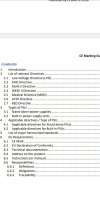
Amir, I think you should address electrical safety regarding HiFi in future videos.

Using gadgets that are not certified. Why you should beware of it. For example, switched power supplies without CE marking, or the equivalent marking in the US (whatever it is?).


Attached pictures, documents on certification regadring power supply. Unfortunately, I couldn't insert the link, but you can google it. :)
 

Attachments

  • 20220730_084656275.jpeg
    20220730_084656275.jpeg
    78 KB · Views: 98
  • 20220730_084738686.jpeg
    20220730_084738686.jpeg
    130.5 KB · Views: 95
Amir, I think you should address electrical safety regarding HiFi in future videos.
It is a good but tricky topic given its legal ramifications. Let me think about it.
 
Back
Top Bottom