• Welcome to ASR. There are many reviews of audio hardware and expert members to help answer your questions. Click here to have your audio equipment measured for free!

HumminGuru Ultrasonic vinyl cleaner mini review

Thomas_A

Master Contributor
Forum Donor
Joined
Jun 20, 2019
Messages
5,691
Likes
4,136
Location
Sweden
This is a mini review of the HumminGuru ultrasonic cleaner for vinyl records. The following procedure was used for cleaning. 5 minutes of ultrasonic using alkaline water (≈pH 10) followed by 2 minutes ultrasonic in demineralised water and 5 minutes of drying cycle. Both solutions contained 2 drops/400 mL of the HumminGurus "The Small Bottle".

I made some initial tests with an ABBA record that was bought used and my initial impression was that some noise as well as clicks and pops were reduced. There was also an apparent increase in clarity and detail. To continue measure any effects I looked up a record which I once "destroyed" by either wet play or some strange cleaning recipe. It is a record with classical music and also very long (35 minutes on side A), and has horrible clicks and pops. I tried cleaning that record way back but to no luck.

As method I used click repair to quantify the number of pops and clicks on the record, left and right channel for the whole 35 minutes play. As seen in the table, I made three cleaning cycles and recorded the LP between the cycles. There is a reduction in the number of pops and ticks with each cleaning cycle, but it seems to require many cycles with these solutions make significant results.

Before clean (L and R channel)Clean cycle 1Clean cycle 2Clean cycle 3
895076754480671956612632
1075992821328748792695604

Now the number of clicks is not always telling what is happening. Most clicks got reduced in level and was still detected.

Skärmavbild 2023-11-10 kl. 13.15.12.png


As a second example I took a used Dire Straits record. This one were also crackly and and microscopic inspection revealed some strange dirt scattered on the record. The first cleaning cycle lead to that the solution got really cloudy after wash and I had to replace it. After the second cycle, there was a decrease in the high-level clicks and pops:
Skärmavbild 2023-11-10 kl. 13.42.10.png


Strangely, however, the number of clicks and pops increased from 33540/20732 to 43620/33332. On further inspection, the noise floor had decreased significantly and the software found even more smaller clicks and pops. The strange dirt remained (between grooves) and probably need a round of my manual "Phiilips Sonicare toothbrush" cleaning procedure (which is quite laborious).

Another result was that the frequency response differed somewhat after clean with a 0.5-1 dB increase in level above 8 kHz. Below a magnification from MasVis, left channel used before (blue) and after cleaning (red):

Skärmavbild 2023-11-10 kl. 13.17.15.png


In conclusion. The HumminGuru works to clean records, but it may also require multiple rounds of cleaning for stubborn records, or it may need more pre-clean methods. It is however very nice to use with its automatic cleaning and drying functions.
 
Last edited:
After a few more records cleaned, the impression holds. The noise floor drops, some but not all pops and clicks disappear or get lower in level, and inreased detail/ high frequency content. Inspecting the records, some however need some manual pre-cleaning to get that black shine back. Another thing is that the main wash fluid gets visibly cloudy after 3-4 records and need to be replaced.
 
Thank you for sharing your review of the HumminGuru. The number of cleaning cycles and time required to get somewhat clean results seems to match others experiences as well.

If I am feeling lazy, I'll use vacuum cleaning or ultrasonic. But if I actually want to get a truly clean record, I'll use what is likely the ultimate cleaning approach as described in the 3rd edition of the Precision Aqueous Cleaning of Vinyl Records (PACVR) manual https://thevinylpress.com/precision-aqueous-cleaning-of-vinyl-records-3rd-edition/

To be honest, after reading the manual, I regret all the money I've spent on the machines, and other so-called cleaning methods and tools - as the method Neil outlines gets records extremely clean, and is actually backed by materials science and thoroughly explains the rationale behind each process in the cleaning step.

If you are going through multiple cleaning cycles, you may be able to save yourself some time and effort using the PACVR method.
With respect to the horrible record example, there was really nothing that helped, not even manual cleaning. What seems to help is long or repetitive cleaning or the Sonicare toothbrush mechanical cleaning. Whatever the nature of the dirt, mechanical cleaning seems best for some dirty records. The Humminguru gets things better and is easy to use. Doing the manual way for everything is a no no for me.
 
I'm happy with mine. It does a reasonable job of getting those grooves clean again. Sometimes I have to run a record through twice. Notably, it made a few copies I have listenable again (for example, an original Breakfast in America). I've only used distilled water, never tried anything more advanced.
 
I would also add that there are few reviews to my knowledge that actually try to quantify the resullts. Noise, pops and clicks and frequency response are all possible to quantify. It comes with difficulties however since a lowered noise floor can fool the algorithm to find very low level clicks and pops.

A simple prewash with tap water and detergent and sponge + rinse in tap water before Humminguru is probably a good procedure. It will remove both loose debris and take care of some greasy stuff as well as loosen some of that hard stuck dirt. Time is a factor as well. At my lab we used to soak glass plates in alkaline wash solution over night.
 
Thanks for the interesting review Thomas!

I have the Degritter US record cleaner and my impressions track with yours.

In my case the results are anywhere from "no difference at all" to turning an unusable record in to sounding almost new! Usually there is some level of improvement.
 

This company was at CAF'23. I don't have any vinyal but the presentation was interesting.
 
I've noticed these ultrasonic cleaners, which are useful for more than just records. 50kHz and effect resembles my small tank-based ultrasonic cleaner. Is anyone else curious? Maybe I'll get one. People do complain about reliability but I think the trick is to avoid using it for more than 10 minute at a time.
 
This is a mini review of the HumminGuru ultrasonic cleaner for vinyl records. The following procedure was used for cleaning. 5 minutes of ultrasonic using alkaline water (≈pH 10) followed by 2 minutes ultrasonic in demineralised water and 5 minutes of drying cycle. Both solutions contained 2 drops/400 mL of the HumminGurus "The Small Bottle".

I made some initial tests with an ABBA record that was bought used and my initial impression was that some noise as well as clicks and pops were reduced. There was also an apparent increase in clarity and detail. To continue measure any effects I looked up a record which I once "destroyed" by either wet play or some strange cleaning recipe. It is a record with classical music and also very long (35 minutes on side A), and has horrible clicks and pops. I tried cleaning that record way back but to no luck.

As method I used click repair to quantify the number of pops and clicks on the record, left and right channel for the whole 35 minutes play. As seen in the table, I made three cleaning cycles and recorded the LP between the cycles. There is a reduction in the number of pops and ticks with each cleaning cycle, but it seems to require many cycles with these solutions make significant results.

Before clean (L and R channel)Clean cycle 1Clean cycle 2Clean cycle 3
895076754480671956612632
1075992821328748792695604

Now the number of clicks is not always telling what is happening. Most clicks got reduced in level and was still detected.

View attachment 325175

As a second example I took a used Dire Straits record. This one were also crackly and and microscopic inspection revealed some strange dirt scattered on the record. The first cleaning cycle lead to that the solution got really cloudy after wash and I had to replace it. After the second cycle, there was a decrease in the high-level clicks and pops:
View attachment 325183

Strangely, however, the number of clicks and pops increased from 33540/20732 to 43620/33332. On further inspection, the noise floor had decreased significantly and the software found even more smaller clicks and pops. The strange dirt remained (between grooves) and probably need a round of my manual "Phiilips Sonicare toothbrush" cleaning procedure (which is quite laborious).

Another result was that the frequency response differed somewhat after clean with a 0.5-1 dB increase in level above 8 kHz. Below a magnification from MasVis, left channel used before (blue) and after cleaning (red):

View attachment 325184

In conclusion. The HumminGuru works to clean records, but it may also require multiple rounds of cleaning for stubborn records, or it may need more pre-clean methods. It is however very nice to use with its automatic cleaning and drying functions.
i hate to wake up a dead horse. i noticed the exact same thing. i got the highest model humminguru and after cleaning records even numerous times i also heard what was slight more pops or clicks even if the record played cleaner. i took upon the habit of washing every record before i play it so many of my records have numerous washings. this actually over time reduced those noises and made the records more silent. you are right it takes time.

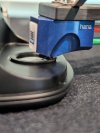
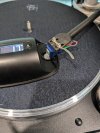
one more thing. i bought their combo scale, ultrasonic cleaner for the stylus. i can say prior to every session or after a long session i will clean "just the tip". this little dandy tool even upon inspection of stylus constantly kept my cart and playing practices clean and worry free. id like to say i hear a improvement in the clarity of the needle but as would you a dirty vs clean one over time playing it. i can say it looks sterile and much cleaner than using a brush.

in conclusion i cay say for the money i like their products..
i use less fluid now aday but this is a old pic
 

Attachments

  • PXL_20240930_011542113.PORTRAIT.ORIGINAL.jpg
    PXL_20240930_011542113.PORTRAIT.ORIGINAL.jpg
    235.6 KB · Views: 302
  • PXL_20240930_011525908.MP.jpg
    PXL_20240930_011525908.MP.jpg
    340.2 KB · Views: 268
Last edited:
i hate to wake up a dead horse. i noticed the exact same thing. i got the highest model humminguru and after cleaning records even numerous times i also heard what was slight more pops or clicks even if the record played cleaner. i took upon the habit of washing every record before i play it so many of my records have numerous washings. this actually over time reduced those noises and made the records more silent. you are right it takes time.

one more thing. i bought their combo scale, ultrasonic cleaner for the stylus. i can say prior to every session or after a long session i will clean "just the tip". this little dandy tool even upon inspection of stylus constantly kept my cart and playing practices clean and worry free. id like to say i hear a improvement in the clarity of the needle but as would you a dirty vs clean one over time playing it. i can say it looks sterile and much cleaner than using a brush.

in conclusion i cay say for the money i like their products..
Both chemistry and time in the US is a factor. I use alkaline water with the HG wetting agent (three drops) followed by rinse i demonised water (2-3 drops wetting agent). Works well for the majority of records.
 
Demonised water.....:)
 
Demonised water.....:)
im a chemical supplier. i can get some wild cleaners and surfactants. one issue is its usually only available in a barrel to me.
 
im a chemical supplier. i can get some wild cleaners and surfactants. one issue is its usually only available in a barrel to me.
Alkaline + acidic + rinse washes are usually good for cleaning, as in the manual cleaning procedure. I am however not bold enough trying acidic wash in the HumminGuru.
 
Alkaline + acidic + rinse washes are usually good for cleaning, as in the manual cleaning procedure. I am however not bold enough trying acidic wash in the HumminGuru.
i wouldnt i just use their bottle and it works great
 
I actually finally treated myself to a Humminguru this fall. Don't think it does as good a job on its own as the Precision Aqueous Cleaning method, but for jobs that don't need the same deep clean it's so much more convenient.
 
I actually finally treated myself to a Humminguru this fall. Don't think it does as good a job on its own as the Precision Aqueous Cleaning method, but for jobs that don't need the same deep clean it's so much more convenient.
Yes, I totally agree about the convenience. I just wish there was an optional 5/10 min "prewash" step without US.
 
Demonised water? :eek:

everclear.jpg
 
Back
Top Bottom