For $46 you can get a discounted Truthear Red right now https://shenzhenaudio.com/products/...ero-red-dual-dynamic-drivers-in-ear-headphoneWhen said IEM is released/discovered for no more than $20 extra

-
WANTED: Happy members who like to discuss audio and other topics related to our interest. Desire to learn and share knowledge of science required. There are many reviews of audio hardware and expert members to help answer your questions. Click here to have your audio equipment measured for free!
- Forums
- Audio, Audio, Audio!
- Headphones and Headphone Amplifier Reviews
- Headphone & IEM Reviews & Discussions
You are using an out of date browser. It may not display this or other websites correctly.
You should upgrade or use an alternative browser.
You should upgrade or use an alternative browser.
7Hz x Crinacle Zero:2 IEM Review
- Thread starter amirm
- Start date
KosherButcher
Member
- Joined
- Nov 6, 2019
- Messages
- 32
- Likes
- 32
Well, I already own the Zero:2, and I am past the return window. I also really enjoy them now with the new tips, and I have paid far more, in the past, for IEMs that I don’t like the sound of nearly as much. In addition, the thing with good ear tips like those, is that I can use them with other IEMs that I own, as well.Those tips are $20, apparently.
At what point it is better to just buy a competently designed IEM?
It was you! Thanks for chiming in. I’ve been doing a bunch of tip swapping and the largest set that came with the Zero 2 (pale yellow) is where I am at. I like the sound of the Zero 2. Chu was my next option, but I’ll see if I can avoid the tip shredder! Yikes!Hey I was the one who mentioned the Chu 2
ehabheikal
Senior Member
- Joined
- May 22, 2020
- Messages
- 442
- Likes
- 161
Does anyone know of replacement tips that fit zero 2

I am using Moondrop spring tips, fit perfectly in my ears and very soft outer which seals well and doesn’t cause any discomfort, quite shallow fitting which aids the bass response, you can feel a very solid in-head thump if you carried away with volume.
I’ve tried comply foam which inserted too deep affecting the bass response, tried a few Azla spinfits which I’m not too impressed with,
Currently got a few tips coming from aliexpress such as the Divinus Velvet , Tangzu Tang Sacai Balanced , Tangzu Tang Sacai Wide Bore , and of course I had to get more Moondrop Spring Tips
I have a Symphonium Meteor iem arriving this week and I want to make sure I have a nice choice of tips to get a good seal and fit/comfort.
Short nozzle iem’s such as the Zero 2, and my new Symphonium meteor benefit audibly from an ear tip that doesn’t insert too deep into the ear canal and I prefer wider bore tips as I feel they allow the iem to deliver sound as it was designed.
If I was you I’d get a set of moondrop spring tips, measure the width of your current favourite/best fitting tip and order the appropriate size.
I’ve tried comply foam which inserted too deep affecting the bass response, tried a few Azla spinfits which I’m not too impressed with,
Currently got a few tips coming from aliexpress such as the Divinus Velvet , Tangzu Tang Sacai Balanced , Tangzu Tang Sacai Wide Bore , and of course I had to get more Moondrop Spring Tips
I have a Symphonium Meteor iem arriving this week and I want to make sure I have a nice choice of tips to get a good seal and fit/comfort.
Short nozzle iem’s such as the Zero 2, and my new Symphonium meteor benefit audibly from an ear tip that doesn’t insert too deep into the ear canal and I prefer wider bore tips as I feel they allow the iem to deliver sound as it was designed.
If I was you I’d get a set of moondrop spring tips, measure the width of your current favourite/best fitting tip and order the appropriate size.
phoenixsong
Addicted to Fun and Learning
- Joined
- Nov 17, 2018
- Messages
- 876
- Likes
- 685
Interesting take as I heard some other members preferring longer tips for the Zero 2I am using Moondrop spring tips, fit perfectly in my ears and very soft outer which seals well and doesn’t cause any discomfort, quite shallow fitting which aids the bass response, you can feel a very solid in-head thump if you carried away with volume.
I’ve tried comply foam which inserted too deep affecting the bass response, tried a few Azla spinfits which I’m not too impressed with,
Currently got a few tips coming from aliexpress such as the Divinus Velvet , Tangzu Tang Sacai Balanced , Tangzu Tang Sacai Wide Bore , and of course I had to get more Moondrop Spring Tips
I have a Symphonium Meteor iem arriving this week and I want to make sure I have a nice choice of tips to get a good seal and fit/comfort.
Short nozzle iem’s such as the Zero 2, and my new Symphonium meteor benefit audibly from an ear tip that doesn’t insert too deep into the ear canal and I prefer wider bore tips as I feel they allow the iem to deliver sound as it was designed.
If I was you I’d get a set of moondrop spring tips, measure the width of your current favourite/best fitting tip and order the appropriate size.
Also, with the Spring tips, I do advise sizing up a little to retain a good seal due to their soft and shallow natureInfiniteJester
Active Member
- Joined
- Feb 2, 2024
- Messages
- 155
- Likes
- 135
I ended up buying the EW200s for a little more than what the Zero:2s cost, and the comparison is absurd. Except in bass quantity, the EW200s are better at everything by such a wide margin that I cannot possibly see any reason to not prefer them if you are not a basshead: better fit, much better build quality, better imaging, better soundstage... They have such a naturality, an openness, a clearness to the sound... that I can only describe them as the anti-thesis of the bloated, claustrophobic and unnatural Zero:2s.
While it is true that they are bright-ish, it is very easy to apply an EQ to increase bass and decrease brightness at your taste without running into any apparent distortion issues:
EQ'ed to USound (I'm using this):
Preamp: -3.7 dB
Filter 1: ON PK Fc 20 Hz Gain 1.7 dB Q 1.000
Filter 2: ON PK Fc 86 Hz Gain 3.1 dB Q 0.500
Filter 3: ON PK Fc 730 Hz Gain 1.8 dB Q 0.900
Filter 4: ON PK Fc 1300 Hz Gain -1.2 dB Q 2.000
Filter 5: ON PK Fc 2000 Hz Gain -2.1 dB Q 1.300
Filter 6: ON PK Fc 5000 Hz Gain -3.4 dB Q 2.000
Filter 7: ON PK Fc 6500 Hz Gain 6.1 dB Q 2.000
Filter 8: ON PK Fc 8100 Hz Gain -8.4 dB Q 2.000
Filter 9: ON PK Fc 9700 Hz Gain 2.8 dB Q 2.000
Filter 10: ON PK Fc 10000 Hz Gain 3.9 dB Q 2.000
EQ'ed to Oratory 1990 (if you really want to mess with the treble [I don't]):
Preamp: -3.8 dB
Filter 1: ON PK Fc 94 Hz Gain 1.7 dB Q 0.700
Filter 2: ON PK Fc 700 Hz Gain 1.8 dB Q 1.000
Filter 3: ON PK Fc 1600 Hz Gain -2.5 dB Q 1.200
Filter 4: ON PK Fc 2500 Hz Gain -0.2 dB Q 2.000
Filter 5: ON PK Fc 4900 Hz Gain -3.0 dB Q 2.000
Filter 6: ON PK Fc 6400 Hz Gain 4.5 dB Q 2.000
Filter 7: ON PK Fc 8100 Hz Gain -8.5 dB Q 2.000
Filter 8: ON PK Fc 9800 Hz Gain 5.3 dB Q 1.000
Filter 9: ON PK Fc 10000 Hz Gain 6.3 dB Q 2.000
Filter 10: ON PK Fc 12000 Hz Gain -9.4 dB Q 2.000
They are just excellent. It is amazing what you can get for that little money. The tips they come with are small and bad, though; but still better than the colorful jokes the Zero:2s present as tips.
While it is true that they are bright-ish, it is very easy to apply an EQ to increase bass and decrease brightness at your taste without running into any apparent distortion issues:
EQ'ed to USound (I'm using this):
Preamp: -3.7 dB
Filter 1: ON PK Fc 20 Hz Gain 1.7 dB Q 1.000
Filter 2: ON PK Fc 86 Hz Gain 3.1 dB Q 0.500
Filter 3: ON PK Fc 730 Hz Gain 1.8 dB Q 0.900
Filter 4: ON PK Fc 1300 Hz Gain -1.2 dB Q 2.000
Filter 5: ON PK Fc 2000 Hz Gain -2.1 dB Q 1.300
Filter 6: ON PK Fc 5000 Hz Gain -3.4 dB Q 2.000
Filter 7: ON PK Fc 6500 Hz Gain 6.1 dB Q 2.000
Filter 8: ON PK Fc 8100 Hz Gain -8.4 dB Q 2.000
Filter 9: ON PK Fc 9700 Hz Gain 2.8 dB Q 2.000
Filter 10: ON PK Fc 10000 Hz Gain 3.9 dB Q 2.000
EQ'ed to Oratory 1990 (if you really want to mess with the treble [I don't]):
Preamp: -3.8 dB
Filter 1: ON PK Fc 94 Hz Gain 1.7 dB Q 0.700
Filter 2: ON PK Fc 700 Hz Gain 1.8 dB Q 1.000
Filter 3: ON PK Fc 1600 Hz Gain -2.5 dB Q 1.200
Filter 4: ON PK Fc 2500 Hz Gain -0.2 dB Q 2.000
Filter 5: ON PK Fc 4900 Hz Gain -3.0 dB Q 2.000
Filter 6: ON PK Fc 6400 Hz Gain 4.5 dB Q 2.000
Filter 7: ON PK Fc 8100 Hz Gain -8.5 dB Q 2.000
Filter 8: ON PK Fc 9800 Hz Gain 5.3 dB Q 1.000
Filter 9: ON PK Fc 10000 Hz Gain 6.3 dB Q 2.000
Filter 10: ON PK Fc 12000 Hz Gain -9.4 dB Q 2.000
They are just excellent. It is amazing what you can get for that little money. The tips they come with are small and bad, though; but still better than the colorful jokes the Zero:2s present as tips.
Last edited:

muza_1
Active Member
I guess it depends on the ears, the colorful tips from 7Hz are the ones I use for all my IEMs, after trying all the ones (SpinFit, Tangzu, Dunu, Clarion, KBEAR etc.) mentioned in this and other IEM threads this ones (red and blue) are the most confortable, silent (I don't hear my steps while walking) and I don't have to fret with them to get a proper seal.

Got mine 3 days ago along with that zonie cable. Running for 3 days and they are good enough for my use to listen to Tidal/Qobuz/Youtube via iPhone. I'm new to IEM but being an audio fan for 20+ years. I don't use EQ now and less likely in the future. Just casual listening and enjoy.
Attachments
Clearly, this is a very good IEM for the price, but I am a bit dissapointed that EQ is needed to get the best performance. I have already so many IEMs, including the original Salnotes Zero, but it seems that the Truthear Nova, while more expensive, is stealing the show:View attachment 335315
Actually , looking at 5128, Nova needs the EQ, not this Zero 2...

You are comparing two different things targeted to different curves.
The Nova screenshot by @MacClintock is a 711 measurement targeted to Harman IE 2019 v2 while your screenshot is BK measurement target to Diffuse filed curve with an arbitrary 8 db bass boost, that you can change according to preference.
If your target is Harman Curve you have to compare Zero 2 to it, and this is the outcome:
and Nova clearly doesn't need EQ while Zero 2 does.

Grobbelboy
Member
- Joined
- Sep 5, 2022
- Messages
- 67
- Likes
- 142
Nah, that’s diffuse field target. The Zero 2 EQ’ed to Harman with the filters that Amir provided sounds significantly better than the stock tuning.
[edit] In reaction to Music1969
[edit] In reaction to Music1969
MacClintock
Addicted to Fun and Learning
- Joined
- May 24, 2023
- Messages
- 529
- Likes
- 968
I gave a like and know what I have stated previously, and when taking the Harman2019IE target, it is true that the Nova is more adherent, in fact the most compliant of all IEMS I know of. Please don't come with the scoring, it takes only 40Hz to 10kHz into account and the Nova is especially good and smooth in the treble.You are comparing two different things targeted to different curves.
The Nova screenshot by @MacClintock is a 711 measurement targeted to Harman IE 2019 v2 while your screenshot is BK measurement target to Diffuse filed curve with an arbitrary 8 db bass boost, that you can change according to preference.
If your target is Harman Curve you have to compare Zero 2 to it, and this is the outcome:
View attachment 359934
and Nova clearly doesn't need EQ while Zero 2 does.
Having said all this, being in possession of the Variations, the Nova, the Red and the 7Hz Zero 2, for the last weeks I was almost exclusivley using the Zero 2 and have zero motivation to change this, it takes away a bit of the ear gain of the 2019 target, which is pleasant for me. Amazing IEM, not even considering the price.
ehabheikal
Senior Member
- Joined
- May 22, 2020
- Messages
- 442
- Likes
- 161
Does anyone know good replacement foam tips for the zero 2?
MacClintock
Addicted to Fun and Learning
- Joined
- May 24, 2023
- Messages
- 529
- Likes
- 968
In fact I don't know if this is true. Looking at his and other sites, "his" supposed target is almost flat in the bass from 1kHz down, but no IEM he ever tuned has this (lack of) bass. So either he is lying about this or just not tuning any of his many IEM's to his proper target, which would be very strange to me.That is a feature and not a bug for many folks - including Crinacle, who has been vocally critical of the Harman IE target.
What are rude replyWould be a good response if you didn't show your ignorance about:
1. Coupler accuracy beyond 10kHz which is not a thing, less important for inclusion into a scoring protocol
And speaking of ignorance , he did not make any comment about beyond 10kHz
We have 5128 data for that
This is even more ignorant2. The low importance of sub-40Hz for audio reproduction, and audio production.

mikehoopes
Member
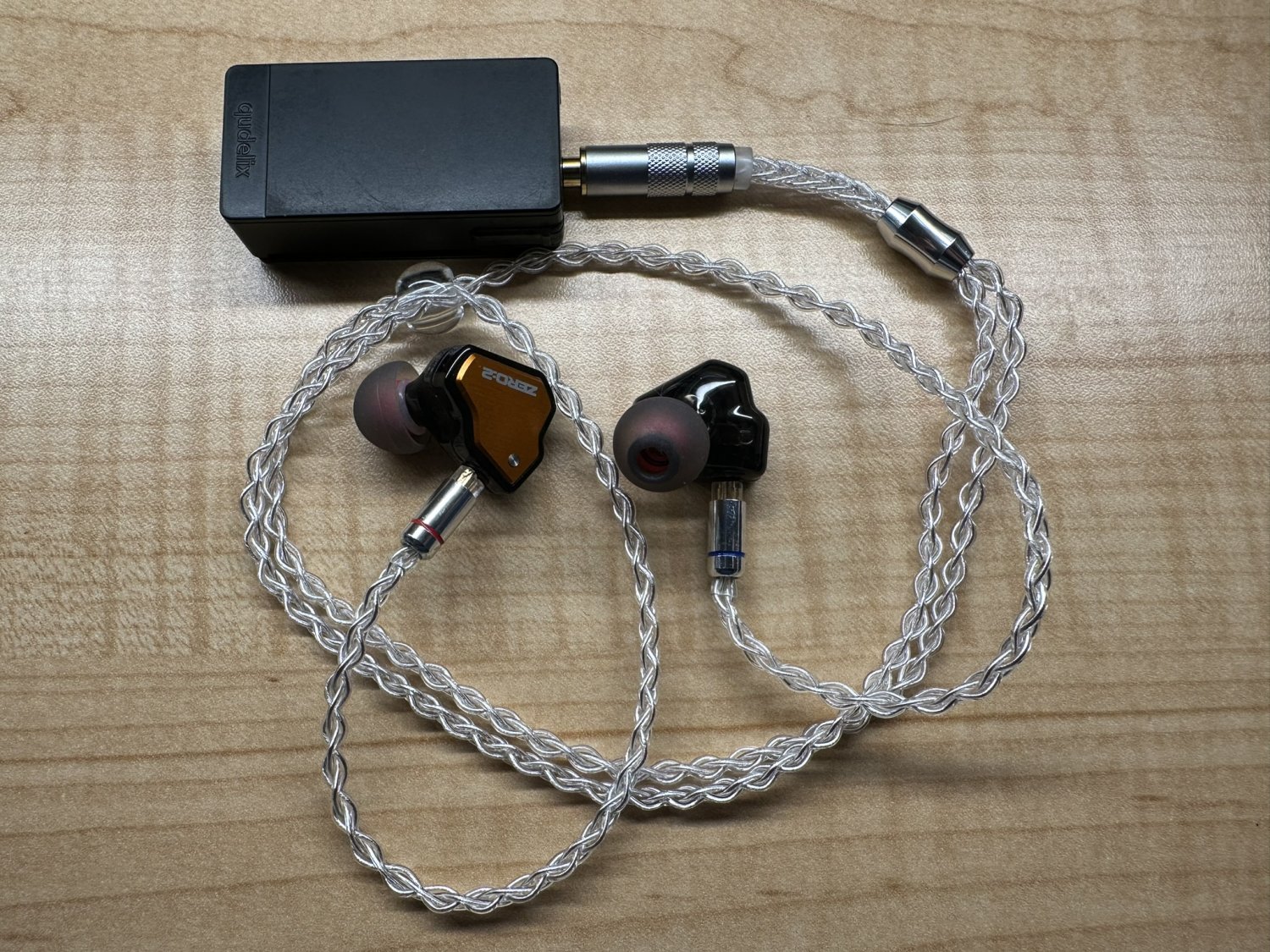
I procured a custom TRRS 50mm cable with a clear plastic chin slider ("8share 2.5mm 0.78mm") for $26/11 days from an Aliexpress vendor.
https://www.aliexpress.us/item/2251832764723404.html
I specified no ear hooks, as they somewhat hamper fitment (pulling the top of the shell inward) and tend to be a tangling nuisance, with a slight loss of comfort at the bend. So with the new balanced cable, I'm gaining some theoretical headroom, but mainly the shortened length is more manageable with the Qudelix 5K application. The alternate ear tips and o-rings make the fit quite reliable for me.
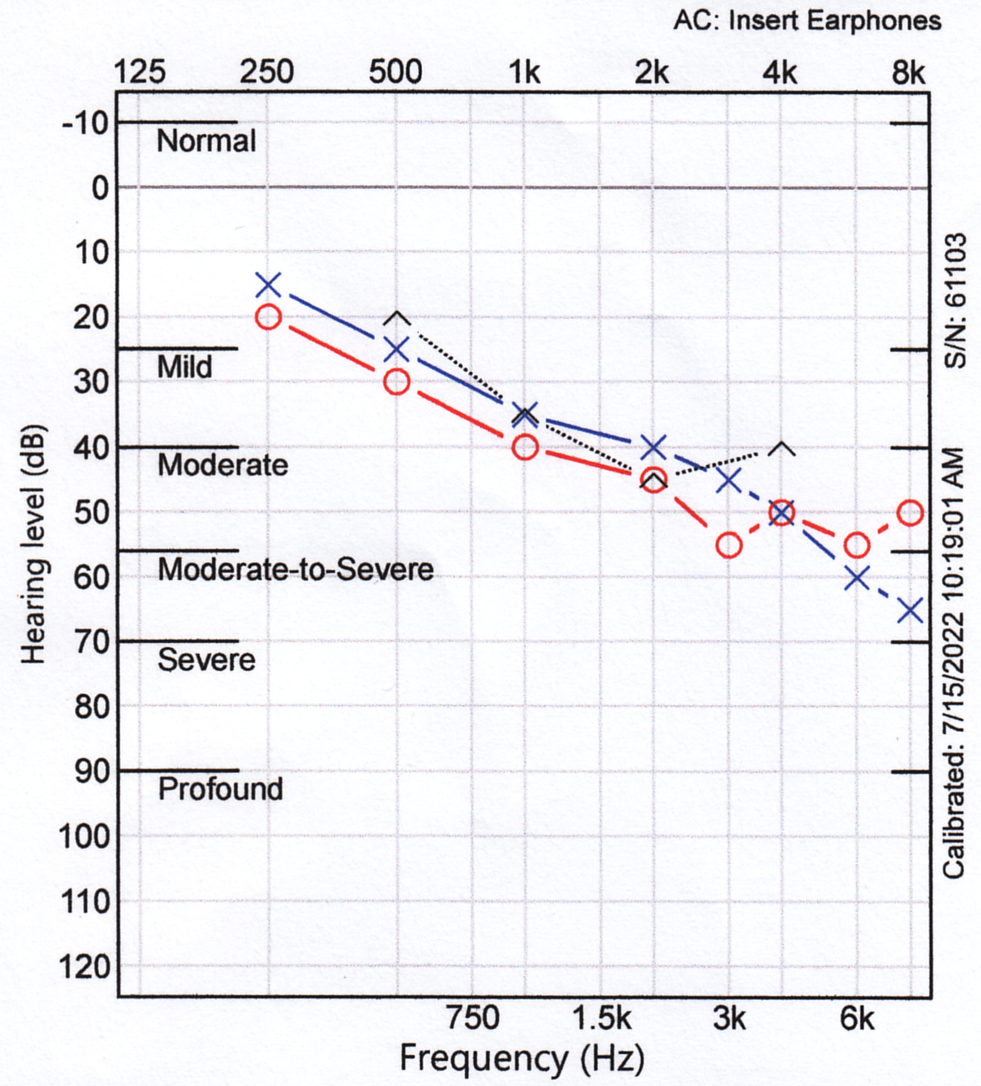
Regardless of targets, I have enough (mild to moderate) sensorineural hearing loss (some age-related, some congenital) that I'm compelled to equalize all IEMs.
https://www.aliexpress.us/item/2251832764723404.html
I specified no ear hooks, as they somewhat hamper fitment (pulling the top of the shell inward) and tend to be a tangling nuisance, with a slight loss of comfort at the bend. So with the new balanced cable, I'm gaining some theoretical headroom, but mainly the shortened length is more manageable with the Qudelix 5K application. The alternate ear tips and o-rings make the fit quite reliable for me.
Regardless of targets, I have enough (mild to moderate) sensorineural hearing loss (some age-related, some congenital) that I'm compelled to equalize all IEMs.
Focus on your perception of my tone only if you don't care about facts. Otherwise read IEC 711 specs. Read "The Mixing Engineer's Handbook" by Bobby Owsinski which states that 40Hz is the target for monitoring exipment, not sub 40Hz. Most importantly trust Sean Olive who knows this already and applies his knowledge to his model.What are rude reply
And speaking of ignorance , he did not make any comment about beyond 10kHz
We have 5128 data for that
This is even more ignorant
Last edited:
Why on earth would I do that when I have a real-time music spectrogram showing me high levels of sub 40Hz content for my music ?Read "The Mixing Engineer's Handbook" by Bobby Owsinski which states that 40Hz is the target for monitoring exipment, not sub 40Hz.
How silly
Maybe you, Bobby and @Sean Olive only listen to Tracy Chapman
(that's a joke Dr Olive will get)Similar threads

- Replies
- 386
- Views
- 73K

- Replies
- 15
- Views
- 3K
- Replies
- 1K
- Views
- 283K
- Replies
- 138
- Views
- 24K

- Replies
- 11
- Views
- 1K