• Welcome to ASR. There are many reviews of audio hardware and expert members to help answer your questions. Click here to have your audio equipment measured for free!

Hypex NCx500 Class D Amplifier Review

Rate this amplifier:

  • 1. Poor (headless panther)

    Votes: 4 0.8%
  • 2. Not terrible (postman panther)

    Votes: 7 1.4%
  • 3. Fine (happy panther)

    Votes: 59 11.4%
  • 4. Great (golfing panther)

    Votes: 447 86.5%

  • Total voters
    517


@Apollon Audio It's nice to have some insight about the differences in sound using these op amps. How do they compare to the onboard Hypex buffer @amirm was using in his review? Is it not recommended or any other reason why it cannot be chosen as an option?
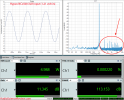
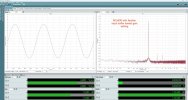
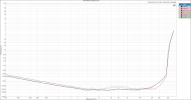
In integrating our custom Apollon input buffer with the unbuffered NCx500, we've not only incorporated four input sensitivity gain settings and selectable XLR/RCA inputs, but we've also enhanced the measurable performance of the NCx500.

Hypex NCx500 Mono amplifier OEM Class D Measurements.png

Screenshot 2023-08-29 213459.png


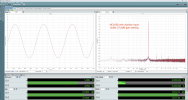
Even at higher gain settings there is a slight improvement.

Hypex NCx500 Mono amplifier OEM Class D Measurements-1.png

Screenshot 2023-08-29 at 22.49.28 2.png


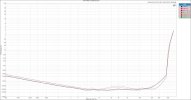
Furthermore, my testing with diverse operational amplifiers reveals variances in the performance metrics of the NCx500. Specifically, I've utilized three distinct op-amps: Sonic Imagery 994, OPA1656 and LM4562. The data clearly indicates that the NCx500 exhibits optimal performance when paired with the Sonic Imagery 994 or OPA1656, whereas its integration with the LM4562 resulted in a bit worse measurements.

THD+N Ratio vs Measured Level @ 1Khz-4Ohm (op amp comparison).png
 

Attachments

  • Hypex NCx500 Mono amplifier OEM Class D Measurements.png
    Hypex NCx500 Mono amplifier OEM Class D Measurements.png
    101.1 KB · Views: 150
  • Screenshot 2023-08-29 213459.jpg
    Screenshot 2023-08-29 213459.jpg
    189.6 KB · Views: 927
  • THD+N Ratio vs Measured Level NCx500 DM (op amp test).jpg
    THD+N Ratio vs Measured Level NCx500 DM (op amp test).jpg
    190.7 KB · Views: 790
  • Screenshot 2023-08-29 at 22.49.28.png
    Screenshot 2023-08-29 at 22.49.28.png
    562.8 KB · Views: 764
  • THD+N Ratio vs Measured Level NCx500 DM (op amp test).png
    THD+N Ratio vs Measured Level NCx500 DM (op amp test).png
    428.6 KB · Views: 127
Last edited:
I was also happy with the amp while I had it, although it had a TI op amp and custom buffer board.
It was a question, not a statement: if the the Hypex buffer is already good enough, then why would it require a new buffer board with op amps (as non-optional extras)? Is it only because of the additional flexibility having more gain settings and the ability to change the sound? I'm just curious: if someone needs only the fixed default gain of 27dB and doesn't need an op amp, why cannot it be chosen as an option? I think maybe Nord sells the MKI version with the default Hypex buffer and fixed gain. I think there wouldn't be an option available to buy the basic version if the Hypex buffer didn't sound good enough. I think this is what you misunderstood. I'm not a native English speaker, apologies if it was not clear.
Thanks for your swift reply.
 
Furthermore, my testing with diverse operational amplifiers reveals variances in the performance metrics of the NCx500. Specifically, I've utilized three distinct op-amps: Sonic Imagery 994, OPA1656 and LM4562. The data clearly indicates that the NCx500 exhibits optimal performance when paired with the Sonic Imagery 994 or OPA1656, whereas its integration with the LM4562 resulted in a bit worse measurements.
Can you clarify which op-amp is used by default in each of your amps, please? The pages for the "Hypex NCx500 DM Lux Dual Mono Amplifier" & the "Hypex NCx500 ST Lux Stereo Amplifier" state that they use the OPA1656, but the "OP Amplifier Selection" drop list has the OPA1612 (and the Sonic Imagery and Sparkos options), while the page for the "Hypex NCx500 ST Stereo Amplifier" only mentions the OPA1612.

Alex
 
In integrating our custom Apollon input buffer with the unbuffered NCx500, we've not only incorporated four input sensitivity gain settings and selectable XLR/RCA inputs, but we've also enhanced the measurable performance of the NCx500.
Furthermore, my testing with diverse operational amplifiers reveals variances in the performance metrics of the NCx500. Specifically, I've utilized three distinct op-amps: Sonic Imagery 994, OPA1656 and LM4562. The data clearly indicates that the NCx500 exhibits optimal performance when paired with the Sonic Imagery 994 or OPA1656, whereas its integration with the LM4562 resulted in a bit worse measurements.
Thanks for the detailed measurements! So the custom input board brings multiple gain settings, selectable XLR/RCA inputs and better measurements.
You mentioned that you tested diverse op amps. Besides the ones listed above, did you try it without op amp? If yes, was it inferior in any way compared to the op amps available as options?
 
Can you clarify which op-amp is used by default in each of your amps, please? The pages for the "Hypex NCx500 DM Lux Dual Mono Amplifier" & the "Hypex NCx500 ST Lux Stereo Amplifier" state that they use the OPA1656, but the "OP Amplifier Selection" drop list has the OPA1612 (and the Sonic Imagery and Sparkos options), while the page for the "Hypex NCx500 ST Stereo Amplifier" only mentions the OPA1612.

Alex
@Apollon Audio — i second that question…
 
Can you clarify which op-amp is used by default in each of your amps, please? The pages for the "Hypex NCx500 DM Lux Dual Mono Amplifier" & the "Hypex NCx500 ST Lux Stereo Amplifier" state that they use the OPA1656, but the "OP Amplifier Selection" drop list has the OPA1612 (and the Sonic Imagery and Sparkos options), while the page for the "Hypex NCx500 ST Stereo Amplifier" only mentions the OPA1612.

Alex
Hello Alex,

our amplifiers standardly employ the OPA1656 op-amp, with the exception of our premium stereo and mono block models, which come equipped with the Weiss OP2-BP op-amps by default. Historically, we utilized the OPA1612, but transitioned to the OPA1656 due to its slightly superior measurements and preferred auditory qualities reported by some users. We are in the process of updating our website to accurately reflect that all our amplifiers feature the OPA1656 in lieu of the OPA1612.
 
Historically, we utilized the OPA1612, but transitioned to the OPA1656 due to its slightly superior measurements and preferred auditory qualities reported by some users.

That's one of the things that makes me nervous about entering the business. On one hand I really want to start making audio gear, but on the other hand I know I'll be encountering these sort of "reports" from users. I'd most likely tell them to put a sock in it, and try to do it as diplomatically as I can, but there's still a high risk of them getting pissed. They'd possibly even start spreading rumours about my "incompetence" as a designer because of how I "tell them what they hear".

You could say that it doesn't matter, since my business model won't be aimed at these people anyway, but how big a market segment does that leave me?

Is it even possible to survive in the industry without catering to some sort of BS?

If I have the 'base' model without buffer - can I add an op amp myself?

The op-amp doesn't do anything usefull alone. You'll need to design a buffer around it.
 
Is it even possible to survive in the industry without catering to some sort of BS?
Sadly it seems most of even the most science-based audio companies and designers have had to give in to a bunch of BS.

I miss Peter J. Walker of Quad.
 
If I have the 'base' model without buffer - can I add an op amp myself?
You don't need any additional buffer for Ncx500. Integrated one in ncx500 is more than enough IMHO . And it is discrete. No need opamps.... check ncx500 datasheet....
 
You don't need any additional buffer for Ncx500. Integrated one in ncx500 is more than enough IMHO . And it is discrete. No need opamps.... check ncx500 datasheet....
I'd like to clarify a point regarding the NCx500 module. Its built-in input buffer is not discrete. It utilizes an LM4562 IC-based operational amplifier.

DSC08929.JPG

DSC08931.JPG
 
Sadly it seems most of even the most science-based audio companies and designers have had to give in to a bunch of BS.

I miss Peter J. Walker of Quad.
This x1000. The last couple pages have been swamps of peddler bullshit and consumer gullibility. It's depressing.
 
That's one of the things that makes me nervous about entering the business. On one hand I really want to start making audio gear, but on the other hand I know I'll be encountering these sort of "reports" from users. I'd most likely tell them to put a sock in it, and try to do it as diplomatically as I can, but there's still a high risk of them getting pissed. They'd possibly even start spreading rumours about my "incompetence" as a designer because of how I "tell them what they hear".

You could say that it doesn't matter, since my business model won't be aimed at these people anyway, but how big a market segment does that leave me?

Is it even possible to survive in the industry without catering to some sort of BS?


The op-amp doesn't do anything usefull alone. You'll need to design a buffer around it.
If amplifiers are such a solved issue I would not advice to enter the industry as cost and price will be what ultimately decide who sells and who makes profits.

Apparently the only differentiator is customers' BS, in which case if you are NOT the cost leader in the industry, it works against your interest (if you are a for profit company, profit) to shed light on it. Based on your thoughts more than a for profit company we should be thinking about an NGO (or a non profit) with the mission of dismantling myths about subjective audio appreciation.
 
Markets don't need anything. The only exceptions being basic necessities.

They either cater to or create demands for things we want, but don't really need.

I could be wrong, but I don't think there's much demand for cheap postmodern looking gear. I imagine that most people wanting that specific aesthetic will be offended by a reasonable price tag. They just want some huge fugly sculptures with an equally huge pice tag to get the expectation bias firing on all cylinders.

Also, radically new form factors usually means a much, much higher production cost, and that makes the sub $1k price tag a pipe dream, unless you want to cut substantial corners on the objective performance of the product. Not to mention that service and repairs most likely becomes a nightmare.
 
If amplifiers are such a solved issue I would not advice to enter the industry as cost and price will be what ultimately decide who sells and who makes profits.
I suspect there miiiiight be one or two other things that drive sales.
 
Got my AUDIOPHONICS LPA-S600NCX a few days ago and for less than 1100,00 € it is a steal. There is no reason to choose ny other amp in my opinion anymore. I was eyeing the small topping PA7 because they were cheaper, but what sold me was that Hypex is EU made, Audiophonics parts can be replaced by myself and the gain is adjustable in a wide and precise range (5 options!)

Finally I don't need to worry about my amp having less oomph than my speakers self-resetting fuses at about 450 Watt. The speaker will give out before the amp will.

Maybe now, after going through UCD, NC400, Purifi, LA90D I will finally stick to this "final" amp. :):):facepalm:
 
I like class D. I have 3 stereo amps in my elec. X overed 3 way system.
 
Back
Top Bottom