• Welcome to ASR. There are many reviews of audio hardware and expert members to help answer your questions. Click here to have your audio equipment measured for free!

Fosi Audio BT30D Pro review

Owned a BT30D Pro for a few weeks. Adding my thoughts here.

Summary: It's OK, I guess. I do not love it.

Pros:
  • The line-out is a true "pre-out" with output controlled by the volume knob. I understand with many similar amps the pre-out is technically a line-out.
  • No hiss. It's silent at any volume level. Above 9 there's a faint buzz from my signal source that disappears if I disconnect the input.
  • No turn-on or turn-off thumps.
Cons:
  • No high-pass filter.
  • The subwoofer controls affect only the speaker-level (passive) sub output. They do not affect the pre-out (i.e. the pre-out is full range).
  • Bluetooth SBC/AAC only. No LDAC, Apt-X, etc.
  • No Bluetooth authentication.
Some thoughts:
  • Why is the case not ventilated? I understand it can drive any reasonable load at any reasonable output level without shutdown from overheat. But heat is the enemy of longevity and I just don't see this thing surviving to "vintage" status without some circulation.
  • Repeating what others have said: why use the TPA3255 then save 50 cents on capacitors that can't handle a 48v supply?
  • It needs a high-pass filter. I can't find a way to fully leverage this amp! Using it with a passive sub I can't keep LFE out of my L&R. I could drive my active sub from pre-out which grants me one master volume knob -- but this forces me to send LFE to the Fosi where, again, I can't keep it out of my L&R. Instead I'm driving my active sub via C/SUB on my PC (where I can implement effective/flexible bass management). The BT30D 3rd channel is a useless paperweight that I cannot put to work!
Simple features to add... $1-2 things that would make this product far more flexible and useful:
  • A true main-in that bypasses everything on the front panel. Make it three channel so I can access the 3rd channel directly for whatever I see fit. Make sure the 3rd channel is full-range, same gain as L&R, etc.
  • Line-in for all three channels, not just L+R, and perhaps a two-position switch that selects LFE source (e.g. sourced from L+R or sourced from line-in - I'd need to ponder this a bit).
  • Pre-outs for all three channels. Make them true pre-outs, downstream from all front panel controls/filters.
  • High-pass filtration.
  • I'll admit this is getting into "Daddy can we buy a Pony?" territory: Variable and defeatable loudness contour, defeatable tone controls, defeatable sub controls.
Bottom line, it's my first mini class-D amp and I'm enjoying it. But it'll never serve as anything more than a basic, nearly featureless two-channel amp in my system. The volume control is useful as a gain control but every other feature this thing has lies just out of reach.
I love that this one has the pre-out that it does. I can't find another amp in this class (<$100 3255/3251 with passive sub out ) that has preamp out also. And I haven't seen anything that has a high pass filter although agreed that that would be good. I don't think anything close to this has high pass filters. But anyway it sounds good on my speakers. I guess they can handle full range ok.

Most amps like this will only have a line out (bridged inputs?) for an active sub, the mains get full range and the sub V does not even follow the mains. So, from my low end perspective, this one is a step up. We often use the preamp out for a second set of speakers filling in another area. Would not want that affected by the sub amp's filter controls.

Agree in other directions like the component decisions that limit it to 36V and running hot with no ventilation. I have a friend who recently bought one and his does not run hot. Mine even idles hot. Not sure what to think about that but it keeps sounding good after a year of use.
 
Last edited:
I love that this one has the pre-out that it does. I can't find another amp in this class (<$100 3255/3251 with passive sub out ) that has preamp out also.

This is a shame. I'll admit most $60-120 amp buyers don't need a pre-out nor know why they might need it.

That said, the $60-120 market is saturated with products. All we need is one manufacturer to release one model with a grab-bag of these simple $1-5 features, don't screw it up with turn-on thumps, thermal issues, distortion, noise, etc, don't charge a single dollar over ~130, and I suspect quite a few of us would throw money at them. Even better if they publish a long-form "FTC watts" statement (this earns my respect and probably the respect of the target market for this hypothetical $130 product).

As it stands we can get class-D mini amps that do have these features but they're "boutique" products for "audiophiles" made by "artisans," they cost 2-5x as much, and I seriously doubt most, if any, can outperform a Fosi V3.

And I haven't seen anything that has a high pass filter although agreed that that would be good. I don't think anything close to this has high pass filters. But anyway it sounds good on my speakers. I guess they can handle full range ok.

Mine seem do OK with full range as well. But the virtues of keeping sub-80Hz out of one's main speakers is well-documented and understood.

Most amps like this will only have a line out (bridged inputs?) for an active sub, the mains get full range and the sub V does not even follow the mains. So, from my low end perspective, this one is a step up. We often use the preamp out for a second set of speakers filling in another area. Would not want that affected by the sub amp's filter controls.

Again, I agree. The BT30D Pro has some unique virtues. Imagine what another $20-30 in components could do. Just another 2-3 TRS jacks and possibly 1-2 switches.

Agree in other directions like the component decisions that limit it to 36V and running hot with no ventilation. I have a friend who recently bought one and his does not run hot. Mine even idles hot. Not sure what to think about that but it keeps sounding good after a year of use.

Mine's warmish. Case top runs maybe 105-110F. The good news is I can play it fairly loud for hours and it never gets any warmer. But most of the time I play at a low level. Between waste heat from the amp and the power brick I doubt my power efficiency is much better than a 50wpc class-A/B.
 
This is a shame. I'll admit most $60-120 amp buyers don't need a pre-out nor know why they might need it.

That said, the $60-120 market is saturated with products. All we need is one manufacturer to release one model with a grab-bag of these simple $1-5 features, don't screw it up with turn-on thumps, thermal issues, distortion, noise, etc, don't charge a single dollar over ~130, and I suspect quite a few of us would throw money at them. Even better if they publish a long-form "FTC watts" statement (this earns my respect and probably the respect of the target market for this hypothetical $130 product).

As it stands we can get class-D mini amps that do have these features but they're "boutique" products for "audiophiles" made by "artisans," they cost 2-5x as much, and I seriously doubt most, if any, can outperform a Fosi V3.


Mine seem do OK with full range as well. But the virtues of keeping sub-80Hz out of one's main speakers is well-documented and understood.


Again, I agree. The BT30D Pro has some unique virtues. Imagine what another $20-30 in components could do. Just another 2-3 TRS jacks and possibly 1-2 switches.


Mine's warmish. Case top runs maybe 105-110F. The good news is I can play it fairly loud for hours and it never gets any warmer. But most of the time I play at a low level. Between waste heat from the amp and the power brick I doubt my power efficiency is much better than a 50wpc class-A/B.
I like your push towards the next level for these. It does seem like Fosi (or Aiyima !) could notch it up- offer the full 48V capable dual 3255 2.1. Keep the passive sub out controls AND add a switchable high pass filter for the mains. Keep a Pre out - before the high pass. Retains the full option of chaining additional amps, active sub or active speakers riding off one volume control but with their own eq, power supplies. Maybe just add $20 to the price plus choose your PS V (or not). That would be my sweet spot. Switchable BT is easy enough.
After that, it gets into where they will want to add remote and display USB DAC, optical in, etd. a larger set of features needed to satisfy next level niche. $200 ish zone.
 
Last edited:
I like your push towards the next level for these.

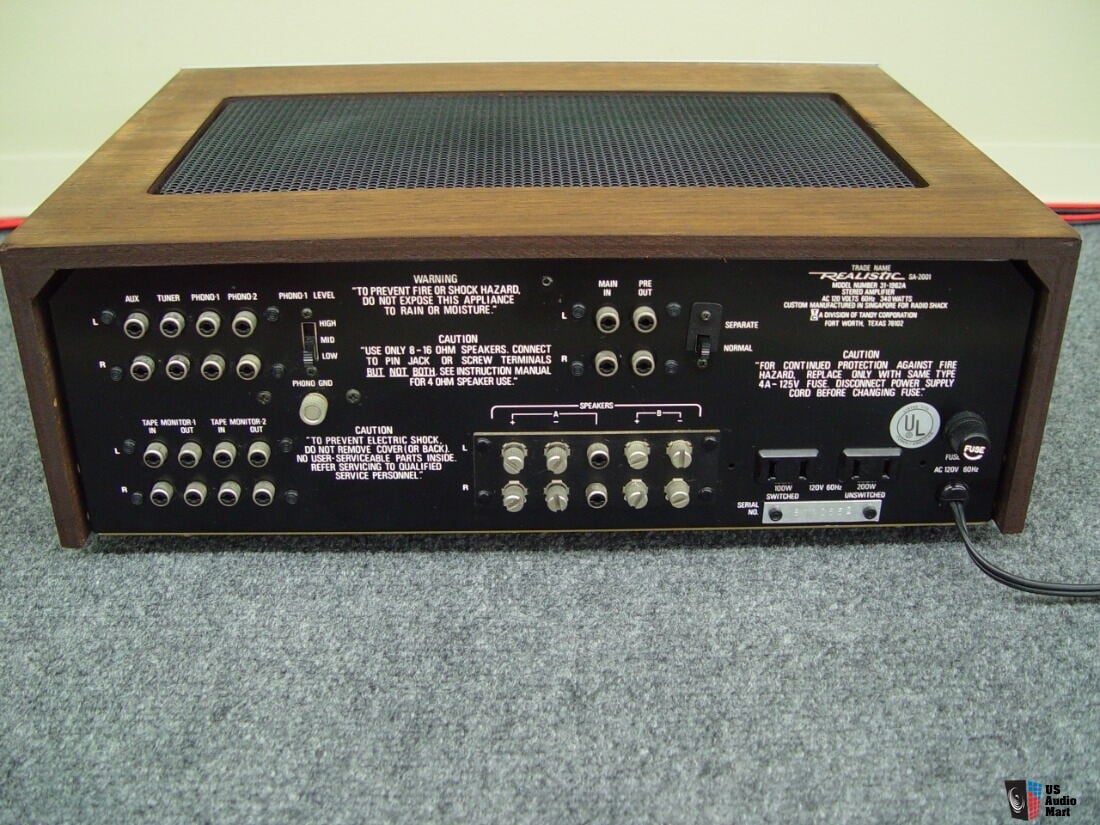
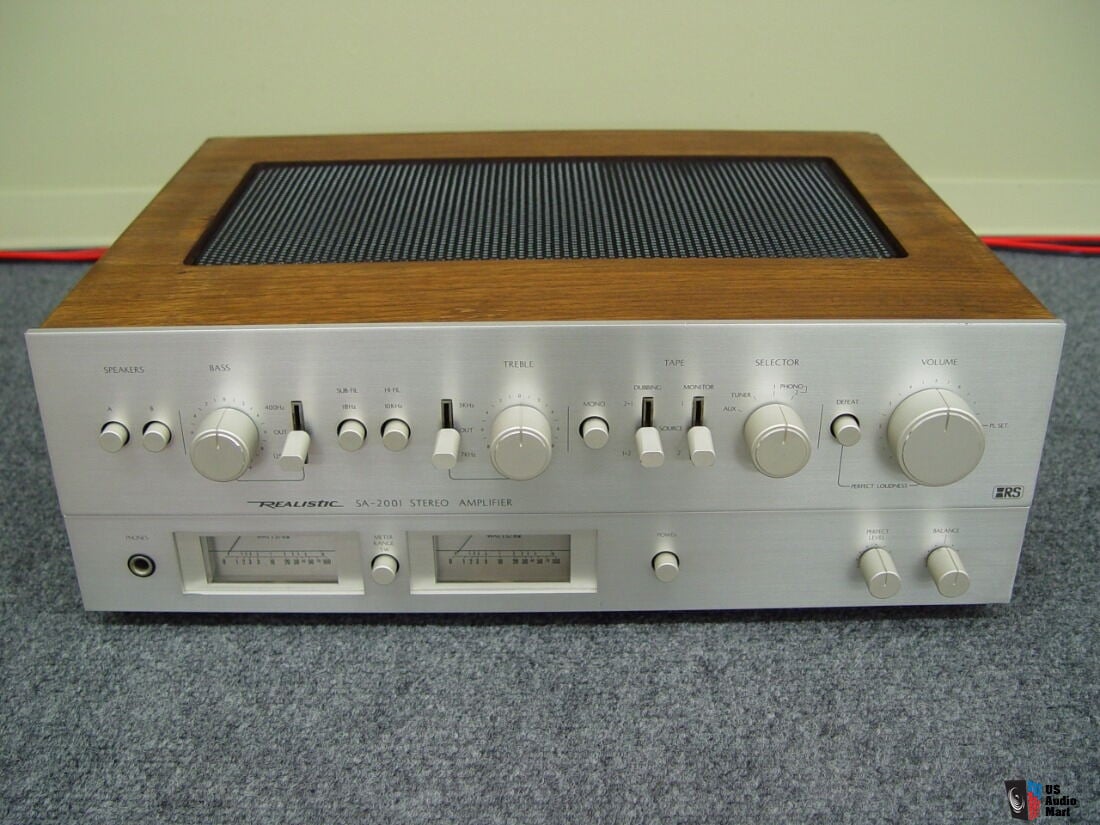
Somewhat. Mainly it's getting back what we had in 1979. Every day since we strayed further from His light.

4575651-afd3b812-realistic-sa-2001-amp-tm-1001-amp-and-tuner.jpg


4575655-390c2822-realistic-sa-2001-amp-tm-1001-amp-and-tuner.jpg
 
Cool to see. That's a very different device at a very different price point for sure! I think there are plenty of options in that niche today but I'm not interested personally. To me getting great sound at <$100 (in today's money) is what got me.

That Realistic was what? $150 - 200 back then or $600-1000 in today's dollars. By that light, the $80 I paid for my BT30D (with PS) last year was same as buying it for $20 back then. Can you imagine getting a 2.1 amplifier that can hit 100 very clean watts at that price point? Though subwoofers were rare at the time. Of course we can now get a full computer (cheap phone) for that too. Tech has gotten so much cheaper.

I hope there is room in the market for great $400+ amps that cover those bases AND the niche that Aiyima Fosi and others are carving out. Still it would be great to have a high pass filter thrown in. I feel pretty certain the 48V circuit is a done deal. That was a decision that Fosi will likely not make again.

All fun discussion. I'm glad to be done defending why I chose to ventilate mine, haha.
 
For anyone wondering, the power from the PSU is delivered to each 3255 chip equally, irrespective of load, or if a passive subwoofer is connected or not, at least according to Fosi Audio. I guess that means the 48V 5A power supply isn't going to get remotely close to pushing either chip. I would be delighted to be corrected.
 
For anyone wondering, the power from the PSU is delivered to each 3255 chip equally, irrespective of load, or if a passive subwoofer is connected or not, at least according to Fosi Audio. I guess that means the 48V 5A power supply isn't going to get remotely close to pushing either chip. I would be delighted to be corrected.
If I recall the issue was Fosi's choice of capacitors. I think it was determined that anything over 32V (or was it 36V?) doesn't leave enough safety margin.
 
Hi, I'm wondering why the pics on the first post are missing? Do I need to enable something to view them?
 
Amir gave the previous model the BT20A a score of 83, as there is no amir review of the BT30D pro roughly what kind of score would you give
I hear that once you get to a score of 85 it is difficult to tell much difference between amps, do you think this is correct
 
Hello everyone,

Does anybody know how high the high-pass frequency for the passive sub goes?

Thanks,
Dominique
 
Hi all,
I'm trying to see if it's easy to build a 5.1 A/V system with a BT30D and a TB10D
Using a 5.1 decoder like this one : (HD920PRO)
View attachment 255565
Directing 2 front channels to the BT30D => FR, FR and Sub (active or passive)
Directing 2 back channels to the TB10D => RR, RL

That would be a 75+60+110 = 245€ system.

Honu, I want to do the exact same. I am following you and waiting for you to post your experience (maybe on a new thread).
 
Has anyone had any issues with a 36V power supply? I've got one that came with the 32V stock power supply and I bought a 36V 5A PS from Parts Express since there wasn't a Fosi 36V available (still isn't to my knowledge) and it works fine with the 32V but when I plug the 36V in the amplifier immediately emits a repeating soft clicking sound and never turns on - no sound other than the clicking. I checked the 36V supply and the polarity at the connector is correct and measures 36V. Plugged the 32V back in and it works fine. I bought it as a gift and the recipient would like a little more power available so I haven't even checked anything else like a sub or bluetooth.

I've emailed Fosi 3 times to two different email addresses and can't even get a response. My ZA3 just arrived minutes ago and at this point I'll leave it in the wrapper and return it if I can't get any support from them for this unit. I'm surprised by a lack of response based on what I've read.
 
I did take some time tonight and more fully checked out the amplifier ... and I think it performed very well.

I tested it with two pairs of speakers - an 8 ohm pair and a 4 ohm pair with a small 4 ohm subwoofer to test the 2.1 functionality. The top of the amp case stayed cool to touch under the 4 ohm pair + subwoofer and got very warm to the touch (but not worryingly so) being driven to loud levels in my 13.5' x 22.5' foot living room for 20 minutes or so each. I used the larger 8 ohm pair (85 dB sensitivity) after the 4 ohm + sub combo so I'm not sure if it would have gotten so warm had I reversed that sequence. Paired with a DAC or other comparably small unit I'd probably put the amp above it if not one of those small racks for something in between, but from this short test anyway I wouldn't be concerned about needing a fan unless I checked it out after a few hours of listening. I was quite impressed with the volume level and certainly wouldn't need any more volume but I certainly would like to have it and have more headroom if I could. In this way, I would defintiely like to have the 36V power supply be a working option and I think based on the chip's specs the 10A power supply would push it right where I'd want it for the money for anything other than insensitive or hard speaker loads to drive.

I'm not someone who uses tone controls and if there is anything I would change about it ... it would be to have none or the ability to defeat them. That said, I set both bass and treble to the 12 o'clock position and thought it was close to flat - good from a logical standpoint to my way of thinking in the absence of detents. What I very much appreciate about this amp is the sub frequency and volume controls and I liked the adjustment they provided - effective and provided a wide range of adjustment that I think would suit the vast majority of users using it for a 2.1 setup. I never looked it up, but I'd be curious about what the slope of the low pass filter is. On this note, I have to say that while not all would want or use it ... coming from the speaker enthusiast community ... if someone would build a unit like this with a mains high pass? Maybe replace the tone control knobs with that for even $25 more? That ... would be special!

I have another small desktop amp with the exact same 2.1 capability and with all the same controls for comparison. The BT30D Pro provides substantially more volume, sounds cleaner, with more detail and punch and has another advantage. The BT30D Pro has a little bit wider case, slightly larger knobs and the feel and resistance of turning the knobs is comfortable and such that they can't be easily knocked out of position. It might seem like a small thing, but even with my smallish hands I've knocked the other amp out of adjustment and not known until something sounded off ... which seems to me could be a common annoyance with these little guys. I also really like the range of the settings knobs - not too fast or slow so it's easy to fine tune without adjustments without them becoming ridicuIous. I couldn't detect any noticeable hiss coming from the speakers without a signal with my ear up to the speaker - other than some of the usual ground loop hum my house seems to be pervaded with. Bluetooth connected fine and though I didn't test range it sounded fine. Being used to DAC's using the LDAC codec I wouldn't use this but I can imagine this being a plus for many.

In the end, this little amp is a real smiler for me! From a sonics, ergonomics and performance standpoint it's actually amazing to me that one could plug this into a source with a sub and sats, tweak in a few minutes and have a really nice sounding set up at a staisfying volume level in a mdeium sized living room ... that's tiny and out of the way ... for $100 or less? That's a LOT of value to me!

I really don't want to end on a low note because I think this is a great little amp and I am enticed to unwrap the ZA3 given tonight's quick test. But c'mon Fosi, if you put up a "support" email (as you should) ... you gotta answer the call ... the first time. ;)
 
If I recall the issue was Fosi's choice of capacitors. I think it was determined that anything over 32V (or was it 36V?) doesn't leave enough safety margin.
Is it actually the capacitors? They are 50V items, my understanding was it's the XL1509-12 (tbc) buck converter which has a maximum input voltage of 40v. Any means to drop the input from 48 down to <40v on the VIN pin would be enough. That buck convert is 2A max so shouldn't be hard to do a mod. If 2v below spec on the capacitors is a big deal, can always upgrade to 63v versions...

FWIW, mine arrived on Wednesday... it produces a good amount of volume for the 32v 5A brick it comes with, and yep, that case really runs warm. It's twice the thermal output in the same space, that heat has to go somewhere. Maybe the lower 32v 5A brick is a design choice to reduce peak thermals???
 
Is it actually the capacitors? They are 50V items, my understanding was it's the XL1509-12 (tbc) buck converter which has a maximum input voltage of 40v. Any means to drop the input from 48 down to <40v on the VIN pin would be enough. That buck convert is 2A max so shouldn't be hard to do a mod. If 2v below spec on the capacitors is a big deal, can always upgrade to 63v versions...

FWIW, mine arrived on Wednesday... it produces a good amount of volume for the 32v 5A brick it comes with, and yep, that case really runs warm. It's twice the thermal output in the same space, that heat has to go somewhere. Maybe the lower 32v 5A brick is a design choice to reduce peak thermals???
You hit the nail on the head about the buck converter being the limiting factor irt maximum voltage. I’ve tested mine up to 38v with no discrepancies (or audible difference) noted.

Also, for those worried about high passing the mains— simply adjust the bass potentiometer to taste. Anti-clockwise= less bass, clockwise= mo’ bass. Pretty self explanatory unless I missed something
 
You hit the nail on the head about the buck converter being the limiting factor irt maximum voltage. I’ve tested mine up to 38v with no discrepancies (or audible difference) noted.

Also, for those worried about high passing the mains— simply adjust the bass potentiometer to taste. Anti-clockwise= less bass, clockwise= mo’ bass. Pretty self explanatory unless I missed something
High pass and bass tone controls are different animals aren't they? Don't know much, but with a high pass, I'd just want to avoid amplifying below where the sub takes over. 100-150 hz ? With a strong slope. Thus the term "pass". For a bass tone control I think it's a shallower slope with a turnover frequency up towards 350hz maybe. So, set your sub crossover around 120 and then reduce your bass tone to act as a high pass and you've got a big dip between 120 and 350. So not really a good way to get there.
 
The issue is not that the default mode is Bluetooth - that's fine. The issue is that your Bluetooth mode allows unknown or malicious devices to connect and override the currently connected Bluetooth device, i.e. to pair without enabling Pairing. So the distinction is whether pairing with new devices is enabled or not. I don't want my neighbour to connect to my device unless I enabled Pairing Mode. But I want all previous N devices who have been authorized to be able to connect at any time.

Have any inexpensive amps implemented this feature?

Most powered speakers with bluetooth function have a pairing button.

I don't know why it's excluded from amps with bluetooth.

Who wants to have their connection hijacked?
 
Hi , i just buy this bt30d pro, and i am frustated to connect to my kurbis 2.0. In manual , this product can connected to active speaker.

I connect 3.5mm from preout BT20D connected to RCA input in kurbis, not working
Another try , 3.55mm to aux in in kurbis, still cannt work.

May any one help?
 
Last edited:
BSWeutj7jcKZZJJ6ufT1ojTNFOJb4tEp_lJNPQTlUdIkQeF6-9TB9pJRpvO4fYNgww-wx8JOfjyNXPGdFI12LFRAxEaCK6Cjb_uI1uDB49A1QLbgDnYVTQqanlgnPOnt0IEFwzQZ3UUCHBMIsabJZVaLuE5vtKyF9wKt8W098jZ-ckYn7yay6-uygNRM
k9i8MePDPHzLEcJHTevKp-jiQ57LTtWKIZN5GYhpHsqt6oaHc0it7UFyVmN9j_FaLOzR7hUrBfKae68iaVPvQqWKxMsE2hyfQFqM1aKHnPYdMozhqu0vN0yrrdj3zsHkJ2E49ZweaJFdICiyn1ZrpgvDujxhPqijNVl8GYEPcgKgYPDxK7H6E2Vwgz6p


gkKGcHTByAinxGUe6ZgfGcFD_OULvrqp6hDKMz1qJdiZ8xo0jVNB5C0P8Z_B9sY3XiDqSqMA9pHRibmqbmKBD6jcSefmNS4BnQWaz3XHNBScelVj-CnSRTL7bS8U2IPLdkfNm8Y49xQx17ZLwDVBcT3Klz7h_ZZ3zoQBj3a29lU-SXOEXvsf3GI3i_lm

Compared to the BT30D non-Pro (left), the Pro version is quite a bit longer and heavier (430g vs 620g).


RAt4S8qHWMW8G5iS4jfB2-tMoIwG95KLlJ0J9jTPknRt8WtEQNorh5Ewef3vpWL-BmbePNn710fTVSPqldyLggW7WVcWyFKSvixb5rkJrRTBOD1mUthd5WztSwtMP5m6YQnBOdSyLLACG4EgSDRzTO3jf4_2ru3MhbJKyVrbP1J_LslGR7r34YFu6ZVN
iifki-0_9Xcc9jp7LkLa_9WAdCY2EumlIUhBTXwxTgdESoQ3jdOw95LRGR_vQL-iO2Pw_FKkwKjxLKoztGAiH3Wlh5RwhRj4X-p2JHE1R8Jj6UKENueiYl0vdMBnST8ioWdz3e4jJadL-o9pmC5chLm5sFupntS34dzHUCPX9UT75JKHMDCDz4d3NBH1


The knobs are made of aluminium, different texture compared to the no-pro, a bit more resistance to turn. Same throw switch used to power on.

The 3.5mm PRE OUT is full range.

Bluetooth will be always-ON so your neighbour can hijack your device just like the non-pro version. Remove the antenna to prevent this from happening if you don’t use BT. Come on Fosi Audio, please fix this.

The amp has a 4” tall BT antenna, again it's better than the 7” incher of the DA2120C that looks like a CB radio... Please give us the 1 incher for future products, for once the smaller the better.

The spec in the manual is different from the official website, give us the true data!!!
trkCcaNfCi-QStobo7aPdVZvFvdXDblLki--fcyjLN8SyxqkWD1D3Vtoq_EIDUcenTtdxjo4Me_xEFsqUXNSqyWIdfCRZmJyDUTuSCJ2-DVuc2CpaM8YvaY_qKdVDARHRNu5NtFcY4o4GtzvuQ0mQl6z8pV4Px6K2azWWjYKEvjwxOQbp4go83yv3c4


BT uses an ATS2853 chip that is also found on the BL20A.
2vDiDVTetsJRhUoZRO1JLuKh6W6FBktlJQ-_VSXz6_pxsxR_5DVatjB3bohE0iCO_uIPoQ00dHHqcWCKw3XZwxmb-Vr6w14J-TZFUmiVXzCoTcoMtwtLuusLOnSovPP1AUNOidrJpxkuIVNRLF5L0Cy_LHn_Ic6j3jgkowSZ47djyJeHo6-ZufY3qTVV


How does it sound?

I did a comparison with Onkyo RZ50 pure output mode (airplay), Aiyima T9 (BT), and the BT30D non-Pro (BT). All using RP5000F towers, with an amp selector switch.

GLUEZOAkBYGGHqFyQvOh7kjA5BbrPNcKfNsTMy4O3cZNmvNLKmA-P68ITgUwGOh21kgljt3SpF3xEkOy4aODxY1FaRcjzEBMoj2LD7vZWcdW-8rqC3xHnHWJNXEgZnaZxKOsZX3rdQiEe89BvcyyQzV6_Dr_7nBqJ94pHUYE73cefI9JazHv4L9ZmrI


Right away there’s a BIG difference between the non-Pro and the rest.

The Pro version is much more dynamic, the voices are clearer, bass is more present and punch harder.

I honestly cannot tell any audible difference between the RZ50 and the BT30D Pro. The T9 sounds only a tad warmer (thx lamp); Even that it was really hard to tell and it depends on the song being played.
The Pro version sounds definitely better than the non-Pro.

To test the passive sub output, I hooked up my gutted Z2300 logitech subwoofer, it works wonderfully and has a very capable output. However, I didn't like the sub crossover control, the adjustment doesn't feel linear. There are no frequency indications on the knob, it can only be tuned by ears.

Now the technical stuff:

The PCB: The board is very well built
AXQchWS2XoDy-Ea52QNWQhMxri4MoPLTejeX5TG63lc9ZKq25336BudprJxqJZyCgJ0ZGKnnr0atNyFVMLRFy6abi9urHRqTakbJRJlJ4j0128QEDs20kQmUU0N_IW_hljeem2q-e-Zwiru50x9myqtIGPINxrr9vjEt9_hFWyl6QQd7UtXbAl_xuSw
KO0UUM4ScJ2UfhLh0Pwt5WyN3jV8bss3a9QWODLHV_EYGWqWQ6GtiDuNM6ELe0PgKoWkL-ZBDbzr23rnoXT94kwxutHo7e5WdcgmYxD0mkckR0FqFgiUMpno8v9YCYFgXA0iNTyvhGj5ZUS8ibv8bsqeA0dzQe_lg5Bno3HGekABE4nnRKt8kdTFcQ8


Caps:
lfAL1MLd8olvZ2MIwif2JO9-H8kr5xhJa9xHGRLpfjCF46dWluIzVT_kq381H2EN-2yTCAxXXsgI4y93nfJPw_X2uaoQFPt427WdgVBwF_YiHogfghTSJ73LG1AK8BaY3VrEFxAuWY1hDIhSn9L5HJ02K9ZOvjvKXntAIdb1_2i_-BZGnTOsu5waur0


Relay: It does the click (barely audible) only during power on. Maybe that's why no more sparks.
QGIwA7aK9OkRBSd5Szi86OmnyFNVgxQKgY6HUirXjPVliyBkfu04aNc_K8BcnNiq5S0fVw1efh0PGrwQAiSoXS_G5jZonSxOv1-_kQidbfDexxacOfgekKqfqU_h9Maj9B3wAhTlZRFU5HYOQtxNhjwgw_KcfNh7qRXofugXiyhcFUdP6g-4f-Mqdik

The muscle: TPA3255 x 2:
2jS3OCwQHnwK3iu5148YNhSByIsFOVD9H0f2nVJPulGLt2cugaTWnSZAQ0TYGJEnWQ8N1hw0DDme9B9JuigAKNFqV_huPeSYMKmU6EpfhYkc9AtfUF2PU2V6zDkXUd0QVEBbs_qepBWkElxz9FeVPrrY6Xm46pMJOBNvcO5Ga80rLS5ffstEBiEW1w0


rpv7Hbum--7WdOgP98OXLpH3LAwOxD7Tp4Y5gGIBzDAid1P3GdsrkTd3euBKYgxmqFHATRVk1Q2zfhR3qRJBvIkRSLVeTZusHzVVEtsc6S8z37rr6FK4SEl33cUQYMVkZsqIIy_YI2CkNj93EEDuYOGANQB865v96LiE28UeU_LB_x02-2-r0a3Y6bQ


vCp0x4beQ9jRxnTZ1ir6EGa4KFsmregb3YwwUUcPSGTXvT0bN1s9uSBFLk9DdI_d9uyree-rMUWvStjF9y9Vrs3TvtcQQ7HcRXglKU6igJwW8ifA7tMifFa1Yc2hoMj4pQXK7Q_bQBYhbUKw0KMThYi1k9I2dHy06z_kpXj_CKnyuCQXtQ3lGZ66yPc


PSU idle voltage: 32.3V
i8B62JvlzQRE5tx6r6HzpFT6ekO0ndZK26h2CzPpUGUxksMr6X9oZURFRbySUPpTflgqYsyda37TjRX0UtpxKYqPI0pxo2LzcFES4XEMAiGX_JVJZiYVF0X7y7l-HHhN_X9I4-3NAbFM5TfG7IfJ0vkE3a8BZS4wpsTT7vfn75dXv4fLAKMxKeVawF4

touhiwRgvD2-O41fGo8saPz5WQtA8GIDkjvAt2uurgbfHrbLP_jhkevOGcbVY-6rT3ZBa9T5IDzS7paAeTDEY-1kBpy7i7cYo1L_PHPnMnFK405xH6ltYBpPFoYWLsmWdYqaxbDG6c-RR-4_4NDJRnADp8Jp_mX7F56aUc6hH2p4siBWv-XR37-jE5o

Power adapter output @ 8ohm load current and voltage, 125W:
z2j2skABUomLRKUwk_V2jFbT2NE801YgmKTFAum-e82SehaI5g-OKCd1Lw617sfCLxsMNC3CB0Ty2yCn9fLiLe7v0oWOWWEQC89iYmbA3FYsOECMufasos1zlm0zg2cZ5KXQBfnlvtPTCuYFoscQenKdO30sf5gNjRjf4ktI0GPm4loY6DTHNUIEcC8

Same 32V5A adapter used for multiple models. No sparks occurred while plugging in the DC plug compared to the DA2120C I've tested, I made multiple attempts to make sure this is repeatable.
gp2O88Qf_HNzMAFvQbnCKfGvNAT8Z2NirEiPBnYyXAdRX9X77qq9g8_J4oWrh6Z1PMUlwU5rDl9zUxx9hFkiynhDyklwHyunqXfiRBIJL_s70kLHMpEmkUyxdIP_g3VY9Hbehb4RkysmOGNYw5LrUeCJVu9WqLlfl_yCzsVBpTGNnyQCap6z7Dlm_NI5


Here I am trying to figure out the max usable volume before getting a bad shaped sine wave, The volume knob is at 3 o'clock, BT reference volume maxed out on my mobile device, no EQ, no tone.

L & R Channel, 8 Ohm load, 1000hz tone, 26Wrms per channel
r9ukKHmjLXEQ5BI2LHdbYkRL2Ax5N_a-cMMpydCRVz841J9nUHg_tN0j6-BvVp29zl139PaRKBbUAwuDm9PKY5e-0EVmdX-F_CU4K3jj26nlGHeJRcib8MOn4Ps-rlN3KDFYRWHxAS1IWO_bu1iCIt0YVezYLhBgZW5MomF-oZ9dLnlF6YhPlqcP1IU


L & R Channel, 8 Ohm load, 1000hz tone, clipping at 60Wrms
oyTbv91ci_CsCcCdXfv5XfwcrPwNltyZWZ6TLoyxr98HHyZVMF7qV_AK_slp2MSTY4adD4-IWLy8PHgMxFyBQnlrNosLpkruV6DFgOjJz-PJ_U-eMbVtKKxWP3JXCUZXiII4mSIY0Kl4yJcUBEflZ0u4IHMRgmFnmpTvdI9I9lb5824DARpK-xODvUY


L & R Channel, 4 Ohm load, 1000hz tone, 40Wrms per channel
Iz3S8Mgcd2h0SFfuvCl5MQl6av4ZFfjFSlwZowZFpVC_hdOi8sjJQ6iFGvBL5G4-9FshES5tVGMxCu2hsDQNeH7qSGQQ3zoEsXgB30EnsJZaIiA_TMwkHk7kvTI8Xxf6cTMIyonJ9V2DTqVsfWEcOLoX8RMWyJEoZVy4AIn7KVjoWFc1wxfwrNPjKMI


L & R Channel, 4 Ohm load, 1000hz tone, clipping at 100Wrms
-QEqDwZ5w7HiXd5CFQb3J1BZwjgx2Fo9KKKJWO9I8NmHzWChqgf5cEwuXP9oEyRGyT7VJo7PdUXxW2UbPazU6LduzJCOLsu5JEPgrXl7brj7VNN_lvwPbplcRSvyvP6giJLOWgv08nkkqa3iKVt89YINMGne8yXs5p_lS19w3X95aQY8M500u3ygnTM


Sub channel @ 4 Ohm load, 75Wrms:
niJMOFhS5Kzhcy_34HRhyv0yPaBiundZZgBsabcO__hthkEkPs46rwxOex_Rn7coylgWZv4ZzJa9Z2yKOKF_6YY9vgH2eMkEusHyIY8trW4uqbaD_QAMhp4wosNu9hfHM4NpISUOFLRwNq2L7jJjTYYapfRJg5UiCXLv4pwQy40PQpgIx8LKVeeSDco


Sub channel @ 4 Ohm load into clipping, 121Wrms:
0W1By14JsKwSD71f5iU46KJ9tkz6SkyWrQckZEhMd9xQqtET6Jzkop9EmRo2W5c67Bgnrj3SuEPMMOcDv8EX_ypgvxWBdyQqrcHIwfEPKWu5sxaikgLFF2Hp4FNgB2EUjDL7A0g49JSXfqjWl2m9v1SCVv05kudn-dIpACguo1dyv_STyFxPV6hccY8


Noise, tested with max volume:
BT30D non-Pro, audible hiss from speakers during powerup, circuit shuts off when no input signal for 5 secs to prevent constant hissing.
jzd7aBIvEtLBElpIlZqv2uoBbProBNtBZciOHWzwY0w48TU78wa-GjTpzweYfwgeURfoQHzxLIoXiSz9v306j_ZzL-wxpkwKG6zP3ExS9xxCU_1Qy_2OKPjoMZe1736XGJLPMJOo6RpOf7d2p-SwWaX821HwMx4O9AgwcYffECOsWgiXpmhCOlAhe4w


BT30D Pro, barely audible hiss from speakers, you have to stick your ear on the tweeter to hear it. no circuit to shut off the signal, it's not needed because it is not audible sitting away from speakers.
xYv9lOP9td_kUrfMuskFLCFnWsBvGsIejAVGi1B2jAoEoIK7gk8VXBc6y_A9HefGlc1B3gja66L_u3H3hGx2sgOO1rd1GdlQcNMBv_B5vVO7cwZVV6flA8uh7x1TK1AvxUx1VcMec3b4HrqzwtaQr03B2j7I0wWnBeqqFMU3yv0SbHDHmkpZHjwu0cU


The TPA3255 chips are hungry AND efficient. If you can feed them, they will put out a respectable amount of power for its size. You can upgrade to a 36V power adapter if you are looking to squeeze more juice out of it. It seems most of the manufacturers using this chip have set the bottleneck to the power supply. If you are looking for a 2.1 amplifier with passive sub output, look no further.

The BT30D Pro is way better than the non-Pro version.


Pros:

  • Great build quality
  • Excellent sound quality, to my ear it’s on par with the Aiyima T9 and RZ50
  • Low noise floor
  • Runs cool and efficient


Cons:
  • Cannot turn BT off
  • Sub frequency needs indication and more linear tuning
  • Power limited by the power supply
  • 1" BT antenna plz
Are the Op-Amps upgradable, e.g. with the Sparkos?
 
Back
Top Bottom