• Welcome to ASR. There are many reviews of audio hardware and expert members to help answer your questions. Click here to have your audio equipment measured for free!

Sennheiser HD600 Review (Headphone)

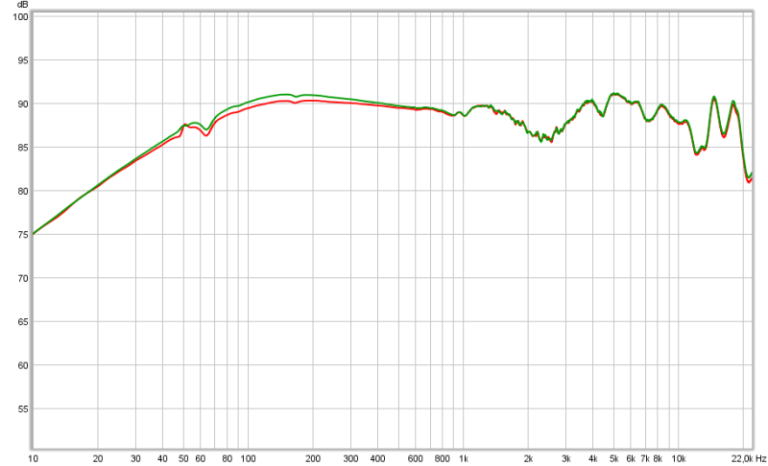
Some receivers and integrated amps have much higher output impedance than the shown 120ohm.
In that case the HD600 will 'warm up' in sound a bit more.
1dB in a wide bandwidth is an audible difference so with certain above mentioned devices one may even get a bit more warmth which some might prefer.
Just don't believe the many reports of 'better bass extension, smoother highs, more analog sound, tube 'warmth' being the reason for the warmth.
A similar effect can be made by simply adding some resistance in series with the headphone cable which is a lot cheaper solution.
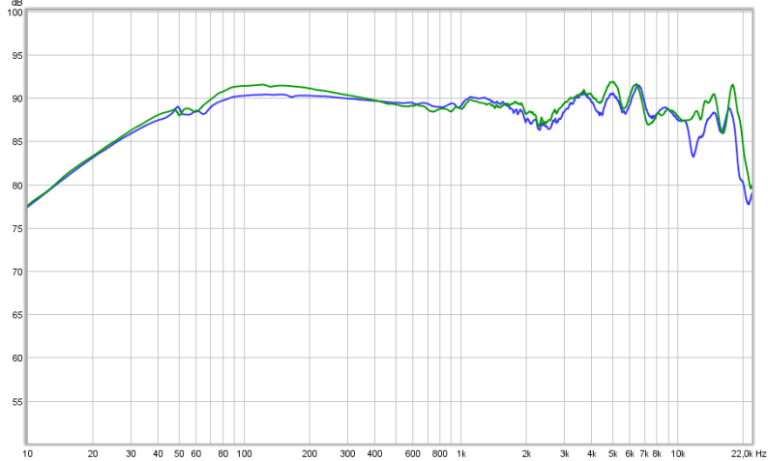
 
hd600-vs-hd650-new-pads1.png


HD650 vs HD600 (above)

HD600 (120ohm) vs HD600 (0.2ohm) below
hd600-120-ohm.png


To make a HD600 sound like a HD650 you will need an output R of around 300ohm. This also means sensitivity will effectively drop to 98dB/V in such a case.
 
I have much more expensive headphones in my collection, but the HD600 is still my favorite, not much has happened since they were released for sure, they are still the best overall and which I highly recommend.
 
Ditto. Other headphones may have some characteristics that are better (e.g., low-end extension) but at the end of the day the HD600 has this incredible midrange nuance and depth and is the least fatiguing over-ear I’ve tried. In fact I’d say it’s the least fatiguing of any type of headphone I’ve tried.
 
Ditto. Other headphones may have some characteristics that are better (e.g., low-end extension) but at the end of the day the HD600 has this incredible midrange nuance and depth and is the least fatiguing over-ear I’ve tried. In fact I’d say it’s the least fatiguing of any type of headphone I’ve tried.
AMEN !
 
I couldn't wait for something better so I made one.

IMG_0304.jpg


Here's an OG HD600

OG HD600.jpeg


Here's my mod

RenCC600.jpeg


Measurments are not mine, but from a "friend" on a different forum. Full instructions on that forum also. 3D print it for free yourself.
 
I couldn't wait for something better so I made one.

View attachment 369711

Here's an OG HD600

View attachment 369712

Here's my mod

View attachment 369714

Measurments are not mine, but from a "friend" on a different forum. Full instructions on that forum also. 3D print it for free yourself.
Cool mod!

Here's what it does to the response, according to those graphs:
RenEH HD600 Mod.png

Harman-compensated:
RenEH HD600 Mod Harman Compensated.png

and 5128 DFHRT-compensated:
graph (51).png

If anyone wants to "demo" the mod as PEQ preset, I've attached it below.
RenEH Mod Effect as PEQ.png
 

Attachments

I’m assuming the 3k is due to concha gain, but this differs person to person no?
There's already a small peak at 3kHz on the stock HD600, I'm not sure why people would want to make it bigger. Strange mod in my eyes.
Still working on it. I’m open to suggestions on how to reduce it.
 
I’m assuming the 3k is due to concha gain, but this differs person to person no?

Still working on it. I’m open to suggestions on how to reduce it.
What's the mod for? I thought the mods purpose was related to change the sound, or are you changing the comfort / fit / ergonomics of the headphone?
 
As you can see it evens out the 4k-5k hump which is rather problematic hump to many myself included. It also adds bass you can feel on the ear.
 
It also adds bass you can feel on the ear.
How and why ? There is no evidence of that other than anecdotal (the mass loading theory but that is supposed to 'tighten' bass rather than increase it).

On what principle would this mod work (increased bass which is not shown in measurements) ?
Jupiter mod was made of dense foam rubber this mode seems to be plastic 3D printed with some velcro on it.
Why copy this mod but make it of different material ?

The Jupiter mod (with removal of the foamy) did increase mid-bass of course (Kiss mod with the foam thingy).

You can reduce the 3kHz by using HD620S(2) drivers :)
I saw a very small reduction in 3kHz by damping the baffle 'acoustic resistors' a bit more.
You can also use a passive filter (when you don't want to resort to EQ).

Below the effect of such a (passive) filter on the HD580 Precision
hd580r-filter.png

Of course such a filter can be tuned lower, higher, deeper, narrower or wider.
The downside of physical mods is that one never changes only that what one wants to address but always changes something else as well in the process.
 
Last edited:
How and why ? There is no evidence of that other than anecdotal (the mass loading theory).

On what principle would this mod work ?
Jupiter mod was made of dense foam rubber this mode seems to be plastic 3D printed with some velcro on it.
Why copy this mod but make it of different material ?

The Jupiter mod (with removal of the foamy) did increase mid-bass of course (Kiss mod with the foam thingy).

You can reduce the 3kHz by using HD620S(2) drivers :)
I saw a very small reduction in 3kHz by damping the baffle 'acoustic resistors' a bit more.
You can also use a passive filter (when you don't want to resort to EQ).

Below the effect of such a (passive) filter on the HD580 Precision
hd580r-filter.png

Of course such a filter can be tuned lower, higher, deeper, narrower or wider.
The downside of physical mods is that one never changes only that what one wants to address but always changes something else as well in the process.
I can’t comment as to why there is suddenly sub bass feeling only the ear only that there is. One theory for the jar model is increased distortion in the bass, but that isn’t my theory so I can’t comment on it.

Print it yourself if you’d like, but note you still need the custom cans metal ring for mass loading. It is not all pla. It could also be printed in nylon to match the density of the Nitsch model jar.

Can you please elaborate on damping the baffles acoustic resistor?
 
Add acoustic damping to the front or rear side of the baffle material (the silk stuff).
It will also affect lower frequencies though. The downside of any mod is that one changes more than 1 thing and rarely only that what one wants to address.
That affects the 3kHz range the most. However the effect is very small. It determines the amount of sound from the rear that reacts with the sound from the front (phase related) that is (mostly) coming through the magnet hole.

The filter is much more effective and targeted.

I see no benefits of the JAR mod, not from a technical p.o.v. nor from a logical acoustical p.o.v. and not from measurements around.
I don't understand the workings of it either, other than suspecting it changes the mindset of the one that does the mods (something must have changed and must be for the better).
Damping of the mass-loading metal ring is not going to contribute anything.

I have mass loaded drivers a while back and did not notice/measure any change. What one basically does is elongate the vent-hole in the magnet assembly, flare it a bit and thus change the tuning of that. Most likely the hump at 3kHz that is measured is changed a bit and shifted in frequency because of the elongation.

The CSD plots made by Marv show differences in the order of -50dB but one has to realize that there isn't a single bass instrument on this planet that has a decay as fast as a driver can do. Natural decay of instruments is much much slower than that of any driver.

If it were that easy to change the HD6*0 in 'performance' for the better than Sennheiser would have simply elongated that magnet hole years ago already instead of designing a new chassis and faff around with driver membrane materials, shapes etc.

If it were simply a question of 'reducing' vibration from chassis or the magnet than all manufacturers would have been bracing drivers from the rear by now or use damping materials on the drivers (like sorbothane)

Pad condition, production tolerances are orders bigger than the effects shown on measurements.

But that is just my opinion though.
 
Last edited:
As you can see it evens out the 4k-5k hump which is rather problematic hump to many myself included. It also adds bass you can feel on the ear.
Except there's not a peak between 4-5kHz, it's a dip:
HD600 Oratory.jpg

But your mod does get rid of the dip there between 4-5kHz.

Re "adds bass that you can feel on the ear" that you mention, the measurements are the same in the bass as solderdude mentioned, so it's not a measurable effect. Maybe you just feel the vibrations of the bass more on your skin of your outer ear where the 3d printed part is touching your ear, maybe it literally increases the tactile nature of the bass - that's just conjecture though, I don't know enough about your mod to make that decision and it would have to be something that would be experienced.
 
Except there's not a peak between 4-5kHz, it's a dip:
View attachment 369881
But your mod does get rid of the dip there between 4-5kHz.

Re "adds bass that you can feel on the ear" that you mention, the measurements are the same in the bass as solderdude mentioned, so it's not a measurable effect. Maybe you just feel the vibrations of the bass more on your skin of your outer ear where the 3d printed part is touching your ear, maybe it literally increases the tactile nature of the bass - that's just conjecture though, I don't know enough about your mod to make that decision and it would have to be something that would be experienced.
As the 3d printed part is on the exterior and not in the ear cup, that would be impossible.
 
As the 3d printed part is on the exterior and not in the ear cup, that would be impossible.
Ha, ok, I thought that was the inside of the earcup you were showing in following pic, but instead you're showing the outside of the earcup (and you removed the wire mesh grill that used to there).
index.php


Well, in that case, I would expect the measured frequency response to be the measured frequency response, you're not gonna get better bass with your mod as it shows it measures identically in the bass - not unless distortion of that bass is less than at stock.
 
I wonder if by removing the foam filters from the back of the HD600 and HD650 it turns out to be the exact same headphone?
 
Back to the earpad discussion, I've owned my HD580s for 25 years (?!) so they are the originals that were the "same" as the HD600. I just replaced the pads again for the Nth time and just wow, every time it surprises me what a big difference it makes. Brace for treble!
 
Back
Top Bottom