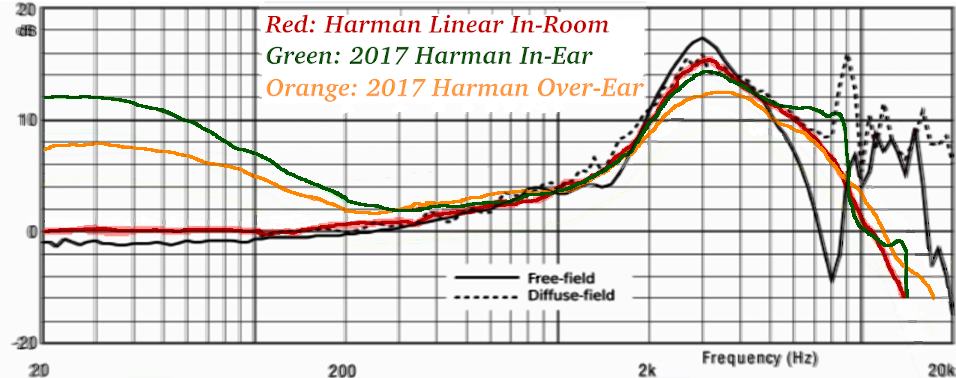
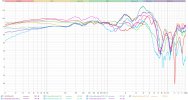
If you noticed, I did not mention harman full bass. I do not agree with harman bass either and Sean Olive also noted that some people prefer less bass.I would say that not everyone likes full Harman bass, or it can greatly depend on the recording, and I can say that my in-ear quasi-anechoic and near-field measurements exhibit flat bass sans room tilt.
Anyways, my focus was on my having not seen many Susvara frequency response curves that overshoot the ear gain target like in the measurement that you focus on.
In regard to ear gain levels, compare my HE1000se and Sennheiser HE-1 measurements to my outdoor 30-degree neutral Genelec 8341A measurement:
View attachment 341535
Figure 1: Sennheiser HE-1 in-ear measurement. Invalid phase response measurement.
View attachment 341536
Figure 2: HE1000se in-ear measurement.
View attachment 341537
Figure 3: 30-degree HRTF from calibrated Genelec 8341A after subtracting the measurement of the lone in-ear mic. The phase respond measurements through the Genelecs are invalid. Note the differing locations of the treble nulls; the headphone ones are consistent with my 90-degree speaker HRTF measurements.
View attachment 341538
Figure 4: Indoor in-ear response for both 30-degree channels playing in phase.
View attachment 341539
Figure 5: Not far from my centered speaker HRTF (after subtracting the lone mic response).
tl;dr: Neutral speakers are brighter than many "bright" headphones. Strings in live concerts can also be surprisingly bright compared to Harman playback.
my point is basically, with any true neutral target curve Susvara bass will appear recessed and mids/ear gain boosted. That's how they sound too. I owned Susvara for couple of days.
Also, outdoor measurements are pretty much useless.(ground plane outdoor measurements can be viable to give an idea about anechoic bass response of speakers) What makes monopole speakers bass boosted is the reflections. Outdoor = no reflections. Music is not produced with speakers on outdoors, speaker outdoor targets are not suitable to form an idea on how headphones should sound.