• Welcome to ASR. There are many reviews of audio hardware and expert members to help answer your questions. Click here to have your audio equipment measured for free!

Elekit TU-8200R amplifier - anybody built or heard one?

Your thoughts about building an Elekit TU-8200R tube amplifier kit:

  • Sad, very sad. I guess we won't see you on this forum for much longer...

    Votes: 0 0.0%
  • There are better choices if it absolutely has to be a tube amp (please comment)

    Votes: 0 0.0%
  • I built one, and it blew up after a week

    Votes: 0 0.0%
  • Get a Texas Instruments TPA3255EVM evaluation kit and a good power supply instead

    Votes: 0 0.0%

  • Total voters
    22
PSA: When using the headphone output of the TU-8200R for test signal output, it's important to keep track of the power dumped into the 3.3 Ohm 1/2 W resistors that make up the headphone shunt. The amp can produce more than the 2 W per channel (into 13.2 Ohm) that these resistors can take.
 
First attempt to measure signals from the TU-8200R with my Analog Discovery 2 USB scope and waveform generator.
1 kHz 100 mV amplitude in, 4 V amplitude out at speaker terminal (amp set to ultralinear mode, output switch to low impedance, terminated into 8 Ohm 50 W resistor). This is with the 8200R volume turned all the way up. So the maximum gain is 32 dB. Output power is 1 W [(4/sqrt2)^2/8= 8/8 = 1 ].

From earlier measurements with the Focusrite Scarlett Solo I know we should see several percent of harmonics, with the third dominating.
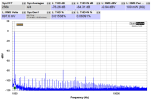
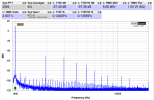
FFT of the right channel speaker output and 6L6GC tube grid shows this:
image.jpg

The output looks as expected, but the 2nd dominates at the grid.
Apparently either the 6L6GC or the output transformer makes some of the second harmonic disappear, and adds just a little bit of third.
 
Last edited:
Remember, when assembling this kit always wear pants when soldering.
 
I own two of the TU-8200 dx. The first one I upgraded several capacitors, but couldn't tell any difference. The second I got has Lundhahl transformers. I love them both and use them for my Recording studio to drive small studio monitors and my mastering headphones. I love these amps. To be honest I really can't tell a difference between the stock output transformers and the Lundahl. I also have upgraded the tubes in one to vintage RCA 6L6 and clear top RCA 12au7. Again, I can't tell the difference between those and the stock EH tubes.

I have multiple vintage tube amps...several upgraded Dynaco ST-70, and several Heathkits (W5M, AA10, and UA-2), all with upgraded capacitors. Again, the TU-8200 beats them all for ease of use, and sound. Plus, it operates at multiple input voltages (you have to re-solder). Love these!
 
Thanks, Knave, very interesting about the inaudible differences! I got the Lundahls, but I have no idea what the standard transformers sound or measure like. Apparently I can hear sub-percent addition of harmonics in a single sine wave, but with music I seem to need more before it becomes really noticeable, at least according to the PKharmonics audio plugin.
One of these days I will start measuring again, the scope hookup loops are still soldered to my TU-8200R...
 
Interesting Gruesome. It is possible they’re different sounding. But not enough for me to worry about. 35 years ago I started collecting tubes and have tons to choose from. I’ve never found a difference enough to make me think that I need to pay a 300 for an an old 12ax7. I use the telefunken and amperex in my top amps, just to use them before it’s time for me to say adios.

Another problem with old amps is the modern wall voltage is too much for them. Such that I have them all running on bucking transformers. None is more sensitive to voltage than the W5M. Wall voltage is way too much for that amp and the voltages exceed my EL cap ratings.

If I were to say which amp is a close second to the tu-8200. I’d say the HealthKit UA-2. But the headphone Jack on the 8200 is why I need it. I do most mixing and setup via headphone prior to final mix. My headphones are stellar.:..beyerdynamic DT 1990 pro open back mastering phones. These truly show the wonder of the 8200 amp
 
The only tube I owned before buying this kit was an old photomultiplier tube.
I agree regarding the usefulness and implementation neatness of the headphone output with the four 1/2 Watt 3.3 Ohm resistors hanging from the main output. If there is a special 'sound'/coloration/distortion deficiency to the TU-8200R, be it from the main tubes or the output transformer, or the interaction of the two, the headphone output should preserve it.
I upgraded mine to 1 Watt resistors, after crisping up the 1/2 Watt ones while measuring distortion at higher power levels.

Another general question about the 8200(R): has anybody created a Spice simulation model for this amplifier?
 
I bought a used (pre-built) 8500 preamp as a front end for my Buckeye amp and am thinking of getting the 8200. Elekit states that the frequency response is 12Hz - 50kHz (-3dB). Ken Rockwell measured frequency response as half a db down at 16 Hz and at 20 kHz. Those are pretty good numbers and show it is well designed.
 
Last edited:
I upgraded mine to 1 Watt resistors, after crisping up the 1/2 Watt ones while measuring distortion at higher power levels.
Better that those resistors should burn, rather than the voice coils of your headphones! This might be a good application for carbon-film resistors.
 
How do I connect this to a preamp? Do I just put the volume to max and connect a preamp to the RCAs?
 
How do I connect this to a preamp? Do I just put the volume to max and connect a preamp to the RCAs?

Yes, the preamp output can go to the power amp input. (Although this isn't strictly a power amp. I believe it's sold as an integrated amp which inclues a preamp & power amp.)

"Gain staging" says to keep the strongest signal you can get (without distortion) and attenuate at the last opportunity. That gives you the best signal-to-noise ratio. That would mean turning-up the preamp and using the volume control on the power amp.

But there can be practical considerations of convenience and you don't want a signal so hot that you can only use 10% of the volume control, etc.

And typically, power amps don't have a volume control or if they have one it's used as a "gain control" rather than an everyday volume control. A preamp is normally the "control center".
 
Of all my tube amps this would be the last one I'd get rid of. Why? Well, it's light and easy to move in and out of my system. It has never had an issue (knock on wood) and it sounds very good.
 
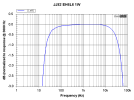
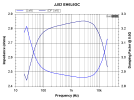
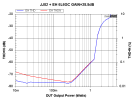
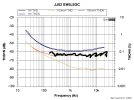
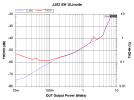
I have a Tu8200r with the llundahl transformers. After a period of alternating between triode and ultra linear, I eventually left it in triode as it always sounded better ie clearer and more transparent despite having less power headroom. Measurements I did recently supported my listening preferences and confirmed that the best tubes for this amplifier is the EH brand 6L6GC and the JJ ecc82s. All other brands ie tungsol, JJ 6L6GC and even NOS rca 6L6GCs have much higher distortion than stock EH tubes. As for the driver tubes JJ ecc82 gave the lowest distortion compared to nos rca and GE 12au7s.
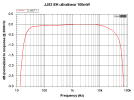
Here are some of the measurements made recently:
Triode mode, 8 ohm load on 8ohm tap
 

Attachments

  • IMG_2941.png
    IMG_2941.png
    22 KB · Views: 25
  • IMG_2942.png
    IMG_2942.png
    26.2 KB · Views: 29
  • IMG_2945.png
    IMG_2945.png
    23.5 KB · Views: 24
  • IMG_2946.jpeg
    IMG_2946.jpeg
    112.2 KB · Views: 21
  • IMG_2943.png
    IMG_2943.png
    206.3 KB · Views: 25
  • IMG_2944.png
    IMG_2944.png
    208.1 KB · Views: 33
And UL mode
Bandwidth is a bit higher with -3dB at ~70khz
 

Attachments

  • IMG_2951.png
    IMG_2951.png
    22.2 KB · Views: 18
  • IMG_2950.png
    IMG_2950.png
    23.5 KB · Views: 19
I have a Tu8200r with the llundahl transformers. After a period of alternating between triode and ultra linear, I eventually left it in triode as it always sounded better ie clearer and more transparent despite having less power headroom. Measurements I did recently supported my listening preferences and confirmed that the best tubes for this amplifier is the EH brand 6L6GC and the JJ ecc82s. All other brands ie tungsol, JJ 6L6GC and even NOS rca 6L6GCs have much higher distortion than stock EH tubes. As for the driver tubes JJ ecc82 gave the lowest distortion compared to nos rca and GE 12au7s.
Here are some of the measurements made recently:
Triode mode, 8 ohm load on 8ohm tap
Interesting
 
Interesting Gruesome. It is possible they’re different sounding. But not enough for me to worry about. 35 years ago I started collecting tubes and have tons to choose from. I’ve never found a difference enough to make me think that I need to pay a 300 for an an old 12ax7. I use the telefunken and amperex in my top amps, just to use them before it’s time for me to say adios.

Another problem with old amps is the modern wall voltage is too much for them. Such that I have them all running on bucking transformers. None is more sensitive to voltage than the W5M. Wall voltage is way too much for that amp and the voltages exceed my EL cap ratings.

If I were to say which amp is a close second to the tu-8200. I’d say the HealthKit UA-2. But the headphone Jack on the 8200 is why I need it. I do most mixing and setup via headphone prior to final mix. My headphones are stellar.:..beyerdynamic DT 1990 pro open back mastering phones. These truly show the wonder of the 8200 amp
I've seen many failures of old Tube amps when they are "upgraded" to silicon rectifiers. When you turn them on, the tubes are not heated up and conducting for a few seconds. During that time, the unloaded power supply can spike in voltage to much more than the caps and other components are rated at. The original 5ar4 etc tube rectifier doesn't do that because it also turns on slowly. It also has a larger voltage drop than the silicon rectifiers. Unfortunately it's not as simple as just keeping the tube, when you are interesting in the best performance because the higher output impedance of the power supply reduces the performance overall. The best solution is a new, slightly lower voltage transformer and a slow turn on relay since it's impractical to build a full voltage regulator at 400+ volts and a high current. I don't know if high voltage SMPS are available but that could be an option.
 
Back
Top Bottom