In many online debates, position taken by some that when amplifiers are used that have flat frequency response and low distortion that no double blind tests have shown them to sound different.
Well, I managed to dig up a 32 year old test that says otherwise. What is fascinating is that one of the authors/testers was no other than [the late] Arny Krueger, who was one of the earliest advocates of ABX type testing.
The article is actually quite short. What I am about to show you is about half of it and contains all pertinent portions. I am happy to field and answer questions that may be in the rest of the article.
So let's start at the top. Here is the title of the 2-page article:

What a headline, no? It says they have "proven" that amplifiers sound different! You almost don't need to read any more but for completeness let's go into it.
Here are the amplifiers in question:

So these are very powerful amplifiers. We are not talking a tube SET amplifier or some other amp that runs out of juice at 20 watts. We have very powerful amplifiers clocking at over 200 watts at 4 ohms.
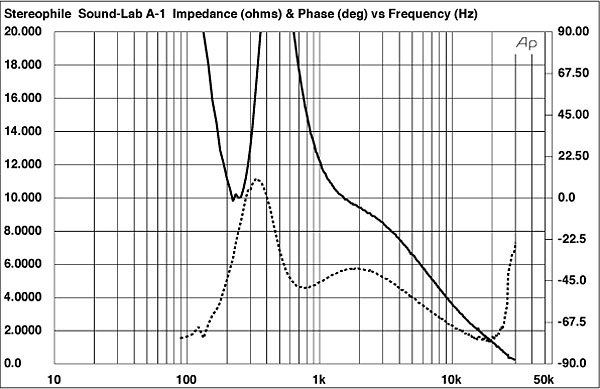
This being the pre-CD era, a turntable was used. Here are the details of that and the speakers used:

So how did they do? Here are the votes for the three tracks tested:


We see why they say "prove" as the two tracks show statistically that the results are not due to chance.
So the conclusion is as expected:

So what caused the difference? It might be this:

No data is presented on what would happen if the volume was turned down. Or how the above was determined.
So there you have it. "Proof" that amplifiers do sound different in double blind tests .
.
EDIT: updated the article with local version of the text as the shared links had disappeared. Also cleaned up the language a bit.
Well, I managed to dig up a 32 year old test that says otherwise. What is fascinating is that one of the authors/testers was no other than [the late] Arny Krueger, who was one of the earliest advocates of ABX type testing.
The article is actually quite short. What I am about to show you is about half of it and contains all pertinent portions. I am happy to field and answer questions that may be in the rest of the article.
So let's start at the top. Here is the title of the 2-page article:
What a headline, no? It says they have "proven" that amplifiers sound different! You almost don't need to read any more but for completeness let's go into it.
Here are the amplifiers in question:
So these are very powerful amplifiers. We are not talking a tube SET amplifier or some other amp that runs out of juice at 20 watts. We have very powerful amplifiers clocking at over 200 watts at 4 ohms.
This being the pre-CD era, a turntable was used. Here are the details of that and the speakers used:
So how did they do? Here are the votes for the three tracks tested:
We see why they say "prove" as the two tracks show statistically that the results are not due to chance.
So the conclusion is as expected:
So what caused the difference? It might be this:
No data is presented on what would happen if the volume was turned down. Or how the above was determined.
So there you have it. "Proof" that amplifiers do sound different in double blind tests
.EDIT: updated the article with local version of the text as the shared links had disappeared. Also cleaned up the language a bit.