• Welcome to ASR. There are many reviews of audio hardware and expert members to help answer your questions. Click here to have your audio equipment measured for free!

RSL Outsider II Outdoor Speaker Review

This is an interesting observation, but the peaking doesn't quite line up with the transfer function used for upfiring Atmos:

View attachment 87398

Though I don't know how much this applies. This is applied to upfiring drivers, which, I would guess, assumes there is absorption of some frequencies from the ceiling material. I don't think a HRTF is applied to on-ceiling speaker channels, but I'm not sure. Maybe there should be...would need further research.
There shouldn’t be any special EQ or transfer function for physical ceiling speakers. The sound is meant to come from above you, and that’s where it is coming from.

It would be interesting to see the Polk OWM3 measured, as that’s the most popular cheap choice for physical mounted speakers for Atmos (the larger OWM5 is also popular and is an MTM).

I wonder how these are going to be implemented; for anything other that TML & TMR, I could see these type of speakers working if you have them hanging down but upright; if you have them parallel to the ceiling and/or on TML & TMR, then that is where a coaxial speaker (cheap would be the Micca COVO-S, no native mounting holes though, or the now discontinued Kanto Ben) would be a better option, or else you are dealing with the large suckouts in the crossover region.
 
Last edited:
What does irk me a bit is when the panther that represents an overall score is based on personal preference rather than the objective data.

The panthers are just a bit of fun. It humanizes the entire process. No, they are not NIST certified, calibrated panthers and @amirm doesn't have a full set in any case, so the step values are a bit coarse (granular). Allow for +/- 1.5 panthers in the accuracy scale and you should be right.

:)
 
wow amir is tearing through these reviews!
 
This is an interesting observation, but the peaking doesn't quite line up with the transfer function used for upfiring Atmos:

View attachment 87398

Though I don't know how much this applies. This is applied to upfiring drivers, which, I would guess, assumes there is absorption of some frequencies from the ceiling material. I don't think a HRTF is applied to on-ceiling speaker channels, but I'm not sure. Maybe there should be...would need further research.

I'm not sure how they are using the response in the graph for upfiring speakers. You sense height based upon comb filtering off your outer ear. The exact location of the dip in the filtering varying with height vs frequency. It is only effective between about 6 khz and 11 khz. So they may use that peak and dip to create a sound from "on high" and modulate the signal sent to the speaker to move it around based upon the desired height effect.
 
Hi,

Here is the EQ based on using these speakers in a regular, stereo pair.
Score No EQ: 2.10
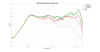
RSL Outsider II no EQ Spinorama.png


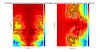
Directivity no great in particular in the vertical plan but the axis is tilted (the tweeter is off-set on one side):
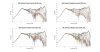
RSL Outsider II 2D surface Directivity Contour Only Data.png


EQ design, quite a bit of deviation from the flat seed
Score with EQ: 4.71 mediocre but more in line a regular speakers in terms on ON and LW response i.e. some type of dip on the ON centered around 4k to compensate for the lack of directivity control/matching of the tweeter.

Code:
Type    Freq       Gain     Q
PEQ     320.0,     1.30,   1.00,...
PEQ     793.7,    -1.47,   1.35,...
PEQ    1244.0,     3.08,   1.42,...
PEQ    2717.0,     2.30,   4.11,...
PEQ    4002.0,    -2.00,   1.06,...
PEQ    6787.0,    -2.82,   1.83,...
PEQ   12906.0,    -6.61,   3.50,...

RSL Outsider II EQ Design.png

EQed spinorama:
RSL Outsider II EQed Spinorama.png

Zoom PIR-LW-ON
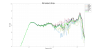
RSL Outsider II Zoom PIR-LW-ON.png

Regression - tonal complete change
RSL Outsider II Regression-Tonal.png


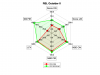
Radar plot: big improvements
RSL Outsider II No EQ vs EQed Radar.png

Edit: I have worked on the LF
New Score: 5.2
RSL Outsider II EQ Design+.png

Additional EQ:
Code:
Type       Freq      Gain     Q
High-Pass  57.5,    -0.00,   1.21,...
PEQ       137.0,    -1.93,   1.86,...

New Spinorama:
RSL Outsider II Spinorama+.png


The rest of the data is attached.
 

Attachments

  • RSL Outsider II 2D surface Directivity Contour Data.png
    RSL Outsider II 2D surface Directivity Contour Data.png
    548.5 KB · Views: 163
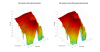
  • RSL Outsider II 3D surface Vertical Directivity Data.png
    RSL Outsider II 3D surface Vertical Directivity Data.png
    946.1 KB · Views: 163
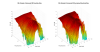
  • RSL Outsider II 3D surface Horizontal Directivity Data.png
    RSL Outsider II 3D surface Horizontal Directivity Data.png
    1,005 KB · Views: 166
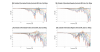
  • RSL Outsider II Normalized Directivity data.png
    RSL Outsider II Normalized Directivity data.png
    511.8 KB · Views: 168
  • RSL Outsider II Reflexion data.png
    RSL Outsider II Reflexion data.png
    264.3 KB · Views: 163
  • RSL Outsider II LW data.png
    RSL Outsider II LW data.png
    310 KB · Views: 179
  • RSL Outsider II Raw Directivity data.png
    RSL Outsider II Raw Directivity data.png
    846.3 KB · Views: 190
  • RSL Outsider II Radar+.png
    RSL Outsider II Radar+.png
    77 KB · Views: 160
Last edited:
Yes, not a bad speaker, as easily EQ'able by the looks of the frequency response, except for the directivity error at crossover. Not bad really, and perhaps the best outdoor speaker so far reviewed?
 
So here's another example of poor FR and directivity, plus really insipid measured bass (-6 dB at 55-60) yet, subjectively, it makes good noise. What can we learn from this?
My non-audio-engineer, hobbyist, uneducated takeaway is that it looks pretty nice from 200hz-1000hz and that where it really counts when it comes to enjoyment. The fundamental frequencies of most music happens between those frequencies.
 
We are talking about outdoor 2-way priced 200$ for pair in retail. It means sealed box, easiest crossover with cheapest components, cheap moisture resistant drivers (i.e. stamped plastic without good motor) and most probably no case damping.
If designer managed somehow to get flat midrange, the mission is already accomplished. Tweeter rise is kind of EQ for significantly off-axis LP.
If someone want something better, these speakers require some crossover redesign and proper damping. I thought about this once - it would not be cheap and most probably will require retail x2 or x3. And anyway after that we are stuck with cheap drivers with unknown QC.
 
So here's another example of poor FR and directivity, plus really insipid measured bass (-6 dB at 55-60) yet, subjectively, it makes good noise. What can we learn from this?
That we can predict loudspeaker performance but not listener's preferences. Also, because of that, that we cannot trust anyone's listening review.
 
I agree that there's sometimes differences between the Olive score and Amir's impression. I don't really see a problem with that, though, and I'd be more surprised - and skeptical - if it didn't occasionally differ. I've actually come to appreciate the recommendation being based more on the subjective part. I feel like I get attacked whenever I link this site's reviews on other forums. By far the most common attack goes something like "That guy doesn't even listen to the speakers. He just measures them and makes a recommendation based on that. How can you recommend a speaker that you've never heard? Measurements?!? *rolls eyes*". I love being able to respond with "Actually he listens to every speaker, and he doesn't recommend speakers for which he didn't like the sound", as it kills that most common criticism. It legitimizes these reviews in the eyes of MANY non ASR members and thus makes them far less likely to gang bang any link to it. It's very tough to convince newbies on other sites that these reviews are the best out there when you have 6 different people chime in after your post to say ASR is garbage and never trust any reviews from that site. Unless they really seek out the knowledge themselves, then they're far more likely to trust the 6 people telling them that my link is garbage than they are to trust me.

Amir's subjective impressions combined with objective measurements bring more newbies into the audio science world than measurement's alone would.

In some ways, I'd say the measurements are more for the members here, and the subjective impressions are for the non-members that are just reading the reviews.
I think the main problem is that the pink panther is a visual representation of the review. A lot of people who visit here won‘t read. The panther is visually linked to the product - often in direct touch with the DUT.
The unintended result is some sort of „emotional manipulation” of the reader. To make it clear: I do not say that Amir is intentionally manipulating!

A headless panther is most likely a business killer. Looking at the impact it can have it should be wisely used. With great power comes...
Therefore, I fully understand if someone is concerned when subjective impression „wins“ over objective measurements.
 
Does someone know what tweeter this is? It looks strange for a silk dome.
 
Shouldn't outside speakers not be judged on different parameters? Because reflections will be rarer outside? The estimated in-room response doesn't say anything about the performance of these speakers.
 
Shouldn't outside speakers not be judged on different parameters? Because reflections will be rarer outside? The estimated in-room response doesn't say anything about the performance of these speakers.
As I noted in the intro this owner and others plan to use these as indoor Dolby atmos speakers.
 
As I noted in the intro this owner and others plan to use these as indoor Dolby atmos speakers.
It was a just a general comment on all the outdoor speakers being reviewed, not this specific case.
 
It was a just a general comment on all the outdoor speakers being reviewed, not this specific case.
All the ones I have tested are being considered for indoor use.
 
I wonder how these are going to be implemented; for anything other that TML & TMR, I could see these type of speakers working if you have them hanging down but upright; if you have them parallel to the ceiling and/or on TML & TMR, then that is where a coaxial speaker (cheap would be the Micca COVO-S, no native mounting holes though, or the now discontinued Kanto Ben) would be a better option, or else you are dealing with the large suckouts in the crossover region.
I agree coaxial would be the best, but we just don't have many options there.

The ceiling option with these would work fine for a small one or two person theater. It wouldn't work as well for a larger room with seats at different angles for the reasons you state. In that case, you could wall mount them as high as you can and angle them appropriately. It would be a wider Atmos configuration which doesn't seem ideal but many people do it.
 
Stupid question: actually what makes it an outdoor speaker vs indoor? shouldn't all speakers targeted at a flat on axis frequency response?
 
Back
Top Bottom