• Welcome to ASR. There are many reviews of audio hardware and expert members to help answer your questions. Click here to have your audio equipment measured for free!

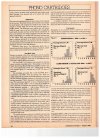
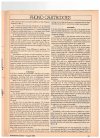
Toole Blind Cartridge Comparison

Elkerton

Active Member
Joined
Feb 15, 2022
Messages
251
Likes
299
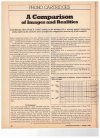
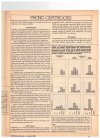
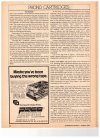
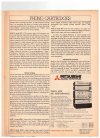
From Audio Scene Canada August 1980, a blind screen comparison by Floyd Toole of 2 MCs and a MM which I decided to add under its own thread rather than at least 2 others to which I might have added it.
 

Attachments

  • Toole Blind Cartridge Comparison 1 001.jpg
    Toole Blind Cartridge Comparison 1 001.jpg
    433.7 KB · Views: 1,918
  • Toole Blind Cartridge Comparison 2 001.jpg
    Toole Blind Cartridge Comparison 2 001.jpg
    446.5 KB · Views: 1,655
  • Toole Blind Cartridge Comparison 3 001.jpg
    Toole Blind Cartridge Comparison 3 001.jpg
    479.5 KB · Views: 1,478
  • Toole Blind Cartridge Comparison 4 001.jpg
    Toole Blind Cartridge Comparison 4 001.jpg
    450 KB · Views: 1,551
  • Toole Blind Cartridge Comparison 5 001.jpg
    Toole Blind Cartridge Comparison 5 001.jpg
    460.5 KB · Views: 1,679
  • Toole Blind Cartridge Comparison 6 001.jpg
    Toole Blind Cartridge Comparison 6 001.jpg
    495.7 KB · Views: 1,893
Has the same fault all these blind comparison tests have. How are the listeners supposed to know which cartridge is more prestigious and expensive?

/;)
 
I own an MC30 Super with excellent unworn diamond, A mid-life V15 IV (HE) and used to own a DL103D (in original Mission 774 arm). The V15 IV is an interesting one, with an initially bland kind of sound subjectively, but the longer one listens, the deeper one hears into the music played, it's just that the sound doesn't leap out at you as it can with other pickups. As vinyl tends to underplay the 'sound' of the master used, I don't mind a bit of 'sparkle' if it's clean.
 
Fascinating stuff, and despite cautions against making such generalizations, very tempting to consider just adding parametric eq to a properly-tracking cartridge and calling it good!

The things to look for in getting good basics, is not so much the frequency response, but the low effective mass, which results in improved tracking, reduced THD, and moving cantilever resonance up beyond the audible range...

So you need to aim for something with a cantilever resonance above 20kHz (and preferably above 30kHz)

Cantilever resonance can best be "read" by calculating the raw frequency response (you need to mathematically cancel out the influence of LCR in the circuit) - so you can spot that distinctive harmonic bell curve - without any interfering circuit influence.

There are very few contenders in todays market that can achieve this.... many TOTL contenders from the 1980's did achieve it.

Of course the needle should be a line contact - the patch need not be overly narrow - but it needs to be as long as possible.

The Dynavector Karat is the only currently made cartridge / needle that I am aware of that definitely meets the criteria.

Even exotic material cantilevers (ruby/saphire/boron) need to be in hollow tube formats to lower their mass - and no one is making hollow tube cantilevers - the Karat achieves it by having an ultra short cantilever - around 1/4 the length of the norm.
(London Decca may also meet the criteria, for similar reasons)

Anyone know of other contenders out there for very low effective tip mass?
 
The things to look for in getting good basics, is not so much the frequency response, but the low effective mass, which results in improved tracking, reduced THD, and moving cantilever resonance up beyond the audible range...
Although the study did not directly address such matters, the Denon DL103D had an elliptical stylus and aluminum cantilever, yet it fared marginally better than the Ortofon MC30, which has a line contact stylus.
 
  • Like
Reactions: Pio
Interesting Toole switched the speakers in the middle of the test. The KEF and Yamaha are very different beasts. I always found the latter a bit on the bright side - there you go.
 
Interesting Toole switched the speakers in the middle of the test. The KEF and Yamaha are very different beasts. I always found the latter a bit on the bright side - there you go.
Yes it is interesting. He didn't actually switch speakers in the middle of the test. Seems it was a different test. The results were recorded and statistically analyzed separately.

It's difficult to know what he ACTUALLY testing in the second test, as he changed too many variables for to honor the fundamental scientific principle of 'all other factors being equal'. He changed the speakers, added the eq, and changed the listeners. He really should have kept the rest of the test the same, only adding the equalizer for a hope of the results being extendable.
 
From Audio Scene Canada August 1980, a blind screen comparison by Floyd Toole of 2 MCs and a MM which I decided to add under its own thread rather than at least 2 others to which I might have added it.
It is a comparison between massmarket consumer products, not science, but reasonable. It fairs quite well in showing that MC is not superior to MM per se.

All three contenders are from the upper shelf to begin with. The hypothesis that MC is better is falsified, if you will, by addressing the MM's critical part, the frequency response variations due to load cpacitance (and resistance). The latter is done independently of the system under test using an equalizer. What else could one ask for? Sure, the statistics is bothersome as always, but the problems are basically well understood. See for reference screenings in medicine / pharma.

One has to consider the background also. MC are not only expensive, the needle cannot be replaced, the tiny output needs costly additions to the playback chain, not the least, it remains quite finicky with noise and hum. Still, MC are legend, or at least they were back then. For some bad reason the higher cost, partly tremendous to simply idiotic, appealed to the audience. Only MC gave the industry--the advertizing industry, enough mysteries to work with. The empty spaces in peoples' mind as the wiggle room. Boron cantilevers, LOL
 
...
The Dynavector Karat is ...
I still remember when it came out in its first incarnation. It was really something, the Shure V15 killer. While the latter just worked allright, with really nothing left to be desired, the former sparkled with esoterics--and unsolvable practical problems, and an eyewatering price tag. No more boring perfection, but an arousing invitation to a vivid (audio) life. It put the scene to profitable unrest. I still remember my shock, as I finally understood how the machinery works. In that sense the 'Karat' saved a bit of my life 8-]
 
Fascinating stuff, and despite cautions against making such generalizations, very tempting to consider just adding parametric eq to a properly-tracking cartridge and calling it good!

I've been messing with this.

Although, in my system, it's easier to do with MC because I don't have to worry about confounding electrical loading. pF doesn't matter to MC, and the inductance on my ART9XA is so low that resistive loading doesn't matter for freq resp in the audible range, either.

To the list of properly tracking, I would add:

--Channel separation
--Decent output
 
It's sad that these kinds of scientific listening tests weren't (and aren't) done more... It was (understandably) limited but it did show that MC isn't automatically better.

I don't personally care about this one because I' haven't played records for decades. :P

--Channel separation
--Decent output
That's usually in the specs.

I never had a "problem" with separation back in the analog days, but separation on a record (or cartridge). Around 20dB was good enough for stereo. But it's WAY WORSE than anything else. ;) I never had an issue with output either but I never had a MC cartridge.
 
Yes, it is sad these kinds of tests are rare. They are costly, and we have to thank the largess of Canada's National Research Centre and the admittedly self-interest of Harman for advancing such tests.
 
I think almost everything audiophiles obsess over comes down to small differences in frequency response which can be easily corrected with EQ. It wouldn't surprise me if this is the main difference between most cartridges.
 
I think almost everything audiophiles obsess over comes down to small differences in frequency response which can be easily corrected with EQ. It wouldn't surprise me if this is the main difference between most cartridges.

I have about 10 cartridges and I've messed around with EQ a lot.

FR is the majority of the subjective experience (obviously), but there are still other factors like tracking, channel separation, distortion, and harmonic resonances that come into play, as well.

It gets especially interesting when you have a given cartridge body from a given manufacturer (e.g. AT, Nagaoka), which often has a "house sound", and you experiment with just swapping stylus shapes / cantilever materials with their MM/MI lines.

I wouldn't say the differences are night and day (many, if not most, modern AT carts have a rising top octave, for example), but they're not imaginary, either, and it doesn't require magical thinking to believe that changing a stylus shape, cantilever material, or cartridge body would have some effect on the sound, given these are electro-mechanical transducers with complex physical physics beyond just EM forces.

What I really want to see are spectral decay graphs for cart resonances like we do with speakers, but I've never seen that.
 
Back
Top Bottom