• Welcome to ASR. There are many reviews of audio hardware and expert members to help answer your questions. Click here to have your audio equipment measured for free!

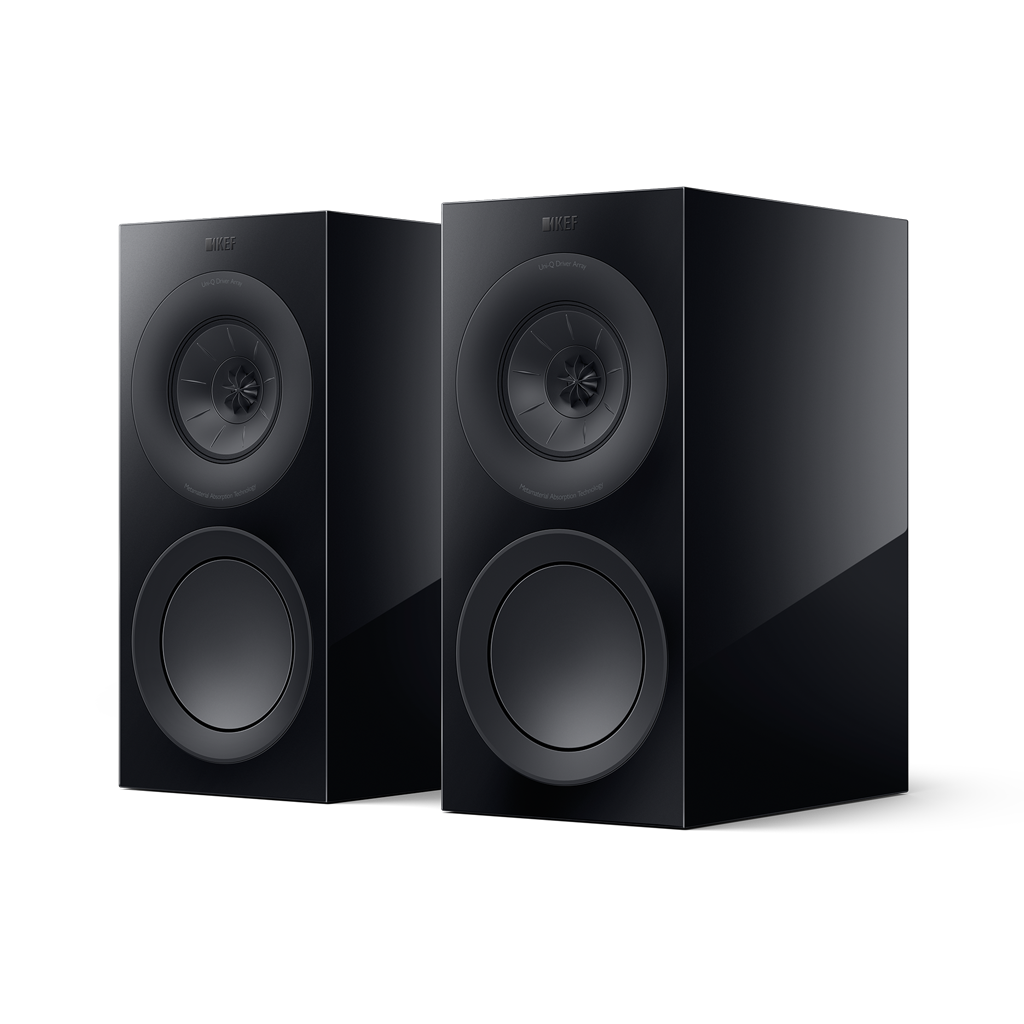
KEF R11 Meta Tower Speaker Review

Rate this speaker:

  • 1. Poor (headless panther)

    Votes: 5 0.9%
  • 2. Not terrible (postman panther)

    Votes: 9 1.6%
  • 3. Fine (happy panther)

    Votes: 96 17.6%
  • 4. Great (golfing panther)

    Votes: 437 79.9%

  • Total voters
    547
I also think that this dip could be caused by the 'shadow flare'. Here's the R3 (non meta) for comparision from Erin's measurements
Kef%20R3%20Response%20Variance%20per%20Shadow%20Flare%20Position.png
 
How massive a leap of faith would it be to extrapolate this review to the smaller R7 or R5 speakers (taking into account the LF response)? Is KEF consistent in their line up?
 
How massive a leap of faith would it be to extrapolate this review to the smaller R7 or R5 speakers (taking into account the LF response)? Is KEF consistent in their line up?
Looking at Kef's own specifications and performance charts, you can see a pretty clear correlation between the different speakers in the same family.
The larger speakers generally have greater low frequency extension, higher efficiency, greater power handling, lower distortion and higher maximum volume.
The speakers characteristics within those envelopes look quite similar.
Kind of like you'd expect.
So that begs the question how does an R3 plus subwoofer compare with the R11?
Especially as the crossover between bass and mid is down at 200Hz.
 
The R3 Meta seems to be the sweet spot in the R lineup.
The R5 Meta basically has the same performance as the R3 Meta and R7 and R11 are at least 2200€ more expensive than the R3 with stands.

For those 2 grand you could get some good subs (Arendal 1961 1s for example) and have more extension than the R11, better bass due to better placement options for the subs and have the same low THD and IMD if you cross them over at ~80Hz
 
Last edited:
The R3 Meta seems to be the sweet spot in the R lineup.
The R5 Meta basically has the same performance as the R3 Meta and R7 and R11 are at least 2200€ more expensive than the R3 with stands.

For those 2 grand you could get some good subs (Arendal 1961 1s for example) and have more extension than the R11, better bass due to better placement option for the subs and have the same low THD and IMD if you cross them over at ~80Hz
That's why I think the value proposition on the R11 isn't great unless you can get them on a really good sale.

These or Buchardt A700 for the same money? A700 all day. And there are other end game speakers I would want to cross-shop as well. Revel is a toss up; the F228Be is too expensive. The F226Be is right there but the bass output is lacking. Then there are value kings like Ascend and Philharmonic Audio to consider.
 
That's why I think the value proposition on the R11 isn't great unless you can get them on a really good sale.

These or Buchardt A700 for the same money? A700 all day. And there are other end game speakers I would want to cross-shop as well. Revel is a toss up; the F228Be is too expensive. The F226Be is right there but the bass output is lacking. Then there are value kings like Ascend and Philharmonic Audio to consider.
At least you got options. Of all the speakers you mentioned only the Kef and Buchardt are easily available here in the EU
 
How massive a leap of faith would it be to extrapolate this review to the smaller R7 or R5 speakers (taking into account the LF response)? Is KEF consistent in their line up?
Yes they are consistent.
Erin ran the R5meta on his klippel. Go have a look at his site. 'Erin's Audio Corner'. He also did a YouTube review of that speaker.

I don't see any reason to buy the R11 if you have subs. Or even the the R7. With subs and the right crossover blending the R5 or even the R3 will handle most situations.
The R11 is for the look of a tall tower and maybe for someone who doesn't want any subwoofers.

I think a lot of that 'huge' tower sense of scale is sighted biases. Subs and medium sized mains would be my general choice vs huge towers and both options sound 'huge'.
 
Yes they are consistent.
Erin ran the R5meta on his klippel. Go have a look at his site. 'Erin's Audio Corner'. He also did a YouTube review of that speaker.

I don't see any reason to buy the R11 if you have subs. Or even the the R7. With subs and the right crossover blending the R5 or even the R3 will handle most situations.
The R11 is for the look of a tall tower and maybe for someone who doesn't want any subwoofers.

I think a lot of that 'huge' tower sense of scale is sighted biases. Subs and medium sized mains would be my general choice vs huge towers and both options sound 'huge'.
Here's DIRAC of an R5 (not Meta) in a home theater room. It shows some interesting patterns pre-correction:
1711572010254.png
 
The R3 Meta seems to be the sweet spot in the R lineup.
The R5 Meta basically has the same performance as the R3 Meta and R7 and R11 are at least 2200€ more expensive than the R3 with stands.

For those 2 grand you could get some good subs (Arendal 1961 1s for example) and have more extension than the R11, better bass due to better placement options for the subs and have the same low THD and IMD if you cross them over at ~80Hz
Wow, I bloody love their website where you can get a 3D rendering of each of their speakers that you can rotate around and then it spins slowly when you release it. Small detail, but I love it!
 
Wow, I bloody love their website where you can get a 3D rendering of each of their speakers that you can rotate around and then it spins slowly when you release it. Small detail, but I love it!
You can also place some of their speakers in your room with the AR feature
 
That's a bit of a long shot.. :D
Anyways, looks like a really great speaker and I'm glad to see the inclusion compression sweeps, altho stepped sines would be better for this (especially for active speakers).
@amirm is there a quick and easy way in the AP software to normalize these to the reference response and zoom in a bit more? That would make it a little easier to read and compare.
I’m working on a headphone review that include compression measurements of a few headphones. I measured with Ap and normalized with rew. I don’t think there is a easy way to do it in the ap software.
 
Good morning @amirm , as always thanks for the review. As regards the dynamic compression graph at three different SPL levels, I wonder if it could be included by default in the speaker reviews, even more so in those of bookshelf speakers which can suffer more than towers when the volume increases.
Thank you
Hello, I totally agree. I have been testing dynamic compression on headphones and it is also a problem on some of those.
 
Here's DIRAC of an R5 (not Meta) in a home theater room. It shows some interesting patterns pre-correction:
View attachment 359510
Those are mainly your room modes and SBIR influences.
You have a unique 'correction'/room curve applied with nearly flat in room through the upper-bass and midrange going into the lower trebble.
I tried something similar to that at one point. Not quite my cup of tea but okay.
Interesting to see to what you are doing but the R5 does have Anechoic data available at Erin's site and as I mentioned so does the R5meta.

Here are the links to make it easier, I should have put them in my previous post. The KEF Blade test is comming soon as well (not sure which variation he has).

R5 https://www.erinsaudiocorner.com/loudspeakers/kef_r5/

R5 meta https://www.erinsaudiocorner.com/loudspeakers/kef_r5_meta/
 
  • Like
Reactions: KMO
You can also place some of their speakers in your room with the AR feature
Good website, compliments the good aesthetic design of their products, plus they measure great, I might get KEF speakers if & when my JBL's die.

EDIT: mind you most of them are passives & not actives, which means I'd have to get an amp and further complications re room EQ implementation. Maybe I wouldn't get some KEFs then.
 
Last edited:
Those are mainly your room modes and SBIR influences.
You have a unique 'correction'/room curve applied with nearly flat in room through the upper-bass and midrange going into the lower trebble.
I tried something similar to that at one point. Not quite my cup of tea but okay.
Interesting to see to what you are doing but the R5 does have Anechoic data available at Erin's site and as I mentioned so does the R5meta.

Here are the links to make it easier, I should have put them in my previous post. The KEF Blade test is comming soon as well (not sure which variation he has).

R5 https://www.erinsaudiocorner.com/loudspeakers/kef_r5/

R5 meta https://www.erinsaudiocorner.com/loudspeakers/kef_r5_meta/
Understood. The droop at 100-200Hz and jagged rise after that looks similar to Erin's results, which is why I posted it. But likely also exaggerated by room mode issues.
 
Thanks @amirm. I do appreciate the SPL tests and compression tests. The ability to move a lot of air is really, I think, one of the main reasons for a floorstander. So It's good to be able to compare measurements at high SPL. Maybe compression is redundant with THD+N & FR? I'm not sure.
 
Made in Great Britain or just assembled ?
Do you think Kef has two manufacturing lines of the same HP (I'm talking about components) ? One in Europe, the other in China?
Furthermore, Kef has been owned since 1992 by a multinational based in Hong Kong which also owns Celestion and is listed on the stock exchange.

As far as I know, everything Reference is hand-made in the UK. The cabinets are sourced locally for sure. Are the drivers and crossovers also made in the UK? I believe so, not 100% sure.
 
Back
Top Bottom