As I understand it, the way Benchmark eliminates crossover distortion is through use of negative feed-forward instead of feedback. That presumably allows them to bias considerably lower than one would need to for a more conventional design - is that an accurate assessment or am I off base here?

-
WANTED: Happy members who like to discuss audio and other topics related to our interest. Desire to learn and share knowledge of science required. There are many reviews of audio hardware and expert members to help answer your questions. Click here to have your audio equipment measured for free!
You are using an out of date browser. It may not display this or other websites correctly.
You should upgrade or use an alternative browser.
You should upgrade or use an alternative browser.
Class A vs AB -- Do They Really Sound Different?
- Thread starter watchnerd
- Start date

MakeMineVinyl
Major Contributor
My single ended triode amp, like most, has such a simple circuit that there isn't much gain available to use as feedback, which is probably why most of them don't bother. In mine, I use around 13dB of global feedback which is about all that is available. The result is that the amp has almost unity voltage gain. This is good since it makes noise from the amp so far down that I can barely hear it even with my ear inside the horns. All the drive voltage comes from the preamp which is also vacuum tube.I believe it is "global feedback" audiophiles don't like.
and yes, class A requires less GFB.

No reviews that I've seen routinely do that...
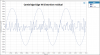
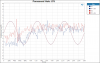
Mine do. Here's a couple examples.
Attachments

Pdxwayne
Major Contributor
- Joined
- Sep 15, 2020
- Messages
- 3,219
- Likes
- 1,172
So, JC5 good? No good?Mine do. Here's a couple examples.
MakeMineVinyl
Major Contributor
It would be interesting to see FFTs of those two since there's a lot going on in the residual.Mine do. Here's a couple examples.
So, JC5 good? No good?
Depends on what you want. Not my cup of tea. But certainly no problem with crossover distortion.
It would be interesting to see FFTs of those two since there's a lot going on in the residual.
Note the magnification. Mostly noise dominated. Which FFTs would you like to see?
MakeMineVinyl
Major Contributor
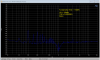
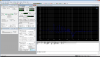
I was mostly curious what was noise and what was distortion.Note the magnification. Mostly noise dominated. Which FFTs would you like to see?

Is that circuit your own design?My single ended triode amp, like most, has such a simple circuit that there isn't much gain available to use as feedback, which is probably why most of them don't bother. In mine, I use around 13dB of global feedback which is about all that is available. The result is that the amp has almost unity voltage gain. This is good since it makes noise from the amp so far down that I can barely hear it even with my ear inside the horns. All the drive voltage comes from the preamp which is also vacuum tube.
did you build it yourself?
BTW, your output device uses local feedback to control distortion. local FB is a lot less problematic .
the GNFB in your case should just about lower output impedance and stop it from oscillating.

I was mostly curious what was noise and what was distortion.
The Cambridge's distortion was below the AP's residual. The Parasound wasn't quite as good, though still reasonably decent.
MakeMineVinyl
Major Contributor
AC power related stuff in there, though still down in the mud.The Cambridge's distortion was below the AP's residual. The Parasound wasn't quite as good, though still reasonably decent.
View attachment 153148
MakeMineVinyl
Major Contributor
It is based on a kit and I mostly used the original circuit with significant modifications. The amp did not have global feedback; I added that. Also, the filament supplies are external and regulated, isolated from ground (obviously), and have separate supplies for the left and right channels. The original HV supply is augmented with a choke input and lots of added filter capacitance.Is that circuit your own design?
did you build it yourself?
BTW, your output device uses local feedback to control distortion. local FB is a lot less problematic .
the GNFB in your case should just about lower output impedance and stop it from oscillating.
The amp uses fixed bias.
The feedback lowers the overall noise by the amount of the feedback which is 13dB. Since this amp is directly connected to a compression driver which is only operational above 500Hz, output impedance is not really a concern.
Pdxwayne
Major Contributor
- Joined
- Sep 15, 2020
- Messages
- 3,219
- Likes
- 1,172
I wonder if this is why I got hum from my Parasound A21....AC power related stuff in there, though still down in the mud.
MakeMineVinyl
Major Contributor
Depending on the sensitivity of your speakers, it could be. Or it could be a ground loop.I wonder if this is why I got hum from my Parasound A21....
I wonder if this is why I got hum from my Parasound A21....
Even if you disconnect it from other components and short the input??
A21 is not bad re hum. Below is my measurement at 100W. 50Hz is -110dB under 20Vrms fundamental. Halo integrated has some residual hum with ear on the speaker. A21 is silent.
Pdxwayne
Major Contributor
- Joined
- Sep 15, 2020
- Messages
- 3,219
- Likes
- 1,172
It got hum even without anything connect to the amp. Just amp to speakers and I got hum....Depending on the sensitivity of your speakers, it could be. Or it could be a ground loop.
Pdxwayne
Major Contributor
- Joined
- Sep 15, 2020
- Messages
- 3,219
- Likes
- 1,172
It is consistent with my A21 and A23. I have tried without anything connected to amp. Just amp to speakers and got hum.Even if you disconnect it from other components and short the input??
A21 is not bad re hum. Below is my measurement at 100W. 50Hz is -110dB under 20Vrms fundamental. Halo integrated has some residual hum with ear on the speaker. A21 is silent.
View attachment 153156
The hum is especially obvious with my Paradigm speakers.
PSU noise?This is my class A (measured with AP SYS-2712 with notch)
View attachment 153145
measured with 500kHz BW
View attachment 153149
BTW I like that analog generator and transformer outputs of the AP2700
It is consistent with my A21 and A23. I have tried without anything connected to amp. Just amp to speakers and got hum.
The hum is especially obvious with my Paradigm speakers.
Once again, input open or shorted? Input must not be open. You catch fields then.
Similar threads
- Replies
- 3
- Views
- 677
D

- Replies
- 25
- Views
- 2K

- Replies
- 14
- Views
- 2K

- Replies
- 20
- Views
- 3K
