• Welcome to ASR. There are many reviews of audio hardware and expert members to help answer your questions. Click here to have your audio equipment measured for free!

Beats Studio Pro are remarkably accurate

alumnicesar

Active Member
Joined
Jul 17, 2023
Messages
138
Likes
76
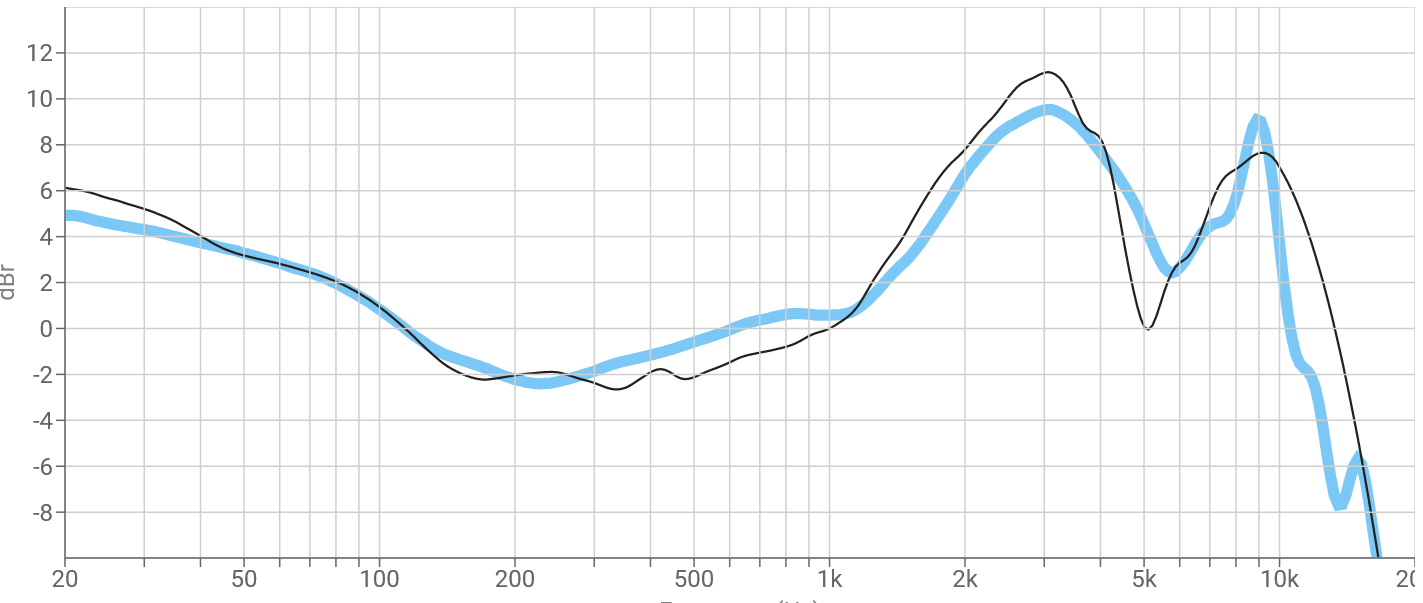
measurements from autoeq . app:
Screenshot 2023-09-19 145354.png


Curve is autoeq's RTINGS's compensated Harman OE target curve because it was measured by RTINGS. I guess their measurements tend to overstate 6k-9k compared to the normal Harman measurement system (GRAS 45ca?)

Anyway, the scale is 2db and it still looks crazily close to the target! Pretty cool.
 
Beats got a bad name among audiophiles (or really, anyone who wasn't wearing them strictly for fashion) many years ago because they sounded legitimately awful for the money. As years went by and especially after the Apple acquisition, the FR on Beats cans has become more than reasonable, this has been the case for years now.

However, I don't think they've completely lost the stink of the early years, but realistically they're a valid choice for anyone in the market for a half-decent headphone.
 
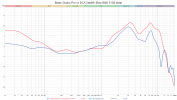
I found another frequency response curve on soundguys.com (not Harman though):

Not bad but most likely too shouty tbh.
 
In person they sounded a bit V, quite clean otherwise, only a small recession in the upper mids maybe but many closed backs have that.
 
Remarkably accurate? No a chance.

Remarkably saleable to the boom-tizz crowd? Absolutely.
 
Remarkably accurate? No a chance.

Remarkably saleable to the boom-tizz crowd? Absolutely.
It's a headphone, not a speaker. This will sound close to neutral to most people.

measurements from autoeq . app:


Curve is autoeq's RTINGS's compensated Harman OE target curve because it was measured by RTINGS. I guess their measurements tend to overstate 6k-9k compared to the normal Harman measurement system (GRAS 45ca?)

Anyway, the scale is 2db and it still looks crazily close to the target! Pretty cool.
Interesting stuff - be curious to see them reviewed here and see how the distortion, difficulty to drive, etc. is.
 
Also RTINGS.com says:

Their sound profile is quite neutral. There's a slight boost in the low-bass that adds a little extra rumble to your audio, and some overemphasis starting in the high-mids lends voices and instruments extra brightness. Sibilants, like S and T sounds, are piercing, but overall the sound is suitable for a variety of genres.

frequency-response-14-graph-small.jpg

Source and more: https://www.rtings.com/headphones/reviews/beats/studio-pro-wireless
 
You got that reversed, it's headphones that have high individual FR variability, especially closed back.

If you put a speaker with a flat frequency response curve up to your ear, it will not sound "flat" because of the ways sound is conducted through the bones of our head and ear, and the different way sound is perceived when it's pushed up against your ear and not interacting with a room. The Harman curve approximates, for most people, what a flat speaker would sound like. I say "most people", and said "most people" in my previous post, because there's variation in how "neutral" the harman curve sounds to each listener based on his or her own physiology.

If you had a speaker that followed an FR curve like this it would sound horrendous - tonnes of bass and harsh highs with no midrange. John was responding to this frequency response plot as if it was a speaker, accusing it of having "showroom sound" with goosed highs and lows, when that's not actually the case at all.
 
Having recently tried these out, I did like the SQ, but the ear cups are too small. For me, the comfort of the fit was more important than the impressive sound.
I don’t have large ears, but I could feel the internal circumference of the pads around my ears as well as feeling them press against my ears.
In comparison, the AirPod Max does not as they have a larger and deeper cup. Of course they have their own issue in natural SQ… which can be addressed through a change in the Accessibility Settings and is quite effective at rectifying their inherent flaw.

I truly hope Apple will find a happy medium between these two products.
 
Anyone who has ever used a headphone.
By design headphones are coupled to your ears, which is unique to everyone. Speakers are not designed to be coupled to your ears. That's why in-ear measurements show high individual FR variability for headphones. Calling a headphone a "speaker" doesn't negate the data.
FqBQICFaUAA07oA.jpg
FqBNzQEaQAA1mmN.jpg
 
By design headphones are coupled to your ears, which is unique to everyone. Speakers are not designed to be coupled to your ears. That's why in-ear measurements show high individual FR variability for headphones. Calling a headphone a "speaker" doesn't negate the data.
I do not understand what point you are trying to make or where you think I am disagreeing with this. From my previous post:

The Harman curve approximates, for most people, what a flat speaker would sound like. I say "most people", and said "most people" in my previous post, because there's variation in how "neutral" the harman curve sounds to each listener based on his or her own physiology.

The point is that a speaker playing in an open room, and a speaker pushed up against your head inside a headphone, will not sound the same, and the frequency response you want from a speaker playing in a room, and from one coupled to the side of your head, are very different. I don't disagree that there's variability between what will sound good to each individual listener based on their own physiology and personal preferences (which is exactly what I said previously), but headphones that track the Harman curve closely will sound neutral to most listeners, most of the time.
 
I do not understand what point you are trying to make or where you think I am disagreeing with this. From my previous post:


The point is that a speaker playing in an open room, and a speaker pushed up against your head inside a headphone, will not sound the same, and the frequency response you want from a speaker playing in a room, and from one coupled to the side of your head, are very different. I don't disagree that there's variability between what will sound good to each individual listener based on their own physiology and personal preferences (which is exactly what I said previously), but headphones that track the Harman curve closely will sound neutral to most listeners, most of the time.
You objected to my reply. I provided data for my factual statements. You keep reiterating the same points, without data, and adding on other factoids that I didn't contest, and that are beside the point. Some would find that disingenuous on your part. Since were not getting anywhere let's leave it at that.
 
I picked up a pair of this used, and initial impressions are they are actually pretty good. Sound more neutral than my Sennheiser Momentum 4, although I can’t seem to pull up a comparison graph to confirm this (rtings used two different methods when measuring these).

Given the software on the Momentum 4’s is so janky, tentatively hopefully these might replace them.
 
Back
Top Bottom