• Welcome to ASR. There are many reviews of audio hardware and expert members to help answer your questions. Click here to have your audio equipment measured for free!

WiiM Pro Plus - Review & Measurements (Streamer)

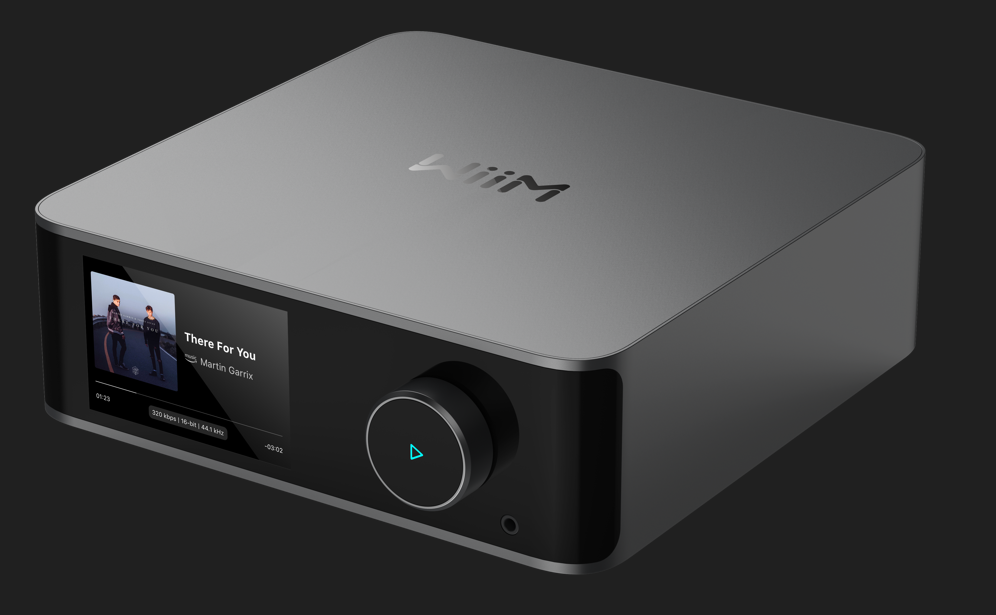
Renderings of the Ultra. (Touch) Display and (probably) headphone jack.

1713556429155.png


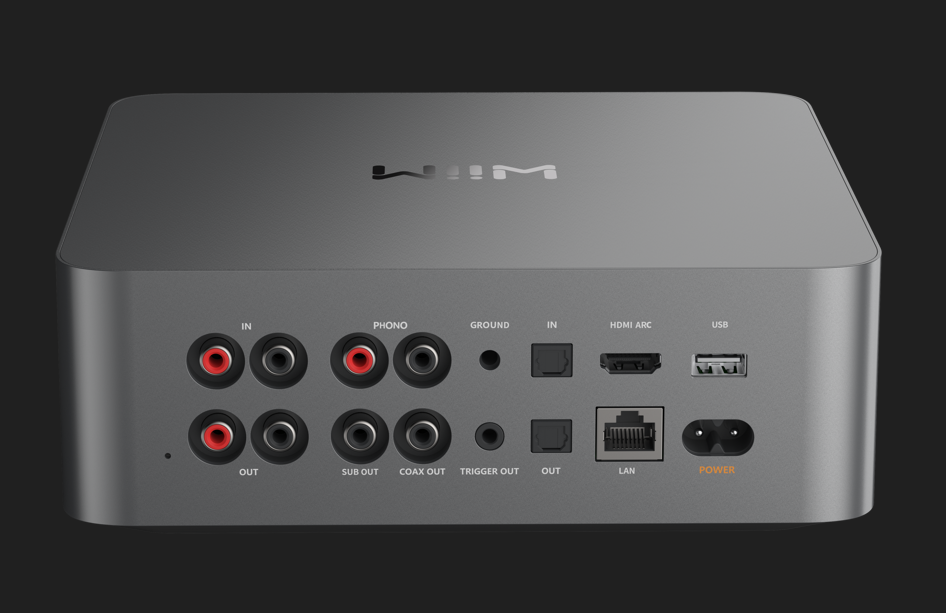
1713556558651.png
 
I'm glad other folks are stoked by this WiiM Ultra but it's just not my thing.

I hope WiiM will release a pure digital transport. No DAC, no ADC etc. but with a USB output.
 
Curious about the phono input. While I get that someone may want to hook a turntable up to this I'd also imagine that person already has a phono pre or a turntable with a built in phono pre
 
Curious about the phono input. While I get that someone may want to hook a turntable up to this I'd also imagine that person already has a phono pre or a turntable with a built in phono pre
WiiM wants to cover as many target groups as possible.

One of these is the Turntable->Traditional receiver->Stereo system group.

Those receivers almost always have a phono input, so giving the WiiM Ultra a Phono in as well was a smart choice IMO.
 
Curious about the phono input. While I get that someone may want to hook a turntable up to this I'd also imagine that person already has a phono pre or a turntable with a built in phono pre
I wouldn’t assume that person even has a turntable yet, let alone a phono pre-amp. If you look at for example Reddit you’ll see a regular stream of advice requests from people putting together systems with a vinyl component from scratch. Given the current popularity, I think it’s a smart move on Wiim’s part — though would’ve been neat if there was a switch to select phono or line input (perhaps there is? I haven’t read up on it) for that set of RCAs.
 
What do tou think of adding linear powee supply, Topping P50, for example? Can I expect any improvements if using as a streamer with separate dac?
 
No improvements whatsoever. Regardless of whether you're using a separate DAC or the built-in one.
And if he still want to test after your answer then I would try to by a used LPSU that he can sell for the same money. Sure he have wasted some time but that can be considered a hobby
 
Apple TV users might be interested in the new app from Wiim, think it works with all devices, and is coming to other platforms.

It's rather limited currently, it's in development, hopefully it will improve rapidly. I've been using the roon extension on Apple TV for months that's very similar, large album cover art is something I'd missed, but I'm not sure about having the TV on whilst listening.
 
I have just ordered a "Pro Plus" - in addition to the two "Pros" I have in operation with an external DAC.
The measurements in Vintage-Flanker's post suggest that WiiM simply used AKM's application circuit (like many others) and that the increase in THD at low frequencies is due to the "too small" capacitance between VrefHx and VrefLx.
Newer PCB photos of the WiiM Pro Plus show 4700uF capacitors installed horizontally instead of 470uF capacitors installed vertically.

But now I have a bit of a stomach-ache with the solution of filtering VrefHx via 10 Ohm and 4700uF:
With this implementation, the 4700uF caps will feed the USB-supplied rest (uC, BT, XMOX) when switching off. Above ca. 50mA reverse current per side the ESD diode inside the AK4493SEQ "wins" and carries most of the current. The Absolute Maximum Rating for VrefHL/R is max. 0.3V outside the supplies according to the AK4493SEQ datasheet (this is a traditional specification that makes sure no latch-up can occur, even though chips designed today should tolerate ca. 10mA through these internal diodes).

A possible protection for the AK4493SEQ VrefHL/R pins would be to add schottky diodes in parallel to the 10R resistors (see below).

I have another simple idea, which I would have to check to see if it really brings an improvement:
The 10R resistor for the LP filtering seems excessive (this is why the 4700μF capacitor is now in place). If the supply is not too noisy, the VrefHL/R could be 'stiffer' by simply reducing the value of the series resistance. This would, in turn, result in massive inrush currents at power-up. If a smaller series resistor is advantageous, we could add P-DMOS transistors (Ron e.g. 0.5 or 1 Ω) in parallel with the 10R resistors and open these transistors slowly so that the inrush current is no higher than before.
The body diode of the P-DMOS transistor would carry the aforementioned reverse current when the unit is turned off. This is not a Schottky diode, of course, but it is a fairly 'fat' diode, so it will carry most of the reverse current. (For those interested I did attach the LTspice schematic).

(Others do add ultra low noise voltage regulators (LT3042 or LT3046) to supply the VrefHL/R with low impedance, but this would be a lot more effort. See e.g. https://nihtila.com/2019/02/10/wee-dac-update-improving-ak4490-performance-on-test-board/)

EDIT: Of course a significant reverse current will only show up if the 5V supply for the analog part of the DAC is used elsewhere (this is what I assumed in my thoughts above). If the analog supply does e.g. have a separate regulator and all of the 3.3V stuff is derived from elsewhere then there's no potential issue at all.

--> @AnalogSteph and others interested in circuitry. What are your thoughts about this?

1758469582777.png
 

Attachments

Last edited:
Is this really necessary considering that Amir's test indicate that the DAC of the Wiim Pro Plus is "transparent" for the end user?
???
 
Amir's @VintageFlanker's measurements (Page 1 of this threaad) show the Pro Plus has flat frequency response, and levels of noise and distortion lower than any human can hear at any time under any conditions.

Whatever you think you are achieving with your mods - it is not going to improve the sound quality in any audible way.
 
Last edited:
Whatever you think you are achieving with your mods - it is not going to improve the sound quality in any audible way.
Thanks for pointing this out, @antcollinet. This time I forgot to mention this disclaimer.
Absolutely, the tiny deficiency at LF that @VintageFlanker pointed out when measuring the pre-production sample would not be audible at all - speaker distortion will swamp this by orders of magnitude.
WiiM has reacted promptly and fixed this for the production runs as VintageFlanker has addressed in his update. So the WiiM Pro Plus should pass the 60Hz test (initially stereophile and Amir tests this as well) with perfect figures. VintageFlankers IMD measurements show this improvement quite clearly.

My initial concern was possible "electrical overstress" at power-off on the VrefHL/R pins due to the 4700uF filter capacitor. After a discussion with a friend I do consider it as very unlikely that the 5V from the USB jack are directly used to power the VrefHL/R. The VrefHL/R will almost for sure have a separate regulator and will in turn render my concern obsolete.
The idea to make the Vref even stiffer was just an idea.
 
Is this really necessary considering that Amir's test indicate that the DAC of the Wiim Pro Plus is "transparent" for the end user?
I'm actually a bit annoyed that, whenever topics are discussed "just for the sake of engineering" (i.e. not audible), the same stereotypical phrases, "transparent" and "not audible," pop up and try to put an end to such discussions. Even adding the disclaimer "certainly not audible" doesn't help (this time I forgot to mention it — it was just too obvious to me).
Of course pointing out that the discussed effect/ deficiency is not audible is important to keep other readers from drawing wrong conclusions.

Here at ASR, we have many knowledgeable people, some of whom specialize in circuit design. What's wrong with discussing "inaudible" topics for the sake of engineering or science? What's the honest motivation to put an end to such discussions?
 
Back
Top Bottom