I'm planning to make a speaker cabinet out of plexiglass, and have run into an issue. Is there an internal sound-dampening solution (eg. polyfill) that is visually clear or transparent? If there isn't one truly effective solution, is internal reflection truly as bad as people describe it to be? Thanks.

-
WANTED: Happy members who like to discuss audio and other topics related to our interest. Desire to learn and share knowledge of science required. There are many reviews of audio hardware and expert members to help answer your questions. Click here to have your audio equipment measured for free!
You are using an out of date browser. It may not display this or other websites correctly.
You should upgrade or use an alternative browser.
You should upgrade or use an alternative browser.
Clear/Transparent sound dampening?
- Thread starter Borteese
- Start date
-
- Tags
- sound dampening

I can't think of anything even vaguely clear. Dickason shows results with and without fillings and wall coverings in his Loudspeaker Design Cookbook. It's a big deal. Are you substantially bracing the plexiglass? It's a pretty flexible material.


Count Arthur
Major Contributor
- Joined
- Jan 10, 2020
- Messages
- 2,250
- Likes
- 5,037
I think what you want might be:

There are some glass speakers, but no internal sound-dampening: https://www.waterfallaudio.com/en/collection-glass-speakers/
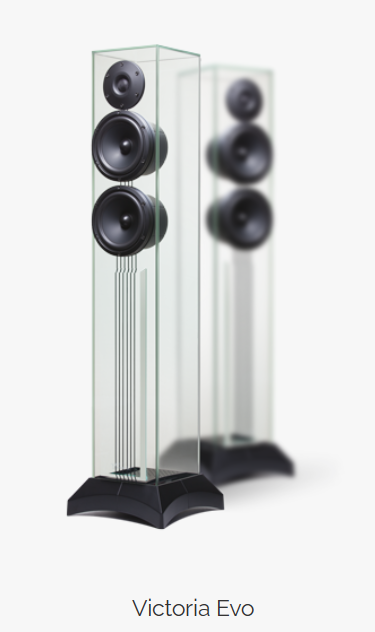
There are some glass speakers, but no internal sound-dampening: https://www.waterfallaudio.com/en/collection-glass-speakers/
Paul Ebert
Member
- Joined
- Mar 15, 2021
- Messages
- 37
- Likes
- 20
Depends on the box. Sealed = Yes; ported = probably; open baffle = obviously, not applicable.
Maybe do a TL and cover the walls with some sort of transparent soft gel?
Maybe do a TL and cover the walls with some sort of transparent soft gel?
I have to think those are more for looking at than listening to.I think what you want might be:
View attachment 326116
There are some glass speakers, but no internal sound-dampening: https://www.waterfallaudio.com/en/collection-glass-speakers/
View attachment 326118
Count Arthur
Major Contributor
- Joined
- Jan 10, 2020
- Messages
- 2,250
- Likes
- 5,037
I have no idea how they sound.I have to think those are more for looking at than listening to.

They have a datasheet, but it's predictably "high end"I have no idea how they sound.


No, not really.Is there an internal sound-dampening solution (eg. polyfill) that is visually clear or transparent?
It can be pretty bad, although resonances are arguably worse than lack of damping. The speaker will be worse than if you used damping material, but it may not be unlistenable or anything.is internal reflection truly as bad as people describe it to be?
If you are doing one of these "clear" speakers, and you want it to sound good, you're going to need some very thick pieces, and you're going to need to pick your dimensions carefully. Keep in mind there's no way to eliminate internal standing waves, but you can choose dimensions so the harmonics don't line up.
As much as audiophiles go on about transparent equipment, you'd think there would be clear damping materials
To give a more thoughtful reply here - the only thing I can think of that might be remotely useful as damping and is at least semi-transparent would be some kind of aerogel. https://onlinelibrary.wiley.com/doi/10.1002/adem.202201137 - however, I think they are very expensive and probably not that easy to work with compared to more normal materials. Looks like about $3/ml on Amazon so I think that might blow up the budget...
I've looked into liquids as damping layers for enclosures... I didn't keep notes but IIRC they wouldn't work well because they tend to transmit sound pretty well.Double sided with some liquid in between
Seriously now,previous post comes close.
However, you might be on to something! If you could find a liquid/gel that was highly viscous and also remained transparent (think green glue, but clear) then it would probably actually work fine. Constructing it might be a b**** but there's no reason a layered design couldn't work. It's actually pretty common to do constrained layer damping in DIY speakers using various adhesives that don't solidify. So the trick will be finding one that's clear and stays clear...
It wouldn't be as good as filling the box with wool, but it would be better than nothing. It would also reduce the penalty from not doing bracing.

Sokel
Master Contributor
- Joined
- Sep 8, 2021
- Messages
- 6,134
- Likes
- 6,223
When I thing of crazy stuff I always try to imagine what would be to have a double-sided around but with vacuum created inside them.I've looked into liquids as damping layers for enclosures... I didn't keep notes but IIRC they wouldn't work well because they tend to transmit sound pretty well.
However, you might be on to something! If you could find a liquid/gel that was highly viscous and also remained transparent (think green glue, but clear) then it would probably actually work fine. Constructing it might be a b**** but there's no reason a layered design couldn't work. It's actually pretty common to do constrained layer damping in DIY speakers using various adhesives that don't solidify. So the trick will be finding one that's clear and stays clear...
It wouldn't be as good as filling the box with wool, but it would be better than nothing. It would also reduce the penalty from not doing bracing.
It's not difficult I think,and sound from the inside would be difficult to escape it.
HarmonicTHD
Major Contributor
- Joined
- Mar 18, 2022
- Messages
- 3,326
- Likes
- 4,836
Dampening usually relies on small particles / fibers rubbing against each other and converting sound energy into heat, which then gets dissipate. That makes them inherently opaque. Sorry no free lunch.
That much is clear.Dampening usually relies on small particles / fibers rubbing against each other and converting sound energy into heat, which then gets dissipate. That makes them inherently opaque. Sorry no free lunch.
/I'll let myself out.
HarmonicTHD
Major Contributor
- Joined
- Mar 18, 2022
- Messages
- 3,326
- Likes
- 4,836
Go post a whac a mole somewhere.That much is clear.
/I'll let myself out.

Why are your speaker cabinets transparent?
So you can see what's inside!
What's inside?
Nothing!
So you can see what's inside!
What's inside?
Nothing!
A vaccuum layer would actually be incredibly good for isolation, I ran the numbers once and a basic thermos' vacuum would attenuate the transmitted sound by something like 100dB.When I thing of crazy stuff I always try to imagine what would be to have a double-sided around but with vacuum created inside them.
It's not difficult I think,and sound from the inside would be difficult to escape it.
I have NO idea how to build a speaker enclosure with a layer of vacuum, but I would highly applaud anyone willing to try it. I personally think it would be extremely difficult...
Sokel
Master Contributor
- Joined
- Sep 8, 2021
- Messages
- 6,134
- Likes
- 6,223
I would imagine basically two boxes (one of them smaller of course) ,one inside the other.A vaccuum layer would actually be incredibly good for isolation, I ran the numbers once and a basic thermos' vacuum would attenuate the transmitted sound by something like 100dB.
I have NO idea how to build a speaker enclosure with a layer of vacuum, but I would highly applaud anyone willing to try it. I personally think it would be extremely difficult...
Some bracing in between them to maintain the distance,really good shielding and a vacuum pump in the end.
Similar threads

- Replies
- 29
- Views
- 3K
- Replies
- 84
- Views
- 5K

- Replies
- 2
- Views
- 529
- Replies
- 4
- Views
- 751
- Replies
- 2
- Views
- 402