
Tom C
Major Contributor
I used to think of myself as pretty picky when it comes to sound. But after hanging around here a while, I realized I’m not so very picky after all.

From the reviewer (Ken Micallef):
"Back in the USA, Greg Roberts's Volti Audio builds some of the finest horn-loaded loudspeakers I've heard."
"I bought the review pair."

What a clown.From the reviewer (Ken Micallef):
"Back in the USA, Greg Roberts's Volti Audio builds some of the finest horn-loaded loudspeakers I've heard."
"I bought the review pair."
Never mind the filler over the nails, what is going on with the panels? I see literal gaps at the seams.It's kind of mind boggling to me as to the effort required to manufacture and market such garbage like Volti speakers. Like do they actually believe they're making something good or just laughing at how their ridiculous scam is working? I don't really know which one is worse. Sometimes when I see a stereophile review like this recent Volti and the speakers performance, I feel like I live in an alternate reality, but then I remember how stupid and gross a lot of people can be and that it's nothing new. It genuinely makes me a bit sad to see that so many people have brain worms to the point that they buy into all this crap.
The volti stuff cracks me up, because it's not even made well. Some of it looks like junk. Look at this piece of crap, $6,200. You can see they used a brad nailer on it and just covered the spots with some wood filler, stands out like a sore thumb. They market them as being bare wood and ready for your own finish. $6,200 gets you a speaker that doesn't even have a finish it on it, and whatever you put on it is going to make those filled holes show even more.
View attachment 474222

No doubt some of the cheapest they could find. Those chintzy ABS plastic horns look absolutely terrible.Are those drivers/horns from Parts Express?
That's thin plywood (veneer for the poor) glued to the corpus.Never mind the filler over the nails, what is going on with the panels? I see literal gaps at the seams.

"I bought the review pair."

The volti stuff cracks me up, because it's not even made well. Some of it looks like junk. Look at this piece of crap, $6,200. You can see they used a brad nailer on it and just covered the spots with some wood filler, stands out like a sore thumb. They market them as being bare wood and ready for your own finish. $6,200 gets you a speaker that doesn't even have a finish it on it, and whatever you put on it is going to make those filled holes show even more.
That's thin plywood (veneer for the poor) glued to the corpus.
These guys don't give a shit, I promise. They just want to listen to the same crappy Chris Jones/Nils Lofgren albums over and over.Granted, these reviewers get preferred pricing, but it's still amazing how often they declare that they've purchased truly expensive components under review. With so much money apparently at their disposal, I'd think they could afford better listening spaces than tiny, cramped rooms in Greenwich Village. After all, as has been said before: when it comes to sound quality, "the room is the elephant in the room."
My guess is 3 mm plywood.It's probably thicker just rebated.

For example this one. Even at the DIY's first attempt it resulted in a better finish. Much cheaper, measures better plus together with the DIY subwoofer he then added for even better bass is certainly a component fullrange sub/speaker solution.Just bizarre. I've seen way better woodworking in DIY threads here.

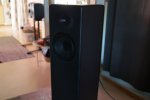
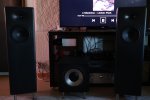
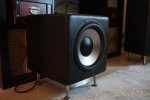

My guess is 3 mm plywood.
| Speakers | IM distortion at 105dB (fs) at ~~14' |
| Klipschorn | 1.7% Slightly Audible |
| AR 4-way AR 98RS | 2.7% Clearly Audible and slightly Annoying |
| Fried Studio 4 | 10% Clearly Audible & Annoying |
| Platinum Studio 2 | 7% Clearly Audible and Annoying |
| From reviews by Heyser, Keele, Jr., and others. |
Hey don't you go insulting my man Nils. As for Chris Jones, I'll have to check him out. He's obviously audiophile approved.These guys don't give a shit, I promise. They just want to listen to the same crappy Chris Jones/Nils Lofgren albums over and over.

While I thought that that some more knowledgeable members might respond. On the subject of doppler distortion the results given (assuming correctly done) seem to have minimal relevance to normal listening levels. 105 db at 14 ft corresponds to a level of 118 db at 1 foot. Both levels will damage your hearing (and possibly the speakers). It might also be worth noting that these speakers with the exception of the Klipsch are no longer in production.1) I would guess they are built with 3/4" wood (19.05mm), rabbeted or something to increase strength. He tends to be inspired by Klipsch; they often use Baltic Birch, veneered with Walnut or some other, in the past making Ebony an expensive option.
2) I can put my hand on the front panel of my Klipschorns, and feel no vibration, even in the bass @ 110 dB (full orchestra and pipe organ). I lost my earplug+headphone-like ear protectors, so I won't try 115 dBC or Z, which is typical of full orchestra maximum PEAKS in the close seats. I'm told that some Opera performances can reach higher instantaneous peaks.
3) To get 115 dB out of my speakers from the MLP takes about 88 watts. My usual level, of about 75dB to 105 dB takes from about 0.006 watts to somewhere around just below 6.5 watts.
4) I have never heard my Khorns be harsh, or honk, or have blurry bass. Maybe others who have, may have had less favorable rooms or amps.
Room variables are pretty imponderable to me. First room proportions count a lot, then they don't. Likewise, liveness or deadness. Same with whether to put absorbers at first reflection points, or not, etc. We put in place a little absorption and a little dispersion.
My amps, over the years, have been Dynaco [tube], McIntosh [tube], Luxman L580 [80wpc, I think], NAD C272 x 3 [150 wpc each] all those that have been used with the Khorns have sounded great with the Khorns. It's possible that the Luxman sounded a very little bit better than the rest.
3) There has been a lot of talk of measured distortion. I may have posted these before. a) See the Stereophile article on Doppler Distortion. b) The ugliest kind of distortion in speakers may be IM distortion, Doppler Distortion, "Modulation Distortion," etc. The names for it and related distortions are Legion. I'm no expert on this, but I have the impression that one major source is too great an excursion of a speaker cone/diaphragm which causes the sound to undergo Doppler effect and modulates other notes and harmonics reproduced by the SAME diaphragm.
Everything else being equal, three way speakers often have less modulation (Doppler) distortion than two way.
Doppler distortion; an excerpt from Stereophile …
“The results were intriguing. Distortion of the flute was gross at 10mm peak diaphragm displacement and not in the least bit euphonic. On the contrary, Doppler made the sound as harsh as you might expect of a distortion mechanism that introduces intermodulation products.
music signals are less revealing of Doppler distortion than this special brew. But these findings undermine the view, widely accepted in the last two decades, that Doppler distortion in loudspeakers is not something we should trouble about. Having done the listening, I side with Moir and Klipsch more than with Fryer, Allison, and Villchur on this issue—something that may come as no surprise to anyone who has heard the effects of low-level jitter and sees where the Fryer criterion appears in fig.2. .
It has often been claimed that, with a two-way speaker, there are audible benefits to using a crossover frequency below the typical 3kHz, the usual explanation being that this removes the crossover from the ear's area of greatest sensitivity. But I wonder. Perhaps this not-uncommon experience Everyone who uses a two-way speaker (me included) can take heart from the fact that most actually has much more to do with the D word. A three-way solution is potentially even better. Three-way speakers bring new design challenges, of course, in particular the need to achieve another perceptually seamless handover between drivers. But from the Doppler perspective, having a crossover for the bass driver at 400Hz or 500Hz is, unquestionably, better.
https://www.stereophile.com/content/red-shift-doppler-distortion-loudspeakers-page-3)
Below are some 105 dB results taken from magazine reviews for both the possibly more meaningful IM distortion (which I think might be the same as "modulation distortion in speakers?").
[If the "addendum" page is still here, ignore it; it didn't get filled in.]
Speakers IM distortion at 105dB (fs) at ~~14' Klipschorn 1.7% Slightly Audible AR 4-way AR 98RS 2.7% Clearly Audible and slightly Annoying Fried Studio 4 10% Clearly Audible & Annoying Platinum Studio 2 7% Clearly Audible and Annoying From reviews by Heyser, Keele, Jr., and others.

Is this your way of admitting that you own one of the speakers that feature in this thread?I used to think of myself as pretty picky when it comes to sound. But after hanging around here a while, I realized I’m not so very picky after all.

While I thought that that some more knowledgeable members might respond. On the subject of doppler distortion the results given (assuming correctly done) seem to have minimal relevance to normal listening levels. 105 db at 14 ft corresponds to a level of 118 db at 1 foot. Both levels will damage your hearing (and possibly the speakers). It might also be worth noting that these speakers with the exception of the Klipsch are no longer in production.


