
-
Welcome to ASR. There are many reviews of audio hardware and expert members to help answer your questions. Click here to have your audio equipment measured for free!
You are using an out of date browser. It may not display this or other websites correctly.
You should upgrade or use an alternative browser.
Will upgrading the capacitor, improve the sound on this crossover?
- Thread starter JohnnyAudio
- Start date

- Joined
- Sep 4, 2026
- Messages
- 157
- Likes
- 231
I couldn't agree more. What is that thing even for?A pre-baked cheap crossover is pretty funny, tho.
I don't wanna know actually.I couldn't agree more. What is that thing even for?

fpitas
Grand Contributor
I doubt anyone argues about using good components, or polypropylene caps for example. But the industrial-rated polypropylene caps I use (when necessary) are under 10 bucks, and DigiKey and Mouser sell them. They have actual specifications, too. Few "audiophile" caps have anything like specifications.Lets not make fun of this to soon. High quality cross over caps are important for two reasons.
First is lifespan and drift free performance as they age. Good caps stay in spec longer maintaining cross over performance over time.
Second is precision specifications. Quality caps have a higher specification tolerance. Perhaps 5% instead of 10% or 20%. Higher tolerance caps match specifications between the speakers better and therefore provide a more accurate crossover frequency between the speakers. This will help prevent image drift at the cross over region.
So I would say it does matter. Can you hear the difference. I'm not sure. Perhaps in cases of a bad mismatch. Never the less you want the speakers to match as close as possible. Cheers.
I'll add: noobs blindly replace caps and have no clear idea what value of capacitance the original or the replacement have. Moving the crossover point around can be audible, so that ruins the experiment right there.
Last edited:
fpitas
Grand Contributor
Noobs read articles on crossovers and think that's how you do it.I couldn't agree more. What is that thing even for?
Are you mad? The fuses are not imprinted with the word "Audiophile" so apart from being terrible, they will work either way round, which is stupid, as it means you get double the number of electrons on AC. Kaboom!As long as the fuse is installed the right direction.
I'd still bet the PCB works as a high pass-filter, so long as the fuses are removed.
fpitas
Grand Contributor
Yes, and that fuse only cost a buck or two. It must sound terrible.Are you mad? The fuses are not imprinted with the word "Audiophile" so apart from being terrible, they will work either way round, which is stupid, as it means you get double the number of electrons on AC. Kaboom!
I'd still bet the PCB works as a high pass-filter, so long as the fuses are removed.
You'll note that copper in the coil is not the requisite 115% pure copper, nor a mono-crystal, nor enameled with the extracts of an angel's glands.Yes, and that fuse only cost a buck or two. It must sound terrible.
I'll stop now, as it's lunch time. I have an audiophile-grade £1000 quiche in the oven, and I'm off to eat it in front of poor people who all have cloth ears.
Last edited:
fpitas
Grand Contributor
Many people here can't hear the stark difference a good power cord makes. It's sad, really.You'll not that copper in the coil is not the requisite 115% pure copper, nor a mono -crystal, nor enameled with the extracts of an angel's glands.
I'll stop now, as it's lunch time. I have an audiophile-grade £1000 quiche in the oven, and I'm off to eat it in front of poor people who all have cloth ears.
NO.Will upgrading the capacitor, improve the sound on this crossover?
Dayton Audio 2k-HPF-4 High Pass Speaker Crossover 2,000 Hz 12 dB/Octave View attachment 557208

Wesseling Audio Lab
Active Member
- Joined
- Sep 12, 2023
- Messages
- 280
- Likes
- 254
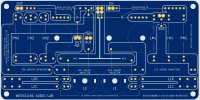
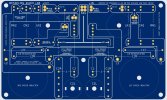
The brand is not important but of the values are. I have a supply and wide value range of Capacitors resistors, nothing expensive. Inductors tend to just jumper or wind or unwind what I have to obtain correct value and then purchase or wind the single correct value. what is important is measurements, circuit design and every speaker design has unique electrical slopes to shape the acoustic response.
I designed parallel crossover HP and LP boards to accommodate any configuration I could think of, installing what is necessary and leaving off what isn't. Waiting for 5 each to try out and can modify for next order if necessary.
All Passive, passive combined with active, both analogue active or DSP and all DSP. All these are good depending what the plan is
Attachments
Last edited:

Pareto Pragmatic
Addicted to Fun and Learning
First is lifespan and drift free performance as they age. Good caps stay in spec longer maintaining cross over performance over time.
Second is precision specifications. Quality caps have a higher specification tolerance. Perhaps 5% instead of 10% or 20%. Higher tolerance caps match specifications between the speakers better and therefore provide a more accurate crossover frequency between the speakers. This will help prevent image drift at the cross over region.
Well said. I would add point 2 becomes more of an issue with more components in the mix.
FWIW, when I recapped some vintage speakers, simple crossover with 3 caps and 2 inductors, I used Dayton. Shipping was more than the parts. Works fine, better than the 40 year old ones they replaced for sure.
Caps at 10x the price would have made me feel fancier, of that I am sure.
A lot of Dunning Kruger effect in DIY audio especially car audioI couldn't agree more. What is that thing even for?
 just throw in drivers in home made boxes..
fpitas
Grand Contributor
The internet just adds fuel to the fire by having lots of filter calculators available. And if drivers were perfectly resistive 8 ohms (4 ohms etc), that would be great!A lot of Dunning Kruger effect in DIY audio especially car audio

Rocky Maine
Member
Those labelled mounting holes are begging for a discussion of what type of hardware to use.
fpitas
Grand Contributor
Gotta be oxygen-free beryllium screws for the best sound.Those labelled mounting holes are begging for a discussion of what type of hardware to use.

5% tolerance is lower than 10% (semantics)Lets not make fun of this to soon. High quality cross over caps are important for two reasons.
First is lifespan and drift free performance as they age. Good caps stay in spec longer maintaining cross over performance over time.
Second is precision specifications. Quality caps have a higher specification tolerance. Perhaps 5% instead of 10% or 20%. Higher tolerance caps match specifications between the speakers better and therefore provide a more accurate crossover frequency between the speakers. This will help prevent image drift at the cross over region.
So I would say it does matter. Can you hear the difference. I'm not sure. Perhaps in cases of a bad mismatch. Never the less you want the speakers to match as close as possible. Cheers.
Similar threads
- Replies
- 3
- Views
- 556
- Replies
- 10
- Views
- 1K
- Replies
- 6
- Views
- 732


- Replies
- 4
- Views
- 647
- Replies
- 1
- Views
- 635