Local network streaming is a thing which doesn't need a (strong) internet connection. I stream all my ripped CDs over my network.Well, for one, I don't stream (not really an option at my main home anyway, you may be able to get a few seconds of cell signal if you stand on one leg, with the other leg in the air, bent at the knee (like Ian Anderson, the lead and flute player of Jethro Tull) with the phone in the air with one hand and the other arm held out for balance. And, then again, you may not.
And I chose not to stream at my other places.
So, have no use for this particular gear anyway (aside from an interest in how it can do EQing).

-
Welcome to ASR. There are many reviews of audio hardware and expert members to help answer your questions. Click here to have your audio equipment measured for free!
- Forums
- Audio, Audio, Audio!
- DACs, Streamers, Servers, Players, Audio Interface
- Home Music Servers, Computers and Streamers
You are using an out of date browser. It may not display this or other websites correctly.
You should upgrade or use an alternative browser.
You should upgrade or use an alternative browser.
WiiM Ultra Streamer Preamp Review
- Thread starter amirm
- Start date
EJ3
Master Contributor
I had not mentioned that, as I had more or less not thought of it as streaming. You are correct in pointing that out.Local network streaming is a thing which doesn't need a (strong) internet connection. I stream all my ripped CDs over my network.
That is an eventual plan, from a NAS. But,12 cabinets of 75 albums each and several hundred CD's, cassette tapes and reel to reels will take a while to get 'ripped' into the system, once I have the system set up. With my schedule (the schedule has a name: "Chaos"), I seriously doubt that I can average more than an album a day into NAS storage.
This year is totally tied up until after January (both schedule and financial).

Bleib
Major Contributor
- Joined
- May 13, 2021
- Messages
- 4,143
- Likes
- 10,592
Note that price increases are occurring, already seen with both Amp Ultra and the Ultra pre-amp here in Sweden
"Price Increase Details
"Price Increase Details
- UK Retail Price: Increased from £329 to £369 (a 12.2% increase).
- US Retail Price: Moved from $329 to $349 (roughly a 6% increase)."
From the OPYou don't understand... It has nothing to do with the settings...
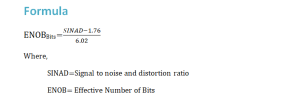
(In terms of quality, it doesn't even reach a 16-bit ENOB. Just 14bit)
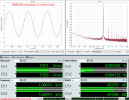
WiiM Analog Input MeasurementsI configured the analog input for 24 bit/192 Khz:WiiM Ultra Stereo Streamer DAC Digital audio Line In Measurements.pngSo not bad. Here is the noise performance for both 24 bit and 16:WiiM Ultra Stereo Streamer DAC Digital audio Line In SNR Measurements.pngSo better override the default 16 bits.You are correct, in that I do not understand what you are saying. Please link to a trusted source.

morillon
Major Contributor
- Joined
- Apr 19, 2022
- Messages
- 2,368
- Likes
- 632
(However, it remains surprising that, in this case , the capture is not observed on the S/PDIF or Toslink output ,using the analog-in/digital-out configuration. No dac from wiim and adc of AP impact etc)From the OP
WiiM Analog Input Measurements
I configured the analog input for 24 bit/192 Khz:
WiiM Ultra Stereo Streamer DAC Digital audio Line In Measurements.png
So not bad. Here is the noise performance for both 24 bit and 16:
WiiM Ultra Stereo Streamer DAC Digital audio Line In SNR Measurements.png
So better override the default 16 bits.
You are correct, in that I do not understand what you are saying. Please link to a trusted source.
Attachments
Last edited:
morillon
Major Contributor
- Joined
- Apr 19, 2022
- Messages
- 2,368
- Likes
- 632
Enob ’s an indicator of the actual quality of the ADC stage... not just the data readout from the ADC chip itself....Unfortunately I could not extract even the tiniest amount of meaning from any of that.
I assume because of my ignorance?
Maybe someone else can translate – ELI5?
;-)
(Rest assured, to the best of my knowledge, no current ADC—or DAC—can claim an effective 24-bit ENOB... but with a SINAD of -88 dB at 1 kHz, we are very, very far from that...There’s no really need to switch to 24-bit here... )
(Ps
WiiM—which grew out of LinkPlay—is a new player in the audio industry...
One can only hope, without being harsh, that they continue to refine their engineering and polish specific areas by leveraging the experience they’ve gained (specifically the ADC, or improving the digital outputs and headphone stage, etc.), and perhaps even face a bit of a challenge from competitors or their own customers...
And the case study of the little PocketADC shows just how little this is actually about cost—especially at WiiM’s production scale. ;-)
Just making progress about "audio hardware"..."and not necessarily the fancy aluminum case or the large screen/vu-meter.. that’s hardly useful from the sofa ..."
;-)
(Just so you know, I’ve been a WiiM user almost since the very beginning—right from the start of 2022... So, not paid by the competition... ;-) )
)
Sorry for the bad translation...
Last edited:
morillon
Major Contributor
- Joined
- Apr 19, 2022
- Messages
- 2,368
- Likes
- 632
The ADC implementation on these devices—which increasingly position themselves as "preamplifiers" ,not my use (whereas the WiiM Mini, Pro, and Pro Plus were initially framed as "supplementary" units) yet mandate the digitization of all analog inputs—is effectively a very sensitive issue here, and one that leaves significant room for improvement... That’s all.
;-)
;-)
Yeah, if I want an analog preamplifier I would specifically use one. But I wouldn't want all the other things in that case. Nor would it fit in the WiiM case at all I guess.The ADC implementation on these devices—which increasingly position themselves as "preamplifiers" ,not my use (whereas the WiiM Mini, Pro, and Pro Plus were initially framed as "supplementary" units) yet mandate the digitization of all analog inputs—is effectively a very sensitive issue here, and one that leaves significant room for improvement... That’s all.
;-)
I see the ADC of line-in/phono as convenience options. To connect legacy devices where the dynamic range is not needed anyway. With the better old devices already coming via optical. And all of them can have the same DSP work and digital volume applied.
Do you think the ADC should challenge dedicated ADCs, suitable for serious recording or producing?
I agree about upgrading the headphone amp though. I don't know what it costs or if it fits, but it would be smart if it is easily doable.
morillon
Major Contributor
- Joined
- Apr 19, 2022
- Messages
- 2,368
- Likes
- 632
Yeah, if I want an analog preamplifier I would specifically use one. But I wouldn't want all the other things in that case. Nor would it fit in the WiiM case at all I guess.
I see the ADC of line-in/phono as convenience options. To connect legacy devices where the dynamic range is not needed anyway. With the better old devices already coming via optical. And all of them can have the same DSP work and digital volume applied.
Do you think the ADC should challenge dedicated ADCs, suitable for serious recording or producing?
I agree about upgrading the headphone amp though. I don't know what it costs or if it fits, but it would be smart if it is easily doable.
Read again a little higher up and observe this as an example... (not an idea of "can" pro etc etc)
PocketADC
The miniDSP Pocket ADC is an extremely compact high-resolution A/D (analog-to-digital) convertor that accepts a stereo analog input on single-ended (RCA) connectors and converts it to SPDIF coaxial and TOSLINK optical digital outputs. This pocket size converter supports high sample rate and...
(Then again, it's just to move things forward... I don't really care myself... I've got a Pocketadc hooked up to my WiiM via optical if needed... and I own CAN-Pros too .
""What I am saying is not in my own interest"".
;-)
)
Last edited:
OK thanks for clarifying.
Bottom line question, for everyone confident in their answer
Would changing from native ADC to PocketADC result in an AUDIBLE SQ improvement?
Assume input signal is high quality not just vinyl tape or FM
Bottom line question, for everyone confident in their answer
Would changing from native ADC to PocketADC result in an AUDIBLE SQ improvement?
Assume input signal is high quality not just vinyl tape or FM

antcollinet
Grand Contributor
Almost certainly not. For the vast majority of people in real world listening.OK thanks for clarifying.
Bottom line question, for everyone confident in their answer
Would changing from native ADC to PocketADC result in an AUDIBLE SQ improvement?
Assume input signal is high quality not just vinyl tape or FM
Some with particularly sensitive hearing may be able to detect the difference - especially if using headphones. But even then it will be the sort of differnece you need fast a/b switching to detect, and hence of little, meaning for listening enjoyment.
(Reasoning - poor sinad is distortion dominated at about 86dB - most people can't hear distortion below about -45dB or so - very very few beyond -55dB. Noise is a nice inaudible -100dB)
If interested, test your own sensitivity to distortion here:
Listening Test
IMO "significant" by definition must include "audible"The ADC implementation
...
leaves significant room for improvement
EJ3
Master Contributor
Really?Yeah, if I want an analog preamplifier I would specifically use one. But I wouldn't want all the other things in that case. Nor would it fit in the WiiM case at all I guess.
dynamic range is not needed anyway.
I have 2 excellent analog pre-amps.
As tested by Amirm:
Apt Holman Measurements
I set it to Aux 1 and then pushed Tape 1 switch:
Signal to noise ratio with same unity gain:
Frequency response was dead flat in audible band:
Crosstalk is better than many devices I test today:
There is essentially no frequency dependency in distortion+noise:
But I want to run digital for processing and to digitize my recordings:
And my analog is as good as some digital.
But you don't listen to the pre-amp, you listen to an analogue source.Really?
I have 2 excellent analog pre-amps.
As tested by Amirm:
Apt Holman Measurements

Vinyl, tapes, reels, old hifi boxes and such. What I'd imagine people plug into the WiiM.
It's possible there are devices with a way better signal than a turntable or a tapedeck. F.e. I have an old streamer, only analogue out, can play higher spec streams and in theory up to 192/24. Which then gets reduced in quality by the analogue output, but it's not bad. Still no challenge for that ADC imo.
For recording (and processing) things are different. But the WiiM isn't really a solution for that.
morillon
Major Contributor
- Joined
- Apr 19, 2022
- Messages
- 2,368
- Likes
- 632
Indeed, I don't know your threshold, the type of music you primarily listen to, and so on.IMO "significant" by definition must include "audible"
Etc
(And if the adc from your wiim is ok (—especially without making factual comparisons—) that is what matters most for you personally ;-) )
Last edited:
EJ3
Master Contributor
Because many of us want to be able to use one system to do everything (as I have FM, multiple reel to reels, multiple cassette decks, a Technics SL-M3 linier tracking TT and other things to connect) and many of us do want the best available, I want to submit the following for you to peruse as a response as to why some of us both want and may need ADC connections:But you don't listen to the pre-amp, you listen to an analogue source.
Vinyl, tapes, reels, old hifi boxes and such. What I'd imagine people plug into the WiiM.
It's possible there are devices with a way better signal than a turntable or a tapedeck. F.e. I have an old streamer, only analogue out, can play higher spec streams and in theory up to 192/24. Which then gets reduced in quality by the analogue output, but it's not bad. Still no challenge for that ADC imo.
For recording (and processing) things are different. But the WiiM isn't really a solution for that.use using this system.
30 kHz is lovely, but if you're recording from CD, you are still limited to ~20 kHz.
Please look here: https://rvglegacy.org/microphones/
Yeah, I know albums are limited, but I have thousands and also have a separate phono preamp (so with an analog in, I can use my Phono Pre-Amp):

| Parameter | Measurement |
|---|---|
| RIAA Accuracy | ±0.1dB, 40Hz to 22kHz |
| Channel balance | ±0.1dB, at 1kHz |
| Signal-to-noise ratio, ref 5mV MM | 79dB, MM cartridge load, flat 220Hz-22kHz |
| Signal-to-noise ratio, ref 2mV HOMC | 77.5dB, 200Ω input load, flat 220Hz-22kHz |
| Total harmonic distortion | <0.0005%, 20Hz to 22kHz, at 21V RMS |
| Maximum output (20Hz to 28kHz) | 21V RMS (XLR), or 10.5V RMS (RCA) |
| Maximum input at 1kHz | 82mV RMS at 42.4dB, 26mV RMS at 52.3dB |
| Maximum input at 10kHz | 400mV RMS at 42.4dB, 125mV RMS at 52.3dB |
| Overload margin ref 5mV, at 1kHz | 24.3dB at 42.4dB gain |
| Overload margin ref 2mV, at 1kHz | 22.3dB at 52.3dB gain |
| Gain at 1kHz (RCA) | 42.39dB, 132x, or 52.30dB, 412x |
| Gain at 1kHz (XLR) | 48.41dB, 264x, or 58.32dB, 824x |
| Minimum load impedance | 1kΩ (RCA), 2kΩ (XLR) |
| Output impedance | 75Ω (RCA), 150Ω (XLR) |
| Input impedance | 50kΩ//120pF |
| Subsonic filter | 23Hz, 3rd order, for -23dB at 10Hz |
| Low-frequency crossfeed | 65Hz to 600Hz, -4.3dB to -21.6dB at 50Hz |
| Dimensions (W*H*D) | 172*60*155mm |
| Power consumption | 6W max powered on, 0.2W standby |
But I also have seen cassette tape that measure 26-27kHz from Sankyo-based 3-head Naks, -3dB, 20dB below DL, type I and IV.
Pioneer CT-95 specs 10Hz to 30kHz.
Until synthesizers came along the ultimate limitation was the FR of the capturing device, because one way or another, everything was recorded with a microphone*. Even the mighty Neumann U87 falls off a cliff after ~13kHz, and is 10dB down by 20kHz. Lesser microphones such as the ubiquitous Shure SM57 and SM58 are dead to the world after 15kHz, and in the other direction start to fall off around 50Hz.
*EdIt: there were some exceptions: bands like the Beatles started a trend in the late 60's of DI'ing the bass into the console, and mixing the DI with the mic on the cab to get a fuller sound. The Beatles first did this on Pepper, I believe. But they still used EQ to roll-off the extreme bottom-end, otherwise cheap ceramic cartridges couldn't track the grooves.
From Nakmandan on Tapeheades.net
Any of the Nakamichi classic transport discrete head machines such as 582/680/ZX-7/1000ZXL etc, with good heads, can easily exceed 20kHz @ -20dB with less than 1% distortion on all three tape types. EASILY. The best ones I've personally worked on can hit up to 28kHz before it reaches the -3dB tolerance. And on the opposite end of the spectrum, most can go down as low as 11-12 Hz before dropping off the -3dB point. The best I've seen went down to 8Hz (680). But like already stated before, this is just bragging rights with test signals. No one can hear that high and there is no music with frequency content that high, which no one can hear anyway. So it is just bragging rights, although it does paint a picture of the overall quality of the machine's capabilities.
From WernerO (also of Tapeheades.net):
Published specs, certainly with Nakamichi, tended to be conservative. A Sankyo-era three-header typically would state 20kHz or 21kHz in the blurb or manual. In reality, as measured here, after 30+ years of service, I see anything from 22kHz to 28kHz (-3dB point at 20dB below DL), depending on the particular bias/eq balance. I expect the better models from other brands also to exceed their paper specifications somewhat, provided these specifications were made honestly (i.e. -20dB, +/-3dB) and not creatively.
For instance an Onkyo TA-2058 I just had in was spec'ed at 18kHz, but managed 21-22kHz on all three tape types.
So, there are exceptions (some of which I happen to have).
As a side note:
CD's:
Typically if you're recording from CD, you are still limited to ~20 kHz.
Look here: https://rvglegacy.org/microphones/
We all have our reasons, theoretically or not, to try to get the best that we can. Meaning the we want what we are sending out to go into something that is better than what our send is so that there is no possibility of missing any part of what we are putting out.
Digital makes that more likely.
EJ3
Master Contributor
I like what iFixit has been doing. Have got some battery replacement kits from them to replace the (unreplaceable batteries in my iPhone, among other things).I'm not so hard line on it - if I can get in there to replace it and it's a standard size then it's fine. Some manufacturers have been working with ifixit for documentation and parts distribution, while others (fairphone, framework, pine64) have all the docs you need and sell the parts on their site. Fairphone even have user replaceable batteries for their earbuds. I've come to this via replacing standard NiCd and NiMH cells in older stuff without the benefit of documentation.
No doubt about the need. I have just 3 analogue sources left and don't see the need for ADC going away just yet.Because many of us want to be able to use one system to do everything (as I have FM, multiple reel to reels, multiple cassette decks, a Technics SL-M3 linier tracking TT and other things to connect) and many of us do want the best available, I want to submit the following for you to peruse as a response as to why some of us both want and may need ADC connections:
A longer while back with more reels and tapedecks, two turntables.. I employed a pre-amp and a good mixer. If that setup was there today, I'd probably ADC it's output with one specific device (I think is proper) and only move on optical from there.
Similar threads

- Replies
- 31
- Views
- 2K

- Replies
- 219
- Views
- 55K

- Replies
- 27
- Views
- 5K

- Replies
- 6
- Views
- 394