• Welcome to ASR. There are many reviews of audio hardware and expert members to help answer your questions. Click here to have your audio equipment measured for free!

WiiM Mini Review (Streamer)

Rate this streamer:

  • 1. Poor (headless panther)

    Votes: 13 2.3%
  • 2. Not terrible (postman panther)

    Votes: 52 9.3%
  • 3. Fine (happy panther)

    Votes: 251 44.8%
  • 4. Great (golfing panther)

    Votes: 244 43.6%

  • Total voters
    560
...react to the competition targeting their price point, and observe the market and the criticisms leveled against them?
There are a few small things to optimize on the hardware side to protect against it.
;-)

(Take the Fosi "sneaky" *move with those XLRs, for instance—it really stirred things up, even though it shared the same base as the Pro Plus on the DAC side, ...when in reality, few people actually need that.....
albeit with significant lag regarding software, features, etc., which is to be expected.)
*...in a very clever way—since it works every time from a marketing standpoint.
 
Last edited:
It’s really getting ridiculous...

Do the listening test in a decently controlled scientific way, and prove me wrong. Only you can do that. I can't prove the negative, I can only point to the evidence.
 
Do the listening test in a decently controlled scientific way, and prove me wrong. Only you can do that. I can't prove the negative, I can only point to the evidence.
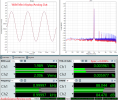
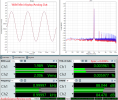
Even according to the rules claimed here... We don't even get enob 15 bits here... It would indeed seem that none of this is of much interest.
You can put everything away.
But if it doesn't bother you, that's great... everything becomes simpler...
;-)
(Ultimately, it’s a pretty simple question: Do you listen to material using compression like MP3 at less than 320kbps, for example... or not? Because, in the end, it makes a significant difference. Just a question to ask yourself—no ill intent meant. ;-) )
 

Attachments

  • Wiim Mini Measurement Analog Streamer Wifi Bluetooth.png
    Wiim Mini Measurement Analog Streamer Wifi Bluetooth.png
    51 KB · Views: 52
Last edited:
... We don't even get even 15 bits here...
But if it doesn't bother you, that's great...
Of course it bothers us. In sighted comparisons "bothering us" would easily result in a "noticeably poor with demanding music", "obvious after a few moments" experience.

An 84+ dB S/N ratio would never be obvious in a quiet room with 30dB residual noise except between tracks with your efficient horns turned quite high. However, I understand there is a VanAlstine comparator available that may make proof easier ;) Perhaps the use-case for the mini does not include auditioning within a foot of the tweeter.
What stops WiiM from including a CS43131 based DAC to feed the analog output? Dongle dacs based on CS43131 by the likes of JCally measure great and are sold for as low as $15.
Loss of sales of the similar measuring Pro and better measuring and far more profitable Pro Plus are two reasons.

Its interesting that WiiM, rather than discontinue the sad panther Pro ($169), released the very similar happy panther Pro Plus ($249 while including the $20 remote) rather than just update. I expect there is no significant manufacturing cost difference between these two besides the remote.
 
I got it in early 2022... and I’d noticed the issue well before the measurements presented here in April—even when comparing it to the humble, much older Chromecast Audio, and certainly when compared to a decent DAC like a Bel Canto or others.

I had given up on the idea of using its built-in DAC, even though having to add an external DAC really didn't suit me.For fairly modest use... far too many boxes and cables.
(I eventually gave it away when the one that was "plus" than sufficient for my needs arrived.)

P.S. Just remember, we aren't listening to a 1 kHz sine wave... but to complex sounds—the kind that actually exist in acoustics and are familiar to those who work with them.
It’s simpler than it looks... and doesn't seem to be all that well understood. So, THD represents a distortion of instrument timbres... something that resonates with those who are accustomed to the real thing.

It’s simpler than it looks... and doesn't seem to be all that well understood.
"""It's a "cultural" topic."""
 
Last edited:
Its interesting that WiiM, rather than discontinue the sad panther Pro ($169), released the very similar happy panther Pro Plus ($249 while including the $20 remote) rather than just update. I expect there is no significant manufacturing cost difference between these two besides the remote
Yeah it's smart to keep the lower end product going in the pipeline. That's what they did with WiiM Amp and WiiM Amp Pro as well.
According to AI, that AKM chip in pro plus costs an extra $10-$25 to implement. So the extra cost is $45 max. Still it's a great value when compared to what other brands are charging.
I think unless another brand come along and seriously challenges WiiM they wouldn't feel compelled to add any extra value to their lower end products. Fosi has been a disappointment with their S3 line up.
 
I got it in early 2022... and I’d noticed the issue well before the measurements presented here in April—even when comparing it to the humble, much older Chromecast Audio, and certainly when compared to a decent DAC like a Bel Canto or others.

I had given up on the idea of using its built-in DAC, even though having to add an external DAC really didn't suit me.For fairly modest use... far too many boxes and cables.
(I eventually gave it away when the one that was "plus" than sufficient for my needs arrived.)

P.S. Just remember, we aren't listening to a 1 kHz sine wave... but to complex sounds—the kind that actually exist in acoustics and are familiar to those who work with them.
It’s simpler than it looks... and doesn't seem to be all that well understood. So, THD represents a distortion of instrument timbres... something that resonates with those who are accustomed to the real thing.

It’s simpler than it looks... and doesn't seem to be all that well understood.
"""It's a "cultural" topic."""

If you didn't enjoy the sound of your system with the mini's DAC in the chain, then it's a good thing that you got rid of it. Your own listening enjoyment is all that matters in the end.

But that doesn't automatically mean that the the factual claims you make for why it sounded that way to you are correct. For example, your "it's not a sine wave, it's the complex sounds of music" argument is a canard or fallacy. Musical signals are collections of sine waves (in other words they can be encoded as and/or broken down into collections of sine waves). If anything, your argument is backwards, as the available evidence indicates that complex musical signals perform all kinds of masking that a single sine wave doesn't. So if the mini's DAC produces audibly inferior fidelity compared to a better-measuring DAC, you are less likely to hear that difference with a musical signal than you are with a 1kHz sine wave. (There is the potential factor of intermodulation distortion, so ideally I'd say a signal containing a 1kHz sine wave and one other sine wave that's not an integer multiple of 1kHz would be ideal, but the overall point stands.)
 
You're just forgetting that "musical" sounds acoustic are a reality for those who engage with them—frequently, and so on. You can gauge their "plausibility"... or not. ;-)
(If you think that—by virtue of having ears like his—you hear the piano the way a pianist who has been playing since age four does, or the violin the way a violinist does, and so on... well, that is precisely where there is a profound misunderstanding... ;-) )
 
Last edited:
You're just forgetting that "musical" sounds acoustic are a reality for those who engage with them—frequently, and so on. You can gauge their "plausibility"... or not. ;-)
(If you think that—by virtue of having ears like his—you hear the piano the way a pianist who has been playing since age four does, or the violin the way a violinist does, and so on... well, that is precisely where there is a profound misunderstanding... ;-) )
It is really really easy.

Look at the measurements and well-understood limits of audibility, or…Properly controlled blind test.

Otherwise you are just aiming arrows in the dark. Probably at an angle of 180 degrees to the target.
 
It is really really easy.

Look at the measurements and well-understood limits of audibility, or…Properly controlled blind test.

Otherwise you are just aiming arrows in the dark. Probably at an angle of 180 degrees to the target.

Why go to the trouble of taking measurements—observing that the results aren't good, or are far from the audibility thresholds you seem to want to highlight—if, according to you, it’s not audible anyway?
It’s not very consistent... not rigorous on your part...
;-)
(P.S. I’ve carried out thousands of audio measurements and this was already the case long before I discovered this forum...... you’re going to have a hard time pigeonholing me as some clueless subjectivist... ;-) )
 

Attachments

  • Wiim Mini Measurement Analog Streamer Wifi Bluetooth.png
    Wiim Mini Measurement Analog Streamer Wifi Bluetooth.png
    51 KB · Views: 42
Last edited:
You're just forgetting that "musical" sounds acoustic are a reality for those who engage with them—frequently, and so on. You can gauge their "plausibility"... or not. ;-)
(If you think that—by virtue of having ears like his—you hear the piano the way a pianist who has been playing since age four does, or the violin the way a violinist does, and so on... well, that is precisely where there is a profound misunderstanding... ;-) )
I'm not forgetting anything. The perceived reality of the sound of any instrument is far more variable than any sonic differences among DACs. So I'm afraid you're the one with the profound misunderstanding because the sound of acoustic instruments on a recording is of little to no use in telling you anything about the sound of a DAC, since the DAC has just about the smallest impact on that sound of any link in the chain.

Contrary to what you have written here, there is not just one sound of "a piano" or "a violin" - there are many, many different types and models that make widely varying sounds. This variation is obvious to anyone who's spent time listening to such instruments, live or on recordings, and it's of course also obvious to anyone who's played such an instrument "since age four."

Moreover, the details of how a piano or violin sounds on a recording are shaped primarily by the venue acoustics, mic and mic preamp sonic characteristics, recording mic arrangement, mix/mastering choices, and acoustic qualities of the playback/listening space. Not to mention, in most live performance situations with most instruments, the instrument is going to sound different to the performer than to anyone else - someone playing a piano at stage left as part of a symphony ensemble or in an orchestra pit is just about the worst person to tell you what that piano sounds like from Row 7 center (the proverbial ideal spot for listening to live acoustic music in a concert hall) - and if they do know what it should sound like from there, it's not from their experience hearing what it sounds like when they're playing it.

The claim you've tried (and failed) to put forth here is quite common in audiophile culture: posit that music isn't sine waves (even though it is, for purposes of discussing digital recording and reproduction); assert that music is "complex"; then reduce "music" to a couple of specific acoustic instruments; further reduce the complexity of those instruments to a single "true and real" sound for each one; once again reduce the complexity of that musical sound by completely ignoring all the acoustic and electric/electronic factors that actually shape the final sound of an instrument on a recording; and finally, further reduce the complexity by ignoring and collapsing the distinction between production and reproduction by claiming that performers who play those instruments know what they should sound like to a home listener of a professionally produced recording of those instruments.

It's a dreadful argument, and responding to it is a great example of Brandolini's Law.
You're on the wrong track... I'm well aware of all these things... :-)

Whether it's complex vs. sine waves... or the variability of instrument sounds, the impact of microphone placement, etc.—or the orders of magnitude involved...

Really... :-)

That’s why—despite the machine translation—I tried to highlight a simple concept I share with a friend who is a classical sound engineer:
the idea of *plausibility*..
It is precisely this "cultural" aspect that allows one to put things into perspective...

And, however clumsily, I’m just trying to point out that THD is a form of *timbre* distortion—which is highly relevant in the realm of acoustic music ( We can also consider the voices of our loved ones... )

I really don't have the means to write a detailed dissertation—especially one that gets mangled by machine translation—but do you realize that what you're saying implies that the DAC measurements performed here (rankings, etc.) are ultimately meaningless and pointless?
And that the whole issue of perception thresholds is irrelevant?

In real life and in conversation, I’d be happy to discuss it... But here—in writing and with a poor translation—I’m not going to take it any further... (That’s why, generally speaking, if I read... I rarely write anything myself...)
None of this makes any sense or is of any interest... Why not...!
Hehe


Have a good day
;-)
 
Last edited:
You're on the wrong track... I'm well aware of all these things... :-)

Whether it's complex vs. sine waves... or the variability of instrument sounds, the impact of microphone placement, etc.—or the orders of magnitude involved...

Really... :-)

That’s why—despite the machine translation—I tried to highlight a simple concept I share with a friend who is a classical sound engineer:
the idea of *plausibility*..
It is precisely this "cultural" aspect that allows one to put things into perspective...

And, however clumsily, I’m just trying to point out that THD is a form of *timbre* distortion—which is highly relevant in the realm of acoustic music ( We can also consider the voices of our loved ones... )

I really don't have the means to write a detailed dissertation—especially one that gets mangled by machine translation—but do you realize that what you're saying implies that the DAC measurements performed here (rankings, etc.) are ultimately meaningless and pointless?
And that the whole issue of perception thresholds is irrelevant?

In real life and in conversation, I’d be happy to discuss it... But here—in writing and with a poor translation—I’m not going to take it any further... (That’s why, generally speaking, if I read... I rarely write anything myself...)
Have a good day ;-)
;-)

This all makes sense - except you've neglected one thing: any evidence that the Mini produces a degree of distortion that would result in consistently audible alteration of perceived instrument timbre. This is yet another super-common move in audiophile discussion: identify a real acoustic/electrical/electronic phenomenon, assert that it's responsible for a claimed listening impression, and don't provide any evidence that the phenomenon occurs at anything remotely near an audible threshold.

At any rate, I'll reiterate that I'm glad you moved on from the Mini since you didn't enjoy it; and I wish you a good day as well!
 
The measurements show it... ...as does my own personal expertise subjectif of mini (gained over time, compared to other machines)... ...
which is enough for me...
Hehe
(You really ought to be satisfied! I don't get it...!!!)
;-))


And that "prove it" mantra—so trendy in ASR circles—gets tiresome...
When you look at the limitations and procedural flaws in many of the measurement approaches touted here, you realize that instead of jumping on "subjectivists" at the slightest comment, the energy would be better spent maintaining a critical eye or refining the "measurement approach" itself... or even trying to understand what lies behind an "expert" perspective, rather than mindlessly mocking "golden ears."
And brain is a formidable dsp

;-)


P.S. As I mentioned earlier... I’ve performed thousands of audio measurements—constantly pitting my own subjectivity against the data... It’s fascinating work, and—believe me—it teaches you a good dose of humility. ;-)
(And an approach claiming to be "scientific"—it seems to me—ought to be just that... and evolving...)


(P.S. It’s funny... It seems to be overlooked that neuroscience actually studies these topics—such as "developed expertise" in areas like music—using heavy-duty methods like functional imaging... "Open" topics, not "closed" ones. :-)
 
Last edited:
The measurements show it... ...as does my own personal expertise subjectif of mini (gained over time, compared to other machines)... ...
which is enough for me...
Hehe
;-))


And that "prove it" mantra—so trendy in ASR circles—gets tiresome...
When you look at the limitations and procedural flaws in many of the measurement approaches touted here, you realize that instead of jumping on "subjectivists" at the slightest comment, the energy would be better spent maintaining a critical eye or refining the "measurement approach" itself... or even trying to understand what lies behind an "expert" perspective, rather than mindlessly mocking "golden ears."
And brain is a formidable dsp

;-)


P.S. As I mentioned earlier... I’ve performed thousands of audio measurements—constantly pitting my own subjectivity against the data... It’s fascinating work, and—believe me—it teaches you a good dose of humility. ;-)
(And an approach claiming to be "scientific"—it seems to me—ought to be just that... and evolving...)
“The measurements show it, and it’s just trendy and dumb to rely on measurements and ask for evidence” - a perfectly incoherent position. Word salad and insults do not an argument make, and we’re not covering any new ground here, we’re just going in circles at this point and it’s tedious. So once again, have a good day, be well, and enjoy your system.
 
“The measurements show it, and it’s just trendy and dumb to rely on measurements and ask for evidence” - a perfectly incoherent position. Word salad and insults do not an argument make, and we’re not covering any new ground here, we’re just going in circles at this point and it’s tedious. So once again, have a good day, be well, and enjoy your system.
I really didn't insult you...
But anyway, have a good day
. ;-)
(It might just be that old distinction between a "scientific" approach and an "engineering" one lurking in the background.)
 
It’s really getting ridiculous...
For years now, here on ASR, we’ve been in a schizophrenic situation where measurements of "Chinese" DACs (they clearly realized that sites like ASR offered a low-cost marketing opportunity) keep piling up—ranking above the general population's "audibility threshold," boasting "transparency," -112dB SINAD, and so on.
Everyone sort of realizes how absurd it’s become.

But now we’ve reached the height of it... suddenly, even by ASR's own standards, we're looking at pathetic SINAD figures—and yet—in a similarly schizophrenic twist—it’s treated as no big deal...
"""The truth is, none of this... none of it... is actually audible...""" :-o
It’s pointless...
Great...

That said, I wouldn't say you're entirely wrong... for the uninitiated "general population," listening to undemanding music... yes, the difference would be barely audible...
It’s really just a matter of pandering that keeps this from being said more often...

It’s all getting pretty ridiculous...
While the trendy "ASR" mantra 's might have had some merit in challenging subjectivists, and why not, we have reached a point where the stances taken border on the absurd—and, for that matter, lack any trace of the open, critical mindset that ought to drive an approach claiming to be "scientific" (which makes the arrogance all the more foolish, given that the protocols are frequently highly questionable and clumsily bias the results—something that should really call for a bit of humility).
Sorry.
I don't understand why you have to be so contemptuous.
It's a perfectly reasonable request: If you say 90 SINAD is noticeably bad on "challenging music," it's the most ASR thing ever to ask if you have demonstrated that in a controlled, blind test--the one most salient takeaway from this entire site is that sighted listening is inherently and irremediably riven with bias, for all of us, no matter what. This is why we measure.

Personally I have no idea how common it is for people to be able to distinguish 90 sinad dacs from 120 sinad dacs, but I'm very very skeptical that there are many listeners who would find the difference not just perceptible but perceptible enough in regular listening to diminish the experience.
 
I find you a bit harsh for pointing out that, ultimately, bad measurements or negative comments—like those regarding the Armim in this instance—are of little interest or relevance.
or the ultimately futile nature of the measures...
:oops:
 
I find you a bit harsh for pointing out that, ultimately, bad measurements or negative comments—like those regarding the Armim in this instance—are of little interest or relevance.
or the ultimately futile nature of the measures...
:oops:
The issue is not pointing out bad measurements, it's whether 90 sinad constitutes a bad measurement, a measurement that results in what you have described as obvious, audible inferiority. That is far from a given, and it's reasonable to question your assumption that it is given that it's right at the edge of human audibility (and of course those edges rarely impinge on music listening--they're almost always only noticeable when a listener does things to intentionally seek them out!).
 
The issue is not pointing out bad measurements, it's whether 90 sinad constitutes a bad measurement, a measurement that results in what you have described as obvious, audible inferiority. That is far from a given, and it's reasonable to question your assumption that it is given that it's right at the edge of human audibility (and of course those edges rarely impinge on music listening--they're almost always only noticeable when a listener does things to intentionally seek them out!).
You shouldn't be addressing me, but Armim... *
;-)
(P.S. I personally found the sound quality of the Mini poor—and it didn't work for my setup—well before I was aware of those measurements.)

*And go ahead and explain to him that all his metrics regarding DACs, rankings, and so on are completely pointless...:oops::oops:
 
Last edited:
Back
Top Bottom