Why using a DMM is very unreliable when calibrating level for A/B testing with class D amplifiers
Originally posted here, but I find it important enough to open a new thread.
I would like to explain in deep why the usually recommended method of calibrating of level of the amp output with a 1kHz sine and DMM is unreliable in case f class D amplifiers.
I have tested BerryBak BVS2300 vs. SMSL A100, into 8ohm load. The former uses AD modulation, the later BD modulation, filter-less. Both types of modulation are explained here:
https://e2e.ti.com/cfs-file/__key/c...nts-files/6/Class_2D00_D-LC-Filter-Design.pdf
To put it short, both create a lot of unwanted HF noises, however the filter-less BD is much worse in this regard.
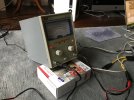
Let me start with oscilloscope shots from the BerryBak.
1kHz/1Vrms output, unfiltered

Please note the high 450kHz switching frequency residual superimposed on the 1kHz sine.
1kHz/1Vrms sine, filtered

Now the same, but 30kHz low pass filter is added at the oscilloscope input BNC connector. Still a small 450kHz spike is visible, but negligible.
Now we connect a DMM instead of the oscilloscope. The situation is like a blind man in the night. I have used two different DMMs, of quite a good quality.
1. UNI-T UT71B, with rated AC measuring bandwidth of 100kHz, in fact measuring even higher.
2. Protek 506, measuring reliably up to some 10kHz
Now, what happens if we connect them across the 8ohm load, instead of the oscilloscope. The chart below shows the results.

The faster UT71B shows similar readings as the oscilloscope and it must be used with the filter to give reliable readings. The slower Protek 506 seems to be less affected by switching residuals, but the readings are unreliable. Hopefully somehow consistent with the filter.
The conclusion is clear - using a filter is a must when calibrating class D amplifier levels for the A/B test, even with the DMMs.
Originally posted here, but I find it important enough to open a new thread.
I would like to explain in deep why the usually recommended method of calibrating of level of the amp output with a 1kHz sine and DMM is unreliable in case f class D amplifiers.
I have tested BerryBak BVS2300 vs. SMSL A100, into 8ohm load. The former uses AD modulation, the later BD modulation, filter-less. Both types of modulation are explained here:
https://e2e.ti.com/cfs-file/__key/c...nts-files/6/Class_2D00_D-LC-Filter-Design.pdf
To put it short, both create a lot of unwanted HF noises, however the filter-less BD is much worse in this regard.
Let me start with oscilloscope shots from the BerryBak.
1kHz/1Vrms output, unfiltered
Please note the high 450kHz switching frequency residual superimposed on the 1kHz sine.
1kHz/1Vrms sine, filtered
Now the same, but 30kHz low pass filter is added at the oscilloscope input BNC connector. Still a small 450kHz spike is visible, but negligible.
Now we connect a DMM instead of the oscilloscope. The situation is like a blind man in the night. I have used two different DMMs, of quite a good quality.
1. UNI-T UT71B, with rated AC measuring bandwidth of 100kHz, in fact measuring even higher.
2. Protek 506, measuring reliably up to some 10kHz
Now, what happens if we connect them across the 8ohm load, instead of the oscilloscope. The chart below shows the results.
The faster UT71B shows similar readings as the oscilloscope and it must be used with the filter to give reliable readings. The slower Protek 506 seems to be less affected by switching residuals, but the readings are unreliable. Hopefully somehow consistent with the filter.
The conclusion is clear - using a filter is a must when calibrating class D amplifier levels for the A/B test, even with the DMMs.
Last edited: