• Welcome to ASR. There are many reviews of audio hardware and expert members to help answer your questions. Click here to have your audio equipment measured for free!

Wharfedale Diamond 220 Budget Speaker Review

Wharfedale is one of my favorite brands of speakers having owned at least half a dozen models. They usually share a similar sonic signature with warm but detailed sound. Reva-2s were my most recent speaker acquisition when on clearance last year. Great speaker to consider when available on the secondary market.

g336REVA2PB-F.jpg
 
I am glad to see these measured well. In Europe, the successive recent Diamond ranges have often been the best buy for budget speakers, particularly at UK prices such as at Richer Sounds who mostly sell deeply discounted gear that is about to be discontinued. But even at Dutch prices these have been excellent buys. Often, the intermediate size standmounts such as this 220 with a 130 mm woofer have been the most succesfull in the range. The bigger models with 160 mm woofer sometimes had issues with driver integration.
 
I have been apprehensive about how my new rosewood finish Wharfedale D320's (plus D300C center) might measure. Now I have reason to believe that they will probably do well under Amir's scrutiny, and hope they get measured some day. The D320's sell in the U.S. at Music Direct for $249/pr vs $199/pr for the Diamond 220's, and they appear to be a more modern version of the venerable Diamond line. Although it is a matter of personal taste, I really like the rounded cabinet corners and separate round grills. (I originally considered the D330 floorstanders, but ended up buying the bookshelf model.)

With either 70wpc of older Classé AB amplification, or 100wpc of modern ICEPower Class D amplification, and room correction via my IOTAVX AVP, I really like them. For music, I can switch the center channel on or off for pure stereo via the IOTAVX remote. (Synthetic center channel output can be ok for some electronic music, but totally messes up the soundstage for most "ensemble" music (jazz, classical, rock, etc.)

Both of these Wharfedale models are bottom-ported, and my D320's are close to the back wall. I find it amazing that I can hear - in my tiny room - a bit of the deep bass in tracks like the end of "Prophecies" from the Koyaanisqatsi soundtrack and "L'ivresse des Profondeurs" by Jaia - with no noticable distortion. I also really like the magnet-held grilles - easy to pop off for critical listening sessions - and they certainly pass the "grilles off" appearance test by my standards.

Wharfedale 220 vs 320.jpg

Wharfedale Dia220 vs D320 Specs.jpg
 
Last edited:
I am glad to see these measured well. In Europe, the successive recent Diamond ranges have often been the best buy for budget speakers, particularly at UK prices such as at Richer Sounds who mostly sell deeply discounted gear that is about to be discontinued. But even at Dutch prices these have been excellent buys. Often, the intermediate size stand-mounts such as this 220 with a 130 mm woofer have been the most successful in the range. The bigger models with 160 mm woofer sometimes had issues with driver integration.

It was this reputation of Wharfedale that convinced me to take a chance and order a pair of the D320s plus matching center from the U.S. and hhave them shipped to me down here where I live as a retired expat in the mountains of Western Panama. I really like them - and if they measure well, that would be icing on the cake.
 
This is a review and detailed measurements of the Diamond 220 from the British speaker company, Wharfedale. I purchased the set for this review from Amazon for US $199 including free shipping.

The 220 comes with inset covers for each driver, giving it a classy look despite its low cost. Here it is though without the grills:

View attachment 87943

The top driver is just a tweeter with the surrounds being a waveguide. It is not a coaxial driver. The port shoots from a hole into the secondary bottom on the speaker.

The back panel is where you really notice this is a budget speaker, sans the fancy bi-amp terminals which you never see in this price range:
View attachment 87945

Despite being small, the 220 is rather hefty and dense speaker.

Measurements that you are about to see were performed using the Klippel Near-field Scanner (NFS). This is a robotic measurement system that analyzes the speaker all around and is able (using advanced mathematics and dual scan) to subtract room reflections (so where I measure it doesn't matter). It also measures the speaker at close distance ("near-field") which sharply reduces the impact of room noise. Both of these factors enable testing in ordinary rooms yet results that can be more accurate than an anechoic chamber. In a nutshell, the measurements show the actual sound coming out of the speaker independent of the room.

I used 800+ measurement points which resulted in error rate of slightly above 1% in upper treble frequencies.

Temperature was 68 degrees. Measurement location is at sea level so you compute the pressure.

Measurements are compliant with latest speaker research into what can predict the speaker preference and is standardized in CEA/CTA-2034 ANSI specifications. Likewise listening tests are performed per research that shows mono listening is much more revealing of differences between speakers than stereo or multichannel.

The reference axis is the tweeter. As you see below, I tested the unit with the grill on and off.

Spinorama Audio Measurements
Acoustic measurements can be grouped in a way that can be perceptually analyzed to determine how good a speaker is and how it can be used in a room. This so called spinorama shows us just about everything we need to know about the speaker with respect to tonality and some flaws. Let's first see the measurements with the grill on:

View attachment 87948

We see quite a disturbance in all of the graphs around 5 kHz. Looking at the driver response, we see modulations at multiples of 3 kHz in the tweeter as well:

View attachment 87950

So I remeasured the speaker with the grill off:

View attachment 87951

This is a huge improvement! Usually the impact of the grill is small but here, given how close it is to the driver, its comb filtering effect is amplified.

Early and important reflections indicate you should avoid floor and ceiling ones if you can:

View attachment 87952

If you don't, this is the predicted response:

View attachment 87954

Note that the issue is around 1.5 to 2 kHz so even a rather thin carpet would do the job (1 inch or thicker).

Impedance dips low as it typically does in this type of speaker:

View attachment 87955

The waveguide is doing its job in creating a rather smooth horizontal dispersion:

View attachment 87956

View attachment 87957

Vertical tends to be a lot more chewed up but it is not that bad here:

View attachment 87958

You are OK within a ±20 degree window above and below the tweeter axis.

Edit: forgot the distortion data:
View attachment 87985

View attachment 87986

Subjective Speaker Listening
Out of box experience with the Diamond 220 was very good. There was a slight boominess that prompted me to turn on the filter for my room mode. Past that, I decided to fill the dip in the response, and put in a shelf for the highs:

View attachment 87959

And my usual high pass filter to get rid of extreme lows that just add distortion and not much more.

Once there, this is a truly hifi speaker. Every audiophile track I had whether it was female vocals, pop music, vintage jazz, etc., it all sounded very good.

The 220 could also play very loud. The only problem is that the port makes very obnoxious rattling sound that doesn't come out of the woofer. This only happens at very high volumes and you only hear it if you are close to the speaker.

Conclusions
I must say, I was not prepared for this speaker to sound good. The first measurement seemed poor and that set my context. Yet when it was all said and done, for a budget speaker, it does a lot of things very right. Good tonality, very good power handling, and nice looks add up to an attractive package.

I am happy to recommend the Wharfedale Diamond 220 speaker.

------------
As always, questions, comments, recommendations, etc. are welcome.

Went to our garden and picked up the last of the zucchini and winter squash:

View attachment 87962

There are so cute to look at, you almost don't want to eat them!

Oh, on our septic saga. Had my helper dig up the trench to expose the sewage pipe that was not sloped right, causing blockage. He spends the entire day on it and got the pipe nice and clear. Of course the plumbers are no where to be seen. Meanwhile a storm comes in, dumps a bunch of rain on us and the ditch caves in. :( To make matters worse, the ditch goes partially under one of our two heat pumps, risking the whole $15,000 unit to topple down. :( After a bunch more calls, they finally come to cut and replace a 7 foot section of pipe. The bill? A cool $400 for one hour of work! It was a trade off getting this review done or doing the work myself. You know which way I went.

The above is a fraction of the money I spent today. More on this later. Hopefully you can make me feel better by donating generously using: https://www.audiosciencereview.com/forum/index.php?threads/how-to-support-audio-science-review.8150/

Strange that the utter lack of bass didn't bother you. Is it me or distorsion is worse at 86 than at 96 dB (nasty 5th peak replaced by way less harmful 2nd and 3rd staying the same) ?
I'd really like to see how the comparable Dali Spektor 2 fares.
 
Extremely welcome review: subjective good sound without deep bass.
Some of us must listen to music in small(ish) rooms, sometimes in appartment buildings. We need a reasonable sound pressure without exciting neighbours and room modes too much.
I have had some trouble to have my main rig behaving to my taste. Experimenting with reduced bass looks a promising idea.
By the way, our second rig in the TV room is very pleasing. The speakers are Wharfedale 10.1...
 
That was a characteristic of the older Diamonds too. They didn't try to reproduce what they couldn't and concentrated on what they could do well.
I don’t have the slightest clue on how to design speakers but this seems so logical that it makes me wonder why would any speaker, especially the smaller ones, not be designed this way?
 
Extremely welcome review: subjective good sound without deep bass.
Some of us must listen to music in small(ish) rooms, sometimes in appartment buildings. We need a reasonable sound pressure without exciting neighbours and room modes too much.
I have had some trouble to have my main rig behaving to my taste. Experimenting with reduced bass looks a promising idea.
By the way, our second rig in the TV room is very pleasing. The speakers are Wharfedale 10.1...
Fyi the Wharfedale Denton 80th is a great small room speaker with a smooth, warm yet still retaining great detail and air (all my personal subjective experience).
They have very nice bass for a 5" driver.
I highly reccomend them as an audition. (Free returns @ MD)
I found the Denton 80th to be a more interesting speaker than the Diamond line and the real wood veneer is very very nice.
$499 now but sometimes lower (mine were $360)
If I still had them (they moved to a good home) I would submit them here.
https://www.musicdirect.com/speakers/wharfedale-denton-80th-anniversary-bookshelf-speakers-pr
1602775209879.png
 
Anyone analyzing the $/per score for one pair of speakers?
Prolly better to just have a budget and the spend a little bit more. There are great option in every price class from $150-200ish up to several K's. ...so really the gains made by spending more are up to the pocket depth. ( is $300 an hours work or half a week?, Things like that)
 
Prolly better to just have a budget and the spend a little bit more. There are great option in every price class from $150-200ish up to several K's. ...so really the gains made by spending more are up to the pocket depth. ( is $300 an hours work or half a week?, Things like that)
or in some cases ($300) represents 30% of monthly income (SS)...work a speaker budget from that..
 
Looks like it might be time to recalibrate our rating systems.

This speaker with the grill off measures in the bottom third of all speakers reviewed so far. For under $200, it is beaten by the Micca RB42, Pioneer SP-BS22-LR and Sony SS-CS5. Two out of three of those speakers had headless panthers in their respective reviews. Color me confused either by the rating systems or by the positive responses about this speaker's performance so far.
 
Anyone analyzing the $/per score for one pair of speakers?

Yes, @MZKM is. See his very useful 'Performance: Price' chart on his preference score page, which shows for example the Elac Debut 2.0 B6.2 and the Q Acoustics 3020i performing better around the same price. (Note the latter is even cheaper now so higher value for money, and the previous version, the 3020 is cheaper still at $229 a pair for what looks like a very similar speaker from the design and rated specs - would need proper measurements of it to confirm that though.)
 
Last edited:
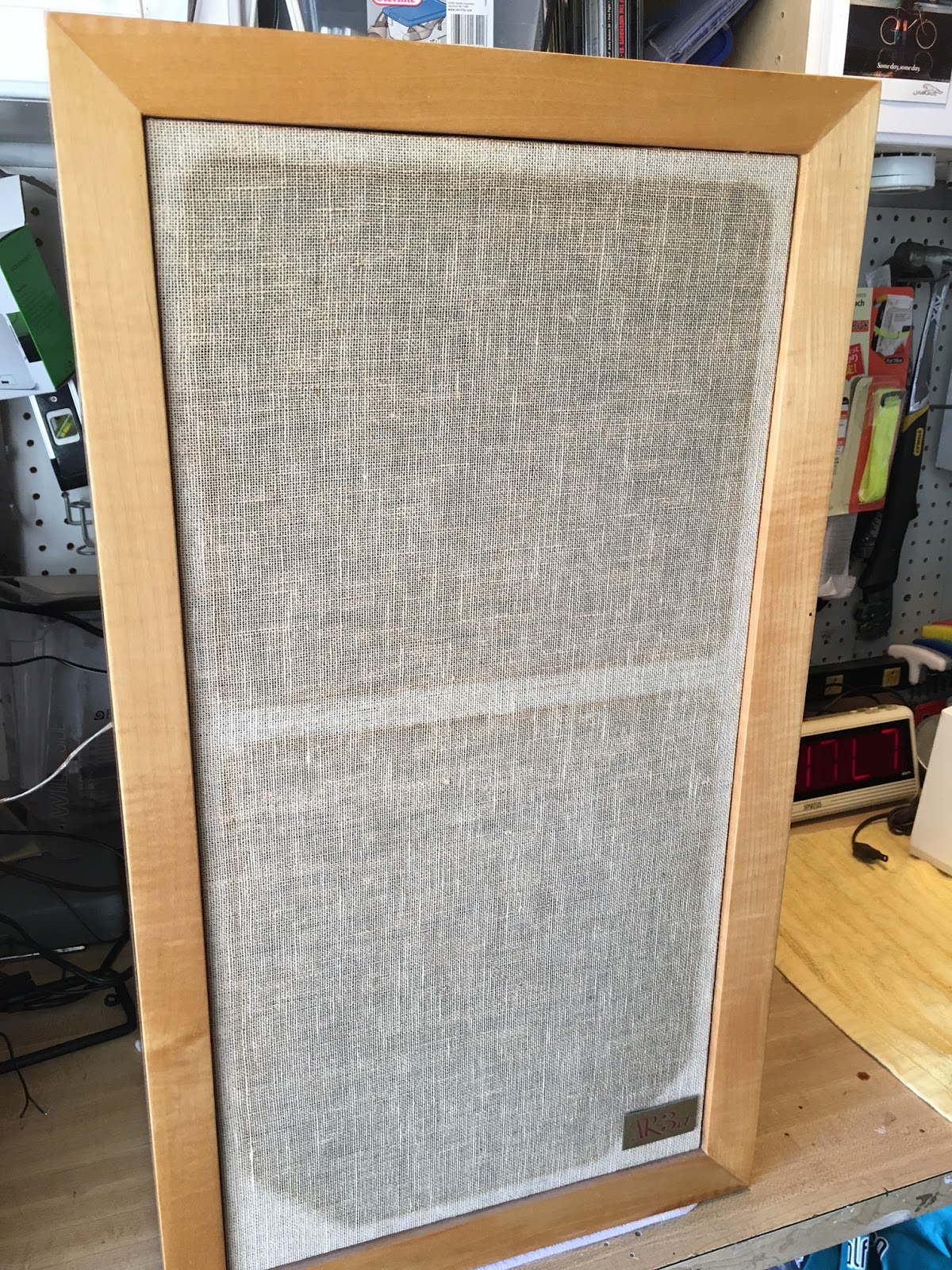
You've never owned AR 3a I can tell. :)

View attachment 88018

Honestly, I still think I prefer that to the drab, uninspired grey rectangle and tacky logo of the speaker with its grille on:

IMG_7413.JPG


Without the grille it's kind of got an interesting, almost steampunk vibe to it :D
 
or in some cases ($300) represents 30% of monthly income (SS)...work a speaker budget from that..
I am putting this response here even though maybe off topic as these prices may help buyers choose between this Whafedale and other inexpensive choices as of today.

Sony SSCS5 bookshelves were on sale yesterday for $73 a pair. They hit this price very often, I am sure that will happen again for the holidays keep an eye out.

Infinity R152 sets (2)are $135 (super great for $ for a pair of good speakers, plus free returns if needed)
https://www.harmanaudio.com/R152BK.html?ged=off
The matching center is also $135 and the tower version is $180 each.

ELAC Debut B6.2 B-stock $262
https://elac-america.myshopify.com/products/b-stock-b6-2-6-1-2-bookshelf-speaker-pair

JBL has the Studio 570 small towers for on $199 each (400 pair)

The JBL 305p doesn't need any amp and is $129 right now each ($260 pair for nice actives) including the white color. (they often hit $89-99 each around the holidays)
https://www.guitarcenter.com/JBL/30...sLlRyfIbtkjiaGOlpyBS7ZeoRrwDxc8BoCerwQAvD_BwE

https://www.harmanaudio.com/studio-monitors/305PMKII.html?ged=off&mrkgadid=1&mrkgcl=989&mrkgen=gpla&mrkgbflag=1&mrkgcat=brand&utm_campaign=Pro|GSC|Brand_(No_Product)&utm_source=Google&utm_medium=cpc&utm_term=pro_brand_pla_jbl_studiomonitors&product_id=305PMKII&utm_content=JBL|Studio_Monitors&acctid=21700000001715250&dskeywordid=92700052744385608&lid=92700052744385608&ds_s_kwgid=58700005780238500&ds_s_inventory_feed_id=97700000008418427&dsproductgroupid=488349453960&product_id=305PMKII&merchid=107453784&prodctry=US&prodlang=en&channel=online&storeid=&device=c&network=g&matchtype=&locationid=9019660&creative=288067584842&targetid=aud-349180005306:pla-488349453960&campaignid=955954686&adgroupid=58440024219&kxconfid=unnmhyek8&gclid=CjwKCAjw5p_8BRBUEiwAPpJO66PNeVJVQSm4glne7n1qjkMpFIrIOGut06FkJGbNvHEC0lbDNxzEyBoCVGUQAvD_BwE&gclsrc=aw.ds


Obviously there is a huge used market as well.
I hope you find a good speaker. You budget may be tight but there are great options. I f you already have an amp I'd pick the R152's and then add a sub later.
 
This is a review and detailed measurements of the Diamond 220 from the British speaker company, Wharfedale. ...
The port shoots from a hole into the secondary bottom on the speaker.
Interesting to see 1. the port design - appears the tube length and aperture are carefully chosen. Would love to hear comments from the speaker designers amongst us on what is going on here, especially since the bass response is not especially good, considering this speaker is over 12" high. And 2. The tweeter enclosure - appears to be more than a waveguide on the front?
1602780420948.png
 
Back
Top Bottom