• Welcome to ASR. There are many reviews of audio hardware and expert members to help answer your questions. Click here to have your audio equipment measured for free!

Useful Applications for AI

I work as a software engineer, and the applications there are wild. I haven't written code myself in more than a year. My team's delivery rate is up by ~400% over 12 months, with about 50% of it manually supervised (interactive claude code), and 50% fully automated human-just-says-yes-on-the-change-request.

The biggest effect I'm seeing is raised ambition - we're taking on more, much bigger projects because we know we can.

Personally I'm building tons of personal and home automation software that I previously would never have finished or wanted to maintain.
Same experience as mine. The raised ambition is the part that worries me a bit :rolleyes:
 
I really like this music here. It's all AI generated. But whenever I just need something to listen to, I open one of these channels. I don't have to think about it. The style is consistent without being too repetititive. For everyday background music it's very nice, especially because there are no lyrics.

 
I work as a software engineer, and the applications there are wild. I haven't written code myself in more than a year. My team's delivery rate is up by ~400% over 12 months, with about 50% of it manually supervised (interactive claude code), and 50% fully automated human-just-says-yes-on-the-change-request.

The biggest effect I'm seeing is raised ambition - we're taking on more, much bigger projects because we know we can.

Personally I'm building tons of personal and home automation software that I previously would never have finished or wanted to maintain.
I'm a software engineer as well, but in the last 30 years I was no longer developing software myself (yes, older guy here).

I started a few days ago a little project with the help of AI (vibe-coding). I built a tool for handling images from my cameras (culling, ingest into folder structure, detect duplicates, collision-safe renaming, use of EXIF data for renaming, undo function for move and copy operation). Something like PhotoMechanic, but without the complexity and without the extensive metadata features, just what I really need.

It took me about 20 hours and the result is so good that I will be using this tool regularly in the next few months. My guess an experienced developer would have been even faster or have a better designed app.
 
I wanted to use Comsol but they are horribly expensive, don't scale well on GPU etc Plus the key value of what i do is to use AI to predict the solution faster than what bem/fem can do and get to control the result with a nightly run. 10 years ago, i would have needed 10 or 20 engineers full time to match my current output and a lot of things would not have been polished the way they are.


100% rust mostly for portability reasons and because the compiler is on the strict side and find bugs generated by xxx agents. Fortran does not provide enough guarantees and I decided to stop f77 25 years ago :) I use a python for visualisation or interfacing with other apps.

the value is not in Rust (vs others) it could have been C++ or GO. The value is that is have a 100% coherent codebase that i can compile with 1 command, that works everywhere with almost zero external dependencies. I rebuilt fft, blas, lapack, iterative solvers, etc to be autonomous. It also help the agents to debug the whole stack since I own all the code. Claude and Codex are very knowledgeable in this areas and progressed very quickly.

i had to relearn a lot of my programming skills. in the past i would have re-used as much as possible (use petsc for ex). Now it is unclear how much you benefit from well established solutions. It is clear that they are SOTA for some things but they were written long time ago and are struggling with GPUs for ex. I was surprise by how fast NVIDIA cards are at matrix/vector multiplications.


2d, axy symmetric and 3d


both depending on what i want to do or what the needs has been up to now.


For now i have Euler well tested and Lighthill/FW not that well tested


I dont have proper shock wave support yet (low speed only). I have only done a few academic examples.


Yes I am looking into PINN, currently testing with acoustics for some real time room-eq correction.


One of the magical things with AI is that you can ask: for each kind of physics, find 10 analytical solutions from the litterature for 1d, 2d and 3d (10 for each) and implement them as a QA binary folllowing skills ...

A few hours later you get your 30 binaries that match the analytical solution.

or you can ask, look at arxiv, find me the last 10 papers on 1 physics module (like thermics) with significant impact and where they have reproducible benchmark/results, and again the tool will find them, analyse them write the code and allow you to compare yourself with established solutions. (Semi) Magical.

On the flip side, from time to time, i want to throw the whole thing out of the window, it can regress in a way that was not the case before.

I released parts of sonium on GitHub. The relevant parts for building and optimizing speakers are included. It lacks documentation atm but you can point your favorite chatbot to it today. You can have a look at https://sonium.spinorama.org code is at https://github.com/pierreaubert/sonium

- Physics modules are in : https://github.com/pierreaubert/sonium/tree/main/crates/sonium-fem/src/physics (more to come when i have the time to merge)
- QA is in https://github.com/pierreaubert/sonium/tree/main/crates/sonium-qa ; Comparison to Wolfram Engine is inside.

Matrix, FFT, Solvers, BEM, FEM etc are currently optimized for macos m4+, intel and amd x86 (epyc, xeon) but work also well on consumer processors, CUDA. ROCM is planned but i dont have the HW to test. Perf is usually 1x to 1.2x slower than state of art library (openblas, petsc, cublas, cusparse, cusolve, etc) but not too bad for a 6 months old library built between 6am and 8am.

The 3 demos relevant here are:
sonium-sim-roomRoom measurement-data generation for RoomEQ testing (FEM + optional dense BLR TBEM at low frequencies)
sonium-sim-speakerLoudspeaker BEM simulation, mesh generation, CEA-2034 output, optimisation
sonium-sim-speaker-modelingElectro-vibroacoustic driver/enclosure models, incl. nonlinear port flow

Quality of the demo is TBC since it was not paid for work.

Sonium is not small (1.2m lines of rust), if you need help to get started let me know. Usually sonnet/astra/sol/muse and friends are very good a building from it. You can ask for ex:
- build an app that model linear flexion on a beam (use something like /grill to get more details and a better prompt).
- optimize the performance of this function on this hardware using the evo-hq skill
- add a physics module to implement xxx
- use vtk to show the computed pressure before and after DSP
etc PR's are very welcome.

If you have expertise in speaker design and find bugs (likely) let me know and i will fix them.

I will make a proper launch in a few months.

p.s. @JustAnandaDourEyedDude for me, that's the power of the AI technology. Millions on line of code built quickly, physics expertise, etc all in 1 tool. Perfect no but powerfull.
 
Last edited:
I've been playing with the AI component of Google Docs. It can re-write one's prose in the style of....anyone. You can make your next text sound like William Faulkner! Or, as Edgar Allan Poe might say: "I have been dabbling with the spectral intelligence bound within Google Docs. It possesses the uncanny power to reshape one's prose into the haunting cadence of... anyone. You might summon from the shadows a voice that echoes the gloomy, labyrinthine musings of William Faulkner himself!"
 
Claude Code is very useful if you want to turn your Rpi or any Linux computer to a streamer.
I had a bit more than usual requirements for my Spotify Streamer on Rpi. I wanted to have PEQ and also an IR remote to work on my Rpi 4. So the usual Moode or Volumio wouldn't cut it. I fired Claude Code and had it connect to my Pi via SSH and set up Spotifyd on it and got it working. It also solved the pop noise that SU-1 was making after stopping and starting the player. Real time saver!
 
I find AI incredibly useful for demoing how some home renovation projects can look before diving in. We've used it to pick ceiling lights and replacement windows among other things. Don't have to bother imaging what things will look like anymore, you know you'll be happy with the result.
 
So this one is particularly relevant here at ASR.

I've been wanting – for some time – to set up a database of all my CDs and albums that I can carry with me, so when buying I don't end up buying stuff I already have – which has happened a couple of times now.

I've also lost the plot with regard to knowing what I've now ripped to Apple Music.

prompt said:
I have a bunch of CDs I need to rip into my existing iTunes library on my Mac. I would like to have an app that will scan a cd barcode and tell me if it is already ripped, and also build a database of all my music, first from what is in iTunes, then from subsequent barcode scans – and track when I have ripped the cd. If it can scan vinyl barcodes and track them, then so much better. What can you find?

ChatGPT suggested possible apps or systems to help with this using barcode scanning, rejecting anything with an annual subscription. It suggested a few alternatives and compared them for me. There were none that could compare with Apple Music to tell me if they were already ripped.

I decided on Discogs – online, long track record – free to use for cataloguing. I started off scanning 6 CD barcodes, but it was irritatingly cumbersome:

prompt said:
So scanning in the app is not as streamlined as I would like. I was hoping for "Scan – automatically add – scan next”.
But it routinely offers many editions from the barcode; I have to create a filter – each scan – to narrow it down to Europe, then click on the edition, then scroll down to "add to collection".
Is there a way to streamline this – especially making the filter sticky between scans?

To cut a long story short – ChatGPT suggested the following:

Use a barcode scan utility (we chose Batchscan) to grab a bunch of cd barcodes – Batchscan’s free limits are 30 in a file, so I am scanning in batches of 30, which I can do in less than a minute.
I upload the file in chat, and it uses the Discogs public api to identify the best match releases for the barcode based on location. It builds a CSV file of release information, and also adds the info to its own master catalogue. As part of this, it identifies releases where it can't make a good decision (e.g. where the barcode has both standard and special editions) and I must manually review the selection.
ChatGPT created a Python utility to take the CSV file and use it to add the selected releases to my collection in Discog, using my personal API Key (entered in the utility and stored locally - not given to chat gpt).
I then download a CSV format of the collection from Discogs – give it to ChatGPT, and it compares that with a previously downloaded export from Apple Music. It generates another CSV file of notes and ripped status, which the utility then uploads into custom fields in Discogs, which will (when everything is catalogued) give me a complete list of all CDs I need to rip.

We've tested it and ironed out most issues over the first 100 or so CDs. It is staggeringly time-saving compared with manual scanning and selection using the discogs app. And manages the comparison with Apple Music, that Discogs cannot do.

Screenshots of the utility it created, and the custom fields in Discogs, below.

Screenshot 2026-10-13 at 16.36.18.png Screenshot 2026-10-15 at 08.55.54.png
 
Last edited:
Related to my post immediately preceding this one. I realised that when I have a list of CDs to rip, I'm still going to need to find those physical CDs when I come to rip them. I really cannot maintain an alphabetised storage system. A lot of work initially and soon gets messed up.

I've just tried an experiment.

I keep CDs mostly in a chest of drawers. The remainder that don't fit in there, on a CD shelf/storage unit.

As an experiment:
I filled one of the drawers with a random set of CDs out of the catalogued ones, spines facing up. Then took a single photograph of them and gave it to ChatGPT, asking it to identify positions of all the CDs. "Drawer" then “column" then "position in column"

It created the position data from the photograph. There was one it couldn't identify from the photograph so I told it what that was.

I can now ask it using voice "Where is Ellie Goulding?" and it tells me "Drawer 1, column 1, position 17, Bright Lights."

I can also ask it where I should put it when returning it to the drawer.


And if this system gets messed up, I can just retake the photographs and ask it to re-index.


Photo of drawer attached.
IMG_2968.jpeg
 
I was in a quest for multichannel for movies, but did not want to spend money on an AVR. I have a pretty minimalist setup and do not mind a bit of DIY (or DIWAI, do it with AI). Long story short I stumbled upon a single board computer that has an eARC input (Khadas VIM3L, SBC). As I already had a HTPC, this seemed a very promising idea. I knew that if I managed to get audio into a computer the rest would be easy. The board is cheap and has the single function of getting multichannel audio from the TV and send via network to the HTPC for processing. Problem is that the documentation of the VIM3L capability was very sparse and I knew that I would need to write code to make this whole thing work. And I do not know how to write code. Enters Claude code, which can be installed in the VIM3L and accessed remotely via a browser. In a few ours I (it, he?) got the basics working.

I wrote the technical stuff here.
 
OT:
I newly installed Firefox web browser with no account making nor any log-in to an account, so that Firefox and the free Gemini do not know (I believe “not”) I am the author of the specific contents in ASR Forum for which I put my inquiries; also, in the PC, I have no files/documents relating to my ASR contents.
Firefox provides a 'Private Browsing' (Chrome's incognito) mode, in its MainMenu.
FF_PrivateBrowser.png

Firefox Private browsing mode opens a new browser window. When you close the last private browsing window, your browsing history and any tracking cookies from websites you visited will be erased.
Firefox Pro Tip: Don't forget to close all your private browsing windows when you're done!
https://www.firefox.com/en-US/compare/chrome/
I don't know if either precaution would achieve results you may have been seeking for firewalling Gemini.
I mean, after all, Chrome is Google and we all know what Google is famous for.:confused:
 
Last edited:
I don't like being served information that cost money and/or privacy.
I was trying to get Claude to list over 5,000 albums that are stored in 7 top-level NAS folders, each spanning a 20yr period (1940s onward).
I reach my free allotted time for Claude engagement...
I am on a time-out for information. :mad: I am glad it is not an emergency. :)
 
Related to my post immediately preceding this one. I realised that when I have a list of CDs to rip, I'm still going to need to find those physical CDs when I come to rip them. I really cannot maintain an alphabetised storage system. A lot of work initially and soon gets messed up.

I've just tried an experiment.

I keep CDs mostly in a chest of drawers. The remainder that don't fit in there, on a CD shelf/storage unit.

As an experiment:
I filled one of the drawers with a random set of CDs out of the catalogued ones, spines facing up. Then took a single photograph of them and gave it to ChatGPT, asking it to identify positions of all the CDs. "Drawer" then “column" then "position in column"

It created the position data from the photograph. There was one it couldn't identify from the photograph so I told it what that was.

I can now ask it using voice "Where is Ellie Goulding?" and it tells me "Drawer 1, column 1, position 17, Bright Lights."

I can also ask it where I should put it when returning it to the drawer.


And if this system gets messed up, I can just retake the photographs and ask it to re-index.


Photo of drawer attached.
View attachment 564458

Really suggestive application of AI; I am much impressed.

I too periodically (actually at least annually) take HiRes photos of my physical disk library/shelves as I shared here #95 on a remote thread.

I still keep all the physical disks for occasional access, for example when I would like to read the liner notes (booklet) in detail. I usually well remember the location of specific disk in my disk racks/shelves, but sometimes it becomes a little bit of frustration finding the specific physical disk since the disk catalogue number printed on the side of disk-case is in very small font/character.

Furthermore, I recently heard that an earthquake and a tornedo happened in Japan caused collapses of music disk racks/shelves of several audio-enthu people, and they are almost giving-up re-building/re-construction of their physical disk library, especially it would be very difficult (or even impossible) to rearrange the disks to the right positions/orders as they were before the tragedy.

I decided, therefore, to take and keep HiRes photos of my present physical CD-SACD-DVD racks/shelves.

I have shared there one of the eight (8) HiRes (6720x4480 pixel) photos of my disk shelves; each of the similar eight (8) shelves contains about 450 CDs (SACDs DVDs), i.e. total about 3,600 physical disks. I used my Canon EOS 5D Mark IV DSLR camera + EF24-105mm F4L IS II USM lens, and shot photos with tripod and cable-release on live-view mode with very careful manual focusing and exposure control in ISO 2500, f/11-13.
WS704.JPG

When I enlarge on-screen the red-rectangular portion of above original HiRes photo, it can be seen like this for easy reading of the smallest fonts/characters of CD catalogue numbers.
WS705.JPG

I will soon follow and simulate your AI application after I would clearly put titles, like Shelf-01, Shelf-02, .... Shelf-08, on each of the eight HiRes photos.
Just like you have done, I will be able to ask AI using voice (or text typing) "Where is Vivaldi - 6 Flute Concertos by I MUSICI and Nicolet?" and it will tell me "Shelf-01, lowest 6th raw, position 9 from left corner." :D
 
Last edited:
Sub $100 tiny portable synth becomes popular target for vibe-coded firmware

Usually devices with a budget have complex cryptographic defenses against substituting new boot code or firmware. Phones and PCs are an example where boot and firmware changes by customers and hostile actors are unwanted. On PCs, UEFI replaced BIOS for that reason.

The M-VALVE FM1 synthesizer costs between $25 (Alli Express on introduction last year) and $90 (Amazon today).

The company released an M-UPGRADE tool for customers to install company firmware updates over USB to the synth. The hardware is based on the JieLi AC791N system on a chip. The chip costs $.45 to $1.70. It is used in smart toys. The FM-1 uses a bare metal software approach - no operating system. For systems with more memory an operating system like embedded Linux is used.

Enthusiasts discovered it was easy to flash the firmware of the commonly known AC791N inside with arbitrary code using the company tool. Then the company released the source under (Open Source) GNU General Public License along with their own integrated development environment.

Customers without coding expertise are using AI vibe coding to produce their own custom firmware.

Add - the FM-1 has MIDI, so you can connect a full size keyboard. I could see this as a great STEM platform for middle schoolers to learn coding on a project that might interest them. It has a development community. Similar to TPA-series amplifiers providing good functionality at a low price, these synths are available at a low price. Both replace vintage counterparts. Roland, maker of classics like the 404 have a defense - Roland Cloud, where the vintage equipment becomes a plug-in. In all, the customer benefits.


It is reported that Behringer is also planning an open source synth.


IDE:

M-VAVE-FM-1-Open-open-source.jpg


Hardware demo of default firmware:

 
Last edited:
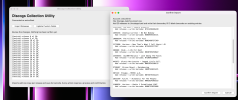
I installed OpenCode on my pc and have it set up to use the Qwen3-Coder-30B-A3B-Instruct local model running in Unsloth Desktop. I "vibe coded" an improved version of a python program I use to combine a png image with a flac file for youtube videos. It all worked great and was a lot faster than I expected. Also it is all free (except for the electricity to run my pc), no online service needed.

The OpenCode UI is running in a terminal. There is a GUI version, but this works well:

1793052157758.png


The finished app:

1793051830409.png
 
As someone who is extremely bad with using software even though I'm good with most of the theory I had Claude walk me through generating some active filters using a couple of different apps to see if I could get to grips with the finer points of either. I finally got a set of filters looking quite good so I asked Claude for thoughts and the reply was "They're quite good but you can do better, compared to the ones I generated they are a 1 or 2dB out in places and the phase can be better" or words to that effect. When I asked why he didn't tell me he had done the filters he replied "You didn't ask"
 
I used OpenCode with Qwen-Coder-Next (70B mixture of experts model) on my Linux pc to convert the python code for this app to Rust. The UI doesn't have the fancy icons that the python version did, but everything is working. The new version is 100% Rust code. Now I'm going to make the UI look a little fancier. The process used a lot of tokens, but they are all free so I don't care about that. The source code is 987 lines.


Screenshot from 2026-10-29 17-16-35.png
 
I used OpenCode with Qwen-Coder-Next (70B mixture of experts model) on my Linux pc to convert the python code for this app to Rust.
Developing...
We are witnessing one-of-our-own grow from AI-assisted image creator (and more) to someone in the know!
Kudos @Brian Hall !!!!!:cool:
 
... It all worked great and was a lot faster than I expected. ...
Same experience here. The two Apps I made were ready to use in a few hours. I started this simply as an experiment and now I'm using my Apps regularly. I did not expect that.
 
I used OpenCode with Qwen-Coder-Next (70B mixture of experts model) on my Linux pc to convert the python code for this app to Rust.
I'm curious - why convert from python to rust? What advantage does it give you in this case, or was it just to try it?
 
Back
Top Bottom