• Welcome to ASR. There are many reviews of audio hardware and expert members to help answer your questions. Click here to have your audio equipment measured for free!

"Unique" narrow-purpose devices of great value for money

Other manufacturers sell similar Dante dongles - Tight AV for example.
I have 3 DanteAVIO dongles (XLR/Ins, XLR/Outs, USB=I/O) for cross-feeding different zones in the house.
In 2021, I was able to score a Dante/AES67 'Interface Box' (rcv+xmt) for under $200, from Chinese manufacturer called AudioCom (at aliexpress).
1793644201614.png

Weird somehow, but I have managed to lose my DanteAVIO XLR/Ins dongle.:oops:
So, I had to purchase this KlarkTeknik DN30R box, at a reasonable price of $180; as a replacement that will never walk away!:rolleyes:
1793644639990.png

Although IP'd, Dante network protocol just works for my application, at reasonable prices.
Unique hardware plus Unique software combo makes them reasonably (FIXED) priced, as well as reasonable performers, per OP requirements!

ADD: "(FIXED)"
 
Last edited:

Relatively speaking maybe reasonably priced, but looks to me the whole Dante world is not for me, at maybe 20+ channels in total just these connector/adapters would cost 5x all the rest put together.

8x channels for $100, more my speed.

In any case, seems functionally not so unique strictly speaking.

that Audinate dongle was a PoE speaker amp!!
 
Audiophonics' "HC Trigger Switch MKII"


Maybe Bobwire has similar switches? But bidirectional symmetrizer / desymmetrizer and concurrent output, I think might be unique
 
ESP32 noob here

Why that?

as opposed to ESP32-C5

The different ESP32 chips have different peripheral capabilities - see here for an overview, although some fine details are missing. For AES67 the important one is the PTP-capable wired ethernet interface. I think there's something specific about being able to discipline the I2S clock from the PTP one too, but I don't remember the details. You get that on the P4. It's also got the high-speed USB so might be a good choice if you want the higher channel count and sample rate UAC for the DSPi as mentioned in the other thread. I've not looked into whether the clocking capabilities would allow it to be a UAC2<->AES67 adapter - even if it can the code would need writing as I don't think that was included in the project.
 
Some of the most useful and inexpensive devices I use are AES72 adapters to convey analog/digital audio over Cat6. Vendors from Amazon (starting at $10), StudioHub, Thomann and many others.
 
Then, you see a current article (via wsj) with the heading of...
1793657551500.png

and wonder where we are heading!:D
 
Some of the most useful and inexpensive devices I use are AES72 adapters to convey analog/digital audio over Cat6. Vendors from Amazon (starting at $10), StudioHub, Thomann and many others.
I thought you were a RAVENNA (AES67) user/fan.
May I ask for what purpose you rely on (or a proponent of) AES72 via Cat6/RJ45?
... in the hopes that I am not gagged for an OT (but tangential) question.
 
Some of the most useful and inexpensive devices I use are AES72 adapters to convey analog/digital audio over Cat6. Vendors from Amazon (starting at $10), StudioHub, Thomann and many others.
As you know that Category is of great interest to me, to continue in other threads.

Do you A. have any Specific Devices that are unique in that category and not too pricey?

or B. (while I gotcha) know of breakout adapter
brands that claim to support SE specifically (especially TS but Euroblock or RCA OK) to RJ45 besides Ashton Research Tetrapatch ?

I'm thinking, use CAT7 or CAT8? "S/FTP or PiMF (Pair in Metal Foil) cable, where each individual pair is wrapped in its own foil shield (within the master braid shield)

to isolate the 4 single-ended channels from cross-talking to each other.

I also want to (maybe just for balanced?) carry the outer shield connection bonded to chassis (star) ground on both sides (and Pin1?) to avoid any potential ground loops as per AES48-2005.

I dunno yet if Tetrapatch enables this, waiting on email back. Can you suggest any others that do? Pretty sure official EtherCON does...

I'm hoping a single "behind the rack" scheme will suffice for at least both Analog types, and the when variations are required they can be implemented by just swapping out the Male-RJ45-terminated CAT patch cables.
 
For AES67 the important one is the PTP-capable wired ethernet interface. I think there's something specific about being able to discipline the I2S clock from the PTP one too, but I don't remember the details.
So long as the NIC/chip supports PTPv2 timestamps properly in hardware, I think everything else about sync'ng the RT system "wall clock" is done in the software stack on each node.

The "heartbeat" for signal-carried clicking, just like BNC WC for DA/AD, I think then gets automatically "coordinated" from the system clock, master/slave needing proper configuration just lije PTPv2 grandmaster selection.

Intel i210 is recommended on PCIe hosts. Apparently RPi5’s BCM2712 Ethernet controller might not completely qualify? CM4's might...

...

> You get that on the P4

but Weeb's saying only ESP32-C5 works to host DSPi?

...

> I've not looked into whether the clocking capabilities would allow it to be a UAC2<->AES67 adapter

That "it" referring to the host or the DSPi SBC?

I was thinking ESP32 is the bidirectional USB host, while the latter (as I2S peripheral) handles all the other formats, where each port is one-way only.
The only contemporary one I know to be entirely broken for PTP is the Aquantia 10GE chipset. The Broadcom chipsets, even the one in the rPI5 work well enough for audio but are not as accurate as they could be if you want extreme accuracy then you need specific Intel NICs some of which are even specifically sold as timing source and have a GPS receiver on the NIC itself as a time source.
 
So long as the NIC/chip supports PTPv2 timestamps properly in hardware, I think everything else about sync'ng the RT system "wall clock" is done in the software stack on each node.
It's a matter of how that is done though. If you can discipline the I2S clock to match network time you can avoid having to use ASRC which is much more computationally expensive, or quick and dirty dropping or repeating of samples as clocks drift apart. https://developer.espressif.com/blog/2026/06/aes67-audio-over-ip-on-the-esp32-p4/ goes into the details of design decisions and limitations.
> You get that on the P4

but Weeb's saying only ESP32-C5 works to host DSPi?
The full quote gives context to what 'that' was:
For AES67 the important one is the PTP-capable wired ethernet interface. I think there's something specific about being able to discipline the I2S clock from the PTP one too, but I don't remember the details. You get that on the P4.
I took @Weeb Labs to be referring to a specific implementation of USB<->I2S on the C5 connecting to the DSPi, not saying that other ESP32 models couldn't be connected to the DSPi I2S inputs and outputs. I may be wrong though as at one point there was talk of porting DSPi to an ESP32 instead of the Pico.
> I've not looked into whether the clocking capabilities would allow it to be a UAC2<->AES67 adapter

That "it" referring to the host or the DSPi SBC?

I was thinking ESP32 is the bidirectional USB host, while the latter (as I2S peripheral) handles all the other formats, where each port is one-way only.
'It' being the P4 board with a modified version of the previously linked project code, replacing I2S with UAC2 device mode for its audio I/O. That would be similar to the Dante<->USB dongle from Audinate.
 
The full quote gives context to what 'that' was:

I took @Weeb Labs to be referring to a specific implementation of USB<->I2S on the C5 connecting to the DSPi, not saying that other ESP32 models couldn't be connected to the DSPi I2S inputs and outputs. I may be wrong though as at one point there was talk of porting DSPi to an ESP32 instead of the Pico.
Absolutely. Many ESP32 models can be used for USB->I2S into DSPi. So long as the ESP has support for USB Audio, it will be suitable.

The ESP32-P4 is a particularly interesting candidate due to its USB 2.0 support, which enables higher bit depths in multichannel configurations. I have actually considered porting DSPi to the P4 eventually for this reason among others. :)
 
Aha thanks for clarifying!

Yes my use case is many channels, so P4 is of specific interest, in line with the "unique" zeitgeist here.

If full PTPv2 compatibility is a stumbling block, then for AES-67 or Ravenna I could go to x86-compatible or RPi5

But I'd also like to see if just "heartbeat" sync on all the AD/DA converters like BNC WC, is enough for my Modularised DSP ™ ideas

The realtime epoch PTPv2 Grandmaster disciplining of each host's System Clock may not even be required.

That would allow trying PipeWire's native RTP or other simpler non-PTPv2 AoIP protocols (see post# 30) like ROC toolkit or VBAN

But I dunno if any have projects enabling their use on ESP32 either.

...

My impression is that ASRC in general should be a rarely used last resort for tight phase accuracy with multi-channel.

My legacy Yamaha router + DSP units have BNC WC, plus AES/EBU converters with ASRC that can be dis/enabled as needed, so that will allow tweaking / testing.
 
interesting thanks
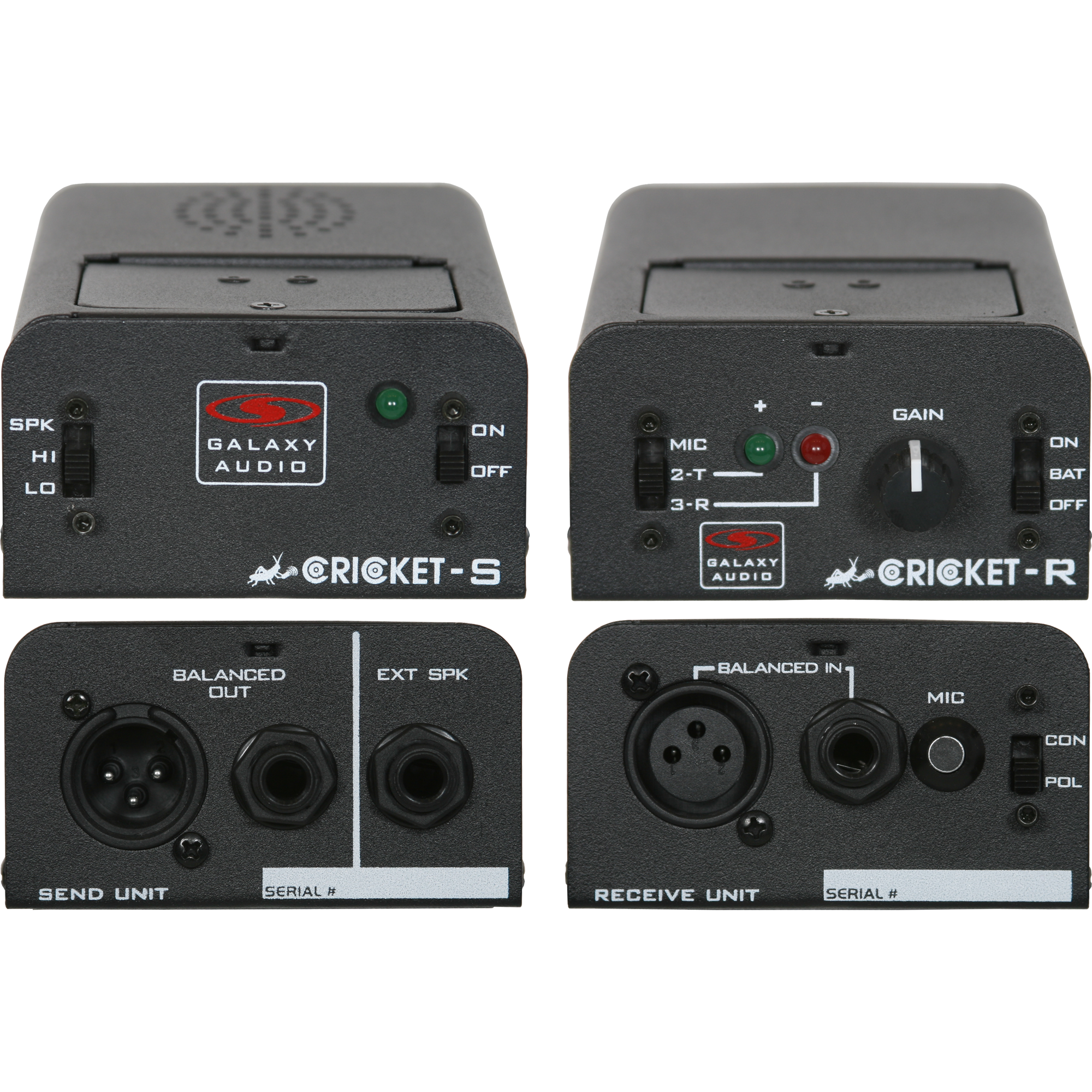
I think @mhardy6647 deserves to get the trophy for best-in-show.
You cannot get more singularity than this, anywhere in the galaxy!:)
 
It does what it does. :)
I have one and, when you need what it does, it's invaluable! :)
Only use it a few times a year, but I am always glad I have it.
They used to be (slightly) less than $100, which (for me, at the time) made the purchase of one a no-brainer when I was working on XOs for my Frankenaltecs. Use it for XLR cables about once a year, too, for one reason or another.
 
Back
Top Bottom