What if a radio is on 12 hours a day? Or if an oven electronic and display is always on, then some time gets hot? If the electronic of a clock is always on?
Caps of 60's and 70's could end exploding, blowing away components around them. Or more often, just leaking around.
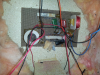
On my oven board, all caps "looked" correct. Due to signals, I first suspected and swapped the switching reg; still the same. I swapped all caps, which fixed it. Why should I bother to check caps specs if one is sure dead or bad?
It was not the only box I fixed so. I had a dead particular ASUS board. Problem was well known: low esr caps in a specific location aging out in a serie. I swapped the known caps, recovered so that board.
Before ending dead, leaking or exploding, their values decrease, or other parameters change. Might be a good reason to swap them all after 20 years.
Indeed, equipment that is on permanently can limit the lifetime. Capacitors aren't just affected by temperature, how close the voltage is to their rating also has an effect, and how much ripple they have to carry matters too, as this also raises the temperature inside the capacitor, independent of ambient temperature.
There are many failure mechanisms in electronics, even without overloads, semiconductors can fail due to the seal with the wires letting in air and moisture, and the metal degrading. Mechanical failure of soldered joints or welds is another. That's why equipment used in hot, damp conditions, near salt water, subject to heavy vibrations or subject to mains spikes and overvoltage stresses all lead to lower lifetimes. However, under more benign conditions, electronics can last extraordinary lengths of time.
Transmitters are expected to operate 24/7 for 20 years, so that's some 175,000 hours, without failures except for consumable items like tubes.
When the BBC replaced the London Control Room in Broadcasting house in 2004/5, they decommissioned the line amplifier racks that had been installed during the previous re-engineering in 1968, so these amps had operated 24/7 for 36 years, or over 300,000 hours. Some of the line amp even still had small double-triode valves! However, these were in a temperature and humidity-controlled environment, using stabilised mains, so about as benign as it could get.
S.


 DSC_0218 (2) by Mark Hardy, on Flickr


 .