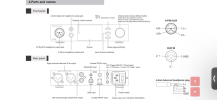
Come on, to be fair it wasn't a listed feature on any of the photos on the original post of the thread or Topping's Facebook or twitter accounts.
With truly the utmost respect: to be fair, the 4.4mm jack is visible in all of the photos, so I'm not sure listing it as a feature in the OG promo images would have been necessary?
This has nothing to do with contempt, but rather with durability and experience.
Ask repair services for photo and video cameras or cell phones how often they need to replace defective USB-C sockets.
I've also had countless USB microphones with defective USB-C sockets on my workbench, including the popular Beyerdynamic FOX, all of which had contact problems. I've had exactly two microphones with defective USB-B sockets, both heavy microphones with drop damage from a height of over 1.5m, falling directly onto the connector with the cable plugged in. The connector and socket were intact, but the socket was torn off the circuit board, soldered in place, and worked.
Due to the small USB-C connector with 24 contacts, quality differences have a much greater impact than with the large USB-B connector with 4 contacts.
Added to this is the much smaller contact surface of the USB-C connector. There are 12 contacts in a width of less than 7mm, minus 3mm for insulation/contact spacing. That leaves 4mm for 12 contacts = 0.33mm contact width. Although there are two of each contact, they are only about 1.5mm long.
USB B connectors have a contact width of about 1.5mm and are several mm long.
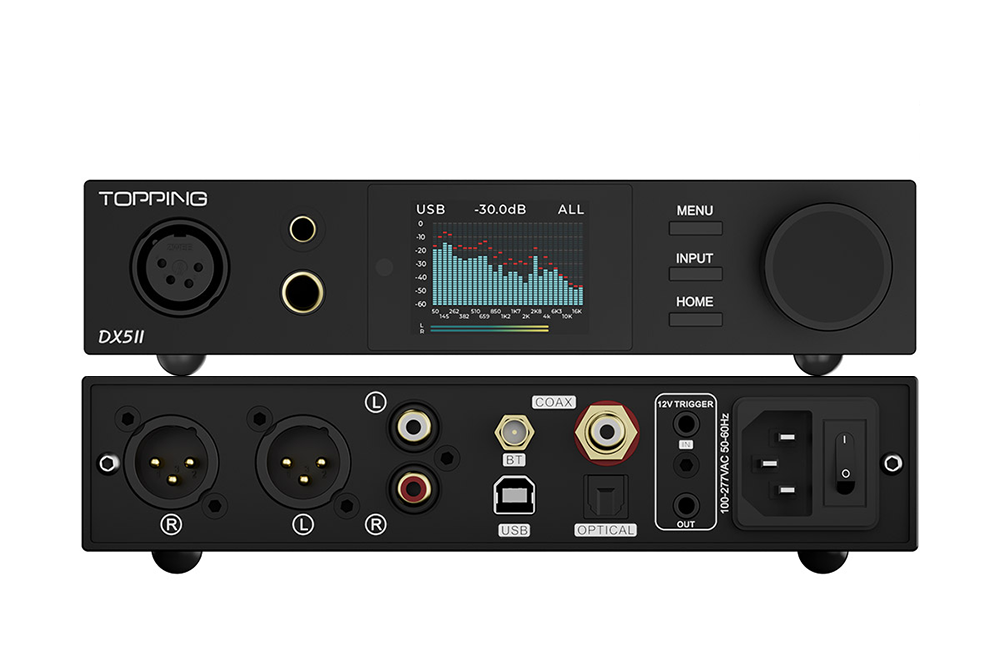
I will be taking the DX5 II with me often and am very happy to have a robust USB B socket.
What would be the advantage of USB C connectors?
I'm sorry that you've had bad experiences with USB-C. The only time it's been a "problem" was with PS4 controllers, but that is not the fault of USB-C, it is the fault of whoever designed the controller's USB-C input location -- laying the controller down flat on a table with a charge cable connected had it pointing in a downward slope, and with it coming into contact with the table surface (or any surface you laid it on), caused it to bend over time. This lead to the cable's connection becoming unreliable/loose, but the jack on the controller itself was perfectly fine, and never failed. A new cable connected just fine with no loose connection. Outside of that, not a single problem or connector/socket failure.
I think the main advantage of USB-C is that it is orientation-independent. According to Google, USB-C cables also tend to have much higher data transfer rates, can transfer audio and video directly, and have higher power delivery, but I believe that that has more to do with the USB protocol than the connector.
Again, I have to stress that I am in no way upset about this, I was merely expecting there to be a different USB connection type (the D50 III uses USB-C). It struck me as odd, given the ubiquity of USB-C these days. As long as it works, I truly don't care.
I also need to make a correction - I said that the PEQ feature is limited to 24-bit/192kHz. I was wrong. All documentation for any of their devices that support PEQ supports 32-bit, but
does limit it to 192kHz. I'm not sure what USB protocol Topping is using with this device, but if I were to guess, it is USB 2.0, and the reason why the PEQ feature has such limitations. A higher protocol, I'm guessing, might allow for going as high as 32-bit/384 or 768kHz?

shenzhenaudio.com