This specs are wrong or who has filled it might had mistaken with the old D10. The output resistor has the code 30XWell, Toppings states 100Ohms for the D10s:
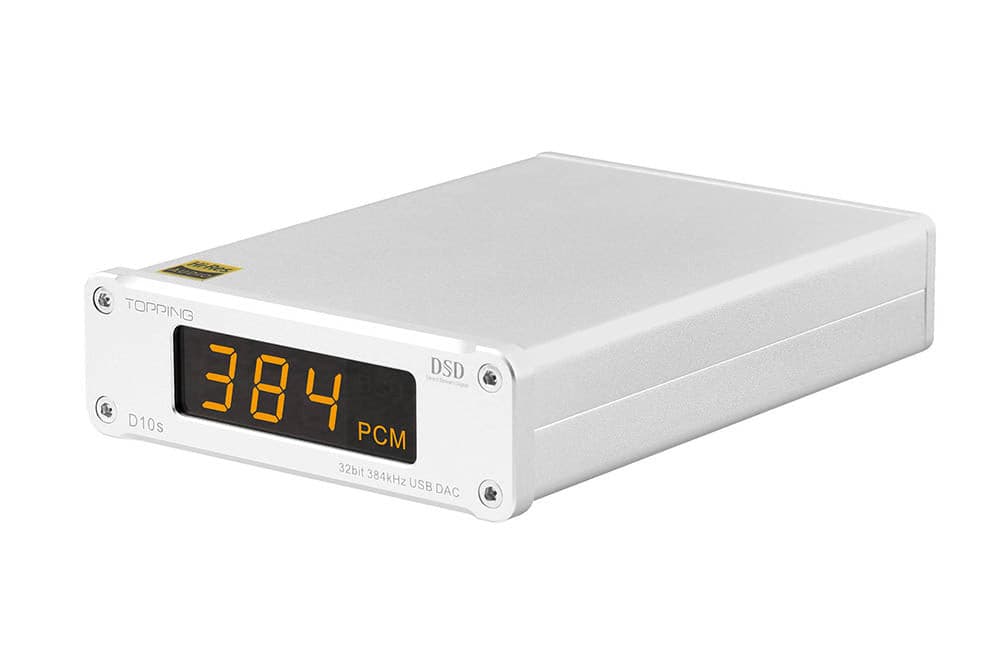
TOPPING D10S ES9038Q2M Digital to Analog Convertor (DAC)
Description: TOPPING D10S is a USB DAC with Line out, Optical and Coaxial output. It use XMOS(XU208) + ES9018K2M + OPA2134 and customized Thesycon driver(Windows) to support maximum PCM384kHz/32bit and DSD256(Native) decode and display the format & sampling rate by indicator. D10S also provide...shenzhenaudio.com
D10B (which I personally own) output impedance is lower with 88Ohms (diffentiall, so 44Ohms per output) -- a passive T-filter with 22R resistors actually.

-
WANTED: Happy members who like to discuss audio and other topics related to our interest. Desire to learn and share knowledge of science required. There are many reviews of audio hardware and expert members to help answer your questions. Click here to have your audio equipment measured for free!
- Forums
- Audio, Audio, Audio!
- DACs, Streamers, Servers, Players, Audio Interface
- Digital To Analog (DAC) Reviews and Discussion
You are using an out of date browser. It may not display this or other websites correctly.
You should upgrade or use an alternative browser.
You should upgrade or use an alternative browser.
Topping D10s Owner Measurements/Quick Review
- Thread starter pma
- Start date

KSTR
Major Contributor
^ no doubt, 20Ohms... and really an unusually low value. No idea what Topping wanted to achieve by this (assuming the 20R is really the BOM value for the build out resistors).


captainbeefheart
Senior Member
- Joined
- Apr 18, 2022
- Messages
- 360
- Likes
- 446
It is 20 ohm and yes it is better than 100 ohm. Think it over.
Yes I agree the lower the output impedance the better.
But I think what @KSTR is saying is for the sake of stability a 20 ohm build out resistor might not be enough resistance to decouple a large enough capacitive load with opamps that don't behave well in unity gain mode. Most companies probably buy huge quantities of a particular opamp and use it for both gain structure stages and also buffers, using a 100 ohm output resistor is a safer bet to keep the buffer stable. But if one chooses wisely for their buffer stage then the output resistor can be reduced significantly or even omitted. I doubt most companies are willing to pay over $10 for a very stable unity gain opamp like the LT1358, instead it's a lot cheaper to just slap a 100 ohm resistor at the output and it's still a low enough output impedance to get most jobs done.
KSTR
Major Contributor
In general I would agree that a really low output resistance (at audio frequencies) is a good thing... but not in a product for OpAmp rolling.It is 20 ohm and yes it is better than 100 ohm. Think it over.
20Ohms should still be safe for many OpAmps, though, but some caution is in order for those who want to experiment.
captainbeefheart
Senior Member
- Joined
- Apr 18, 2022
- Messages
- 360
- Likes
- 446
20Ohms should still be safe for many OpAmps, though, but some caution is in order for those who want to experiment.
20 ohms should be enough for many opamps but as an engineer you want "worst case scenario" type thinking where someone may use some very long cables with an above normal amount of load capacitance. I typically choose very stable buffers and use 4.7-10 ohms for the output resistor.
NewbieAudiophileExpert
Senior Member
- Joined
- Apr 17, 2022
- Messages
- 306
- Likes
- 135
So i've purchased a D10S and it's on the way - I've also purchased a male RCA to 3.5mm female AUX converter, with the intention of using the DAC as a headphone amp, and controlling the volume via the PC or Mac volume adjustment setting.
Does anybody have an aversion to this method of amplifying headphones?
Does anybody have an aversion to this method of amplifying headphones?
- Thread Starter
- #28
In general I would agree that a really low output resistance (at audio frequencies) is a good thing... but not in a product for OpAmp rolling.
20Ohms should still be safe for many OpAmps, though, but some caution is in order for those who want to experiment.
With the original opamp (probably 49720, I have not open the box) tested with 25m of Tasker C121 cable, 20kHz sine record below:
DAC square wave output looks also "normal" as a response of sharp digital filter, HF spectrum is without hints of oscillations. I think almost nobody would use such long cable. I use half of the length between 2 rooms.
captainbeefheart
Senior Member
- Joined
- Apr 18, 2022
- Messages
- 360
- Likes
- 446
DAC square wave output looks also "normal" as a response of sharp digital filter, HF spectrum is without hints of oscillations. I think almost nobody would use such long cable. I use half of the length between 2 rooms.
You certainly just saved me some time thank you!! The D10s to me sounds really good and your testing puts any concerns of mine to rest. Not sure when I'll get to try some different opamps, since there is no sign of instability it's way at the bottom of the project list.
captainbeefheart
Senior Member
- Joined
- Apr 18, 2022
- Messages
- 360
- Likes
- 446
So i've purchased a D10S and it's on the way - I've also purchased a male RCA to 3.5mm female AUX converter, with the intention of using the DAC as a headphone amp, and controlling the volume via the PC or Mac volume adjustment setting.
Does anybody have an aversion to this method of amplifying headphones?
I don't want to rain on your parade but the D10s isn't designed to drive headphones. Depends on the impedance of your headphones, if they are around 150 ohms you might get 25mW of power into them and performance won't be great. If you have 32 ohm headphones results will be very bad.
If you needed a headphone amp you should have purchased the DX3. I personally like my system modular so I prefer a standalone DAC and a standalone headphone amp, in my case I use a tube based headphone amp. So although I don't think it's a bad choice you got the D10s you just need to get a separate headphone amplifier. I have a Zen Headphone amp I am not using and I also have a bunch of boards if you are so inclined to build one yourself. My boards are an improved designs and both channels are now on one PCB. It's a very good headphone amp and there are reviews all over the internet for it in many different variations but the overall design is a scaled down version of Nelson Pass' famous Zen amp for loudspeakers. The Zen headphone amp is a much better amp vs the one you would get inside the DX3 from Topping.
Here is some information if you are interested: https://electronics-diy.com/zen-headphone-amplifier.php
NewbieAudiophileExpert
Senior Member
- Joined
- Apr 17, 2022
- Messages
- 306
- Likes
- 135
So i've just received the D10S and I like it a lot as a DAC - I currently use it with my macbook pro, since I have an apple music subscription - it's able to play high rest music really well and it sounds great with my Yamaha V6A in direct mode.
I use this program to switch sample rates automatically - https://github.com/vincentneo/LosslessSwitcher/releases/tag/1.0.0
I use this program to switch sample rates automatically - https://github.com/vincentneo/LosslessSwitcher/releases/tag/1.0.0
- Thread Starter
- #33
Carefully with this DAC, it is able to output DC voltage when they are in the digital data!!!
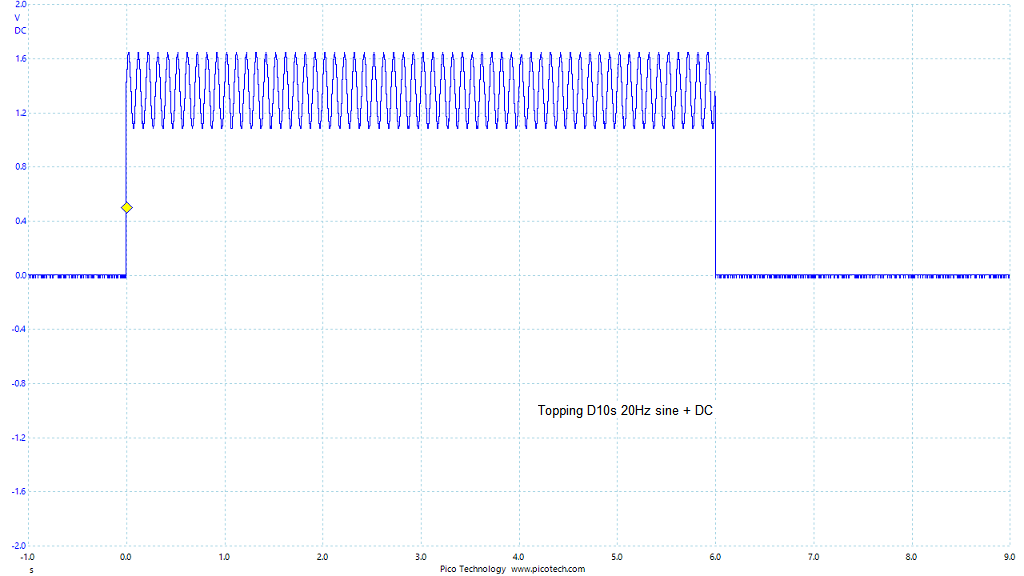
Connect it to Hypex module directly (without preamp) and in case of data error or SW error you will have up to 12Vdc output without activating Hypex module DC protection! The speaker voice coil will be burnt for sure.
Connect it to Hypex module directly (without preamp) and in case of data error or SW error you will have up to 12Vdc output without activating Hypex module DC protection! The speaker voice coil will be burnt for sure.
Sorry if it is a stupid question, but what so you mean with "digital data" ia this case?Carefully with this DAC, it is able to output DC voltage when they are in the digital data!!!
View attachment 271220
Connect it to Hypex module directly (without preamp) and in case of data error or SW error you will have up to 12Vdc output without activating Hypex module DC protection! The speaker voice coil will be burnt for sure.
- Thread Starter
- #35
The file (Wav, flac, mp3 ....) you are sending to the DAC from PC. Constant DC value may be sent for the reason of software error, freezing etc. The DAC should have internal HW or SW mechanism (coupling capacitor is the simplest) not to allow DC at the DAC output. The amplifier should have properly designed DC output protection. If both components are designed improperly, as in this case, disaster may happen.Sorry if it is a stupid question, but what so you mean with "digital data" ia this case?
Thanks! When you said "digital data" I was thinking using its coax output would cause a DC offset at analog outputs.The file (Wav, flac, mp3 ....) you are sending to the DAC from PC. Constant DC value may be sent for the reason of software error, freezing etc. The DAC should have internal HW or SW mechanism (coupling capacitor is the simplest) not to allow DC at the DAC output. The amplifier should have properly designed DC output protection. If both components are designed improperly, as in this case, disaster may happen.
Maybe Topping was aware about it and put some caps at L30 inputs... But you know there are purists which hate coupling caps in the signal path.
 .
.Similar threads

- Replies
- 3
- Views
- 2K
- Poll
- Replies
- 128
- Views
- 61K

- Poll
- Replies
- 49
- Views
- 16K

- Poll
- Replies
- 268
- Views
- 59K


- Replies
- 5
- Views
- 1K