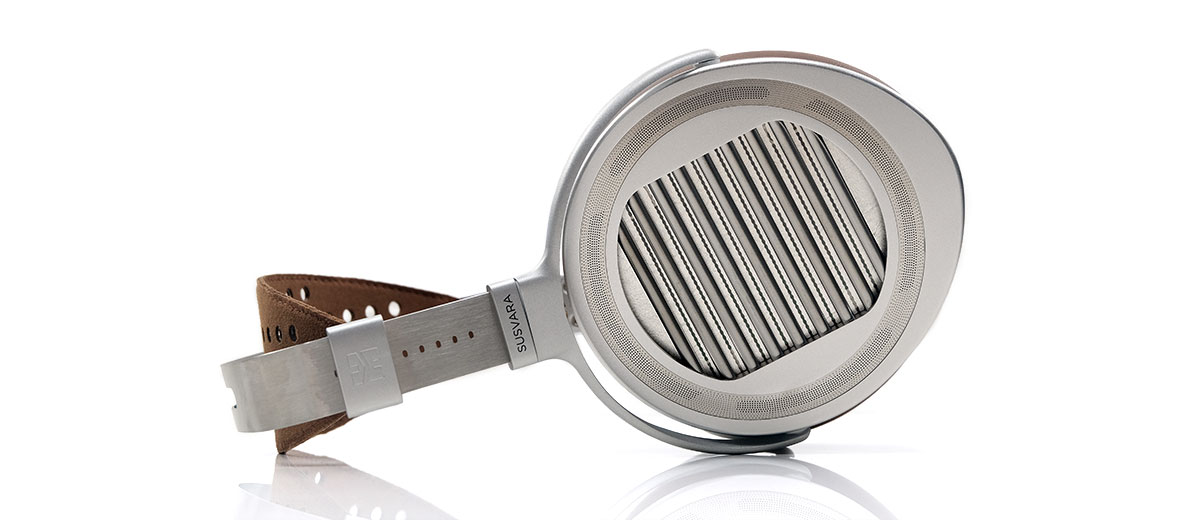
I spent about half an hour with the 800s at an audio store. While not indestructable, the construction seems well thought out. I dont think users need to worry much about them breaking.
Did you know that people exist who pay 8000 for the most easily destructable headphones you can imagine?

Marcus reviews the HIFIMAN Susvara Unveiled, which is a set of flagship headphones with a unique fully open-back planar magnetic driver design

headfonics.com
I own only one OE Headphone, the AKG K702, and after 10 years I changed the pads, and can imagine that the replacement pads should last another 20 years, cos they are even better than the originals. Only thing that went wrong was a crack in the mechanism which adjust the fit, but that was my fault, must have sat on it when I fell asleep on a chair, or inadvertently. Even that I think with a bit of superglue, I should be able to "fix" that.
Otherwise, sounds exactly the same as the day I received it. Some of the "chrome" paint has worn off and it looks flaky, but well it has also not been treated with the utmost of care, and I think storage in a bit of damp air/fungi may have contributed to this flaking.
And that was an item that cost less than $150., and still does.
Sure newer headphones have improved sonics, but I see no reason why long term reliability should be compromised in a headphone.
I did buy some less expensive headphones as gifts for family members, AKG something 50's, can't remember the model number, and these both got damaged within about 3 years, which demonstrates that the issue of quality and reliability is a universal one. I also have Sony and Sennheiser earbuds, the cheapie things, that went bad within a few months.
So ultimately, its a buyer beware issue, where we need to research, to identify the reliable products.
Sadly, with so many listening devices, being released today, IEM's, headphones, and speakers, pretty hard to tell which will go the distance. I've a pair of 22 year old Alesis M1 Actives, old studio monitors, still working perfectly - maybe not sounding anywhere near as good as modern equivalents, but it's still working. !
The worst offenders with reliability, seem to be IEM's, in my limited experience with them - bought 6 so far. 1 was dead on arrival, a second was dead with serious channel imbalance after I wore them to sleep one night, and the only planar magnetic I own an ARTTI T10 has a definite, if slight frequency response imbalance as well as a level imbalance between left and right earpiece. When I read or watch reviews of IEM's there is so much talk of "sample" variance. from one sample to the other, but then there is also measured differences by reviewers, especially of planar magnetics, with variance between left and right.
In the professional audio world, there is the concept of a matched stereo pair, for microphones. so that if one was recording in stereo, you have the best chance of an accurate recording, cos the left and right have almost identical frequency response, but you pay a bit more for this.
I'd be happy to pay a bit more for a more reliable listening device, which was made more reliable by design, quality manufacturing, and backed up by quality control. e.g. a measurement of the specific device I bought, of the left and right, proving that any differences were within an acceptable worst case variance.