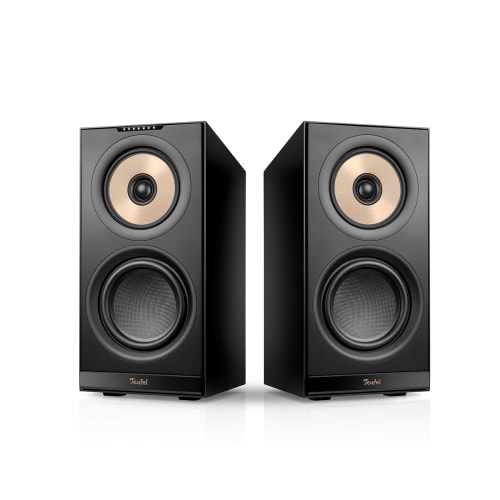
Hi, Gary and Fisher, I’m also a Chinese audio enthusiast, and I’m very pleased to see that monitor speakers developed in China have undergone a comprehensive test and evaluation on ASR.
First of all, thank you for your previous transparency regarding the design choices of the MiniMax 3. It's great to have manufacturers actively engaging with objective data.
I have a technical question regarding the Klippel Step Response measurement (as shown in the attached screenshot).
As I understand it, you mentioned earlier that the MiniMax 3
does not use any FIR correction and relies on IIR (minimum phase) filters along with DSP delays to align the physically offset drivers.
However, looking at the step response,
I noticed a clear oscillation/artifact before the main impulse peak (highlighted in the green circle, roughly 3.0ms to 3.6ms). Mathematically,
FIR filters are known for this "pre-ringing" because they are non-causal. Since IIR filters are causal, there theoretically should not be any energy before the main impulse.
Could you help clarify what is causing this pre-impulse artifact?
My hypotheses are:
1.
Is this an "acoustic pre-ringing" caused by the physical acoustic center misalignment of the coaxial drivers? (e.g., Klippel aligns T=0 to the tweeter's impulse, leaving the mid-range's earlier acoustic arrival pushed to the "negative" time window).
2.
Is it a side-effect of the specific DSP delay implementation or aggressive phase compensation you mentioned earlier?
I'd love to hear your technical insights on this. Thanks!

teufelaudio.fr