• Welcome to ASR. There are many reviews of audio hardware and expert members to help answer your questions. Click here to have your audio equipment measured for free!

SMSL SU-2 DAC Review (NTTY)

Rate this DAC

  • Terrible (*)

    Votes: 0 0.0%
  • Mediocre (**)

    Votes: 1 1.1%
  • Good (***)

    Votes: 21 23.9%
  • Excellent (****)

    Votes: 66 75.0%

  • Total voters
    88
has smsl sorted out their toslink inputs? had massive issues running toslink into a su-8v2 and su-9n.
To do that, you would need to explain what kind of problems you had.
 
Well, well done! A very interesting review from an HW engineer's perspective (thanks!).

I didn't know you tested the DO400 (which I have) until I saw your THD+N comparison graphs. I will look for a review here and hope you did a similar deep dive on it as you did on this cheaper unit.
 
I’ve seen several SMSL amplifiers where the ground terminal wasn't connected, yet the chassis was tied to the internal ground and wasn't isolated.
Discussions with SMSL revealed that they have absolutely no idea about this specific issue.
The last device I had on my bench with this problem was the AO300. Interestingly, the power supply unit used was missing components CY1 and CY2, which would have been necessary for a proper ground connection. The manufacturer only sells this power supply with those components installed and with an explicit ground connection.
tell ref product plz
 
I am a big fan of good quality inexpensive pure DAC without preamp function and volume control. I like the simplicity and purity of it. So, this is a perfect little device. I still like the SMSL SU-1 DAC. What I don't understand is why SMSL chooses to replace the AKM chipsets with the ESS chipsets for the SU-2 DAC. Will there be an AKM version later on?

I do greatly appreciate the Balanced XLR on the SU-2, which means it is much more suitable for home hi-fi system than the SU-1, which is more for desktop computer system.
 
Last edited:
Like the SU-1, the SU-2 is a product of ShenzhenAudio, not SMSL.
This is evident from the fact that it is not listed on the SMSL or HiFi-Express store pages.
It also means that all support is provided exclusively through ShenzhenAudio, not SMSL.
Does it make any difference for consumers?
 
I am a big fan of good quality inexpensive pure DAC without preamp function and volume control. I like the simplicity and purity of it. So, this is a perfect little device. I still like the SMSL SU-1 DAC. What I don't understand is why SMSL chooses to replace the AKM chipsets with the ESS chipsets for the SU-2 DAC. Will there be an AKM version later on?

I do greatly appreciate the Balanced XLR on the SU-2, which means it is much more suitable for home hi-fi system than the SU-1, which is more for desktop computer system.
The "SU" in the name suggests that the SU-2 is a successor to the DU-1 or something similar, but that isn't the case.
The decision to use the ES9039Q2M was likely made because it is the latest affordable chip and has already been successfully integrated into a wide range of other DACs. It is also the most widely used DAC chip in SMSL's lineup, which naturally impacts the purchase price given the high production volume.

In any case, one wouldn't expect an audible difference compared to AKM chips. We have never been able to detect such a difference in controlled blind tests. Proper integration is far more important than the specific DAC chip or its manufacturer.
I also recommend checking out this thread on the subject: RME ADI-2 DAC FS - AKM Versus ESS Measurements (DAC, Preamp & Headamp)

It is amusing to note that some users in the thread for the new RME ADI-2 Pro FS R Black Edition are up in arms because it still uses the older AK4493 chip instead of the new ES9039Q2M.

Does it make any difference for consumers?
Unfortunately, in my experience, yes. ShenzhenAudio's service seems to have improved, but—based on my experience—their support regarding issues like firmware updates has often been lacking.
Many buyers also fail to understand that, when problems arise, SMSL refers them to ShenzhenAudio.
All in all, it would be great if SA could spend more time developing and testing their devices.
 
I do greatly appreciate the Balanced XLR on the SU-2, which means it is much more suitable for home hi-fi system than the SU-1, which is more for desktop computer system.
Respectfully, I do not believe that is the way to look at the difference of unbalanced (RCA/TS) vs. balanced (XLR/TRS). Historically, the divide has been:
  • Unbalanced => consumer audio devices — including hi-fi systems
  • Balanced => professional audio equipment
In almost every situation, there is no reason why someone would need (or even have an audible reason to prefer) unbalance vs. balanced in a home hi-fi system. There are a few exceptions; but not many.

In my case, I am using balanced because I began using professional audio equipment at the core of my home office — Ashly LX-308B stereo mixer, RME ADI-2 Pro AD/DA, KH 120A speakers. But that is only for my home office. For my primary hi-fi system in the living room (movies & music), it is and always will be 100% unbalanced audio.

So in my case, the SU-1 is unsuited for my "desktop computer system", and I instead need to use the TOPPING D10 Balanced (USB => Balanced). But the SU-1 is perfect for input into my hi-fi system in the living room (USB => Unbalanced).
 
Last edited:
In almost every situation, there is no reason why someone would need (or even have an audible reason to prefer) unbalance vs. balanced in a home hi-fi system. There are a few exceptions; but not many.
Below is the loopback measurement of the USB DAC connected to USB ADC, to the same PC (MacBookPro), battery supplied. The only difference is RCA unbalanced vs. XLR balanced interconnects. So there are two USB cables and the loop is closed via those analog interconnects.

DAC-ADC_RCA.png


DAC-ADC_XLR.png
 
Respectfully, I do not believe that is the way to look at the difference of unbalanced (RCA/TS) vs. balanced (XLR/TRS). Historically, the divide has been:
  • Unbalanced => consumer audio devices — including hi-fi systems
  • Balanced => professional audio equipment
In almost every situation, there is no reason why someone would need (or even have an audible reason to prefer) unbalance vs. balanced in a home hi-fi system. There are a few exceptions; but not many.

In my case, I am using balanced because I began using professional audio equipment at the core of my home office — Ashly LX-308B stereo mixer, RME ADI-2 Pro AD/DA, KH 120A speakers. But that is only for my home office. For my primary hi-fi system in the living room (movies & music), it is and always will be 100% unbalanced audio.

So in my case, the SU-1 is unsuited for my "desktop computer system", and I instead need to use the TOPPING D10 Balanced (USB => Balanced). But the SU-1 is perfect for input into my hi-fi system in the living room (USB => Unbalanced).
Well, that’s not entirely accurate.
My first dedicated Hi-Fi DAC from 1994—a Cambridge Audio DacMagic 1—could well be the direct predecessor to the SU-2.
It featured three digital inputs, RCA and balanced outputs, a built-in power supply, an on/off switch, input selection, and LEDs for frequency and function. The price was similarly affordable, too, at £149.
True. Generalizations are never entirely accurate. Edit: and my earlier note did not mention the adoption of balanced by audiophile hi-fi systems over the past decades.

I was reacting to the implied view that unbalanced is not suitable for true hi-fi. So from that perspective, was your DacMagic 1 the norm? Did the majority of other DACs on the market include balanced output? Or was that the exception to the rule? And did it actually matter — from an audible perspective — whether you used the balanced or unbalanced outputs?

As a side note: I personally wish that consumer audio was balanced as well, since it is technically a better standard for line transmission (i.e., interconnects). But, the cases where that technical improvement matters are relatively uncommon for a home hi-fi system since the lengths are typically short.
 
Below is the loopback measurement of the USB DAC connected to USB ADC, to the same PC (MacBookPro), battery supplied. The only difference is RCA unbalanced vs. XLR balanced interconnects. So there are two USB cables and the loop is closed via those analog interconnects.
Thanks for doing that measurement! Am I correct to interpret the graphs as follows:
  • Balanced (XLR) had better technical performance (i.e., it was more excellent than the RCA)
  • Unbalanced (RCA) was so excellent that it was well beyond the ability of human hearing to detect it wasn't as perfect as the balanced?
 
No look at THD+N RTA -104dB XLR -112.2dB Human hearing is up to -110dB i would say, so i prefere XLR ;)
Also much better for long distances from DAC to my aktive Speaker !!!
I would use an 15M XLR always against an 15m Speaker Cabel and place the Amp close as possible to the Speaker! Instead of close to the DAC with RCA Cabel.

And not so sensetive against 230 Powerline Kabels around them! ;)
 
Last edited:
No look at THD+N RTA -104dB XLR -112.2dB Human hearing is up to -110dB i would say, so i prefere XLR ;) also much better for long distances from DAC to my aktive Speaker !!!

And not so sensetive against 230 Powerline Kabels around them! ;)

In which case, how did that much noise get into their interconnect?

And I agree: long interconnect runs are the most common use case for balanced audio in home hi-fi. Such as long interconnect to active speakers, a far away turntable, etc. But, that is not the common home hi-fi situation.
 
In which case, how did that much noise get into their interconnect?

And I agree: long interconnect runs are the most common use case for balanced audio in home hi-fi. Such as long interconnect to active speakers, a far away turntable, etc. But, that is not the common home hi-fi situation.
Think twice and don't forget Surround 7.2 up to Atmos ;) LoooooL

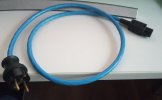
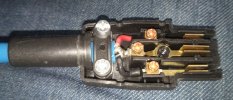
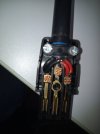
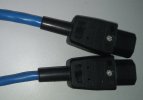
Put an Power mains Cabel paralell to an normal RCA Cabel let say input cable from an Preamp you could hear Humm if the Volumecontrol is on the right position.

I have build all Mains Cabel for my Sources with shieldet Cabel, Shield is used as Earth wire ;) So i can use RCA without that Problem near that Cable;)

IMG_20260810_180501_7.jpg Groneberg Serie 3.jpg IMG_20260810_181237_1.jpg IMG_20260810_182145_9.jpg

The thicker one for AMP and the thiner for my Sources.
 
Last edited:
Think twice and don't forget Surround 7.2 up to Atmos

Yes, line level interconnects to active atmos speakers as well.

But are most atmos speakers line-level interconnect? The majority of systems I've seen have been speaker wire carrying high level signal to passive speakers — where balanced isn't even meaningful.
 
Think twice and don't forget Surround 7.2 up to Atmos ;) LoooooL

Put an Power mains Cabel paralell to an normal RCA Cabel let say input cable from an Preamp you could hear Humm if the Volumecontrol is on the right position.

I have build all Mains Cabel for my Sources with shieldet Cabel, Shield is used as Earth wire ;) So i can use RCA without that Problem near that Cable;)

View attachment 554275 View attachment 554274 View attachment 554276 View attachment 554277

The thicker one for AMP and the thiner for my Sources.
It is better to connect the shield only at the mains end and route the earth connection via a third, equivalent conductor.
A high-quality solution for this is the LAPP Robust 215 C (available in 3G x 1.5, 2.5, 4, or 6 mm² versions), featuring PP core insulation and a TPE sheath. It costs approximately €3–7 per meter, depending on the source and cross-section.
 
I just measured it: the chassis and the connector grounds are connected to the protective earth terminal.
So, everything is in order.
Thanks,
I've misunderstood a picture from another thread. From that, it seemed that the ground terminal of the IEC socket has not been connected. There is no cable in it, so I supposed that the DAC is a double insulation one, lacking the regulatory markings on the chassis, But actually the ground is in place, I guess using a solid metal vertical bar.
 
Back
Top Bottom