Release in January 2026.Is this a discontinued product?
Retailers include Bloom and Apos, maybe SMSL sees it as niche, just not selling direct?
Or production is currently low volume.
But plenty of Chinese global sellers.

Release in January 2026.Is this a discontinued product?
Is this a discontinued product? I do not see this product listed at SMSL's online ("factory") store page: https://smsl.shop/collections/all
Other question: who is the best USA-based authorized distributor to purchase from? With view towards future returns, should it be needed.
Like the SU-1, the SU-2 is a product of ShenzhenAudio, not SMSL.Release in January 2026.
Retailers include Bloom and Apos, maybe SMSL sees it as niche, just not selling direct?
Or production is currently low volume.
But plenty of Chinese global sellers.
This is common practice in China and nothing new.so SA is a distributor? And they commissioned these models from SMSL as OEM as their exclusive project?

Maybe I misunderstood that unit, but it seems it does not have a master clock mode at all, instead only syncs to the incoming clock (SPDIF/AES). Then measuring pitch error makes no sense, it will always be 0.Pitch Error (GPSDO corrected) : 19'997.02Hz (19'997Hz requested) ie 1ppm
The IMD scores are extremely good. Crosstalk is ultra low, even at 10khz. Pitch error is a very small and too rare 1ppm.
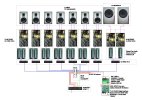
Based on that picture, I think you now you need to buy 7 more speakers to connect to those devicesBest Bang for the Bug
I bought 8 of them for my 7.2 Surround CamillaDSP aktive Project connected to an RME HDSPe AES Card to get 16 analogue Channels for less then 900€ at all
View attachment 553639
And there i don't need all that fancy stuff (USB, Blutooth, I2S on HDMI and so on...) only AES in and XLR Out!
Nice Review


Indeed, this DAC does not have clock input. What I mean is that when I verify the pitch of the DUT, I first "correct" the one of ADC. For that, I set the GPSDO to output a 19997Hz Clock reference and I measure it with the ADC (when the ADC is at stabilized temp, I read 19997.12Hz). It gives me the deviation of the ADC. I then connect the DAC to the ADC and play a 19997Hz test tone. I apply the correction to the final result.@NTTY :
Maybe I misunderstood that unit, but it seems it does not have a master clock mode at all, instead only syncs to the incoming clock (SPDIF/AES). Then measuring pitch error makes no sense, it will always be 0.

Perfect job as always, Flo!Hello Everyone, this is a review and measurements of the SMSL SU-2 DAC
No, i need 2 Channels per Speaker (1 DAC = Tweeter and Midbass) for full aktive 7.2 System, i have already 5.2 Speaker Setup so only need 2 more to buildBased on that picture, I think you now you need to buy 7 more speakers to connect to those devices

 also more flexible to use, no Windows Control app needed to configure it for Linux Use also!

Yes I did - but I missed some toslink action!?I hope you enjoyed this review!
.
Thank you!Hello Everyone, this is a revie and measurements of the SMSL SU-2 DAC
View attachment 552879
I bought it from the Ali store, and paid roughly $120 shipping included.
SMSL SU-2 – Presentation
The SU-2 replaces the SU-1, drops the USB input and adds an AES SPDIF (Balanced) connector. It hosts the ESS ES9039Q2M, just like the SMSL PS200 Pro that I recently reviewed.
As you can see from the photo, there’s only one button to power it on/off and switch between the three digital inputs. It can’t be simpler. The chassis is full aluminium and the device is heavy enough not to be dragged by standard XLR cables.
This is the back of the device:
View attachment 552881
As opposed to the SMSL PS200 Pro, we get XLR outputs with this one, which should allow us to chase few more dBs of SINAD and/or DR here and there.
Compared to the SU-1, I see the SU-2 gets 4xOPA1612A, meaning an analogue output architecture similar to that of the SMSL PS200 Pro. So we should see similar performances from RCA outputs.
Strangely enough, I don’t find this device listed on SMSL site, it could be a special request from resellers of SMSL(?). I must admit it addresses a niche use case.
User experience
I don’t have much to say, except that I personally like the fact it does not have a USB input. I prefer getting the AES because 1) my preferred source has it, 2) I don’t play music via a computer on my main system. But I’m old fashioned, I admit, I like my good old SPDIF.
Of course, the lack of USB input comes with several limitations, and I suppose I don’t need to tell you about that. But worse case scenario, you can use the reasonably priced SMLS PO100 Pro for instance. I also used the SMSL PL200T too, which, on top of being a CD Transport, can play the role of a DDC with word clock input and AES output. I used these two devices to feed the SU-2 for the measurements you’ll see below.
What else? Oh yes, there are some white blinking LEDs on the front. The L/R blink increasingly when the digital signal gets closer to full scale. And the “Locked” LED does not indicate an actual status of digital lock but an overall level of digital input. Indeed, it will start blinking when the signal gets lower than -45dBFS (go figure).
SMSL SU-2 – Measurements
All measurements performed with an E1DA Cosmos ADCiso (grade 0) in mono mode, the Cosmos Scaler (100kohms from unbalanced input) and APU (when required) for analog outputs.
From XLR out, I measured 4.836Vrms from Left Channel and 4.844Vrms from the Right one, ie 0.01dB channel imbalance. Balanced outputs preserved absolute polarity, and phase is dead flat.
From RCA out, I measured 2.345Vrms from Left Channel and 2.348Vrms from the Right one, ie 0.01dB channel imbalance too. The SE outputs are non-inverting, and phase is also dead flat.
All below measurements are form XLR outputs unless otherwise noted. I tested all digital inputs and they all have the exact same performances.
----
Let’s start with the standard 1kHz at 4Vrms (-1.5dBFS input), as Amir would do, but I use a different span of 20Hz-20kHz:
View attachment 552882
The dashboard shows the best channel (left) and averaging left and right got me to a THD+N of -122.8dB. That is a SINAD of 122.8dB. When I applied the span of Amir (10Hz-22.4kHz), I got a SINAD of 0.3dB less, meaning 122.5dB.
As usual, we lose a bit of resolution with the RCA outputs (2Vrms), look:
View attachment 552883
When averaging the two channels, I got 120.4dB SINAD.
And since you’ve been asking for it, this is my little ranking, based on my measurements of several devices. Again, I go for a span of 20Hz-20kHz for these and this is THD+N, the opposite of SINAD, but well, it’s the same:
View attachment 552884
I’ve put results with both RCA and XLR to facilitate comparison, notably with the PS200 Pro that has the same architecture and RCA outputs only.
The SU-2 did 0.1dB better that the Topping DX1 II, that uses the ES9039Q2M too, but that hosts lot more features.
----
From experience with reviewing CD Players, I like to run the same 1khz test at -6dBFS:
View attachment 552886
The performances are consistent meaning that playing close to full scale or not does not bother this DAC.
----
Talking full scale, and because this DAC does not feature volume control, at max 4.8Vrms output, the SMSL SU-2 goes up to 124dB SINAD (20Hz-20kHz) average between the two channels. This is clearly best in class for the ES9039Q2M. And look how cool it looks like in that case:
View attachment 552887
There no signs of stress whatsoever. The right channel has a little more H2, but still below -130dBr
----
Stereophile was often showing the below and I like it too, so I'm used to reuse it. It is a view from 20Hz to 1kHz with a 1kHz sine at 0dBFS (here 4Vrms though, so @-1.5dBFS):
View attachment 552888
The linear frequency scale better reveals potential power supply related noise (leakages) and here there's nothing. I had to do 0 effort to get there, meaning the SMSL is well isolated on power supply perspective. Note that the vertical scale goes down to -170dBr, else the trace would be partially hidden, these DACs of today really have crazy good performances.
That being said, note the curve at the foot of the fundamental (this view is taken without using the Cosmos notch. It’s an indication of (very) low correlated noise at the foot of the fundamental.
----
Since I'm here, let me add the 50Hz @0dBFS into 600ohms (done with the new Cosmos DM), for compatibility with Stereophile measurements:
View attachment 552889
The highest harmonic is the 3rd one but at a very low -115dBr, so you can ignore (more on that later).
What you can see though is a higher than best in class low level random noise at the foot of the fundamental, which I already mentioned. It is at higher level with this low frequency signal. It’s not an issue since our ears are not sensitive in this area of the audio band. But it will certainly impact the multitone view.
----
The SU-2 does not offer a selection of filters from the ESS DAC but the below view tells us what SMSL went for:
View attachment 552902
It clearly is the Linear Fast filter option of the ESS DAC, which is phase linear, and I already mentioned it at the beginning of the review.
When zooming Bandwidth is flat:
View attachment 552903
I did not align the two traces (44.1kHz and 48kHz) at 0dB on purpose so you get a better viewing.
Let me also show you the attenuation of the digital filter which is a very good better than -110dB:
View attachment 552904
I overlaid white noise and the IMD AES DFD test (18kHz & 20kHz 1:1), both aligned at 0dB. This better shows the artifacts (aliases) of the conversion up to 80kHz. They are all attenuated below -110dB, which is all we want. SMSL made the good choice of filter, the one I would have gone for, and that I always recommend to use when it can be selected.
----
Let's talk jitter now (J-Test at 48kHz, 512k FFT. 32 averages), and...:
View attachment 552905
There’s none. We can see a little more low-level noise from the right channel (the green trace) but this is anecdotical. The stressor test tone (Fs/192 square tone at 1LSB) can be very well seen at the left hand side, meaning again no disruption from the power supply. This trace is very neat; one we don’t see so often.
By the way, I’ve recently been challenged on another forum, being asked to crazy zoom on the view (9kHz to 15kHz, -90dBr top) to show “phase noise” of the DAC. I do not agree at all with that need. The level of jitter we can hear (100ns at best: The Theoretical and Audible Effects of Jitter on Digital Audio Quality, one AES study and ABX tests I reproduced myself with friends to find the same results) would be seen as massive side bands in this view (check this out here if you have time). I trace this view as Amir does and as Julian Dunn did himself for instance in the AP technote (attached in this review, since it seems AudioPrecision removed it from the web).
I was also challenged on using the 48kHz sampling rate, being told it should be 44.1kHz because most music is sampled that way… Ok, let’s try:
View attachment 552906
Yes, massively nailed again, no difference. Note the noise floor that decreases at 20kHz is because both the SU-2 DAC and my ADC (Cosmos) where running at 44.1kHz, so the ADC’s filter was already active and it’s attenuation not compensated.
Oh, and I was not asked to show the potential differences between AES, Optical and Coax inputs, but here you go with an overlay of the three:
View attachment 552907
Yes, again, nailed and same for the three digital inputs. Proper implementation of a DAC chip should always be like that, and it is too rare.
----
Ok, I’m starting to enjoy this long review and I’m by far not done Let’s go to the Multitone test (48kHz SR, 256k FFT, 16 averages):
View attachment 552908
I told you that the random correlated noise and the foot of fundamental would show itself at lower frequencies. And it does. But we are still speaking of 20 to more than 22 bits distortion-free range! Since it is random noise and not distortion, plus being at low frequencies where our ears are not well performing, I can safely state that this is of no consequences.
----
Next is the THD+N vs Frequency (192kHz, 512k FFT 4 averages, 3PPO (20Hz to 20kHz), 4Vrms output):
View attachment 552909
As usual with high resolution DACs, this test is hitting the max resolution of my Cosmos ADC. The blue and orange traces are with the fundamental closer to 0dBFS input of ADC, but that stresses it at low and high frequencies, increasing the harmonic distortion that takes over the very low noise. When setting the scaler 6db lower to release the stress on the ADC, it inevitably increases the noise floor relative to the fundamental.
Anyways, as you see from the plot at 1kHz, we get at best -115dB THD+N at 1kHz, with all noise included up to 90kHz. What a performance for $120! The other channel overlays almost perfectly sign of a very good output stage too.
----
The IMD SMPTE sweep vs level, which can't be compared to the one of Amir because this measurement is based on FFT analysis of IMD distortion only (192kHz, 128k FFT 4 averages, 1dB step, scaler in auto mode), is the below:
View attachment 552910
I’m sorry I can’t find the other channel, obviously I forgot to record it. This trace show what I witnessed live. At lower levels, the IMD kind of pumps +-10dB which generates these pics and mountain-shaped view. I could measure twice and not get the same results. I don’t think this is an issue, but at least I can report something else than a boring “nailed” or “perfect”.
----
Dynamic range is very good, be it CCIR-2K weighted or A-Weighted (0dBFS = 4Vrms):
View attachment 552911
View attachment 552912
---
And now let's have a look at other less usual measurements. The one that I like is the resistance to intersample-overs.
This test is performed with dedicated test tones with a specific phase shift to generate digital overs. If anything in the digital path (oversampling filter /DSP / ASRC) does not have enough headroom for digital overs, it will generate clipping within the interpolator.
For that, I'm using a test tone of 11'025Hz with a phase shift of 45° that goes up to +3.01dB over, by 1dB steps. This allows me to process what's the headroom of the digital interpolator of the DAC. Here are the results (THD+N measurement up to 90kHz):
Intersample-overs tests
THD+N 20Hz - 90kHzPeak = -0.99dBFS Peak = +0.01dBFS Peak = +1.01dBFS Peak = +2.01dBFS Peak = +3.01dBFS SMSL SU-2 -110.2dB -111.1dB -43dB -25.7dB -20.5dB
The above means that the interpolator of the SMSL has no headroom. Too bad that SMSL did not attenuated by default, for instance by -3dB, since the ESS DAC has digital volume control that we know can resolve the issue of ISOs.
----
Other measurements (not shown):
View attachment 552914
- First, I now regroup all IMD tests as below, sourced from REW's results (IMD distortion and Total Distortion+Noise shown for each):
The IMD scores are extremely good. Crosstalk is ultra low, even at 10khz. Pitch error is a very small and too rare 1ppm.
- Crosstalk: -156.2dB (100Hz), -158dB (1kHz), -136.6dB (10kHz),
- Pitch Error (GPSDO corrected) : 19'997.02Hz (19'997Hz requested) ie 1ppm
----
Let's try the linearity, down to -130dBFS, for the fun:
View attachment 552927
If we accept the threshold of 0.2dB deviation from the requested Voltage output, then the SMSL SU-2 is linear down to -125dBFS which concurs with other DACs using the same ESS converter. This is of course very good.
----
Last and not least, as I'm used to do with CD players review, the below is a view of THD (only) vs frequency at -12dFBS. I overlaid the results at 16bits and 24bits:
View attachment 553662
At 16bits, this is the best I can get from this test (it would be the same in pure digital domain). And you appreciate the improvement at 24bits. Note that both are at -12dBFS meaning that in the two scenarios, the THD is buried in the noise floor (digital or analog).
SMSL SU-2 - Implementation of the ESS ES9039Q2M
This review should have stopped above, but with the help of ASR members, there is a little more to talk about. When I tried to run the Linearity test, calibrating my interface for that purpose, and using a -130dBFS signal, I saw it disappear!
It happens that this is a "default" automute function of the ES9039Q2M DAC, as described in its datasheet:
View attachment 552930
I actually measured that the SU-2 goes mute at -122.0dBfs and unmutes at -119.7dBFS (single tone, peak value). That is very close to what is documented above, which I suspected where RMS values vs my peak ones, but I could not confirm (I did not have enough time, also...).
This automute activates from the below conditions:
View attachment 552932
Where the "automute_time" is:
View attachment 552933
I created the below table to translate into real life understandable durations:
Description Hex value Decimal Duration at 44.1kHz Duration at 48kHz Duration at 96kHz Duration at 192kHz Disabled 11'h000 0 infinite infinite infinite infinite Slowest 11'h001 1 -5.94 seconds -5.46 seconds -2.73 seconds -1.37 seconds Default 11'h00F 15 -396.3 ms -364.1 ms -182.04 ms -91 ms Fastest 11'h7FF 2047 -2.9 ms -2.67 ms -1.33 ms -0.67 ms
And @L-Train member did a very precise measurement of the actual value that SMSL went for, and it is the default one.
I suppose all the above serves to prevent glitches when changing the sampling rate or when switching between digital inputs.
Note that this mechanism does not introduce gaps in a gapless playback, since the digital signal is uninterrupted in that case. Although this is the theoretical and practical case, I also listened to a Pink Floy live album to double check
Conclusions
This is a high performing DAC. I loved the fact that it is brainless, real plug&play device. I'm old, I know, and I like my good old SPDIF. I'm really happy to see the type of performances we can get from it, more than 40 years after it was released, especially on jitter perspective.
Yes, no USB input, no volume control, no HPA, no PEQ... and still 100$ or so. But really, this is well implemented, well engineered, and we are used to that with SMSL.
My use case is very simple, I connect it to a CD player and my preferred one has an AES SPDIF out. I don't have anything to think about, again, plug and play. I saw some pictures of the SU-2 with the SMSL PL200T and I used it as a DDC feeding the SU-2 for some of the above tests (Jitter Test with AES and Coax). It also helped me to verify gapless playback.
The funny automute function tells us one thing: ESS engineers think that, by default, they can mute their DAC when the signal goes below -120dBFS (ie 20 bits). This is tells us that we, folks here, have been looking at super highly resolved devices for quite some time now
I hope you enjoyed this review!
Flo


is a double-insulation device without the proper marks of the double concentric square? I've seen a teardown and the earth terminal seems not connected
3-prong plug must not be used with class II double-insulation device. If yes, it violates safety standards.is a double-insulation device without the proper marks of the double concentric square? I've seen a teardown and the earth terminal seems not connected
is a double-insulation device without the proper marks of the double concentric square? I've seen a teardown and the earth terminal seems not connected
I just measured it: the chassis and the connector grounds are connected to the protective earth terminal.Hmm... from the pictures I've found I can't really tell since there don't seem to be any cables... (I usually look for the yellow/green cable as a sign of ground)
SMSL is known for not connecting the safety earth prong, but that mostly applies to their power-amplifiers. Their DACs/HP-amps usually have proper earth connection.
Can anyone who is more familiar with circuits chime in?
I’ve seen several SMSL amplifiers where the ground terminal wasn't connected, yet the chassis was tied to the internal ground and wasn't isolated.3-prong plug must not be used with class II double-insulation device. If yes, it violates safety standards.
I’ve seen several SMSL amplifiers where the ground terminal wasn't connected, yet the chassis was tied to the internal ground and wasn't isolated.
Discussions with SMSL revealed that they have absolutely no idea about this specific issue.
The last device I had on my bench with this problem was the AO300. Interestingly, the power supply unit used was missing components CY1 and CY2, which would have been necessary for a proper ground connection. The manufacturer only sells this power supply with those components installed and with an explicit ground connection.


