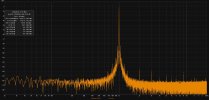
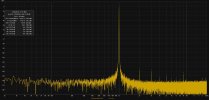
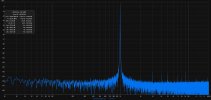
I think there's an underlying issue here that many of the jitter tests by Amir, NTTY and others are performed using
good quality digital audio sources.
These will show whether or not the DAC is
adding it's own jitter. In the case of the SU-2, it is not.
What these tests don't show is how DACs perform with
poor quality sources. In other words, how much do they
reduce the jitter on the incoming digital audio.
I've been trying hard to understand what Frunse is doing. It's not easy, but it's been worthwhile (I have also recommended before that he uses a translator).
He is trying to get top-tier stereo system performance from an immersive multi-channel system, based on sources with HDMI outputs.
To the best of my knowledge, he is
the first person ever to do this and demonstrate it with high quality measurements (using E1DA DM ADC, APU & Scaler).
He runs Camilla on a PC to perform the DSP functions. The AES/EBU input/output is handled with an RME HDSPe AES PCIe card, before feeding 8 stereo DACs.
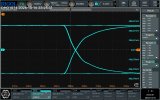
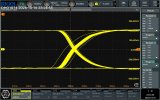
He managed to get very good measurements using a MUTEC SRC to reduce the inevitable jitter from the HDMI audio extractor.
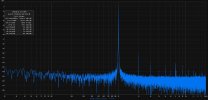
The MUTEC reduced jitter when driving the SU-2 directly.
The MUTEC reduced jitter when driving any DAC directly.
The MUTEC reduced jitter when driving the RME which then drove the SU-2.
The MUTEC reduced jitter when driving the SU-2 directly, but with the RME in between the HDMI extractor and the MUTEC.
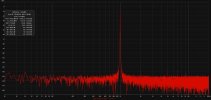
Without the MUTEC, the jitter went straight through the SU-2 DAC.
Without the MUTEC, the jitter went straight through the RME.
Without the MUTEC, the jitter was reduced when using both the MOTU and Musical Fidelity DACs.
What this shows is that both the RME and the SU-2 don't add any significant jitter, but neither do they reduce it, which is a surprise.
It also shows that the MOTU and the Musical Fidelity are both effective at reducing jitter, as you might expect from good, modern DACs.
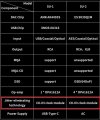
The behaviour of the SU-2 surprises me because SMSL claim it has a CK-03 clock module to eliminate jitter, plus it uses the ESS ES 3039Q2M DAC chip. That's a high-end stereo DAC, which unlike lesser models, has an
SRC in the digital signal path in between the digital filters and the modulators. Usually indicates good jitter performance.
The RME HDSPe AES also surprises me because RME state it has SteadyClock FS, which is an
EXTREMELY effective jitter reduction tool. If RME says one of it's products is good at something, I trust what they're saying more than pretty much any other audio company.
Something doesn't add up, and I'm not sure what it is. It might just be a matter of configuration or settings.