• Welcome to ASR. There are many reviews of audio hardware and expert members to help answer your questions. Click here to have your audio equipment measured for free!

SMSL SU-2: a dumb, wasted opportunity

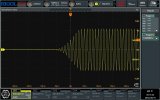
I spent some time trying to determine the number of zero samples needed before the fade in occurs. Using a series of 1 kHz tones in 100 ms bursts (offset by 90 degrees such that the first and last samples are at/near maximum amplitude) and varying the number of zero samples between them, I determined that at a 48 kHz sample rate the fade in behaviour starts after about 17400 zero samples (~362.5 ms):

SMSL SU-2 fade-in ramp zero samples.gif


The GIF above shows the fade/ramp behaviour starting with 17408 zero samples, and increases the number of zero samples by 128 each iteration. It's interesting that the ramp itself has a ramp and isn't strictly on/off after a set number of zero samples.

I had seen the AUTOMUTE_TIME register in the datasheet, and sure enough, this measured result agrees with the default value.
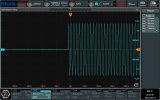
 
I spent some time trying to determine the number of zero samples needed before the fade in occurs. Using a series of 1 kHz tones in 100 ms bursts (offset by 90 degrees such that the first and last samples are at/near maximum amplitude) and varying the number of zero samples between them, I determined that at a 48 kHz sample rate the fade in behaviour starts after about 17400 zero samples (~362.5 ms):

View attachment 552533

The GIF above shows the fade/ramp behaviour starting with 17408 zero samples, and increases the number of zero samples by 128 each iteration. It's interesting that the ramp itself has a ramp and isn't strictly on/off after a set number of zero samples.

I had seen the AUTOMUTE_TIME register in the datasheet, and sure enough, this measured result agrees with the default value.
It is very unfortunate that they opted for these settings, they make no sense for a desktop device. Maybe they could do a firmware fix if headers to program the microcontroller are available....
 
Does this impact the ability to play gapless?

Super important for live performances among others
 
Does this impact the ability to play gapless?

Super important for live performances among others
I don’t think this will be very audible, but unless the measurements signal is preceded by dither, this could be a problem for calibration
 
It is very unfortunate that they opted for these settings, they make no sense for a desktop device. Maybe they could do a firmware fix if headers to program the microcontroller are available....

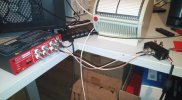
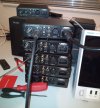
I agree. The MODE pin on the ES9039Q2M is connected directly to ground so it operates in software I2C mode and a firmware update would be possible. A vertical FFC connector is provided for programming the microcontroller but I don't think they would expect end users to do this, so it would probably have to be returned to the retailer for the update.

PXL_20260818_173731471.RAW-01.jpg


PXL_20260818_174000603.RAW-01.jpg
 
  • Like
Reactions: MCH
I don’t think this will be very audible, but unless the measurements signal is preceded by dither, this could be a problem for calibration
What is "this" you refer to?

I was not in any way talking about measurement nor calibrating anything

Just asking about Playing Gapless albums or show sets, where I would not want to perceive any sign of the cut between tracks.
 
... If so, then I don’t think I can use this DAC with a Trinnov that is trying to measure speaker distance, phase, amplitude etc.

Can Trinnov themselves weigh in on this?

If this is the default behavior (in hardware mode) from the world's largest DAC chip manufacture, Trinnov's calibration mechanism should proactively ensure all DACs in the audio chain are fully primed before they pull actual measurement data. Or perhaps Trinnov will confirm that they already have that issue addressed.
 
What is "this" you refer to?

I was not in any way talking about measurement nor calibrating anything

Just asking about Playing Gapless albums or show sets, where I would not want to perceive any sign of the cut between tracks.
It an extremely fast fade in, 1/60 of second, so I doubt it will sound like a fade in, more like softening attack on the first note, but it can mess up measurements. Also, on a gapless, if there is no digital silence between tracks would the auto mute even activate?
 
Last edited:
Can Trinnov themselves weigh in on this?

If this is the default behavior (in hardware mode) from the world's largest DAC chip manufacture, Trinnov's calibration mechanism should proactively ensure all DACs in the audio chain are fully primed before they pull actual measurement data. Or perhaps Trinnov will confirm that they already have that issue addressed.
I agree, that would be ideal, a low level white noise preamble would probably work. I’m asking my Trinnov dealer to see what they say. That said, Trinnov is mostly in the custom high end theater market. The new CI doesn’t even come with a remote, and when inquired about buying a Trinnov remote, the response was that they couldn’t guarantee that it would work. Fortunately several users on AVSForum tell me the SofaBaton works fine with the CI. I would think Trinnov would rather sell you their Amplitude 16 amplifier connected via AioP or an Altitude 16 with built in DACs, either much more expensive than a CI.
 
I did 2 Measurings right now with REW on an QuantAsylum 403 Analyzer (ES9038Q2M) (USB ASIO401 Driver) and REW on Realtec Digital opt. Out to that SU-2 DAC.

On Both i started the Signalgenerator with 1kHz -10dBV @ 96kHz

QA403 USB in (ASIO401):

QA403 USB REW 96kHz ASIO401 Signalgenerator.jpg

SU-2 Optical in, XLR Out (+Pin to Ground, FLEXASIO):

SU-2 OPT IN REW 96kHz FlexASIO Signalgenerator.jpg

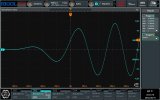
So it looks like 10ms Fade in.

On the other Hand here the REW Sweep 20 to 20000Hz (first 200ms)

QA403 USB:
QA403 USB REW 96kHz ASIO401 Starting Sweep 20 to 20000Hz.jpg

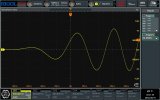
SU-2:
SU-2 OPT IN REW 96kHz FlexASIO starting Sweep.jpg

Max Amplitude is a bit higher on QA403 Outputstage, has only -2 dB or +8 dB Stage so i used the +8dB Setting on Asio Driver

Trigerlevel Scope was on both 500mV.

Didn't see a big Problem here on QA403 it shows 17Hz on the right (on Scope) and 22Hz on SU-2;)
But thats how the Scope detects or count the Frequency.

So if the Sweep Starts from 2 Hz i guess at 10Hz the Signallevel is Faded in already and i don't realy need to measure or play lower ;)
My RIPOLE SUB's get probably an 20Hz Highpas 12dB/octave for Protection so anyway.
 
Last edited:
I did 2 Measurings right now with REW on an QuantAsylum 403 Analyzer (ES9038Q2M) (USB ASIO401 Driver) and REW on Realtec Digital opt. Out to that SU-2 DAC.

On Both i started the Signalgenerator with 1kHz -10dBV @ 96kHz

QA403 USB in (ASIO401):

View attachment 552651

SU-2 Optical in, XLR Out (+Pin to Ground, FLEXASIO):

View attachment 552652

So it looks like 10ms Fade in.

On the other Hand here the REW starting sweep 20 to 20000Hz (first 80ms)

QA403 USB:
View attachment 552653

SU-2:
View attachment 552654

Max Amplitude is a bit higher on QA403 Outputstage, has only -2 dB or +8 dB Stage so i used the +8dB Setting on Asio Driver

Trigerlevel Scope was on both 500mV.

Didn't see a big Problem here ;)
Respectfully disagree. Maybe not problematic for higher frequencies but the leading edge of the impulse response is altered. At 48khz the fade in is all done in 20 ms, so I believe that’s why it doesn’t show in your bottom two graphs. So I think the SU2 will be fine on log sine sweeps like you have with REW and Dirac, but the fade in will cause problems with Trinnov MLS that employs successive noise bursts.
 
Last edited:
Here i measured both Devices Frequncyresponse with an QA40XPlot aplication (I cant use both Devices together on REW :( QA403 works only with ASIO but i can't use FLEXASIO and ASIO401 at once and FLEXASIO don't find the QA403 Device ;) ):
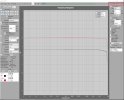
With the ADC from QA403 (Corected 2026.08.19, USB Voltage was to Low on QA403 now its ok, Top right, missed that :( ):

QA40XPlot SU-2 and QA403.jpg

This Aplication Sends his signal to both Devices at once QA403 and to the Windows default Sounddevice so i could measure QA403 Out to IN and SU-2 (Realtek Digital optical Out) Out to QA403 IN

IMG_20260818_232417_3.jpg IMG_20260818_232408_0.jpg

Quik and Dirty ;)

Next day i try it with an MOTU UL, there i can use Toslink or SPDIF to SU-2 and the Analogue ins from the same Device with ASIO on REW ;)

QA404 is on the Developement and get's Digiital AES in and Outs as well let see when it become's aviable!
 
Last edited:
Respectfully disagree. Maybe not problematic for higher frequencies but the leading edge of the impulse response is altered. At 48khz the fade in is all done in 20 ms, so I believe that’s why it doesn’t show in your bottom two graphs. So I think the SU2 will be fine on log sine sweeps like you have with REW and Dirac, but the fade in will cause problems with Trinnov MLS that employs successive noise bursts.
Yeah i didn't know how the Trinov Devices works, i always used REW also never DIRAC, so for me it isn't an Brainer i can do my Setup and i am fine with this DAC.

My Setup is always masured by me, never from an Device by his self ;)

On the other Hand it cost only 109bugs you could buy one test it with Trinov and if you get Trouble sell it again \o/.

Most People with an Trinov would look to much more expensive Devices i guess so no information aviable from others :(
 
Last edited:
Topping D70 Pro is next cheapest.

Obv with S/PDIF is dime a dozen
Schiit Mimir is $299. AI says it probably does not have auto mute. Schiit hasn’t confirmed. Otherwise the tests I’ve seen on Mimir all look good.
 
Schiit Mimir is $299. AI says it probably does not have auto mute. Schiit hasn’t confirmed. Otherwise the tests I’ve seen on Mimir all look good.
Mimir is indeed a wonderful DAC, with FB a great Preamp also, crazy good value for money.

But why would you try to compare it with SMSL SU-2? It's got the standard USB input, no AES3 at all
 
Mimir is indeed a wonderful DAC, with FB a great Preamp also, crazy good value for money.

But why would you try to compare it with SMSL SU-2? It's got the standard USB input, no AES3 at all
The Mimir i am looking at has AES3. I need a DAC that doesn’t have the auto mute feature that’s in the SU2.
 
The Mimir i am looking at has AES3. I need a DAC that doesn’t have the auto mute feature that’s in the SU2.
Absolutely right! I missed that silly me. Makes it even better value, the USB input's fantastic.

If you want Loudness Contour their Forkbeard add-on has a great (adjustable!) implementation.

Thank you for pointing out my mistake
 
Apparently gapless sources maintain an active but silent dither signal between tracks so no muting happens
And maybe the silence just prior and during the Trinnov calibration measurements bursts also have dither, which would keep the SU2 from auto mute. But in the end, I just feel more comfortable with the quality of the US made Schiit Mimir. There are reports on the Trinnov threads on AVSForum stating that the Trinnov works well with the predecessor to the Mimir. Fingers crosses the Mimir works well also.
 
Back
Top Bottom