• Welcome to ASR. There are many reviews of audio hardware and expert members to help answer your questions. Click here to have your audio equipment measured for free!

SMSL R100 DAC Review (NTTY)

I did not notice such glitches, but I’ll test too.
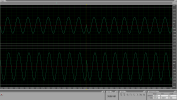
I have made a 2 minutes recording from 2 DACs outputs, simultaneously driven with the same digital signal. The test signal is a sequence of 1kHz, 10kHz, 100Hz sines and a white noise. I have aligned the files and made a difference. I found just one glitch, but the glitch occurs in both DAC outputs and at the exactly same time point, so it is a drop-out from the driving PC. As I already said, such cases need to be investigated thoroughly to find the root cause.

D10s_vs_R100_glitch.png
 

pma​

I’ve been looking into this for 10 days.
The problem is unpredictable. It might play for hours without any clicking sounds at all, and then suddenly start.
Sometimes it happens every 30 seconds, sometimes every 5 minutes, sometimes every 3 seconds. It’s completely random.
 

pma​

I’ve been looking into this for 10 days.
The problem is unpredictable. It might play for hours without any clicking sounds at all, and then suddenly start.
Sometimes it happens every 30 seconds, sometimes every 5 minutes, sometimes every 3 seconds. It’s completely random.
Like @pma explained above, the root cause is likely to be with the source in his case, since the issue was the same, at the same time, with two different DACs.

That said, you explained suffering the same issue from difference sources, and at all inputs of the R100, initially after a period of time. Since I measured that the R100 is limiting the BW to 22kHz, whatever is the SR at the input, that means SMSL performs a re-sampling of all incoming signals (with its internal DSP). That points me to a potential issue with the internal buffer under/overflowing, due to too large clock deviations between the source and the R100. Fact you don't have the issue with other DACs, could be explained because they don't use an ASRC in their internal digital path.
With the R100, we have:
  • S/PDIF source → S/PDIF receiver/clock recovery → R100 DSP/resampling → AD1861
  • USB PC → asynchronous USB reception → R100 DSP/resampling → AD1861
Since you said you have the same issue from the USB input of the R100, that points me towards the DSP/resampling, because it's what is common in this digital path.

Can you please provide the below additional information:
  • What is the sampling rate of your source(s), I mean the files you play?
  • Do you use different sampling rates?
  • When connecting with a computer, do you use the driver in exclusive mode?
Eventually, if you could test with different input sampling rates and try to record time until you get the first dropout, it'd be nice. Indeed, a predictable relationship between input sample rate and dropout interval would point toward buffer/rate-conversion behavior. For instance if you'd get:
  • 44.1 kHz → dropout every ~3 min
  • 88.2 kHz → dropout every ~1.5 min
  • 176.4 kHz → dropout every ~45 sec
And this could confirm an issue with the DSP/SRC in the internal clock domain, FIFO limits reached, tracking issue. If that is, SMSL is likely to be able to update the firmware to fix this.

I did not suffer the issue, but I'll try to reproduce it, when time allows.

Cheers

 
Last edited:

NTTY​

I used various sources, connecting via both USB and S/PDIF.
For the PC and laptop, I used official drivers and Foobar with ASIO.
For the Raspberry Pi, I used Album Player with ALSA, connecting via USB or S/PDIF through an SMSL PO100 PRO.
I also used a Marantz CD63SE.
The clicking occurred during 44/16 audio playback; there were no clicks when playing "silent" (empty) files.
The clicks happened constantly and unpredictably. According to an AI analysis, the issue likely stems from the thermal conditions of the AD DAC chip—specifically a "frequency drift"—caused by a circuit design flaw or a manufacturing defect.

I have already returned the device.
 
hat said, you explained suffering the same issue from difference sources, and at all inputs of the R100, initially after a period of time. Since I measured that the R100 is limiting the BW to 22kHz, whatever is the SR at the input, that means SMSL performs a re-sampling of all incoming signals (with its internal DSP).
Same observation in my case.
 
I hope @NTTY would not mind, I am attaching another view of R100 linearity.

SMSL_linearity.png
 
No worries, it's indeed a different look at it.

By the way I tried to reproduce the dropping issue, but failed. I let the R100 get hot for 7 hours and listened twice to the below selection of tracks (variable bit rate) but I could not hear any issue (I fed it with the SMSL PO100Pro - optical input).

1793815930682.png


Cheers
 
  • Like
Reactions: pma
The clicking occurred during 44/16 audio playback; there were no clicks when playing "silent" (empty) files
I have clicks, clicks and clicks with some 44.1/16 programme, today. I will try to investigate in deep.
 
Oh no. Weird, let me know if you want me to run some tests on my side.
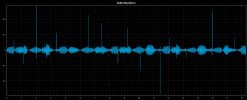
Got it, Flo. And I can initiate it anytime. Check the file. Left channel is R100, right channel is DX5. Simultaneous rec, same source. Just check it and listen. And I am not telling more. They have to try harder, much harder. I do not want to give them another free lunch. Enough in the past (not specifically SMSL).

delta_clicktest.png
 

Attachments

Last edited:
Remember - 1kHz sine test + SINAD tells nothing in the real use. Absolutely nothing. Unfortunately, it has become a “benchmark” test here and thousands of followers take it serious.
 
Remember - 1kHz sine test + SINAD tells nothing in the real use. Absolutely nothing. Unfortunately, it has become a “benchmark” test here and thousands of followers take it serious.
1kHz tests and SINAD are and remain useful. But as we have learned from the Cirrus Logic CS431xx DRE issue, sometimes there's more to discover!
 
Back
Top Bottom