• Welcome to ASR. There are many reviews of audio hardware and expert members to help answer your questions. Click here to have your audio equipment measured for free!

SMSL PL200 MKII Review (CD Player, DAC & HP Amp)

Rate this CD Player

  • Terrible (*)

    Votes: 0 0.0%
  • Mediocre (**)

    Votes: 4 4.3%
  • Good (***)

    Votes: 14 15.2%
  • Excellent (****)

    Votes: 74 80.4%

  • Total voters
    92
Using I2S outside the device, with whatever connector (RJ45, HDMI, …), is prone to failure over a few meters. It is key that the clock and data stay in sync when they travel, but this is not guaranteed over a few meters, as it is known that the longer the distance, the more the jitter.
I shall test I2S resistance to jitter over distance one day.
I just figured it was SMSL's intention that a shorter, 6-inch or 1-foot HDMI cable would be used to connect the IS2 output on the PL200T to one of their desktop DACs that has an I2S input. If even those minimal lengths of cable are enough to introduce jitter, I think the advantage of featuring an I2S port on audio components is effectively lost...(!)
 
Last edited:
Below you`ll find a link to listen by yourself:

aufnahme_016.flac

The recording was made through a RME ADI-2fs in ADC mode at 88KHz and 24bit to align with any possible artefacts from CD format output and captures the complete 3mins test track starting from 20Hz@0s - 200Hz@60s - 2KHz@120s - 20KHz@180s plus roughly a second before starting the CD replay and also afterwards.
As explained before the digital level is -14dB -20dB (generated with Wavelab 5).
Due to minimal losses through the tape recording output of the preamp (runs through a TL072 op-amp buffer inside) and PL200 level adjustment to -4.5dB (matches the 4dBu sensivity setting of the ADI-2 fs ADC) the recorded level stays app. at -14dBfs -20dBfs.

Playing the test track somewhat louder than you would set your typical listening level for music reveals a faint beat chirp around 16K (below and above, @2mins+52s track runtime). When listening closely one can even hear an even less audible chirp around 8KHz.
As said, I recognized chirps with various CD players and DACs in different intensities on different platforms (also portables and smartphones with external DAC).
Since this is a subjective comparison I can only state that this PL200 chirp is one of the least audible ones (as far as I can recall, an old TEAC VRDS-10 and the first Philips CD100 were the worst, chirps at different frequencies though).

When re-doing this test today with the above RME (AKM chips), I have to admit, listening to the ADI-2 fs in DAC mode at 44/16, also revealed this chirp in the same intensitiy as the PL200.
But a similarly generated testfile at 96/24 was audible clean.

Due to a probable connection to a base frequency of 8KHz and multiples, I connected this behaviour so far to some USB clock interference...wonder what the actual reason is...any developer insight???


Late remarks:
Looking at the live spectrum (3rd octave analyzer, tc electronic), reveals chirps around -95dB level, which fits to my audible impression!
Actually the test tracks are generated at -20dB. Since they are some 18y old, I forgot and just read the level from the analyzer which adds L+R levels (+6dB)

Analyzing the above behaviour I have to admit that it looks like this beat chirp is generated by the test signal itself.
I'm sorry for unsettling some of you!
Thinking about how Wavelab generates a "continous" sweep I considered that they might do it in tiny steps, eventually somehow correlated to a step-frequency (of 8KHz?) generating an audible chirp interference around 16KHz.
To prove that the chirp is actually generated by Wavelab, I used my >40y old home designed optically tuned vienna-bridge audio oscillator which has a stable output level and very low distortion and swept it around 16KHz when recording similar as above, at 44/16 and -20dBfs ( aufnahme_018.flac ).
This time I tested it only against the ADI-2 fs DAC, which showed the chirp as well before, but not with this analog generated test signal.
Probably the PL200 in CD and DAC mode will behave similarly clean.
 
Last edited:
Analyzing the above behaviour I have to admit that it looks like this beat chirp is generated by the test signal itself.
I suspected that the chirp you were detecting was not being generated by the SMSL CD player but was the result of a glitch in the testing process.
 
I suspected that the chirp you were detecting was not being generated by the SMSL CD player but was the result of a glitch in the testing process.
...Yeah, when I saw the chirp at around -95dB in my tc electronic spectrum viewer, I wondered how it could become visible below or around the minimum level of the 16bit CD format. The most reasonable explanation is some kind of repetitive glitch in the testsignal itself...at least learned something...
 
I just figured it was SMSL's intention that a shorter, 6-inch or 1-foot HDMI cable would be used to connect the IS2 output on the PL200T to one of their desktop DACs that has an I2S input. If even those minimal lengths of cable are enough to introduce jitter, I think the advantage of featuring an I2S port on audio components is effectively lost...(!)
The HDMI cable is used for that it has 4 twisted pair of wires. So, it’s possible to transport the fragile I2S signal using balanced signal for each of the 4 lines of data (clock, data, left/right identification, and master clock).
Voltage swing is lowered too (compared to I2S internal voltages) so it’s not radiating too much.
But all that does not make it very resistant to jitter so it’s better to use very short cables indeed.
 
A question came up for me: I’ve downloaded many recordings from the web in various formats (MP3, FLAC, AIFF, Ogg Vorbis, etc.) and converted them all to Red Book CD-Audio (CDA) format, which I then burned onto physical CD-RW discs. Will these discs play without any issues on any SMSL device ?
 
I just figured it was SMSL's intention that a shorter, 6-inch or 1-foot HDMI cable would be used to connect the IS2 output on the PL200T to one of their desktop DACs that has an I2S input. If even those minimal lengths of cable are enough to introduce jitter, I think the advantage of featuring an I2S port on audio components is effectively lost...(!)
The HDMI cable is used for that it has 4 twisted pair of wires. So, it’s possible to transport the fragile I2S signal using balanced signal for each of the 4 lines of data (clock, data, left/right identification, and master clock).
Voltage swing is lowered too (compared to I2S internal voltages) so it’s not radiating too much.
But all that does not make it very resistant to jitter so it’s better to use very short cables indeed.
Guys, this is I2S over LVDS and has nothing to do with the internal transmission of I2S. In this setup, all digital signals are transmitted differentially, making them highly resistant to crosstalk and interference.
Cables 1–2 meters long are no problem at all, and even 5-meter cables worked for me without any audible degradation.

The jitter issue with I2S over LVDS stems primarily from the fact that, in most cases, the jitter is neither eliminated, suppressed, reduced, nor removed at either the source or the receiving device. In DACs, the I2S signal is almost always routed to bypass all jitter-handling routines and fed directly into the DAC chip.

I2S had—and still has—the potential to become one of the best digital audio interfaces. However, this would have required an optimized interface for source devices, as well as a tailored, optimized interface for the receiving end.
Furthermore, the introduction of I2S over LVDS missed the opportunity to standardize the interface; consequently, there is no official standard for the cable, the connectors (plugs/jacks), or the pinout. While HDMI connectors and standard HDMI cables have become the norm, they lack a standard for pin assignment and functionality, which repeatedly leads to problems.

LVDS is an independent industry standard for the physical communication layer of high-speed data transmission that has been widely used for 30 years—including for the external transmission of inter-IC communication data. LVDS is used in notebooks, computers, TVs, and storage systems—throughout the IT sector, as well as in production control systems, medical technology, and electronics for aviation, maritime transport, rail, the automotive industry, and more.
If all LVDS connections worldwide were to vanish in the snap of a finger, our world would literally collapse—and not just the internet.
 
A question came up for me: I’ve downloaded many recordings from the web in various formats (MP3, FLAC, AIFF, Ogg Vorbis, etc.) and converted them all to Red Book CD-Audio (CDA) format, which I then burned onto physical CD-RW discs. Will these discs play without any issues on any SMSL device ?
Tested a handful to a dozen of self burned ones, because my old CD100 (recapped and adjusted) did not play certain newer "red book" originals properly. Used specificly old read only 16x 74mins/650MB CD-Rs for re-encoding, since they fitted the old Philips best (burned at 4x speed only). No problems encountered so far playing them on the PL200. Also track jumping works perfectly, which is a major problem for the Philips with certain new originals. Also listened to some few other CD-Rs from various manufacturers which did not show any bugs.
The only thing I noticed once, was some glitches and clicks at the end of 2 originals, which I could not reproduce after cleaning and re-inserting them. I am not sure if there is a certain sensivity of that drive at low speed outer edges...have an eye on it.
 
Last edited:
burned onto physical CD-RW discs.


I made a mistake in my previous question; they are all CD-R recordings—not rewritable—but I assume your answer still holds true... Thanks
 
For those that own this player, does it do gapless playback on enhanced CDs?

This seems to be a major blind spot in most new CD players these days. Gapless works fine on standard audio CDs, but enhanced CDs on all other new players I own (FiiO DM13, Moondrop Discdream 2, KLIM Nomad) don’t do gapless and place 1-2 seconds of silence between each track. When asked about this, FiiO have claimed ignorance and stated that gapless isn’t possible on these styles of discs.

From what I’ve observed, the issue appears to boil down to the fact that most enhanced CDs are technically multi-session discs. The 1st session is the basic redbook CD audio, while the 2nd session is the CD-ROM data viewable when inserting one of these discs into a PC drive.

Another observation is that each of these aforementioned players are also compatible with MP3-CDs, which are also technically multi-session discs.

The logic in most of these newer CD players doesn’t seem to know that regular redbook CD audio can be contained in the 1st session and instead appear to read these types of CDs as MP3-CDs. This can be seen in action on these aforementioned players, as all three will display “phantom” folder and file information on the display when enhanced discs are stopped instead of displaying the CDs total number of tracks and total run time.

For reference, I should also point out that several earlier enhanced CDs that I own which are authored differently (Placing CD-ROM data on track 1 or in the pre-gap, NOT as multi-session) DO play with gapless playback on these players, providing further evidence that it is the multi-session nature of most enhanced CDs that are throwing these players off when it comes to gapless.

With that being said, I guess I should also ask if the SMSL PL200 MKII is compatible with MP3-CDs, since this appears to be the “sticking point” in relation to this issue. I’ve looked around elsewhere online, and it looks like the previous PL200 model wasn’t compatible with them. However, I can’t seem to get a straight answer on the MKII. This might not be an issue to most, but the discographies of some of my favorite artists (i.e. The Beatles’ 2009 Remasters) are mainly enhanced CDs. I’d like to find a player that can play these types of discs as intended.
 
I was on the verge of pulling the trigger several times, but first I need to clear up a few questions...
Mattfrie1, what do you mean by "enhanced" CDs? I assume that’s the same as "remastered," right? My English isn't great, so I’m not sure if you’re referring to two different things. It seems I’ve missed quite a bit during the years I stepped away from CDs to immerse myself in the world of turntables and phono cartridges—for instance, that whole business about "pre-emphasis" back in the 70s...
I’m also a huge Beatles fan, and I wouldn’t want to buy a special edition only to find that—to use your words—it doesn’t play back " as intended ". What’s the issue here? I’m not entirely sure what you’re referring to.

Another thing that puzzles me is the very small price difference—around 10%—between the "transport-only" model PL200T and the version that includes a DAC and a headphone output, model PL200MKII. I’d be inclined to take advantage of those "extras," but is there any feature in the transport-only version that’s missing from the "full" model?
 
...that whole business about "pre-emphasis" back in the 70s...
I’m also a huge Beatles fan, and I wouldn’t want to buy a special edition only to find that—to use your words—it doesn’t play back " as intended ".
"Pre-emphasis" of CD pressings was only applied in the initial decade of CD production, from 1982 when the first CD player was introduced to about 1990. So essentially, any CD pressing that was made after 1990 (including Beatles "special edition" CDs produced after 1990) should play accurately on the SMSL PL200 MKII, because post-1990 CDs don't require "de-emphasis."
 
Yes, the matter of pre-emphasis has been cleared up for me now—thanks. But the difference between "enhanced" and "remaster"—that’s still not clear...:confused:
 
...the difference between "enhanced" and "remaster"—that’s still not clear...:confused:
Here is the information Google provided for a search of "Beatles enhanced CDs":
Key Features of Enhanced Beatles CDs
  • Multimedia Content: Many of the 2009 remastered CDs (such as The Beatles "White Album" and Abbey Road) featured CD-ROM short mini-documentary video files or enhanced data tracks that could be viewed on early computers.
  • Remastered Sound: Unlike the original 1987 CD issues, the 2009 remasters were meticulously restored at Abbey Road Studios using original analog master tapes, offering much better clarity, dynamic range, and bass definition
So the distinction between "enhanced" and "remastered" seems to be that "enhanced" Beatles CDs contain additional CD-ROM files that can be read by a computer with a CD/DVD/ (or Blu-ray) drive, while "remastered" Beatles CDs pertains to simply improving the audio quality of the recorded music, which should play perfectly on the SMSL PL200 MKII.
I believe that the original question by Mattfrie1 was whether the CD-ROM enhancement would would prevent "gapless" playback by the SMSL PL200 MKII. However, the CD-ROM enhancement should not affect the the ability of the SMSL PL200 MKII to accurately reproduce the musical improvements on every Beatles CD pressing that contains remastered audio.

By the way, a Blu-ray player like the Sony UBP-X700/K connected to a computer monitor or TV would correctly read and display the CD-ROM material of an "enhanced" CD, as well as provide bit-perfect reproduction of the audio tracks on a "remastered" CD.
 
Last edited:
Thanks for the info !
Well, I suppose the initial frustration I felt with one of those albums that offered extra material (bonus content) discouraged me from delving into the technical aspects of CDs and their history.
I often asked myself: "Why offer something that doesn't work, or is simply a lie?"

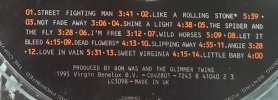
Here are some examples.
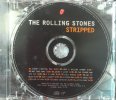
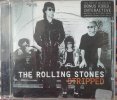
The Rolling Stones' *Stripped* CD:
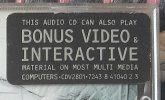
"This audio CD can also play BONUS VIDEO & INTERACTIVE material on most multimedia computers."
I was never able to access that bonus content; looking at the screen showing the track details—that was all there was—just audio tracks.
Origin: UK

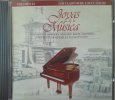
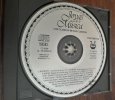
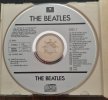
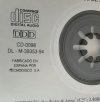
A collection of classical music CDs—50 beautiful silver discs marked "DDD." The first letter is a "D"! I didn't realize digital recorders existed back then, but then again, one can't know everything, right? ...
Origin: Spain

And one last contribution—just so you don't think I’ve betrayed The Beatles for The Rolling Stones (though I must admit, I like them too).

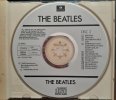
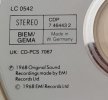
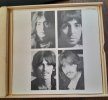
You mentioned The Beatles' *White Album*! An excellent edition. There’s no bonus content, nor any information regarding the recording, mixing, editing, or mastering process (I just learned that this is part of the "SPARS code"—that’s good to know!).
Recorded at EMI Studios, released in Germany in 1968. It sounds fantastic, and if it happens to have pre-emphasis—well, I honestly couldn't care less. I don't have tone controls on my main system, but I’ve never needed them to enjoy the "Fab Four" from Liverpool.
Origin: Germany

The photos might not appear in the exact order of my narrative—it would be too much of a hassle for me to arrange them that way, so please accept my apologies (I just wanted to be helpful to Henried). And if these photos are a nuisance because the discussion has strayed from the original topic—which was a product review—then, Mr. Administrator, please feel free to delete everything. I’ve already had plenty of fun!
 

Attachments

  • 20261105_113512.jpg
    20261105_113512.jpg
    430.6 KB · Views: 14
  • 20261105_113342.jpg
    20261105_113342.jpg
    380.8 KB · Views: 14
  • 20261105_113400.jpg
    20261105_113400.jpg
    532.3 KB · Views: 17
  • 20261105_113400-2.jpg
    20261105_113400-2.jpg
    131.8 KB · Views: 10
  • 20261105_113512-1.jpg
    20261105_113512-1.jpg
    217.9 KB · Views: 14
  • 20261105_114133.jpg
    20261105_114133.jpg
    374.7 KB · Views: 13
  • 20261105_115118.jpg
    20261105_115118.jpg
    315.5 KB · Views: 12
  • 20261105_115220-1.jpg
    20261105_115220-1.jpg
    99.6 KB · Views: 15
  • 20261105_115220.jpg
    20261105_115220.jpg
    303.3 KB · Views: 12
  • 20261105_115225.jpg
    20261105_115225.jpg
    354.2 KB · Views: 12
  • 20261105_114133-1.jpg
    20261105_114133-1.jpg
    121.8 KB · Views: 13
  • Rolling - Stripped.jpg
    Rolling - Stripped.jpg
    466.8 KB · Views: 15
Last edited:
...if it happens to have pre-emphasis—well, I honestly couldn't care less. I don't have tone controls on my main system, but I’ve never needed them to enjoy the "Fab Four" from Liverpool.
Origin: Germany
What a great collection of CDs you have! I did an Internet search for your recording of the 'White Album', and I learned it was pressed in 1992, so it should not need de-emphasis to play the mastering correctly as intended. However, pre-emphasis was often applied to Classical recordings that were pressed before 1990, and if you happen to own any vintage Classical CDs from that pre-1990 era, you would probably want to have a CD player that can apply de-emphasis so they can be reproduced accurately, The treble has been boosted on CDs when pre-emphasis has been applied, and the music will sound unnatrually harsh if those CDs are heard on a player that can't properly de-emphasize that elevated treble. Fortunately, the Sony UBP-X700/K is a Blu-ray player that will provide perfect de-emphasis for CDs that require it. (I'm not a Sony employee who's trying to get people to buy that Blu-ray player, I just want to give people purchasing options ...) If you'd like to know why early CDs were mastered with pre-emphasis, here is a link to a brief explanation: PRE-EMPHASIS
 
Last edited:
Thanks ! there are many more, and if I end up getting the SMSL, I intend to listen as carefully as possible; so, I’ll need to figure out which of my CDs—and how many of them—have that particular artifact applied...
I remember the era of cassette tapes recorded with Dolby; many people would tell me, "I record with Dolby, but I play them back without it—the highs sound better!" So much R&D, only for someone to commit such a heresy!
I found this; I haven't read it yet, but it seems to delve quite deeply into the subject....


Last edited:
I found this; I haven't read it yet, but it seems to delve quite deeply into the subject...
Thanks for those links - I'll enjoy reading those threads and learning more about pre-emphasis/de-emphasis of older CDs.
I have collected multiple thousands of Classical CDs from various sources over the years, and most of them were second-hand or cutouts, but I've never cataloged which of them were pressed in the '80s with pre-emphasis applied. Fortunately, I already own 3 good Blu-ray players that will automatically apply de-emphasis to CDs, so I don't have concerns. As I mentioned, Classical CDs from the '80s were often mastered with pre-emphasis since they typically contained passages of quiet music or silent pauses, where the CD player's own DAC noise might be heard if pre-emphasis wasn't used in the pressing the recording. If you discover that you have multiple CDs in your collection that require de-emphasis but you prefer not to spend a lot of money on an additional audio component, the Sony BDP-S1700/K Blu-ray player is an inexpensive alternative (It sells for about $115 in the U.S.) Because Sony, along with Philips, was the original creator of the compact disc they still remain dedicated to designing lower-cost players that accurately reproduce CDs.
I'm really interested in seeing the upcoming review by NTTY of the soon-to-be-released FiiO DP11 CD player. I'm hoping his tests will show that it includes a de-emphasis circuit and that it has bit-perfect output. The suggested price for the DP11 is just $169.99
 
For me, the main priority is acquiring a dedicated CD player—that is, one designed exclusively for playing Red Book-standard CDs, utilizing the best technology currently available. It’s the weak link in my primary system, and I’m looking for something that will "wow" me—even if just by the experience of top-loading a disc and watching it spin. Naturally, I expect it to offer some significant improvements that will hopefully be audible compared to the generic DVD player I’m currently using. We’ll see.
It seems the SMSL PL200 MKII wasn’t designed to address the "issue" of pre-emphasis. That said, I don’t own as many CDs as you do; and looking at the list of releases affected by this "cursed artifact"—which you can find in one of the links I shared—I see several very well-known, widely distributed artists, such as The Beatles and Pink Floyd. I happen to own some of their albums on vinyl, as well as a few CDs...
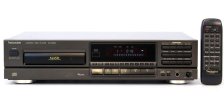
But, guess what? My very first CD player—which I still have, and it’s in impeccable condition—is a Technics SL-PG300. So, I asked an AI whether it would recognize pre-emphasis (PE):
"Yes, the Technics SL-PG300 supports and recognizes discs with pre-emphasis, correctly applying the digital de-emphasis process.
The device's service manual confirms that its internal circuitry and 1-bit MASH DAC include a specific function called 'Digital de-emphasis ON/OFF.' This function is activated automatically ('H': ON) when the player detects the pre-emphasis code—or 'flag'—recorded on the CD tracks.
To ensure that your burned CDs (CD-Rs) play back with the correct tonal equalization—and don't sound overly bright or shrill—keep the following in mind:
Flag Location: The Technics SL-PG300 will detect pre-emphasis only if it is correctly marked in the track subchannel data when the CD-R is burned.
Limitations with Copies: Many modern PC burning programs omit this parameter or fail to record it correctly in the CD-R's pre-gap or subchannel area. If you are duplicating an original CD that features pre-emphasis, make sure to use software that faithfully copies the subchannels (such as Exact Audio Copy in 'cue sheet' mode)."


I’m taking all of this with a grain of salt; AI often makes mistakes, so I need to verify it myself. For instance, this Technics player wasn't designed to handle CD-Rs—it’s from an early generation, long before MP3s even existed! That said, if the physical media is of good quality, it actually plays CD-Rs just fine—quite an achievement!
I plan to check whether any "de-emphasis applied" indicator—or something similar—lights up when I play my CDs. Honestly, I’ve never paid attention to it before. If it does happen, it likely won't be for many discs; I’ll listen to those on my secondary system (the rest of the chain that makes up the SLPG300 ) will be enjoyable regardless. It’s an all-vintage setup: a Sansui amplifier, a CEC turntable, an NAD Fm tuner, and JBL speakers.
If I end up buying the SMSL—and I’ll certainly keep your suggestion about the Sony BDP-S1700/K in mind; it’s quite tempting and definitely worth considering—it will be for the purpose of buying new CDs by artists or featuring versions I haven’t heard before. If I come across something I like via streaming, I’ll pick that up as well. It might seem a bit counterintuitive, but I currently use Spotify—which, as I understand, streams everything in 320 kbps MP3—so I expect I’ll hear a noticeable improvement. I used to use Tidal (which streams lossless FLAC), but I had to stop due to connection issues; I found the sound quality to be superior—more detailed and richer in nuance.
Anyway, I’m looking forward to testing out my SLPG300—I’ll let you know how it goes!
 

Attachments

  • Technics_SL-PG_300-1991 (1).jpg
    Technics_SL-PG_300-1991 (1).jpg
    83.3 KB · Views: 20
Back
Top Bottom