• Welcome to ASR. There are many reviews of audio hardware and expert members to help answer your questions. Click here to have your audio equipment measured for free!

SMSL PL200 MKII Review (CD Player, DAC & HP Amp)

Rate this CD Player

  • Terrible (*)

    Votes: 0 0.0%
  • Mediocre (**)

    Votes: 4 4.3%
  • Good (***)

    Votes: 14 15.2%
  • Excellent (****)

    Votes: 74 80.4%

  • Total voters
    92
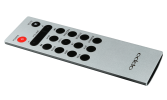
This photo showing the remote control that comes with the SMSL PL200 MK2 is directly from the Amazon retail page
View attachment 563013
About pre-emphasis and "brightness" of playback. Pre-emphasis was only applied to CDs that were pressed in the 1980s. These are the only media sources that would sound "bright" on a player that does not apply de-emphasis. Everything else you play on the SMSL PL200 MK2 will be reproduced perfectly, and that includes CDs pressed since the 1990s, and any CDs you burn from other sources.
I was expecting something more in keeping with the unit—also made of aluminum, like the one that came with my Oppo Sonica. Although some users did complain about receiving a black plastic one. It’s pretty basic—just for selecting inputs—but still...
You say that "pre-emphasis" was used back in the 80s? I honestly wasn't aware of that. I suppose I'll find out for myself if I notice excessive brightness on a CD; after all, just like with many vinyl records, record labels sometimes indicated the release date and sometimes didn't...
And I discovered that the manual actually contains a photo and description of the remote control, as it should... thanks anyway!
 

Attachments

  • headphone-amplifier-ha-1_remote-hr.png
    headphone-amplifier-ha-1_remote-hr.png
    1.4 MB · Views: 59
Regarding Pl200 MKii remote control, I have to state that mine does not fulfill my expectations.
Actually the combination of player and RC is not very sensitive, it reacts only in a small angle (<30°) off of the player's control panel upright axis and does not reach beyond app. 5m.
The player's RC firmware lacks proper separation of short and long press button functions. E. g. starting the player with the play/pause or next and back track buttons does not work until the button is pressed only very shortly (unnatural pulse like) . This behaviour can be corrected by a programmable RC, like in my case a Philips Pronto, allowing to send commands only once, instead of repetitive as the original RCs does...anyway reach is not increased.

Another backlash is a faint audible chirp when sweeping above the audible band (via CD test track), here around 16KHz (level @ -14dBfs).
I guess it is the old problem with ESS DAC's sensivity to dirty audio power supply. Wonder why the test did not reveal this???
...Anyway I would regard it as still acceptable (in comparison with older players and DACs), but my RME ADI-2 fs (part of my computer audio) is audible clean with the same signal!


Wow, that's not good news...:rolleyes:
 
Another backlash is a faint audible chirp when sweeping above the audible band (via CD test track), here around 16KHz (level @ -14dBfs).
I guess it is the old problem with ESS DAC's sensivity to dirty audio power supply. Wonder why the test did not reveal this???
What is the test for that?
 
Wow, that's not good news...:rolleyes:
I have a Technics SLPG300 in my secondary system, and I recalled that its remote control was always very effective—in fact, more so than the remotes for other CD or DVD players I’ve owned. I once asked on another forum how these remotes work, and someone explained that some operate via radio frequency (making them immune to physical obstacles; they even work when pointed at nearby walls), while others use infrared. Obviously, in the latter case, the sensor's reception angle is always quite narrow.
A little while ago, I took the Technics remote and tested it from a distance of 6 meters (though I never actually listen from that far away), and it worked perfectly. However, it stopped responding at a 45-degree angle, whereas it did work at 30 degrees.
This leads me to conclude that, for "audiophile" listening—the kind of listening intended for anyone owning the SMSL unit in question—the remote's performance is perfectly acceptable. After all, one can hardly expect a remote to work while you're in the kitchen pointing it toward the living room where the audio system is located.
 
You say that "pre-emphasis" was used back in the 80s? I honestly wasn't aware of that.
When CD players were manufactured in the 1980s, their built-in Digital to Audio Converters weren't as advanced as they are today. Those early 1980s DACs introduced audible noise in the upper frequencies. To compensate for that, the upper frequencies of CDs pressed in the 1980s were boosted, or "pre-emphasized", and the CD players of that time would recognize the pre-emphasis and "de-emphasize" the upper frequencies to their proper volume, which would also lower the DAC noise to inaudible levels. It was similar to the RIAA equalization curve that has always been applied to pressings of vinyl LPs, to compensate for the technical limitations of vinyl. However, by 1990 the DACs in CD players had improved to the point that pre-emphasis was no longer necessary when producing a CD, and record companies permanently phased out pre-emphasis in their CD pressings.
You can often find the date when a CD was pressed by looking at the fine print on the disc itself.
By the way, Blu-ray players that are currently available from Sony, like the BDP-S1700/U [$113] and the Sony UBP-X700U [$328] will automatically recognize pre-emphasis and will apply de-emphasis perfectly to 1980s pressings of CDs, as tested by NTTY.
 
Last edited:
Hi Henreid
Thanks for all that info. I bought the vintage Technics SLPG300—released around 1991–92—and I never noticed any excessive "brightness." From what you say, it seems they had stopped using that technical gimmick by then. Nor did the bits strike me as particularly "cold" or lacking "warmth"—perhaps because the MASH 1-bit DAC was a solid development for its time; I’m not sure.
Right now, I use a generic DVD/CD player as a transport—one that "reads everything" (and it really does)—and I pair it with the ESS Sabre 9038 Pro DAC in my Oppo Sonica. Do you think the 9039 chip in this SMSL unit will offer any audible improvement? And why? Would it be due to a better transport, a better DAC, or the combination of both? I’m surprised by the video above ( post 89 ) and all the author describes regarding the sound... is that actually real, or is he just imagining things ?
 
Right now, I use a generic DVD/CD player as a transport—one that "reads everything" (and it really does)—and I pair it with the ESS Sabre 9038 Pro DAC in my Oppo Sonica. Do you think the 9039 chip in this SMSL unit will offer any audible improvement? And why? Would it be due to a better transport, a better DAC, or the combination of both? I’m surprised by the video above ( post 89 ) and all the author describes regarding the sound... is that actually real, or is he just imagining things ?
I'm afraid I don't possess the technical expertise to offer advice about which chip in a DAC might sound better. I'm an older guy and my interest in audio began in the analog era, when I was reading magazines like "High Fidelity", "Stereo Review" and "Audio". Back then, those publications wouldn't dream of printing a review of audio equipment without first testing it in the lab, and showing the results. I suppose I'm "old school" in the regard that when reviewers like NTTY and amirm here on ASR test a component and tell me that its artifacts are below the threshold of audibility, I believe them. And I'll add that when bloggers upload a critique of an audio product based merely on their "golden ear" hearing ability I don't consider it a review at all. (I've never felt any confidence in relying on those who make unsubstantiated claims, but that's just my personal perspective, and you can take it with a grain of salt as well...) Based on the tests by NTTY I'd buy the SMSL PL200 MKII in a heartbeat. But I'm also a frugal geezer and if another CD player offers the same tested performance for a lower price, I'll buy the cheaper model instead. It all comes down to what you decide you'd like to own at a price you feel you can afford to spend. I'm definitely looking forward to a future review by NTTY of the FiiO DP11 CD player, reported to sell for $170 when it is released. I hope the test results are great!
 
Last edited:
Well, we agree that we both have years of experience and a lot of listening under our belts. But unfortunately, the breakneck pace of new technology doesn't give us the time to test everything available ourselves... That said, we’re back to the well-worn debate about digital sources. Do all players sound the same? Double-blind tests seem to suggest that, even if they don't, no one can accurately distinguish one source from another... so does that make all measurements secondary? It’s like the arguments over cables or tubes versus solid-state. You just make your choice and enjoy it. If I do buy the SMSL (I was very close to getting the NAD C 538), I’ll share my general impressions—admittedly biased because it’s a new toy—but one thing is certain: I lack both the hearing acuity and the audacity to make the kind of bold claims that guy in the link does...
 
What is the test for that?
Simple 3mins sweep from 20Hz to 20KHz at a level of -14dBfs and a bit depth of 16bit (once digitally generated with Wavelab).
Heard best with HP set to reasonable level in the audible band. When passing 16KHz this chirp becomes audible.
 
Last edited:
Simple 3mins sweep from 20Hz to 20KHz at a level of -14dBfs and a bit depth of 16bit (once digitally generated with Wavelab).
Heard best with HP set to reasonable level in the audible band. When passing 16KHz this chirp becomes audible.
I published the results of my standard 20-20k sweep @-12dBFS (16bits/44.1kHz), and it shows same results as if I'd run it in digital domain. ie excellence.
 
Simple 3mins sweep from 20Hz to 20KHz at a level of -14dBfs and a bit depth of 16bit (once digitally generated with Wavelab).
Heard best with HP set to reasonable level in the audible band. When passing 16KHz this chirp becomes audible.
It would show up on measurements
 
I published the results of my standard 20-20k sweep @-12dBFS (16bits/44.1kHz), and it shows same results as if I'd run it in digital domain. ie excellence.
Below you`ll find a link to listen by yourself:

aufnahme_016.flac

The recording was made through a RME ADI-2fs in ADC mode at 88KHz and 24bit to align with any possible artefacts from CD format output and captures the complete 3mins test track starting from 20Hz@0s - 200Hz@60s - 2KHz@120s - 20KHz@180s plus roughly a second before starting the CD replay and also afterwards.
As explained before the digital level is -14dB -20dB (generated with Wavelab 5).
Due to minimal losses through the tape recording output of the preamp (runs through a TL072 op-amp buffer inside) and PL200 level adjustment to -4.5dB (matches the 4dBu sensivity setting of the ADI-2 fs ADC) the recorded level stays app. at -14dBfs -20dBfs.

Playing the test track somewhat louder than you would set your typical listening level for music reveals a faint beat chirp around 16K (below and above, @2mins+52s track runtime). When listening closely one can even hear an even less audible chirp around 8KHz.
As said, I recognized chirps with various CD players and DACs in different intensities on different platforms (also portables and smartphones with external DAC).
Since this is a subjective comparison I can only state that this PL200 chirp is one of the least audible ones (as far as I can recall, an old TEAC VRDS-10 and the first Philips CD100 were the worst, chirps at different frequencies though).

When re-doing this test today with the above RME (AKM chips), I have to admit, listening to the ADI-2 fs in DAC mode at 44/16, also revealed this chirp in the same intensitiy as the PL200.
But a similarly generated testfile at 96/24 was audible clean.

Due to a probable connection to a base frequency of 8KHz and multiples, I connected this behaviour so far to some USB clock interference...wonder what the actual reason is...any developer insight???


Late remarks:
Looking at the live spectrum (3rd octave analyzer, tc electronic), reveals chirps around -95dB level, which fits to my audible impression!
Actually the test tracks are generated at -20dB. Since they are some 18y old, I forgot and just read the level from the analyzer which adds L+R levels (+6dB)
 
Last edited:
Simple 3mins sweep from 20Hz to 20KHz at a level of -14dBfs and a bit depth of 16bit (once digitally generated with Wavelab).
Heard best with HP set to reasonable level in the audible band. When passing 16KHz this chirp becomes audible.
So, should I buy it or not? Will that buzzing sound be audible without headphones, too?:(

Maybe I should go for the PL200T transport... I have a good DAC...
 
So, should I buy it or not? Will that buzzing sound be audible without headphones, too?:(

Maybe I should go for the PL200T transport... I have a good DAC...
...Wouldn't worry too much...Just gave it a try via speakers at my max. volume setting for music listening (no amp clipping at 0dBfs player level, i.e. 20dB below 0dBfs with this test signal). Couldn't hear it!

The question remaining is the cause of this chirp and whether its cause would become audible with different test signals or even during music listening?

Anyway, this problem seems to be attached generally to 16bits resolution audio as 24bit playback didn't reveal it so far (haven't tested the PL200 USB DAC mode for that so far)...for me a reason to go for HD audio in general...
 
My DAC is the ESS Sabre 9038 Pro included in Oppo Sonica. I won't be using that I2S connection; it doesn't work for me. I'll use coaxial S/PDIF. I don't think there is any connection available today that can extract better sound quality. Or is there? Thanks for the info.


The PL200T does NOT have an HDMI output. It has a I2S output that uses an HDMI connector. @NTTY 's review is in error.
Thanks for correcting my mistake. From what I've been able to ascertain, the pin assignment of I2S is not standardized, so even if you have an I2S input on a different brand of DAC/Amp, the connection may not be perfect. This would seriously limit its usefulness as an output. While it's capable of transmitting an exceptionally precise digital audio signal, in practical terms it appears to be a type of proprietary output that is likely to function with just a few upper-tier SMSL products. (I own an SMSL DL100 DAC/Headphone Amp and it lacks an I2S port...) :confused:
 
Last edited:
While it's capable of transmitting an exceptionally precise digital audio signal, in pratical terms it appears…
I2S stands for Inter-IC Sound, and so is designed to be used within the device, not outside. It carries digital data and clock on separate lines. There are no connectors/cables specified for that protocol because it is supposed to be used only between integrated circuits inside the device.
Using I2S outside the device, with whatever connector (RJ45, HDMI, …), is prone to failure over few meters. It is based on Non Return to Zero protocol (NRZ) line coding for its data stream, where a high voltage level represents a digital 1 and a low voltage level represents a digital 0. It is key that the clock and data stay in sync when they travel, but this is not guaranteed over few meters, as it is known that the longer the distance, the more the jitter.

SPDIF and biphase mark coding (BMC) have been designed to be more resistant to that issue, they should be preferred for inter-devices connection.

I shall test I2S resistance to jitter over distance one day.
 
Back
Top Bottom