• Welcome to ASR. There are many reviews of audio hardware and expert members to help answer your questions. Click here to have your audio equipment measured for free!

SMSL H200 Preamplifier & HP Amp Review (NTTY)

Rate this Preamp & HPA

  • Terrible (*)

    Votes: 0 0.0%
  • Mediocre (**)

    Votes: 2 2.6%
  • Good (***)

    Votes: 8 10.4%
  • Excellent (****)

    Votes: 67 87.0%

  • Total voters
    77
Hi Chaps/Chappettes,

apologies for the basic question, but what's the benefit of this if I can just connect my DAC directly to a PowerAmp and can control volume and input with the DAC?

Sorry for my ignorance.

No real benefit that I can think of for that use case.
 
Excellent review as usual. I specially liked the comparison of digital volume vs preamp in the chain attenuating the signal and who wins where. Very useful!
 
Hi Chaps/Chappettes,

apologies for the basic question, but what's the benefit of this if I can just connect my DAC directly to a PowerAmp and can control volume and input with the DAC?

Sorry for my ignorance.
It’s likely to offer a better resolution when volume is attenuated compared to using the one of your DAC.
Of course the real benefit depends on the DAC you use.
That’s all for your use case (besides HPA).
 
BTW, I could not see an output vs. distortion chart (maybe I was distracted).
No I did not go for these, it's a little long to do with my setup, for multiple reasons, but here you go with one:

H200_MG_HPA_THDNvsPower..jpg


Basically, Medium Gain is offering plenty of power already.
 
Great review as always.
Cannot see the point of this, needs two more inputs and doesn't need a headphone amp, needs to decide what it is, a headphone amp or a preamp, right now it's neither and pointless.
 
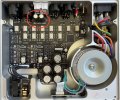
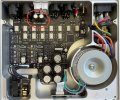
Are the marked capacitors in the signal path?
 

Attachments

  • SMSL H200_003.jpg
    SMSL H200_003.jpg
    508.5 KB · Views: 87
Great review as always.
Cannot see the point of this, needs two more inputs and doesn't need a headphone amp, needs to decide what it is, a headphone amp or a preamp, right now it's neither and pointless.
I still like it. Well a dac is more like an input selector between cd and streamer. Then, it goes through this, then power amplifier. Sometimes I would use a headphone. But it really needs a 12v trigger in and out (or at least auto sensing). But I would prefer one box doing all of these.
 
Last edited:
I still like it. Well a dac is more like an input selector between cd and streamer. Then, it goes through this, then power amplifier. Sometimes I would use a headphone. But it really needs a 12v trigger in and out (or at least auto sensing). But I would prefer one box doing all of these.
It's all horses for courses isn't it? I have zero need for a trigger for example, none of the rest of my kit (12 devices) has that facility, I also have 4 analogue sources which need switching, so not for me.
 
God forbid we get proper pre-amp, nowdays we call pre-amp anything with volume knob, sometimes even without it.
View attachment 559937
 
That’s not quite right.
The unit uses only 6 or 7 relays for volume control; the rest are for input/output switching.
This type of volume control has been around for over 40 years, and in the 30 years I’ve been using it—and often retrofitting it into other units—I have never seen a relay fail.
For one thing, the low-level signals impose no problematic load or switching voltage/power; for another, the cycle ratings are based on a load of 30V/1A, meaning the actual lifespan is far closer to 50,000,000 switching operations than to 100,000.
Even at 100 operations a day, that would amount to only 1,100,000 operations over 30 years—a negligible number given the light load.

Standard potentiometers wear out much faster and almost always exhibit channel imbalances; it’s more a matter of luck if they don’t.
If a relay were to actually fail, replacing it at a workshop or a repair café would be neither difficult nor expensive.

Agreed, a volume control circuit that does not have to rely on a standard potentiometer, especially a "matched" pair, is essentially a good thing.

From the interior photographs of the H200 it seems that using relays in a volume control stage also requires high precision resistors around the relays,

SMSL also use electronic volume control chips from at least three different manufacturers in a range of products, where at least two and possibly all three manufacturers are Japanese. Should electronic volume control provide a further improvement on channel matching?

What are your thoughts on electronic volume control?
 
Hi @NTTY
Do you remember the values of the capacitors located next to the RCA jacks?
 

Attachments

  • SMSL H200_003.jpg
    SMSL H200_003.jpg
    508.5 KB · Views: 45
Hi @NTTY
Do you remember the values of the capacitors located next to the RCA jacks?
The value isn't that critical; they are just DC coupling capacitors, so anything between 16–63V and 10–47µF is safe.
 
The value isn't that critical; they are just DC coupling capacitors, so anything between 16–63V and 10–47µF is safe.
That’s what I suspected, too. They’re likely on the signal input. Given their high values, it will be very difficult to replace them with good film capacitors. An electrolytic capacitor in the signal path is a pure evil.
 
That’s what I suspected, too. They’re likely on the signal input. Given their high values, it will be very difficult to replace them with good film capacitors. An electrolytic capacitor in the signal path is a pure evil.
Sorry, but that is absolute audiophile nonsense.
We’ve conducted countless blind tests involving audiophile listeners who insisted there was a huge difference. Without exception, they all failed. We’ve repeated these tests more than ten times over the last 26 years, always with the same result.
A good bipolar capacitor—like the Nichicon Muse ES BP, for instance—is more than adequate, yet it is indistinguishable from reasonably good standard electrolytic capacitors.
With all due respect for your experience but I hear the difference and let it stay that way.
 
With all due respect for your experience but I hear the difference and let it stay that way.
And this was done, of course, in a proper, level-matched blind test using two identical units (which had been verified beforehand), where only one had its electrolytic capacitors replaced with film capacitors?
Or did you simply swap them out and then hear a huge difference?
 
And this was done, of course, in a proper, level-matched blind test using two identical units (which had been verified beforehand), where only one had its electrolytic capacitors replaced with film capacitors?
Or did you simply swap them out and then hear a huge difference?
Everyone hears differently. Perhaps someday someone will build a device for such measurements.
 
Back
Top Bottom