• Welcome to ASR. There are many reviews of audio hardware and expert members to help answer your questions. Click here to have your audio equipment measured for free!

SMSL D1 - ROHM DAC for everyone

Can hear the audible differences between DACs and amplifiers. I must be an anomaly.
Write music occasionally, so I presume acute hearing.
D/A implementation, output stage component choice, quality and tolerance, cable/connector choice (built numerous interconnects) = audible differences.

There's a tiny DAC for under £20 out there that sounds incredible. Full and rich. Bought on eBay, UNBRANDED!

Ok, ok. No fun here.

:rolleyes:
 
Write music occasionally, so I presume acute hearing.
It's true. Writing music is a cure for all sorts of hearing problems.
 
Hi Roland68,

Like it haha. You make me laugh (I should be decorating the lounge). Here's some photos.

Got two D1's, both unmodified. PSU has the mod.
Not fooling myself. All of my DACs sound different, even the same model can do so, different production date, tolerances of those components; as you know? Revealing amp is essential.
Fosi BT20a Pro with OPA 2134, Van Damme blue driving Mission LX, nice and smooth in the bedroom.
Completely different experience to the lounge set up.

D1 powering devices with reverse current.
1. LEDs on disconnected USB C cable. The USB cable in it's entirety.
2. Successfully booting the Sanskrit MK3 (not MK4, wishful thinking).
3. Successfully booting the E50II.

Clearly sending power from the PC onwards through the Aux power input.
Can hear the audible differences between DACs and amplifiers. I must be an anomaly.
Write music occasionally, so I presume acute hearing.
D/A implementation, output stage component choice, quality and tolerance, cable/connector choice (built numerous interconnects) = audible differences.

There's a tiny DAC for under £20 out there that sounds incredible. Full and rich. Bought on eBay, UNBRANDED!

Ok, ok. No fun here.

:rolleyes:
You’re no exception, because you fall for this sort of thing just like tens or hundreds of thousands of other audiophiles.
I’ve met hundreds of people who make claims like that, and whenever they dared to take part in one of our blind comparison tests, those abilities vanished instantly—even when they brought their own equipment along.
But by now, I’ve got an incredible list of absolutely fantastic excuses for why they suddenly couldn't hear those differences anymore.

That’s what always makes me laugh.
 
Hi Roland68,

Like it haha. You make me laugh (I should be decorating the lounge). Here's some photos.

Got two D1's, both unmodified. PSU has the mod.
Not fooling myself. All of my DACs sound different, even the same model can do so, different production date, tolerances of those components; as you know? Revealing amp is essential.
Fosi BT20a Pro with OPA 2134, Van Damme blue driving Mission LX, nice and smooth in the bedroom.
Completely different experience to the lounge set up.

D1 powering devices with reverse current.
1. LEDs on disconnected USB C cable. The USB cable in it's entirety.
2. Successfully booting the Sanskrit MK3 (not MK4, wishful thinking).
3. Successfully booting the E50II.

Clearly sending power from the PC onwards through the Aux power input.
Just to save other users from making false assumptions or doing anything foolish, here is a clarification regarding the D1's USB power port.
The D1 runs perfectly fine on standard USB 2.0 power (manufacturer spec: <5W). It appears SMSL wanted to give users the option of connecting a separate external power supply to this DAC, so they added an extra USB power port.
The +/- 5V lines of the USB power port are wired in parallel with the standard USB port (data and 5V from the host), which is a legitimate and common practice. The USB power port is clearly an input, not an output.

However, there is no connection between the +/- 5V lines of the USB power port and the standard USB input—which is exactly how it should be.
SMSL did everything right here; installing diodes anywhere in the circuit would be completely pointless and would, at best, slightly increase the noise floor.

If you use an external power supply via the D1's USB power port and disconnect the +5V line in the data cable (carrying data and 5V from the host)—ideally right at the host-side connector—you prevent the DAC from being powered by the host device's "dirty" 5V supply. This also minimizes interference coupling from the 5V line onto the data lines.

Incidentally, the D1 regenerates its internal power supply, meaning the quality of the external power adapter has little to no impact on performance.
A decent Mean Well 5V power supply (0.7–1A) is perfectly adequate. If you also use the "wall-wart filter" from the DIY Audio forum, anything beyond that is just expensive nonsense.
 
> _MAX_ said:
> Can hear the audible differences between DACs and amplifiers. I must be an anomaly

You’re no exception, because you fall for this sort of thing just like tens or hundreds of thousands of other audiophiles.

[…]

That’s what always makes me laugh.

This is a very common type of comment here and also a fallacy. It is intentionally ignoring DACs that are “broken” or just very old, or amplifiers which are extremely underpowered and rich in distortion.

Not all devices are like the highest SINAD ones reviewed here. And there was a reason the first DACs were considered to have a harsh sound.

So I would not discard certain comments with laughs. But ask first what they listened to. Yes, sighted comparison is biased. There is confirmation bias. We all know that. And: Two decently built recent DACs or amplifiers since a few decades, when used in similar conditions, do not contribute to audibly different final outcomes, this is established. There are, however, other conditions. Or are we to assume that a 2A3 single ended amp will provide the same sound out of a pair of LS 3/5a than a Purifi module at reasonable listening levels? Because in this case science tells us it cannot be the case, because of the high distortion when you start needing 5-6W of power.
You are misinterpreting my statement.
I was referring to the comment made by the user a few posts back—#637—where he mentioned specific modern DACs with which he heard differences. If you hear differences with devices like that, either something is defective, or the differences are extremely marginal. The latter usually refers to minimal differences in resolution rather than tonal characteristics.
Over the last 26 years, we have compared well over 1,000 devices in level-matched blind tests. I am very familiar with the claims guests make about the differences they hear in the equipment they bring along. Yet, in a level-matched blind test, those differences suddenly vanished—or, in a few cases, remained only marginally perceptible.

Differences between identical units—or those caused by component variance—are also extremely rare, if not unlikely.
We have frequently compared multiple units of the same model from different production batches for this very reason—models like the E30, E50, SU-1, SU-10, DO400, etc., and even six different D1 units. It was a very arduous process but yielded no results; in other words, they were indistinguishable. Of course, one must ensure that the settings on the DACs are exactly the same.

Exceptions clearly include defective units—though the fault is usually very audible—as well as extremely poorly designed devices.
Another factor involves devices that have been intentionally (or unintentionally) "voiced" to produce a specific sound.

And that brings us to a crucial point.
Here, we are concerned with reproducing the music exactly as it was recorded, not with interpretation.
Please take a close look at the source data. You will find that it contains absolutely precise information, whether analog or digital.
If a device is incapable of reproducing that information accurately, it can only be considered defective; it has failed to perform its primary function.

This applies equally to older DACs and digital devices that produce a harsh sound. Most of that is absolute nonsense; if such devices actually sound "harsh," that would be evident in the measurements as well. Ironically, this "harsh" sound almost always originates in the analog stage.
I still use a Cambridge Audio DACMagic from 1994 (designed by John Westlake), which clearly demonstrates—even in direct comparisons—that the challenge of DAC design was already solved 32 years ago.

Devices with a deliberately (or unintentionally) "voiced" sound signature are acceptable, provided the manufacturer discloses this and can reliably explain how it affects the music. However, such units can no longer be compared to standard equipment.
If the manufacturer does not explicitly disclose this, the device must be considered defective—and the situation regarded as a fraud against the customer.

 
This is a very common type of comment here and also a fallacy. It is intentionally ignoring DACs that are “broken” or just very old, or amplifiers which are extremely underpowered and rich in distortion.

Not all devices are like the highest SINAD ones reviewed here. And there was a reason the first DACs were considered to have a harsh sound.

So I would not discard certain comments with laughs. But ask first what they listened to. Yes, sighted comparison is biased. There is confirmation bias. We all know that. And: Two decently built recent DACs or amplifiers since a few decades, when used in similar conditions, do not contribute to audibly different final outcomes, this is established. There are, however, other conditions. Or are we to assume that a 2A3 single ended amp will provide the same sound out of a pair of LS 3/5a than a Purifi module at reasonable listening levels? Because in this case science tells us it cannot be the case, because of the high distortion when you start needing 5-6W of power.
Just as an addendum:
There is no point comparing amplifiers that are too weak for a given application, as they are simply inadequate.
Distortion is either the result of poor design or a deliberate sonic "voicing" choice. Why spend money on the former? As for the latter, that is a matter for each individual to decide, since it represents a significant alteration of the music itself.

Incidentally, well-designed, high-performance amplifiers were already a completely solved problem 39 years and 7 months ago—as demonstrated here on ASR by the test of the NAD 2200.
 
Just as an addendum:
There is no point comparing amplifiers that are too weak for a given application, as they are simply inadequate.
Distortion is either the result of poor design or a deliberate sonic "voicing" choice. Why spend money on the former? As for the latter, that is a matter for each individual to decide, since it represents a significant alteration of the music itself.

Well, while I agree with you, sentences like “all DAC sound equal” or “all amplifiers sound equal”, and any argument implying that (like deriding those who claim to hear differences) are still false AND bring injustice to ASR, a site that has done A LOT to bring objectivism back as *the* most correct parameter to evaluate audio gear.

Incidentally, well-designed, high-performance amplifiers were already a completely solved problem 39 years and 7 months ago—as demonstrated here on ASR by the test of the NAD 2200.

Absolutely correct. For DACs I think that level was achieved later.
 
You are misinterpreting my statement.
I was referring to the comment made by the user a few posts back—#637—where he mentioned specific modern DACs with which he heard differences.

Ok, in this case apologies then. Krabapple however clearly misunderstood my statements and judged them out of context.

If you hear differences with devices like that, either something is defective, or the differences are extremely marginal. The latter usually refers to minimal differences in resolution rather than tonal characteristics.

I agree.

Over the last 26 years, we have compared well over 1,000 devices in level-matched blind tests. I am very familiar with the claims guests make about the differences they hear in the equipment they bring along. Yet, in a level-matched blind test, those differences suddenly vanished—or, in a few cases, remained only marginally perceptible.

My experience as well. Also, with properly designed DACs, as I claimed, it is at least 10 (if not 15) years that even the marginally perceptible differences disappeared as well. At least in my experience.

Differences between identical units—or those caused by component variance—are also extremely rare, if not unlikely.

Yup.

[…]

And that brings us to a crucial point.
Here, we are concerned with reproducing the music exactly as it was recorded, not with interpretation.

As I am. When I want to give voicing, I do that in the digital domain before the DAC. And I almost never want to (in the cases where I really need that, like some historical recordings, I haven’t found a satisfactory way of doing it, I may do some work on using generative AI to reconstruct a more bearable sound. So far no results.)

Please take a close look at the source data. You will find that it contains absolutely precise information, whether analog or digital.
If a device is incapable of reproducing that information accurately, it can only be considered defective; it has failed to perform its primary function.

This applies equally to older DACs and digital devices that produce a harsh sound. Most of that is absolute nonsense; if such devices actually sound "harsh," that would be evident in the measurements as well. Ironically, this "harsh" sound almost always originates in the analog stage.

Possibly. We can only listen to a DAC devide in its entirety though.

I still use a Cambridge Audio DACMagic from 1994 (designed by John Westlake), which clearly demonstrates—even in direct comparisons—that the challenge of DAC design was already solved 32 years ago.

Devices with a deliberately (or unintentionally) "voiced" sound signature are acceptable, provided the manufacturer discloses this and can reliably explain how it affects the music. However, such units can no longer be compared to standard equipment.
If the manufacturer does not explicitly disclose this, the device must be considered defective—and the situation regarded as a fraud against the customer.

Agree 100%.
 
sentences like “all DAC sound equal” or “all amplifiers sound equal”
Please stop with the old straw man. Those statements are not made. They are always qualified (well measuring - operating within limits etc) or the qualification is implied.

Such as in this case where @Roland68 was referring to specific devices which do meet those conditions.


As regards voicing - have you ever met an electronic device that doesn't claim low distortion and flat frequency response? Just how then, are they achieving "voicing"? You can't have both "voicing" and good specifications.
 
Please stop with the old straw man. Those statements are not made. They are always qualified (well measuring - operating within limits etc) or the qualification is implied.

Well, you must be referring to my statements then. Because I am one of the few that ALWAYS adds such qualifiers.

True, I often read “competently designed amps/DACs” but rarely “operating within limits”.

I think that the most compact way to phrase the thing is “Amps/DACs are a solved problem.” To my ears (what?) this has a nice ring to it. That one needs to understand the problem in order to make a purchasing decision.
 
Last edited:
True, I often read “competently designed amps/DACs” but rarely “operating within limits”.
Odd - I see it all the time - though it relates to amps, not dacs. Might also be "within power limits" "within design limits" "not clipping" or any number of phrases meaning the same thing.
 
Odd - I see it all the time - though it relates to amps, not dacs. Might also be "within power limits" "within design limits" "not clipping" or any number of phrases meaning the same thing.

Ok. Maybe you read my posts on the matter then
:cool:
 
Last edited:
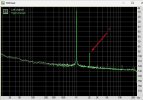
Hello! Recently received SMSL D1. I measured the parameters, and this is what confuses me. This is a peak at 2kHz in THD measurements. I connected the DAC via ADUM4160 (galvanic isolation) and applied external power. For Line-In, Realtek is used in the motherboard.
Realtek output to input testing produces a clean graph. Also testing other DAC's under the same conditions does not give this peak at 2 kHz. I tried to find similar D1 measurements somewhere, but I couldn’t find them.
Who has the same? I think I can return the device.
 

Attachments

  • adum.jpg
    adum.jpg
    61.2 KB · Views: 54
Just to save other users from making false assumptions or doing anything foolish, here is a clarification regarding the D1's USB power port.
The D1 runs perfectly fine on standard USB 2.0 power (manufacturer spec: <5W). It appears SMSL wanted to give users the option of connecting a separate external power supply to this DAC, so they added an extra USB power port.
The +/- 5V lines of the USB power port are wired in parallel with the standard USB port (data and 5V from the host), which is a legitimate and common practice. The USB power port is clearly an input, not an output.

However, there is no connection between the +/- 5V lines of the USB power port and the standard USB input—which is exactly how it should be.
SMSL did everything right here; installing diodes anywhere in the circuit would be completely pointless and would, at best, slightly increase the noise floor.

If you use an external power supply via the D1's USB power port and disconnect the +5V line in the data cable (carrying data and 5V from the host)—ideally right at the host-side connector—you prevent the DAC from being powered by the host device's "dirty" 5V supply. This also minimizes interference coupling from the 5V line onto the data lines.

Incidentally, the D1 regenerates its internal power supply, meaning the quality of the external power adapter has little to no impact on performance.
A decent Mean Well 5V power supply (0.7–1A) is perfectly adequate. If you also use the "wall-wart filter" from the DIY Audio forum, anything beyond that is just expensive nonsense.
There's one thing I don't understand.
The ASR community seems to be in universal consensus regarding John "Benchmark" Siau's God-like abilities in engineering.
And he recently posted this:

Now, correct me if I'm wrong but @amirm 's DAC test suite has never included any measurements regarding intersample overs, right?
NTTY has been measuring this in his CD player tests and he did reveal very significant differences
So
1. John Siau seems to think this is a real, very audible issue (10% distortion products!)
2. Many of the DACs approved by Amir's testing might have this issue (for all we know - or they may not!)
3. And yet here we are arguing that DACs that measure at SOTA levels in ASR tests can't sound different...?

What am I missing?
Oh wait, I know. A proper test of the SMSL D1 that also includes an intersample overs test! :)
@NTTY you're in Germany, right? Would you want to test mine?
 
People hi :)

That is the approach I have long used with my 'MusicBee' player, which features tools to avoid these kinds of sound reproduction issues with the DAC.

To find out how to do it, simply visit the 'Music Bee' website, use Google, or consult an AI like Claude ou ChatGPT (by asking the right, relevant questions); it should also be able to suggest other solutions if you are using a different player. ;)

In this way, you will obtain an objective solution to the problem—addressing what you perceived subjectively while listening, yet which was nonetheless a genuine reality...

...It is not I who say this (even though I think it), but Mr. John Siau of Benchmark :cool:

We have now made further progress in the science of sound reproduction.

I pity poor Amirm—whose task was already monumental—for having to perform this type of test in his future reviews; it is a test that can no longer be overlooked if one wishes to remain entirely objective :(

Unless Mr. John Siau is falling victim to an "acoustic bias"—as people often say in cases like this—you could certainly try telling him, but convincing him of it will be a very difficult task :D
 
Last edited:
The problem I have with all this DAC science is in actual use I can't tell any difference. I can listen to the same CD running through my Yamaha with an ESS ES9080Q DAC, my old Pioneer changer from the 90's with a pulse flow DAC, or my old Sony Discman with a multi-bit DAC and the CD sounds the same. My hearing may just be too poor to detect this noise and distortion, but I have long since given up worrying about SINAD or what DAC chip something has. I am much more sensitive to mastering, especially modern crushed masters which sound terrible to me on any device I try to listen to them on.
 
The problem I have with all this DAC science is in actual use I can't tell any difference.
Why is that a problem. It is exactly the expected result.
 
Back
Top Bottom