• Welcome to ASR. There are many reviews of audio hardware and expert members to help answer your questions. Click here to have your audio equipment measured for free!

Sealed versus Ported Bass, can the difference be measured?

You wrote that the cylinders are “operating not in the sealed mode,” but then mention an all-sealed arrangement. If the PCs are still ported, you’re effectively running a mixed topology (sealed + ported), which can work but sometimes creates phase or decay-time mismatches around the tuning frequency. Let me know which it is—sealed or ported—and whether you’ve plugged one, two, or all three ports on each cylinder (SVS’s “16 Hz / 18 Hz / 20 Hz” modes).
That was a typo, the cylinders are operating in the sealed mode (all ports blocked with foam) and have a special app setting for that. The crossover in both cases is at 70 htz (from Revel Performa F226 Be).
 
There are some really bizarre things going on with those MDAT's. But first let us answer your question.

1752246697576.png


First, are we dealing like with like? I imported both MDAT's into the same graph and time aligned + SPL aligned them. The measurement marked "SEALED" is in red, and "PORTED" is in green. The answer is "not really". Although the bass equalisation is roughly the same, there are substantial differences above 1kHz, most notably a huge dip at 2kHz in the PORTED measurement. This isn't going to be due to a difference in subwoofer layout, it's going to be due to different mic position + maybe something else, e.g. a large piece of furniture that was present in one measurement but absent in the other.

1752247214618.png


More bizarre are these huge spikes in the waterfall at 450Hz and 750Hz which remain flat and do not diminish in intensity - a measurement artefact for sure. Both peaks are squarely in the vocal range and as loud as the measurement itself, which makes me think that someone was yelling or a dog was barking when the measurement was taken. I would have rejected the measurement immediately and retaken it. This means that from now on, all the "PORTED" measurements are suspect and must be interpreted with caution.

1752246036423.png


Group delay view. Again, SEALED is red, PORTED is green. You can see that above 10kHz the group delay is the same, meaning we can compare the GD below 200Hz.

I have drawn in dark blue the general trend for GD. You can see that the red and green measurements are almost the same. This does not necessarily mean that the GD of your sealed sub is the same as the ported sub, as I mentioned before there are too many confounding variables to draw that conclusion. All we can say at this point is that the difference in GD is not the reason why you prefer sealed over ported.

A couple of other things stand out. Look at the peaks marked 1, 2, and 3. These are non minimum-phase areas of the frequency response. These will be due to two or more sound waves interacting with each other - perhaps the direct sound with its reflection, or the direct sound from two speakers (L and R, or one of the speakers with a subwoofer, or two subwoofers, etc). The peaks marked 2 and 3 are absent in the SEALED measurement, and are likely NOT due to the measurement artefact discussed earlier since those are at 450Hz / 750Hz. It is likely due to subwoofer / mic positioning.

1752248514845.png


The double impulse on the green curve at the start of the step response tells me that this is a measurement of two main speakers together, with the microphone not well centred between the speakers. The direct sound from one speaker is arriving earlier than the other.

1752248289828.png


The tail of the step response is good for observing ringing behaviour in the subwoofer. This is the same measurement as above, but stretched out to show 450ms instead of the first 10ms. Here, you can see the ringing behaviour between "PORTED" and "SEALED" is very different, with the PORTED curve showing "ringing" that is louder than the main impulse itself. I say "ringing" because I am not sure if this is actual ringing or due to the measurement artefact we saw earlier. Certainly, if you have multiple subwoofers and they are not time aligned properly, you can observe "ringing" that looks like this.

1752249121605.png


And finally, the spectrograms. These have been normalised to the peak value at every frequency. The artefact shown earlier is well above this frequency range, so the spectro is interpretable. Here you can see that the decay of the sealed sub is superior to the ported.

 
There are some really bizarre things going on with those MDAT's. But first let us answer your question.

View attachment 462685

First, are we dealing like with like? I imported both MDAT's into the same graph and time aligned + SPL aligned them. The measurement marked "SEALED" is in red, and "PORTED" is in green. The answer is "not really". Although the bass equalisation is roughly the same, there are substantial differences above 1kHz, most notably a huge dip at 2kHz in the PORTED measurement. This isn't going to be due to a difference in subwoofer layout, it's going to be due to different mic position + maybe something else, e.g. a large piece of furniture that was present in one measurement but absent in the other.

View attachment 462692

More bizarre are these huge spikes in the waterfall at 450Hz and 750Hz which remain flat and do not diminish in intensity - a measurement artefact for sure. Both peaks are squarely in the vocal range and as loud as the measurement itself, which makes me think that someone was yelling or a dog was barking when the measurement was taken. I would have rejected the measurement immediately and retaken it. This means that from now on, all the "PORTED" measurements are suspect and must be interpreted with caution.

View attachment 462682

Group delay view. Again, SEALED is red, PORTED is green. You can see that above 10kHz the group delay is the same, meaning we can compare the GD below 200Hz.

I have drawn in dark blue the general trend for GD. You can see that the red and green measurements are almost the same. This does not necessarily mean that the GD of your sealed sub is the same as the ported sub, as I mentioned before there are too many confounding variables to draw that conclusion. All we can say at this point is that the difference in GD is not the reason why you prefer sealed over ported.

A couple of other things stand out. Look at the peaks marked 1, 2, and 3. These are non minimum-phase areas of the frequency response. These will be due to two or more sound waves interacting with each other - perhaps the direct sound with its reflection, or the direct sound from two speakers (L and R, or one of the speakers with a subwoofer, or two subwoofers, etc). The peaks marked 2 and 3 are absent in the SEALED measurement, and are likely NOT due to the measurement artefact discussed earlier since those are at 450Hz / 750Hz. It is likely due to subwoofer / mic positioning.

View attachment 462696

The double impulse on the green curve at the start of the step response tells me that this is a measurement of two main speakers together, with the microphone not well centred between the speakers. The direct sound from one speaker is arriving earlier than the other.

View attachment 462694

The tail of the step response is good for observing ringing behaviour in the subwoofer. This is the same measurement as above, but stretched out to show 450ms instead of the first 10ms. Here, you can see the ringing behaviour between "PORTED" and "SEALED" is very different, with the PORTED curve showing "ringing" that is louder than the main impulse itself. I say "ringing" because I am not sure if this is actual ringing or due to the measurement artefact we saw earlier. Certainly, if you have multiple subwoofers and they are not time aligned properly, you can observe "ringing" that looks like this.

View attachment 462700

And finally, the spectrograms. These have been normalised to the peak value at every frequency. The artefact shown earlier is well above this frequency range, so the spectro is interpretable. Here you can see that the decay of the sealed sub is superior to the ported.
Well, that's quite an analysis, thanks. I do have a dog, so maybe that explains the PORTED anomalies. I also have a large foot rest in between the speakers and the measurement mike, that could vary in position. Rank amateur stuff, but I'm learning. And this is multiple subs (5), for the ported arrangement, two paired in one corner, 3 in the other. For the SEALED, it's two in one corner, and a single in the other. I could look for an alternative PORTED measurement, without the dog bark, but I wouldn't want to trouble you again with this analysis unless you are interested.
 
Well, that's quite an analysis, thanks. I do have a dog, so maybe that explains the PORTED anomalies. I also have a large foot rest in between the speakers and the measurement mike, that could vary in position. Rank amateur stuff, but I'm learning. And this is multiple subs (5), for the ported arrangement, two paired in one corner, 3 in the other. For the SEALED, it's two in one corner, and a single in the other. I could look for an alternative PORTED measurement, without the dog bark, but I wouldn't want to trouble you again with this analysis unless you are interested.
Here's an alternative PORTED MDAT that may not feature a dog!
 

Attachments

once you align the SPL around the lower bass then the response is clearly one that has been hammered into the same shape by dirac with some differences higher up that don't seem likely to be a function of sealed vs ported

you're not going to tell hardly anything (in terms of sealed vs ported) from such a comparison as there's nothing really to compare

however, assuming usual crossover range and accepting caveats that it's a measurement at a single position, it's clearly a bit of a mess in the ported case but the sealed setup looks ok

both responses look rather anaemic in the bass though, a negative slope all the way from 60Hz is definitely not what you want & a small peak at 40Hz with a rolloff below and a trough after it is surely going to accentuate that one note feeling & certainly these aspects should be noticeable

1752256912862.png
 
Anyway my intention is not to tell you what is going on, but to show you how you can look at the measurement yourself and draw your own conclusions. I am like you, I started from nothing and all this is self-taught. Again, I loaded your SECOND PORTED measurement into REW and dragged the SEALED measurement so that I can display them together. I then aligned the SPL, aligned the time, and applied smoothing. Try to interpret one graph by directly comparing it to the other using the Overlays button.

1752256334616.png


This is the step response from 0ms - 500ms for sealed (red) and ported (green) with no dog. The time domain performance of both curves is very poor, with the green curve being particularly horrible.

1752256489878.png


To give you an idea what it should look like, this is the step response of my system over the same time period of 500ms. Red/Green = left/right speaker and subs. Notice a few features of this measurement: (1) the left and right channels are virtually carbon copies of each other, (2) after the main impulse, there is no peak which is greater in amplitude than the main impulse, and the decay is uniform and consistent, (3) the post-impulse ringing dies out after 250ms. Some of this is due to the way I set my speakers up, some of it is due to the room.

In contrast, your green curve ("second ported") has reflections or ringing that are louder than the main impulse, in particular that huge impulse arriving at 100ms. This would result in disjointed sound, imagine if you hear a drum being struck. First you hear the high frequencies from the stick hitting the skin, then one tenth of a second later the boom arrives.

Your red curve ("sealed") is not free from this either, but it is better than the ported measurement. It is not clear from this measurement whether those huge impulses are due to reflections or extremely poor subwoofer time alignment, but I would strongly suggest you do something about it.

1752256944868.png


Since the thread title is about group delay, here we can see that the GD of the ported subs is slightly higher than the sealed sub. It is not an entirely clean measurement being in-room and also subject to all the caveats that we discussed earlier, but you can clearly see the trend.

There are lots of things to look at. I'm not going to go through all of them, but I suggest you do what I did. Put both measurements on the same MDAT and compare them. If you have any questions, feel free to ask.
 
Well, thanks again! I will not use the ported arrangement again, and it's obvious why I prefer the sealed, from your analysis. I rely on Dirac with Bass Control for time alignment. Apparently, that is not enough. What can I do to improve beyond Dirac?
 
once you align the SPL around the lower bass then the response is clearly one that has been hammered into the same shape by dirac with some differences higher up that don't seem likely to be a function of sealed vs ported

you're not going to tell hardly anything (in terms of sealed vs ported) from such a comparison as there's nothing really to compare

however, assuming usual crossover range and accepting caveats that it's a measurement at a single position, it's clearly a bit of a mess in the ported case but the sealed setup looks ok

both responses look rather anaemic in the bass though, a negative slope all the way from 60Hz is definitely not what you want & a small peak at 40Hz with a rolloff below and a trough after it is surely going to accentuate that one note feeling & certainly these aspects should be noticeable

View attachment 462724
I can of course easily elevate the lower bass, using either Dirac or the SVS app but I don't prefer that sound profile, which I have tried (and is the default result of Dirac). Overall, however from 20 khtz to 20 htz there is an upward tilt (see my first post).
 
Well, thanks again! I will not use the ported arrangement again, and it's obvious why I prefer the sealed, from your analysis. I rely on Dirac with Bass Control for time alignment. Apparently, that is not enough. What can I do to improve beyond Dirac?
In the past I have tried to use DIRAC Bass Control and it completely messed up the sub timing. Recently I tried the latest Beta release and it seems to be working now. Not a completely fair test because in the past I had 4 subs and now I have 2 subs but if you are concerned about timing issues I would definitely try the latest Beta version of DIRAC and see if it makes any difference.

If you decide to go the "manual" time alignment route you are in for a wild ride. Ported vs Sealed is nothing compared to the differences of opinion and different techniques for time aligning multiple subs. You would think it would be easy settled science but it is not. The main problem goes back to the difficulty of getting reliable "in room" measurements at low frequencies. My experience was I tried 6 different methods (REW Time Alignment tool, "staggered timing impulse response method", "Near field timing and tape measure method", DIRAC, and two different MSO (Multi Sub Optimization) programs, and all gave different results. The closest were the latest DIRAC Bass Control and "near field and tape measure" method so that is what I went with and it seems OK but I still am not 100% sure.
 
Last edited:
In the past I have tried to use DIRAC Bass Control and it completely messed up the sub timing. Recently I tried the latest Beta release and it seems to be working now. Not a completely fair test because in the past I had 4 subs and now I have 2 subs but if you are concerned about timing issues I would definitely try the latest Beta version of DIRAC and see if it makes any difference.

If you decide to go the "manual" time alignment route you are in for a wild ride. Ported vs Sealed is nothing compared to the differences of opinion and different techniques for time aligning multiple subs. You would think it would be easy settled science but it is not. The main problem goes back to the difficulty of getting reliable "in room" measurements at low frequencies. My experience was I tried 6 different methods (REW Time Alignment tool, "staggered timing impulse response method", "Near field timing and tape measure method", DIRAC, and two different MSO (Multi Sub Optimization) programs, and all gave different results. The closest were the latest DIRAC Bass Control and "near field and tape measure" method so that is what I went with and it seems OK but I still am not 100% sure.
 
Thanks, after reading an earlier post of yours I did install this latest beta (3.13.9) version. However, I haven't measured with REW since the install and recalculation (I assume I don't have to collect a new data set) was performed. Maybe tomorrow....
 
I can of course easily elevate the lower bass, using either Dirac or the SVS app but I don't prefer that sound profile, which I have tried (and is the default result of Dirac). Overall, however from 20 khtz to 20 htz there is an upward tilt (see my first post).
if you're going to get into tweaking, you may consider whether it's some setup issue that mean it sounds better with the bass removed.
 
Well, thanks again! I will not use the ported arrangement again, and it's obvious why I prefer the sealed, from your analysis. I rely on Dirac with Bass Control for time alignment. Apparently, that is not enough. What can I do to improve beyond Dirac?

I think it's pretty clear from looking at the measurements that your problem is the poor time domain performance - specifically, that there is a massive peak that arrives about 100ms after the main impulse. That will be EASILY audible. The problem is that we do not know what is causing it. It is going to be one of the following:

1. An extremely poorly time aligned subwoofer or subwoofers. You indicated that you have more than one. In other words, a subwoofer setup problem. The solution would be to improve the DSP.
2. A late arriving reflection or more than one reflection, especially a reflection from a concave surface. In other words, a room problem. The solution would be to move subwoofers. DSP may be able to help.

Right now we don't know what the culprit is because your entire system was measured together (i.e. 2 speakers and 3 subwoofers). You need to measure each speaker and subwoofer individually with an acoustic reference. A diagram would also be helpful.
 
yea, with my 4x18's, the bass would hit and stop then the room would "ring" or vibrate down...............
 
Anyway my intention is not to tell you what is going on, but to show you how you can look at the measurement yourself and draw your own conclusions. I am like you, I started from nothing and all this is self-taught. Again, I loaded your SECOND PORTED measurement into REW and dragged the SEALED measurement so that I can display them together. I then aligned the SPL, aligned the time, and applied smoothing. Try to interpret one graph by directly comparing it to the other using the Overlays button.

View attachment 462722

This is the step response from 0ms - 500ms for sealed (red) and ported (green) with no dog. The time domain performance of both curves is very poor, with the green curve being particularly horrible.

View attachment 462723

To give you an idea what it should look like, this is the step response of my system over the same time period of 500ms. Red/Green = left/right speaker and subs. Notice a few features of this measurement: (1) the left and right channels are virtually carbon copies of each other, (2) after the main impulse, there is no peak which is greater in amplitude than the main impulse, and the decay is uniform and consistent, (3) the post-impulse ringing dies out after 250ms. Some of this is due to the way I set my speakers up, some of it is due to the room.

In contrast, your green curve ("second ported") has reflections or ringing that are louder than the main impulse, in particular that huge impulse arriving at 100ms. This would result in disjointed sound, imagine if you hear a drum being struck. First you hear the high frequencies from the stick hitting the skin, then one tenth of a second later the boom arrives.

Your red curve ("sealed") is not free from this either, but it is better than the ported measurement. It is not clear from this measurement whether those huge impulses are due to reflections or extremely poor subwoofer time alignment, but I would strongly suggest you do something about it.

View attachment 462726

Since the thread title is about group delay, here we can see that the GD of the ported subs is slightly higher than the sealed sub. It is not an entirely clean measurement being in-room and also subject to all the caveats that we discussed earlier, but you can clearly see the trend.

There are lots of things to look at. I'm not going to go through all of them, but I suggest you do what I did. Put both measurements on the same MDAT and compare them. If you have any questions, feel free to ask.
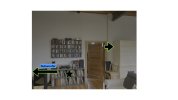
I don't see display of the 'Step Response' as an obvious option in REW (V 5.31.2). This seems to be crucial for me. Also my display of 'Group Delay' looks very different from yours. By the way, there possibly are the reflective concave surfaces you speak of in the room, largest (arrow) is in room fireplace made of tile and brick (I live in Poland) that is along the long wall of one subwoofer corner (see labeled arrow). Another closer to the sub in the corner is a record cupboard (star). Seating is about at the level of the in room fireplace,
 

Attachments

  • subwoofer pic.jpg
    subwoofer pic.jpg
    173.6 KB · Views: 160
Last edited:
Back
Top Bottom