• Welcome to ASR. There are many reviews of audio hardware and expert members to help answer your questions. Click here to have your audio equipment measured for free!

Safety question: budget Class D amps as "electric guitar amps"?

tccalvin

Senior Member
Joined
Oct 13, 2024
Messages
412
Likes
371
It is said that electric guitar amplifiers should never be designed as Class II devices for safety reasons.

I'm fairly ignorant on the matter, with my limited understanding being that protective earth wires can save you from experiencing a fatal shock through your guitar's strings, especially when handling guitars and microphones simultaneously.

However, if you look at current home studio setups, you will see many instances in which guitars are being played through Class II equipment.

For example, a very common scenario is this chain:

Guitar > Instrument Cable > USB-powered Audio Interface > USB > Laptop > USB > USB-powered Audio Interface > RCA or TRS > Active Class II Speakers

This chain is widely considered safe, even though you're effectively plugging a guitar into the speakers' Class II Class D amplifiers, with the interface and laptop acting as the "preamp" section.

This made me consider other similar chains for my own setup, like for example:

Guitar > Instrument Cable > USB-powered Audio Interface > USB > Laptop > USB > USB-powered Audio Interface > RCA or TRS > Budget Chinese Class D Amp > Passive Speakers

or:

Guitar > Instrument Cable > USB-powered Audio Interface > USB > Laptop > USB > Class I DAC > RCA or TRS > Budget Chinese Class D Amp > Passive Speakers

or even:

Guitar > Instrument Cable > Class II Guitar Preamp > TRS or XLR > Budget Chinese Class D Amp > Passive Speakers

How safe are any of these chains?

Even if they are safe, will the guitar player experience any "tingling" sensations?

What changes if, at any point in the chain, you introduce a Class I device (like a Class I DAC in one of the above examples) into the chain?

What happens if, in addition to the guitar chain, you also throw in a microphone into the mix (either connected to the same interface or to a different chain altogether)?

Thanks in advance for your time. :)
 
Well, first you should consider if you'll ever get the proper distortion from a class D amp. Tube amps for example give lavish distortion, but class D will just neatly clip and sound robotic.
 
Well, first you should consider if you'll ever get the proper distortion from a class D amp. Tube amps for example give lavish distortion, but class D will just neatly clip and sound robotic.

Sure... but I wouldn't be using it for the distortion. It would be an entirely clean power amp used to drive full-range speakers, with all the distortion being handled either by a plug-in or by a dedicated guitar pedal/preamplifier.
 
Sure... but I wouldn't be using it for the distortion. It would be an entirely clean power amp used to drive full-range speakers, with all the distortion being handled either by a plug-in or by a dedicated guitar pedal/preamplifier.
In that case you should be fine if the amp you choose has a safety-rated power supply brick that guarantees low leakage from the mains. The supply will have the various CE and UL markings.
 
Will not make any comment on electrical safety since the power amplifer and its power supply not known. If the setup is used for playing and recording it makes sense to me. If it is only for playing I would never use this because the sound is not what a traditional guitar amplifier will give.
 
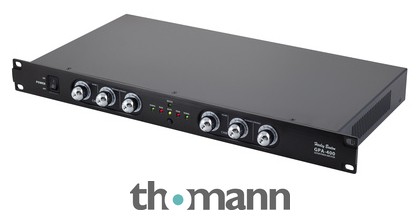
Class D (perhaps in combination with a modeling preamplifier) should work perfectly fine. Thomann offers a really affordable amp for example:

 
Well, first you should consider if you'll ever get the proper distortion from a class D amp. Tube amps for example give lavish distortion, but class D will just neatly clip and sound robotic.
Who said that only tubes instrument amps do manifest audible distortion (gobs of it if you like) ?

Judging by the class AB el. bass amps, or small guitar AB, older amps, a nice combination of Master and Volume can get you to distortion levels way above the signal (and other interesting effects as well if you go close to them) :p
 
Will not make any comment on electrical safety since the power amplifer and its power supply not known.

I was thinking of something like the Douk A5, but many of these budget Chinese amps come with the same (or very similar) Class II external power bricks. That's the kind of design I'm thinking of.

Class D (perhaps in combination with a modeling preamplifier) should work perfectly fine. Thomann offers a really affordable amp for example:

Yeah, Class D amps for guitar are nothing new, they've been here for a while. That Harley Benton amp looks like a Class I design though, which puts it in a more "traditional guitar product" category instead of the hi-fi-focused designs I was considering.
 
Who said that only tubes instrument amps do manifest audible distortion (gobs of it if you like) ?

Judging by the class AB el. bass amps, or small guitar AB, older amps, a nice combination of Master and Volume can get you to distortion levels way above the signal (and other interesting effects as well if you go close to them) :p
Sure. But the guitarists I know always prefer the tube distortion if they are going for the "rock and roll" sound. It's true, these days they use lightweight transistor amps and DSP tube emulators.
 
To elaborate...good transistor AB amps clip cleanly. Old tube guitar amps were designed to distort near clipping by mechanisms like the beam power screen voltage dropping, which gave a lot more distortion even before hard clipping set in.
 
Sure. But the guitarists I know always prefer the tube distortion if they are going for the "rock and roll" sound. It's true, these days they use lightweight transistor amps and DSP tube emulators.
Have a look at old, big band concerts with famous guitarists.
You will see small AB amps with a mic in front of them then going to a Marshall wall of big ones.

No tubes there, nowhere.

The guitar famous distortion of these days were far from a simple H2, H3, like tubes do.
They looked like square waves at a scope (hence the need for a stable AB, hence the later need of a comb to replace them with class D)
 
I guess this would be a dedicated guitar Class II power-amp:


Not that that's what I'm after, but still... they do exist. :)
 
Have a look at old, big band concerts with famous guitarists.
You will see small AB amps with a mic in front of them then going to a Marshall wall of big ones.

No tubes there, nowhere.

The guitar famous distortion of these days were far from a simple H2, H3, like tubes do.
They looked like square waves at a scope (hence the need for a stable AB, hence the later need of a comb to replace them with class D)
So, they mic it and feed it through Marshalls? No, I wasn't aware the latest trend is clean clipping.
 
So, they mic it and feed it through Marshalls? No, I wasn't aware the latest trend is clean clipping.
That was the big-70's-80's big band way.
Now things are way different of course (except from the vintage lovers)

I remember my school days back in the '80's were some kids were trying to replicate it by using gear like a Fender sidekick 10 running from their car batteries :facepalm:
(you can't believe the sheer SPL a small amp/driver like that can produce unless you experience it up close)
 
I'm curious what the safety issue of using a class II amp with a guitar is supposed to be. Where did you hear this?
 
I'm curious what the safety issue of using a class II amp with a guitar is supposed to be. Where did you hear this?
Some musicians were used as a return ground on occasion, has happened live as well.
It's a legitimate worry.

Somewhere in the chain a safety ground must be always included, better near where big current flows.
 
I'm curious what the safety issue of using a class II amp with a guitar is supposed to be. Where did you hear this?

I'm not sure where I first heard this, but here is a source:

"When Class II Is Not Safe
There are many situations where Class II items should NOT be used because spillages, rainwater ingress or physical damage are likely. Portable Class II appliances can become a serious hazard if used inside bathrooms. It is simply left to the good sense of users not to use Class II appliances in hazardous conditions.

Guitar amplifiers and mixer/ amplifiers are items that should never be built as Class II. Typical live music environments often involve careless handling of beverages while outdoor performances run the risk of rain soaking the stage and equipment. The chance of a chassis becoming live while a performer holds onto the metal strings of a guitar or the handle of a microphone is way too high."

This aside, it is true that the vast majority of guitar amplifiers are built as Class I designs.
 
That warning doesn't seem to apply to a power brick, unless you dunk it in a pail of water etc. The output from the brick to the amp is tested for mains leakage.
 
This is not about Class-D or not, it is about power supply safety. Any competent design which has the required agency approvals can be considered safe, no matter whether the supply is class-I or class-II. Beware of the cheapest far-east junk stuff, obviously.

As a guitar player, my two live "rigs" for touring have class-D power amps. One with a a class-I supply, the other with a class-II external SMPS brick.

Of course things can go wrong in uncontrolled ways like wrongly wired mains sockets or extensions, one of the reasons I use wireless transmission for the guitar signal.
 
And if your fuse box doesn't have RCD/GFI breakers, there's nothing to stop you plugging an amp into an RCD adapter. In fact if you have a long run of mains cable to an amp, you'd best use an RCD as near to it as possible....

As said many times before, many guitarists are moving to Class D power amps, fronted by modellers to save money and to get more power with in a lightweight head.

As for PA systems, I don't recall the last time I saw one that wasn't class-d based.
 
Back
Top Bottom