Hello all,
I should probably start with what I'm not.
I'm not new to ASR but I've been a reader rather than a contributer. I'm not an acoustics engineer, mathematician or software developer. I'm a home cinema/audio enthusiast with a reasonable working knowledge of REW, Dirac and room acoustics, but there are plenty of people on this forum who know vastly more about these subjects than I do.
I've also used AI to help me develop the software, including the coding and implementation of a lot of the underlying maths.
I'm saying that upfront because I'm not here to present myself as an expert. Quite the opposite: one reason I'm posting on ASR is that I'd like people who really understand this stuff to challenge what I've built.
The project is called RoomPhase.
I originally started it for myself because I found there was a gap between understanding that I had an acoustic problem and knowing what I should actually do about it.
REW is extraordinarily powerful, but for someone who isn't an acoustic engineer it can still leave you looking at a measurement thinking: OK, I can see the problem – now what?
RoomPhase is intended to sit around that process rather than replace it.
One of my priorities from the start was that RoomPhase should also be an educational tool. A big part of this project for me has been learning the terminology and understanding what the measurements and calculations actually mean, rather than just being given a result. So wherever possible I’ve tried to make RoomPhase explain what it is showing, why it matters, what the relevant acoustic terms mean, and what the limits of the calculation or measurement are. My hope is that someone can use it not just to improve a room, but to gradually understand the acoustics behind the decisions they’re making.
You enter the physical room, speakers, subwoofers, listening positions, displays, furniture and acoustic treatment. It then combines room geometry, acoustic modelling and eventually real REW measurements to help investigate what's happening and, importantly, explain possible changes.
At the moment it includes things such as:
It should explain why, show the evidence behind the recommendation, state the assumptions being made and, where the evidence isn't strong enough, say so.
I'm also trying hard to avoid pretending that a rectangular-room mathematical model is the real room. Prediction and measurement need to be treated as different things, and recommendations based on measurements should carry more weight than an idealised model.
For multiple subs I'm particularly interested in measurement consistency, timing references, phase interaction and properly recording the actual gain/delay/polarity/filter state under which each measurement was taken.
Longer term I'm also looking at how RoomPhase could work alongside specialist tools such as MSO rather than attempting to reinvent them.
This is still under development and I'm not asking anyone to buy anything. I'm trying to find the weak points before I get anywhere near that stage. Some areas are more mature than others and I’m still tightening the measurement workflows, validation rules and explanations. I’m deliberately showing it before I consider it finished because I’d rather have knowledgeable people challenge the methodology now than discover later that I’ve built confidence around a bad assumption.
That's really why I'm posting here.
I'd be very interested in feedback from experienced REW users, acoustics people and anyone who has spent far too many evenings moving subwoofers around a room.
In particular:
What would RoomPhase have to check, explain or show you before you'd trust it enough to actually move a sub, change a delay, alter a crossover or put acoustic treatment somewhere based on its recommendation?
And perhaps even more importantly:
What assumptions, calculations or failure modes would make you distrust it immediately?
I'm perfectly happy to be told that something is wrong. If you think a calculation, assumption or methodology doesn't stand up, I'd much rather find that out now.
I'll add some screenshots below rather than turn this first post into an enormous wall of text.
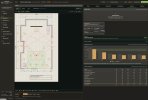
A few screen shots attached to show the current approach. Some views are predictive, some measurement-based, and RoomPhase tries to make that distinction explicit rather than blending the two.
I should probably start with what I'm not.
I'm not new to ASR but I've been a reader rather than a contributer. I'm not an acoustics engineer, mathematician or software developer. I'm a home cinema/audio enthusiast with a reasonable working knowledge of REW, Dirac and room acoustics, but there are plenty of people on this forum who know vastly more about these subjects than I do.
I've also used AI to help me develop the software, including the coding and implementation of a lot of the underlying maths.
I'm saying that upfront because I'm not here to present myself as an expert. Quite the opposite: one reason I'm posting on ASR is that I'd like people who really understand this stuff to challenge what I've built.
The project is called RoomPhase.
I originally started it for myself because I found there was a gap between understanding that I had an acoustic problem and knowing what I should actually do about it.
REW is extraordinarily powerful, but for someone who isn't an acoustic engineer it can still leave you looking at a measurement thinking: OK, I can see the problem – now what?
RoomPhase is intended to sit around that process rather than replace it.
One of my priorities from the start was that RoomPhase should also be an educational tool. A big part of this project for me has been learning the terminology and understanding what the measurements and calculations actually mean, rather than just being given a result. So wherever possible I’ve tried to make RoomPhase explain what it is showing, why it matters, what the relevant acoustic terms mean, and what the limits of the calculation or measurement are. My hope is that someone can use it not just to improve a room, but to gradually understand the acoustics behind the decisions they’re making.
You enter the physical room, speakers, subwoofers, listening positions, displays, furniture and acoustic treatment. It then combines room geometry, acoustic modelling and eventually real REW measurements to help investigate what's happening and, importantly, explain possible changes.
At the moment it includes things such as:
- 2D/3D room modelling with speaker, subwoofer and listening-position placement
- axial and tangential room-mode analysis
- frequency investigation
- first-reflection analysis
- speaker and subwoofer placement analysis
- seating/listening-position analysis
- acoustic-treatment planning
- crossover, phase, polarity and delay investigation
- REW integration
- comparison of predicted behaviour with measured behaviour
- guided recommendations rather than simply displaying graphs
It should explain why, show the evidence behind the recommendation, state the assumptions being made and, where the evidence isn't strong enough, say so.
I'm also trying hard to avoid pretending that a rectangular-room mathematical model is the real room. Prediction and measurement need to be treated as different things, and recommendations based on measurements should carry more weight than an idealised model.
For multiple subs I'm particularly interested in measurement consistency, timing references, phase interaction and properly recording the actual gain/delay/polarity/filter state under which each measurement was taken.
Longer term I'm also looking at how RoomPhase could work alongside specialist tools such as MSO rather than attempting to reinvent them.
This is still under development and I'm not asking anyone to buy anything. I'm trying to find the weak points before I get anywhere near that stage. Some areas are more mature than others and I’m still tightening the measurement workflows, validation rules and explanations. I’m deliberately showing it before I consider it finished because I’d rather have knowledgeable people challenge the methodology now than discover later that I’ve built confidence around a bad assumption.
That's really why I'm posting here.
I'd be very interested in feedback from experienced REW users, acoustics people and anyone who has spent far too many evenings moving subwoofers around a room.
In particular:
What would RoomPhase have to check, explain or show you before you'd trust it enough to actually move a sub, change a delay, alter a crossover or put acoustic treatment somewhere based on its recommendation?
And perhaps even more importantly:
What assumptions, calculations or failure modes would make you distrust it immediately?
I'm perfectly happy to be told that something is wrong. If you think a calculation, assumption or methodology doesn't stand up, I'd much rather find that out now.
I'll add some screenshots below rather than turn this first post into an enormous wall of text.
A few screen shots attached to show the current approach. Some views are predictive, some measurement-based, and RoomPhase tries to make that distinction explicit rather than blending the two.
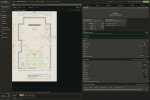
- Room Editor.jpg
RoomPhase builds a simplified geometric model of the actual room, including features such as the bay window and chimney breast. The model is used for modal, reflection and treatment calculations, but it is not treated as a substitute for measurement. - Bass.jpg
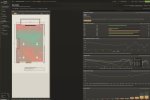
Bass analysis combines room dimensions, seat positions and subwoofer positions to show predicted modal behaviour across the listening area. The intention is to help narrow down sensible positions before validating them with REW. - Measurements3.jpg
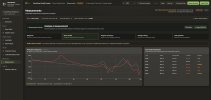
This compares RoomPhase’s simplified room-model prediction against an imported REW sweep. The curves are shape-normalised rather than absolute-SPL matched. The 62% figure is a partial correlation indicator, not a claim that the room has been predicted with 62% accuracy. Individual predicted room modes are also checked against measured energy around the expected frequencies. - reflections.jpg
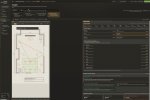
This view calculates geometric reflection paths and their arrival times relative to the direct sound. It identifies where reflections are likely to originate, but their actual strength or audibility still needs measurement. RoomPhase deliberately separates geometry from measured acoustic significance. - Room Editor2.jpg
RoomPhase estimates reverberation and absorption from the room geometry, surfaces, furnishings and treatment entered by the user. These are planning estimates. Where REW decay data exists, measured behaviour takes precedence.