• Welcome to ASR. There are many reviews of audio hardware and expert members to help answer your questions. Click here to have your audio equipment measured for free!

Review of DJ equipment?

@nagster am I reading this measurement right?
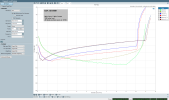
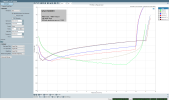
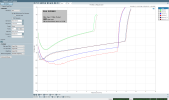
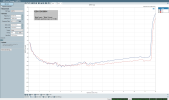
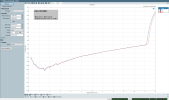
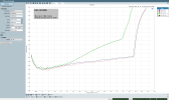
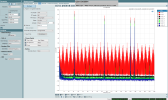
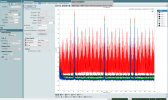
The cdj-3000x has a MINUS TEN DB hole with steep slopes at 2000hz?!?!
 
@nagster am I reading this measurement right?
The cdj-3000x has a MINUS TEN DB hole with steep slopes at 2000hz?!?!

That's with master tempo on. IIRC, there were some other classic key change algorithms that also had a similar notch. Engine OS's Elastique Efficient is superior key correction, but that's additional to the more computationally efficient, aggressive, and 'leaky' firmware's DSP sound quality. So, if you're going keylock off, the CDJ-3000X will provide superior sound. If you're using key change aggressively, it's either a wash or the Denon DJ Prime stuff will sound superior, YMMV. In my experience, the sonic defects of Engine OS are less noticeable with sparse, dynamic, real musical content, and more of an issue with dense, artificial content with distortion already baked into the production. The Engine OS processing also seems more geared to imperfect live environments, while the CDJ-3000X firmware's sound, while thriving in controlled audiophile environments, might not be as strong in some live DJing situations. Seems to come down to digital signal processing methods and philosophies behind the compromises they chose.
 
Last edited:
@nagster am I reading this measurement right?
The cdj-3000x has a MINUS TEN DB hole with steep slopes at 2000hz?!?!
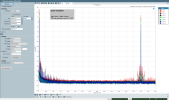
Yes, the measurements show what you are saying. There was a strange dip in the FR.
Could you perhaps perform your own measurements when you have the chance to use the CDJ-3000X? Especially if the results are unexpectedly good or bad, I do various checks before publishing them, but I cannot say that there is a possibility that the drop in FR is a problem specific to my measurement environment. Having a third party replicate the results would be ideal.

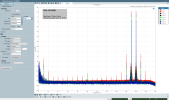
You can verify this using free measurement software (such as REW, MTA, or ARTA/STEPS), a USB flash drive, and a computer equipped with a line input. High-precision equipment is not required. The necessary settings and conditions are detailed in the images I posted. For instance, try comparing amplitudes at frequencies such as 100, 300, 1k, 1.7k, 1.8k, 1.9k, 2k, 2.1k, 2.2k, 3k, and 10 kHz.

I measured two CDJ-3000 units and one CDJ-3000X unit, and all of them yielded similar results. Concerned that there might be an issue with frequency sweeps, I also performed spot measurements, which produced the same outcome. Although I didn't post the data, I verified the CDJ-3000's frequency response using an R&S UPV and a Keithley 2002 before publishing my findings. Since all the instruments showed consistent results, I released the FR data obtained with the APx555. For the CDJ-3000X, however, I did not verify the results with any instrument other than the APx555.

 
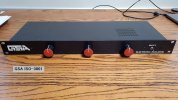
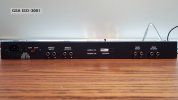
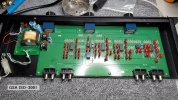
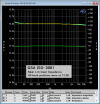
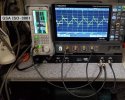
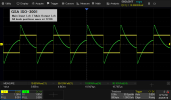
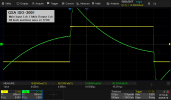
Photos and measurements of the GSA ISO-3001 DJ Isolator.
Input/Output impedance, Square wave response.
(Continued below)
 

Attachments

  • 0003_gsa_iso3001_2_photo.jpg
    0003_gsa_iso3001_2_photo.jpg
    124.6 KB · Views: 57
  • 0004_gsa_iso3001_2_photo.jpg
    0004_gsa_iso3001_2_photo.jpg
    67.6 KB · Views: 63
  • 0006_gsa_iso3001_2_photo.jpg
    0006_gsa_iso3001_2_photo.jpg
    209 KB · Views: 63
  • 0101_gsa_iso3001_2_Zin.png
    0101_gsa_iso3001_2_Zin.png
    36 KB · Views: 67
  • 0107_gsa_iso3001_2_Zout.png
    0107_gsa_iso3001_2_Zout.png
    122.9 KB · Views: 62
  • 0201_gsa_iso3001_2_sq_01.jpg
    0201_gsa_iso3001_2_sq_01.jpg
    101.6 KB · Views: 69
  • 0202_gsa_iso3001_2_sq_02_SDS1204X_HD_PNG_1.png
    0202_gsa_iso3001_2_sq_02_SDS1204X_HD_PNG_1.png
    36.5 KB · Views: 56
  • 0203_gsa_iso3001_2_sq_03_SDS1204X_HD_PNG_2.png
    0203_gsa_iso3001_2_sq_03_SDS1204X_HD_PNG_2.png
    37.8 KB · Views: 49
Measurements of the GSA ISO-3001 DJ Isolator.
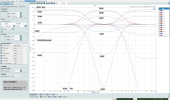
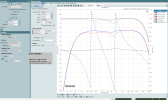
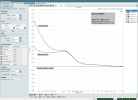
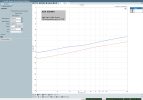
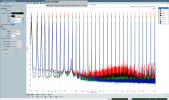
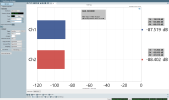
APx Dashboard, Frequency response, Group delay, Crosstalk, Distortion.
That is all.
 

Attachments

  • 0301_gsa_iso3001_2_db_dc.png
    0301_gsa_iso3001_2_db_dc.png
    181.6 KB · Views: 76
  • 0302_gsa_iso3001_2_db_noise.png
    0302_gsa_iso3001_2_db_noise.png
    197.8 KB · Views: 71
  • 0303_gsa_iso3001_2_db_1v.png
    0303_gsa_iso3001_2_db_1v.png
    167.7 KB · Views: 63
  • 0304_gsa_iso3001_2_db_4v.png
    0304_gsa_iso3001_2_db_4v.png
    161.7 KB · Views: 81
  • 0401_gsa_iso3001_2_fr.png
    0401_gsa_iso3001_2_fr.png
    179.5 KB · Views: 72
  • 0402_gsa_iso3001_2_fr_phase.png
    0402_gsa_iso3001_2_fr_phase.png
    193.3 KB · Views: 70
  • 0403_gsa_iso3001_2_gd.png
    0403_gsa_iso3001_2_gd.png
    135.4 KB · Views: 70
  • 0601_gsa_iso3001_2_xtalk.png
    0601_gsa_iso3001_2_xtalk.png
    82.7 KB · Views: 73
  • 0701_gsa_iso3001_2_thd_sweep_gen.png
    0701_gsa_iso3001_2_thd_sweep_gen.png
    149.2 KB · Views: 65
  • 0702_gsa_iso3001_2_thd_sweep_100kload.png
    0702_gsa_iso3001_2_thd_sweep_100kload.png
    151.6 KB · Views: 72
  • 0703_gsa_iso3001_2_thd_sweep_600load.png
    0703_gsa_iso3001_2_thd_sweep_600load.png
    140.9 KB · Views: 75
  • 0801_gsa_iso3001_2_smpte_sweep.png
    0801_gsa_iso3001_2_smpte_sweep.png
    116.9 KB · Views: 72
  • 0802_gsa_iso3001_2_smpte_fft.png
    0802_gsa_iso3001_2_smpte_fft.png
    209.2 KB · Views: 56
  • 0901_gsa_iso3001_2_ccif_sweep.png
    0901_gsa_iso3001_2_ccif_sweep.png
    102.6 KB · Views: 60
  • 0902_gsa_iso3001_2_ccif_fft.png
    0902_gsa_iso3001_2_ccif_fft.png
    193.1 KB · Views: 64
  • 1001_gsa_iso3001_2_dim_sweep.png
    1001_gsa_iso3001_2_dim_sweep.png
    140.4 KB · Views: 57
  • 1002_gsa_iso3001_2_dim30_fft.png
    1002_gsa_iso3001_2_dim30_fft.png
    249.7 KB · Views: 69
  • 1004_gsa_iso3001_2_dim100_fft.png
    1004_gsa_iso3001_2_dim100_fft.png
    260.2 KB · Views: 68
  • 1101_gsa_iso3001_2_32t_fft.png
    1101_gsa_iso3001_2_32t_fft.png
    320.8 KB · Views: 70
  • 1105_gsa_iso3001_2_32t_tdn.png
    1105_gsa_iso3001_2_32t_tdn.png
    92.1 KB · Views: 72
That all looks quite standard, especially the test waveform group delay distortion, for a nice isolator, with only the THD and noise being higher than what you'd expect from a digital crossover network. Good analog performance. 2nd, 3rd, or 4th order? I always wondered if the MP2015's mids on the channels' tone controls were properly inverted. Is it opamps-based or discrete, because it did unusually well even with 4 volts?
 
Last edited:
After testing the Rane with saw waves, I can confirm the polarity is the way it's supposed to be for a 2nd order isolator on those channels.
 
Back
Top Bottom