Follow along with the video below to see how to install our site as a web app on your home screen.
Note: This feature may not be available in some browsers.
Welcome to ASR. There are many reviews of audio hardware and expert members to help answer your questions.
Click here to have your audio equipment measured for free!
I have cut many interconnects over the years (always very cheap generic ones) and i would say that most often (always?) I have found this construction, that i would call coaxial:
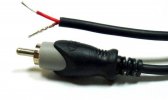
(The peeled conductor goes around the red cable)
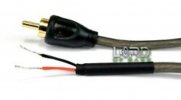
For sure these, that nobody would call coaxial, also exist, but in my experience they are more rare, specially the second one:
The one that Amir reviewed linked above... i don't know, but i would expect that if you cut it it would be like the one in my first picture.
My 2cents.

Easy-to-follow instructions for creating RCA cablesRCA cables are used for many audio applications, and this wikiHow guide can help you build your own for custom installation in your car or home. Turn on a soldering iron. Do this first so...
I have cut many interconnects over the years (always very cheap generic ones) and i would say that most often (always?) I have found this construction, that i would call coaxial:
I can of course agree that actual experience is useful yet, I only have a few generic RCA cables, and they all have "figure 8" design (it is externally visible that there are two separately insulated wires).
The images on wikihow show solid core conductors and one image has 4 conductors for one audio channel, which isn't normal or needed, but the idea was that there are two separately insulated wires. Since I haven't cut a bunch of different RCA cables open of the ones that are on the market, I made an assumption about what the normal (most used) design is that might or might not be correct (hard to know).
I can of course agree that actual experience is useful yet, I only have a few generic RCA cables, and they all have "figure 8" design (it is externally visible that there are two separately insulated wires).