WOOH! Idea picked up from Monitor Audio!
Energy Veritas speakers implemented this years before Monitor Audio started doing it.

WOOH! Idea picked up from Monitor Audio!

Nope. Here is a $20K competitor:Nope, the mess is larger with a 2nd further distanced woofer interfering too at the crossover to the tweeter. The only real advantage of a 2 way configuration is lower distortion at the mid region which in this case is for me an unnecessary compromise unnecessary as the distortion is already so low with the Purify drivers in the mids.
This isn't a BR. It's a MLTL - quarter-wave transmission line enclosure with a port.Why chase lowest frequencies with a BR concept?

I see that these use AMT tweeters. I remember hearing those many, many years ago and being very impressed; I didn't know they were still around. Just wondering about the bass-midrange: is it better to have 2 smallish wide-range drivers or larger bass and smaller mid? Is it just about having a nice, narrow cabinet? Anyway, I'd guess that these are hard to beat for £7k.This is a review, listening tests and detailed measurements of the Radiant Acoustics Clarity 66 Purifi-based speaker. It was sent to me by the company and costs US $9998.
View attachment 547408
My sample is in black (please don't mind the poor white balance) and looks quite elegant. It also comes in walnut and oak finishes. Despite its modest size this is one heavy speaker! It weighs in at 46 KG or 88 pounds. I felt every bit of it as I moved the darn thing around.
Back panel sports the largest port I have seen in a domestic speaker:
View attachment 547409
It is almost the same size of the woofers! Under load, it pumps out fair amount of air.
The only binding post configuration offered is banana jacks, giving the back a very flat and finished look. I suggest getting locking ones.
The main actor here is not one but two Purifi drivers which are known for their low distortion. Despite its size, speaker is 2-way which I much prefer to 2.5 way we typically see.
Radiant Acoustics Clarity 66 Measurements
Let's start with our anechoic CEA-2034 frequency response measurements:
View attachment 547410
Response is generally flat with some localized peaks and resonances. They are quite narrow though so should not be very audible. There is a slight tilt up as I have shown with the arrow. Tweeter does have some pronounced resonances and roll off before 20 kHz. I should note that its design created a complex soundfield which was not fully resolved off-axis with the number of points I used to measure. The fins in front of it are the likely culprit.
Early window response shows a dip around crossover frequency (2.4 kHz):
View attachment 547411
I will show the pinched vertical directivity which is the guilty party:
View attachment 547412
The sum total looks alright though:
View attachment 547413
Near-field response shows the issues mentioned regarding tweeter:
View attachment 547414
Junk coming out of the port is nicely controlled.
Horizontal directivity is not very even:
View attachment 547415
View attachment 547416
So some room dependency may exist.
Now we get to the main act: distortion, or I should say lack thereof:
View attachment 547417
Amazing how the graph at 86 dBSPL hugs the near zero line, even in deep bass!!! It still remains civil at 96 dBSPL. During the sweeps, I only heard some deep bass distortion at 101 dBSPL. Below it sounded very clean.
View attachment 547418
I don't think I have seen distortion this low at 86 dBSPL.
Our new measurement of low frequency distortion shows off this capability like nobody's business:
View attachment 547419
We are talking less than 1% distortion in bass frequencies at even 91 dBSPL!
Impedance is typical at minimum of 4 ohm:
View attachment 547420
Waterfall shows a couple of resonances:
View attachment 547421
The 300 to 500 Hz was visisible in on axis response.
Step response is clean but has some waviness toward the end:
View attachment 547422
Radiant Acoustics Clarity 66 Speaker Listening Tests
The first impression was how low the bass response went and importantly, how clean it was. I have never heard a speaker with a couple of small drivers reproduce my sub-bass tracks as if it was a walk in the park! It might be subjective bias but track after track seemed to have more bass than I remember with cleaner reproduction.
As for tilted up highs, my ears are plugged from mowing our dusty field. But I could not detect excessive treble response. I sensed speaker was activating some of my room modes which may have balanced the response out.
With the amplification I was using, I was not able to create audible distortion even at max volume. And this is a very large space with a single speaker.
Conclusions
What do you get when you have the designer of one of the most advanced woofers get involved in a full speaker design? Clarity 66. We are talking about a full range speaker with unheard of distortion levels, doing justice to its name in that region. Yes, it has kind of a cliff that sets in at 101 dBSPL but below that, it likely beats any speaker its size and by wide margin.
Rest of the measurements are good to very good. Slight imperfections are seen here and there which seem to bother the eye more than the ears. For me anyway.
Price is high but we are talking about a speaker produced in Denmark. With luxury fit and finish and robust build. Very robust build.
The Clarity 66 brings true innovation and outside of the box thinking to speaker design. Certainly a feather in the cap of our Danish friends!
I am happy to recommend the Radiant Acoustics Clarity 66.
-----------
As always, questions, comments, recommendations, etc. are welcome.
Any donations are much appreciated using: https://www.audiosciencereview.com/forum/index.php?threads/how-to-support-audio-science-review.8150/

Physics cannot be undone by comparing different loudspeakers and local disturbances are not the total dispersion/cancellation issues I am talking about.Nope. Here is a $20K competitor:

And its near-field response:
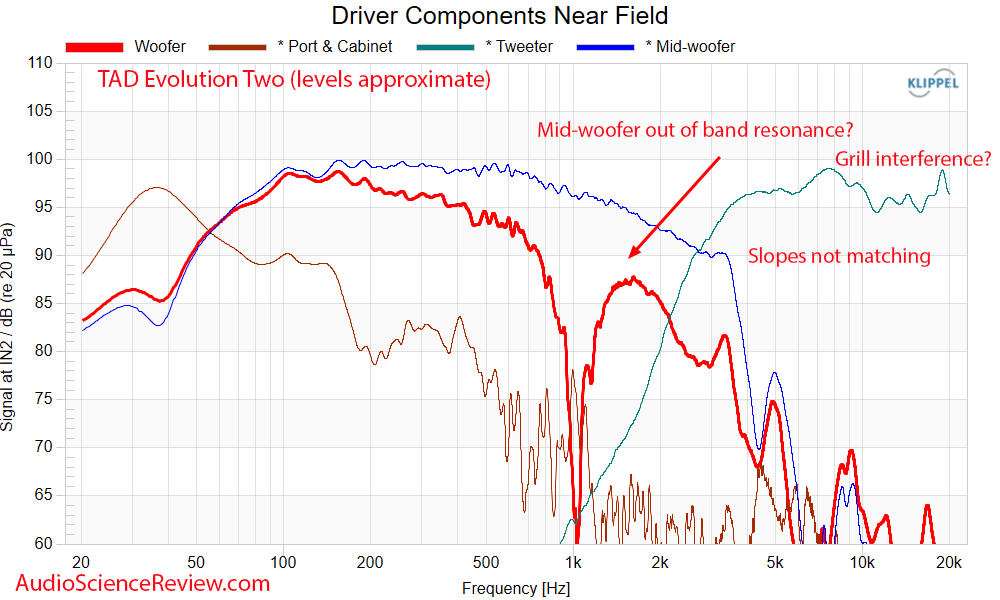
That's a mistake. Again see my measurements of TAD and JBL and pay attention to response of those woofers as they roll down. There are break ups and resonances mixing with everything else resulting in chewed up response in critical area of 1K to 5 kHz. Using idealized drives in sims gives you highly misleading results. I much rather see a 3-way than any 2.5 way. It is a difference about reality vs theory....To not compare apples with oranges I also just made a quick simulation

AMT tweeter.The vertical is... not great. Nicely symmetrical, but wow, quite narrow. Not a speaker for low ceilings! Horizontal off-axis is just OK too, less even than I'd like to see.

Anyway, I'd guess that these are hard to beat for £7k.
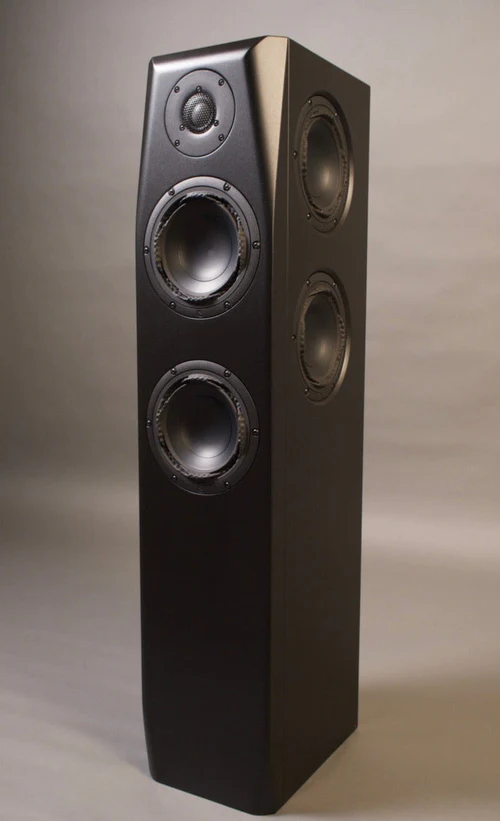
 aaltospeakers.fi

Maybe; there have been through rod speakers for decadesWOOH! Idea picked up from Monitor Audio!

And £6998 in the UK according to the Hifi News review in the August 2026 edition.Wow !
And I see a price of 8000€ for a pair in Europe...

 www.hifinews.com


On the contrary, I'd say a narrow vertical on its own is beneficial for low ceilings. What's not so nice is the large crossover dip, that could've been reduced by employing a 2.5 way crossover *and* not using a ribbon(?) tweeter than needs to be crossed so high up (the latter turning this into an entirely different speaker tho).The vertical is... not great. Nicely symmetrical, but wow, quite narrow. Not a speaker for low ceilings!
FEA optimization is awesome but why save 3 cents on having an ugly green PCB instead of black?
If driver breakups and resonances are an issue that is even more with a 2-way as they happen on both midwoofers.That's a mistake. Again see my measurements of TAD and JBL and pay attention to response of those woofers as they roll down. There are break ups and resonances mixing with everything else resulting in chewed up response in critical area of 1K to 5 kHz. Using idealized drives in sims gives you highly misleading results. I much rather see a 3-way than any 2.5 way. It is a difference about reality vs theory....
That deal looks great, especially as they're active. If only I needed some speakers right now...;-)Hummmm actually the Taipuu Kero L Active Pro towers use 4x Purifi Audio woofers @6800€ paired (instead of 13600€)
Taipuu Kero L Active Pro - Aalto Speakers
Loistava tilaisuus tarttua viimeisiin Taipuu Kero L Active Pro -lattiakaiuttimiin suoraan valmistajan varastosta uskomattomaan hintaan! Saatavilla enää yksi pari satiininvalkoisena.

 www.gato-audio.com
I assume 2-ways have a simpler crossover with a much smaller woofer inductors. Important because they use wire only inductors.Nope, the mess is larger with a 2nd further distanced woofer interfering too at the crossover to the tweeter. The only real advantage of a 2 way configuration is lower distortion at the mid region which in this case is for me an unnecessary compromise unnecessary as the distortion is already so low with the Purify drivers in the mids.


