• Welcome to ASR. There are many reviews of audio hardware and expert members to help answer your questions. Click here to have your audio equipment measured for free!

Radiant Acoustics Clarity 66 Speaker Review

Rate this speaker:

  • 1. Poor (headless panther)

    Votes: 3 1.1%
  • 2. Not terrible (postman panther)

    Votes: 28 10.2%
  • 3. Fine (happy panther)

    Votes: 131 47.6%
  • 4. Great (golfing panther)

    Votes: 113 41.1%

  • Total voters
    275
I’m not a fan of subs, so I would definitely pick the larger speaker. I don’t claim I’m typical or representative of any trend, but four subs is certainly not domestically acceptable! However, in a dedicated room you can try whatever you like.
Why four subs? It's certainly great if you want to do DBA or distributed subs, but if you just want to relieve the midbass from sub-bass excursion, two would be perfectly good.

Smaller speakers also need stands unless you can place them on some sort of sideboard which has visual and acoustic drawbacks. Instead of the stand, use a sub of the right height and ideally width also for smart looks. This is usually a diy job but it is also a niche manufacturers could get into, offering something the right size and with the right visuals and ideally also crossover integration.
 
Here's an interesting Harman presentation. In his presentation, for all practical purposes, two subs is, practically speaking as good as four in our "typical" listening environment.

Subwoofers: Optimum Numbers and Locations, by Welti, T

I only post this because, well, I use two :rolleyes:
Are there studies saying how to use the two?

I have two but can't seem to make them cover the whole room.
 
While form factor is similar, they are not exactly comparable in terms of looks and construction, and better looks with that CNC machined aluminum front baffle are worth extra 1.2K to me personally (Radiant 66 listed at 7.998 per pair). I just don't see where "seriously overpriced" comes from.
Radiant Acoustics website lists the price as $9,998/pr US
 
Because that was what I was replying to! See post #179. (I’d never dream of using more than one!)
You should at least try two, better three. Four is the maximum. @markk posted an interesting Welti paper - more about that topic can be read in Floyd Toole's book "Sound Reproduction". Recommended!

One sub is not recommended at all if you listen at more than one position.
IME no sub is better than only 1 sub.
 
(I haven’t read the 12 pages of comments). I see the Purifi drivers in many high end speakers. Wrong did a Video on them 5 years ago when he had a buzz cut. He found that they had extremely low distortion. I would love to own these but I’m too cheap to spend $10K. It would be more enticing if they came with a built in Purifi amp!
 
Still, $10K (in the US) is a price point that opens a load of options. You don't have to look only at Purifi-based speakers.
But Radiant 66 is an appealing choice.
Appealing?? Not really

A pair of genelec 8361a , with amps, digital, dsp is appealing for this price point
 
95db... That's deth people levels of listening .. thats loud in a living room
And even though some would listen at these levels , mixed in music is inaudible
Consider it this way: 96dB/1m is only about 86dB/3m. These are not near field monitors.
Hello. Polar Response chart: Noting how solidly red it is from 200 to 20K, could I infer that the speaker creates a very coherent sound over +/-30-degrees off-axis? I can picture these charts for other speakers where +/-30-degrees it looks like a pineapple crown, but not in this chart -- WOW!!!
Is there anything in the polar response chart that could indicate sibilance, chestiness, or some such other "audiophile" term? Thanks.
Between that and the axial response, yes! Generally the off axis response should monotonically fall away from the on axis as you get further and further off axis.
 
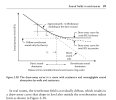
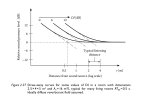
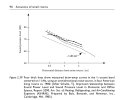
Consider it this way: 96dB/1m is only about 86dB/3m.
It is more complicated, not a simple decay in a “small room”.

IMG_4055.jpegIMG_4054.jpegIMG_4053.jpeg
[Acoustics of Small rooms. Kleiner, Tichy]
 
It's true that Peter Lyngdorf is not unknown or unexperienced in speaker design and hifi bussiness. He is also involved in Purifi btw. But i also think these speakers are seriously overpriced, and the brandname is new, not known in the Hifi world. We will see who is wrong on that in the futur altough...
I think the Lyngdorf Cue-100 is wastly more overpriced. It only has one Purifi 6,5” bas driver and costs $25.000

1785356300636.png


Just a few comparable speakers (Also cheaper):

Revel Performa F226Be ($8,470/Pair)
KEF R11 Meta ($7,000/pair)
Martin Logan Masterpiece Classic ESL9 ($7,500/Pair)
Sonus Faber Sonetto V G2 ($7,000/Pair)
MoFi Sourcepoint 10 ($8,000/Pair)
Monitor Audio Gold 500 6G ($8,300/Pair)
Magnepan MG-3.7i ($8,800/Pair)
The main selling point of Acoustic Clarity 66 is extremely low harmonic distortion - it beats Revel Performa F226Be, KEF R11 Meta, Sonus Faber Sonneto V G2 and MFi Sourcepoint 10.
I didn't find distortion measurements on other 3 loudspeakers, but I would bet they are worse than Acoustic Clarity 66 , especially in the low frequency region.
 
Consider it this way: 96dB/1m is only about 86dB/3m. These are not near field monitors.

Between that and the axial response, yes! Generally the off axis response should monotonically fall away from the on axis as you get further and further off axis.
I was considering people listening at 96bd at their seat, typically 3m ... So yes its loud, very very very loud
 
It is more complicated, not a simple decay in a “small room”.

View attachment 547963View attachment 547964View attachment 547965
[Acoustics of Small rooms. Kleiner, Tichy]
Right. Another way to look at it is to try to see what what is the level of the reverberant sound field is and when the spl of the direct sound equals the reverberant sound field. You can use a T60 reverberation time to grind out a critical distance where these two values are the same. For a monopole type speaker in a typical small room, the critical distance turns out commonly to be around 1m. For distances beyond the critical distance, the sound field is relatively constant at that level.

So in the typical small room, if the spl was 96 at 1m, well, turns out the reverberant sound field level would be equal to the speaker's direct spl somewhere around 1m and beyond although the direct contribution falls off as a percentage of the total. And the reverberant sound field, in theory, is roughly equal everywhere in the room. Now, that's not really true in a real world room. But, you can't really use 4pi free space spl drop-off to determine in room listening position average spl.

This is one of the reasons that 6.5 drivers do as well as they do in a typical small room. You don't need much power to set up an 85dB in room sound field with two units. You may be sitting 2-3 meters away, but the spl at your ear is still ~85 because of the contribution of the reverberant sound field.

Having said that, what you want is 20 dB of clean headroom, so you'd like to reproduce a transient at say 105dB cleanly, not so much set up a 95dB average soundfield SPL. That would be loud and probably somewhat painful...

So I do want to see test data that ideally give me low distortion to 105dB...ish...
 
I was considering people listening at 96bd at their seat, typically 3m ... So yes its loud, very very very loud
Yeah, that's different from 95-96dB/1m, which is what is used as a pretty standardized measurement.
 
So yes its loud, very very very loud
If we're talking about average levels, yes (especially if A-weighted). It's not necessarily that loud if we're talking about short-term peaks though. As a somewhat extreme example, this recording of Stravinsky's Orpheus has a C-weighted instantaneous crest factor of 31dB. Instantaneous peaks of 99dB(C) would then only be 68dB(C) average—not particularly loud by most people's standards.
 
Back
Top Bottom