

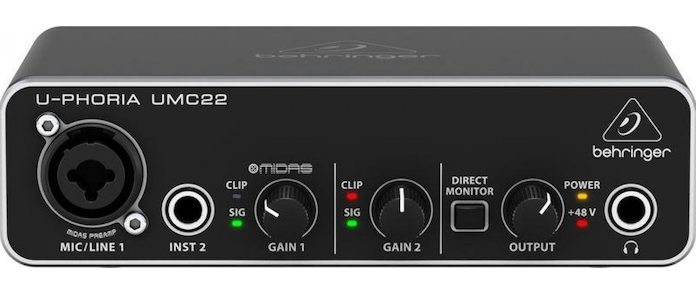
I've had this little interface for many years and it's been a champ. It currently sells for about $56 and I use it for room response measurements and other tasks involving a microphone. The unit is USB-powered and provides 48v phantom power to the mic, as well as instrument input, headphone out and two line outputs.
Measured using the trusty and well-performing Element24 interface. UMC22 only supports 48kHz at 16 bits, so that's what I measured.
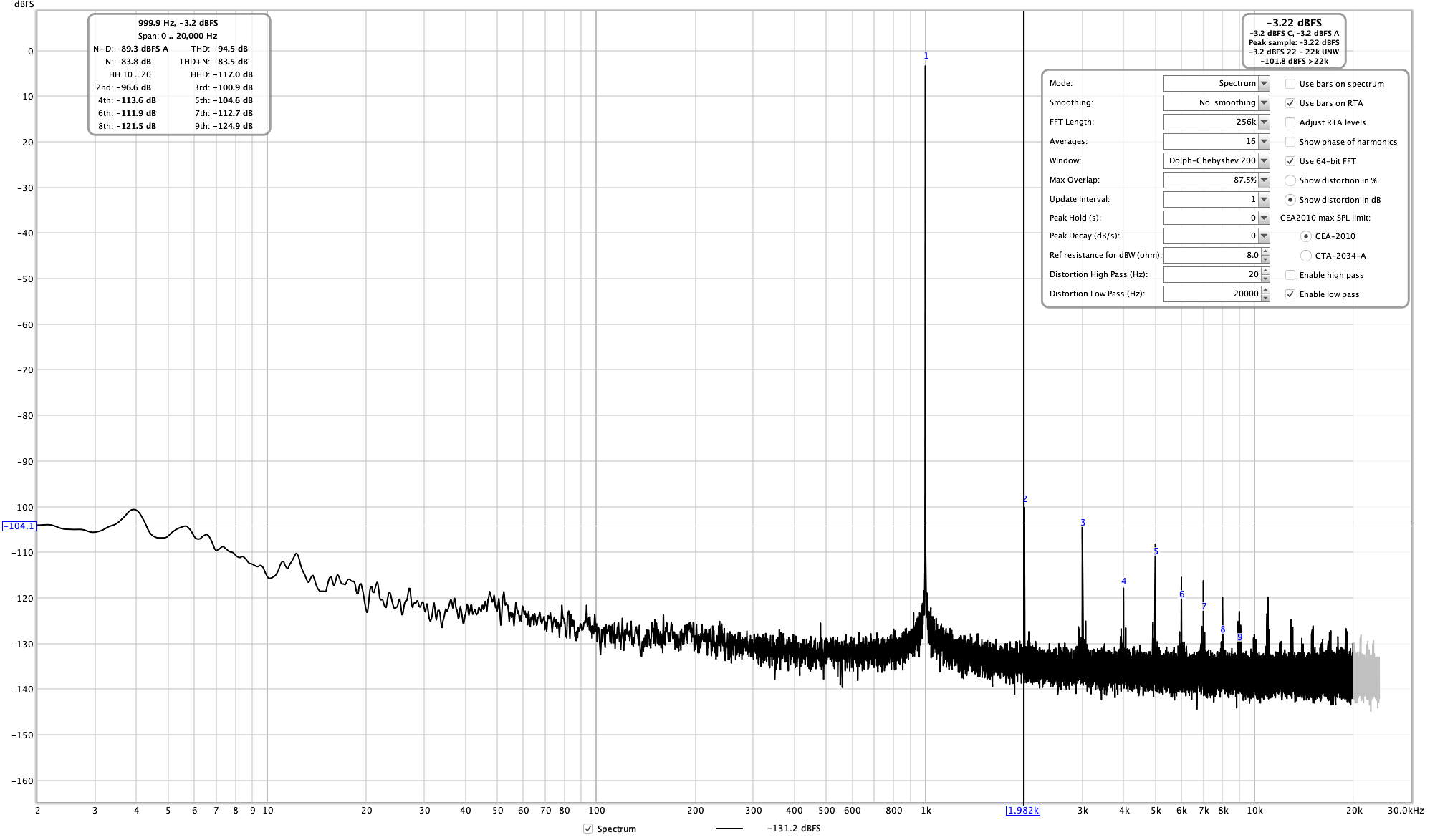
First, the DAC portion fed with 1kHz signal. I couldn't get 0dBFS out of it. -3.2dBFS produced 400mV at the output. THD+N of -83.5dB and an elevated noise floor below 100Hz. This didn't seem to be mains frequency related, so I'm not sure what caused it:
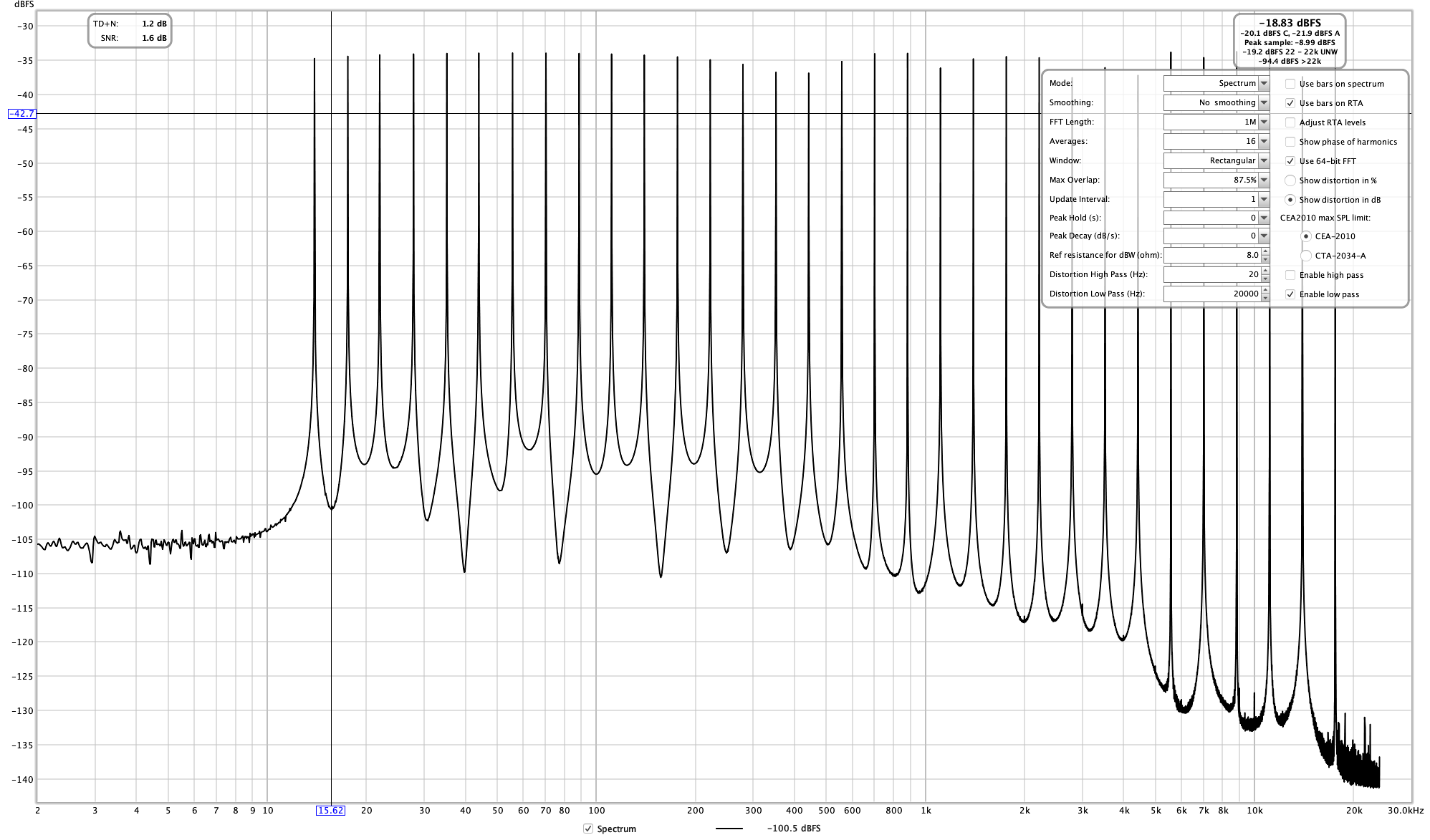
Multi-tone test (remember, this is still with 16-bit data). Some non-linearity in the peak level observed, these should normally all line up at the same level:
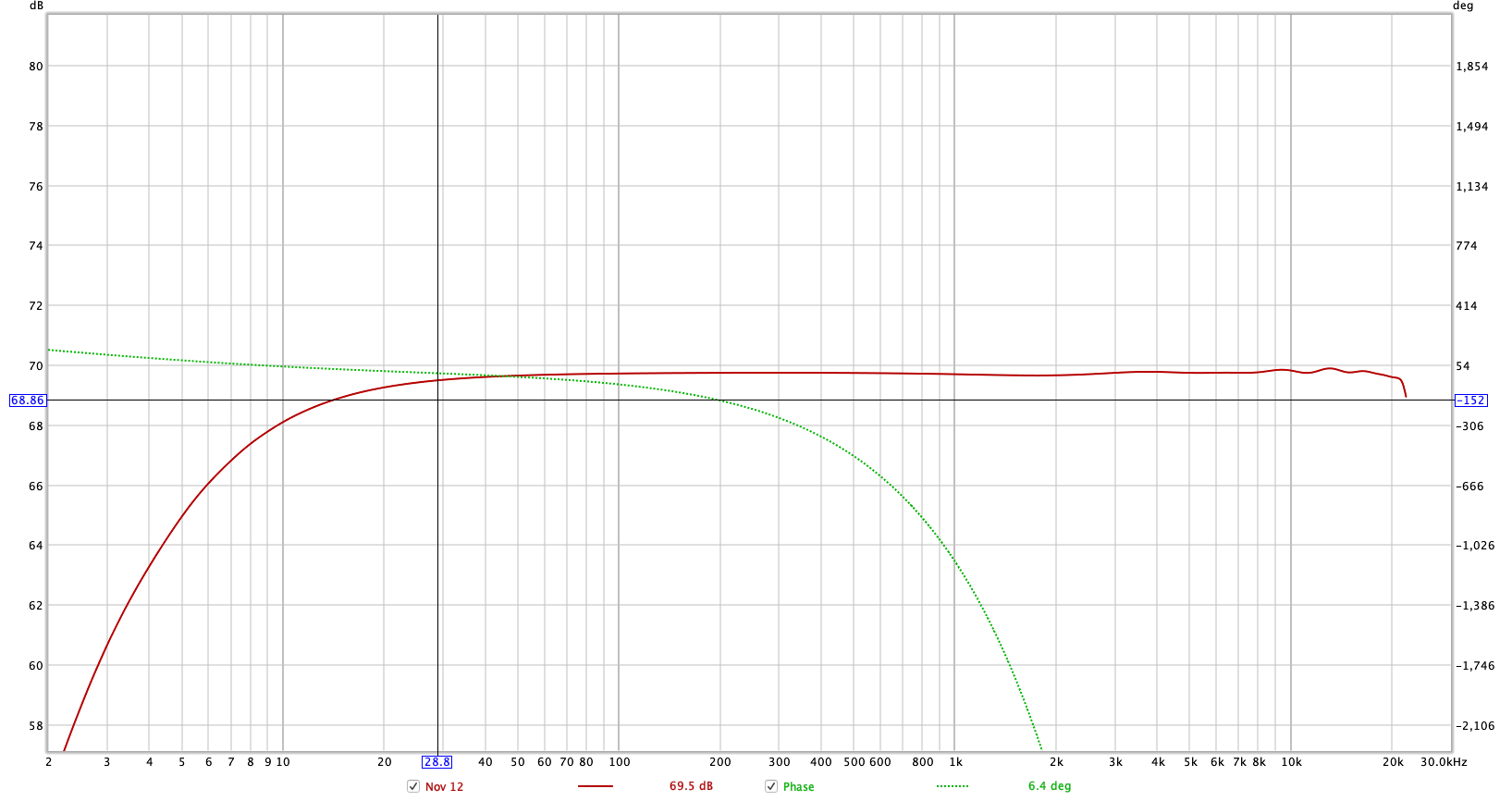
Frequency response looks pretty flat in the audible range, but phase isn't quite so nice:
I then repeated the same set of tests with the ADC portion of the interface.
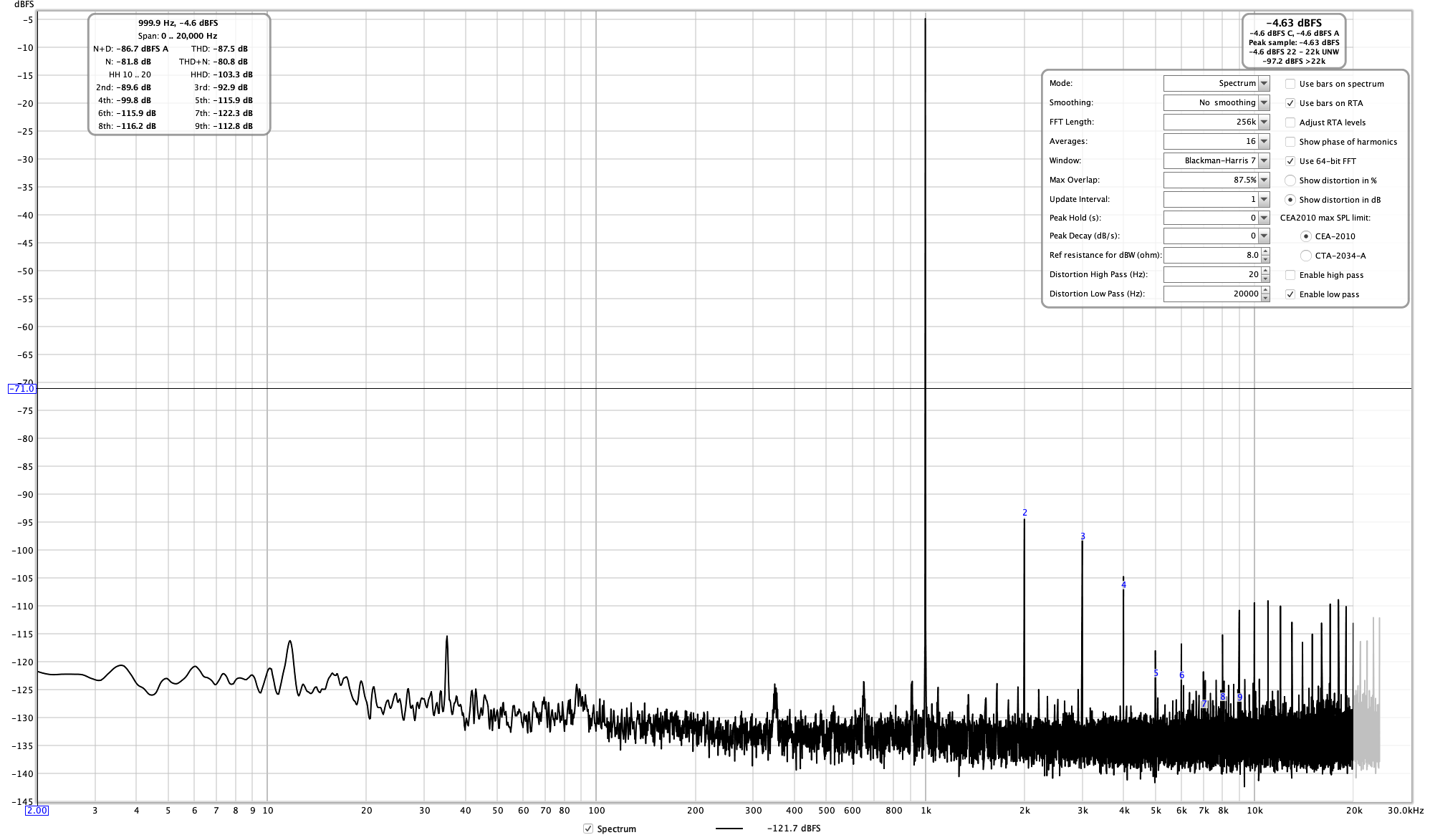
1kHz with input of 265mV at the microphone input, anything greater resulted in clipping:
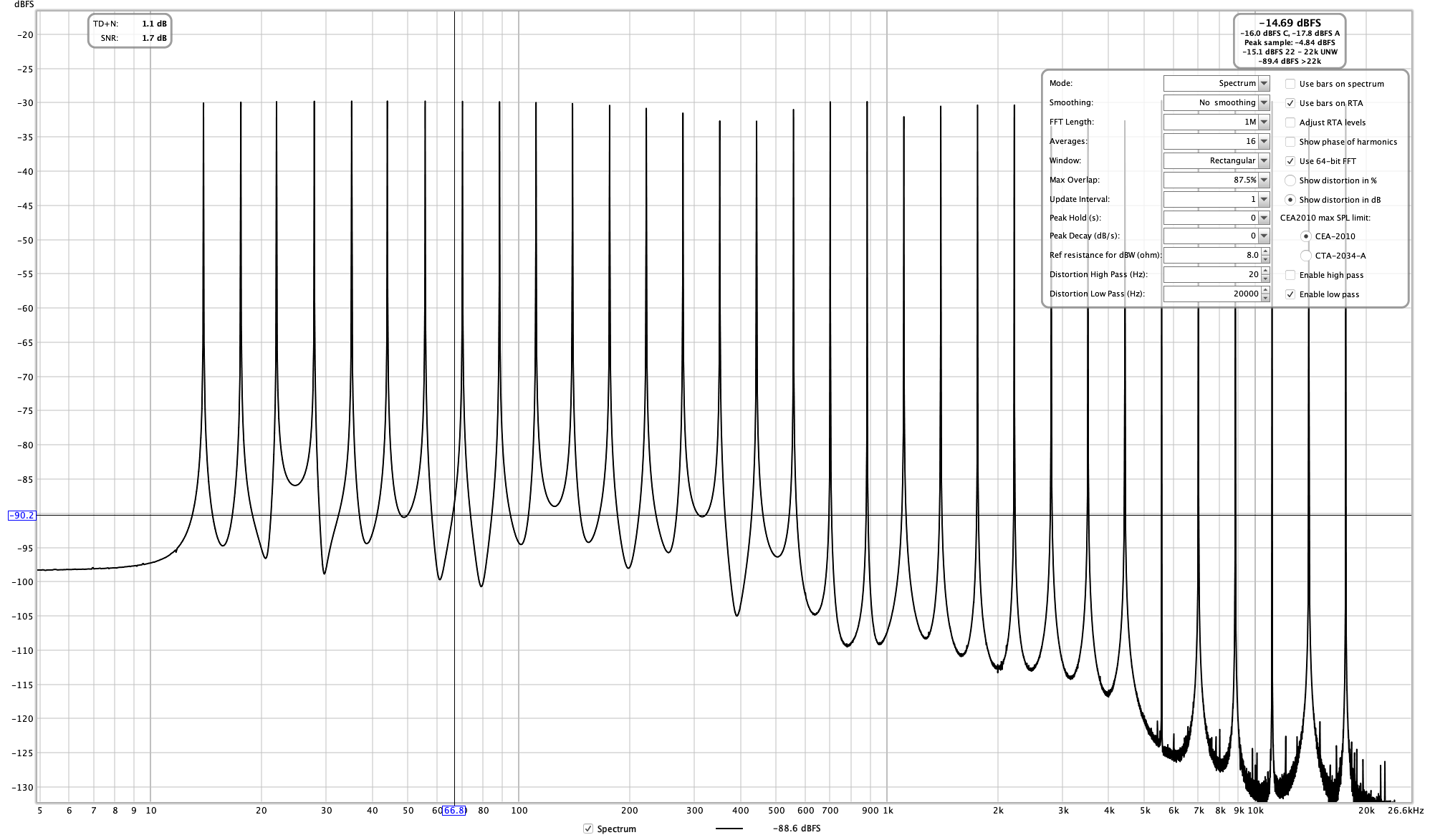
Multi-tone test:
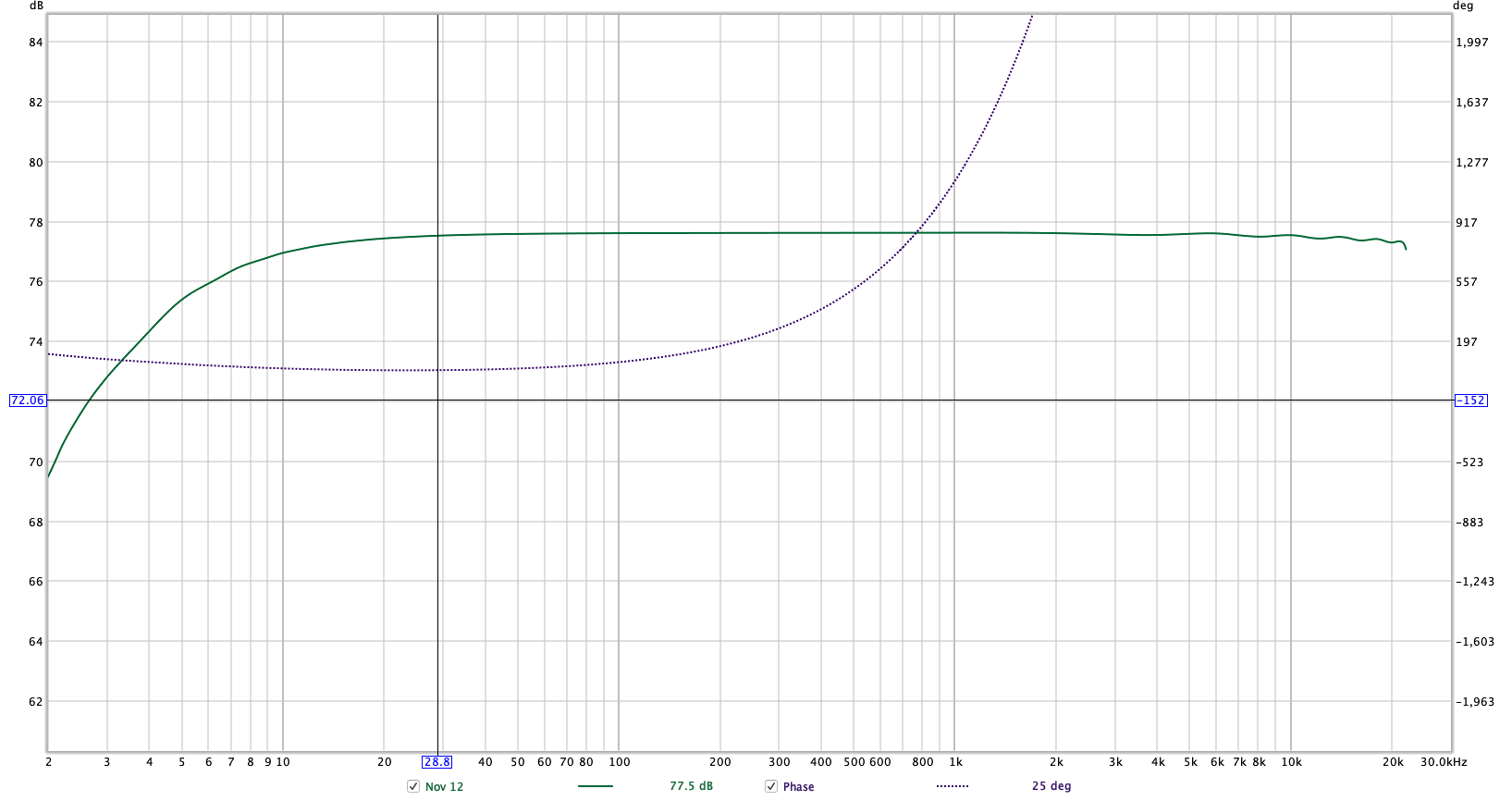
Frequency response and phase for the ADC:
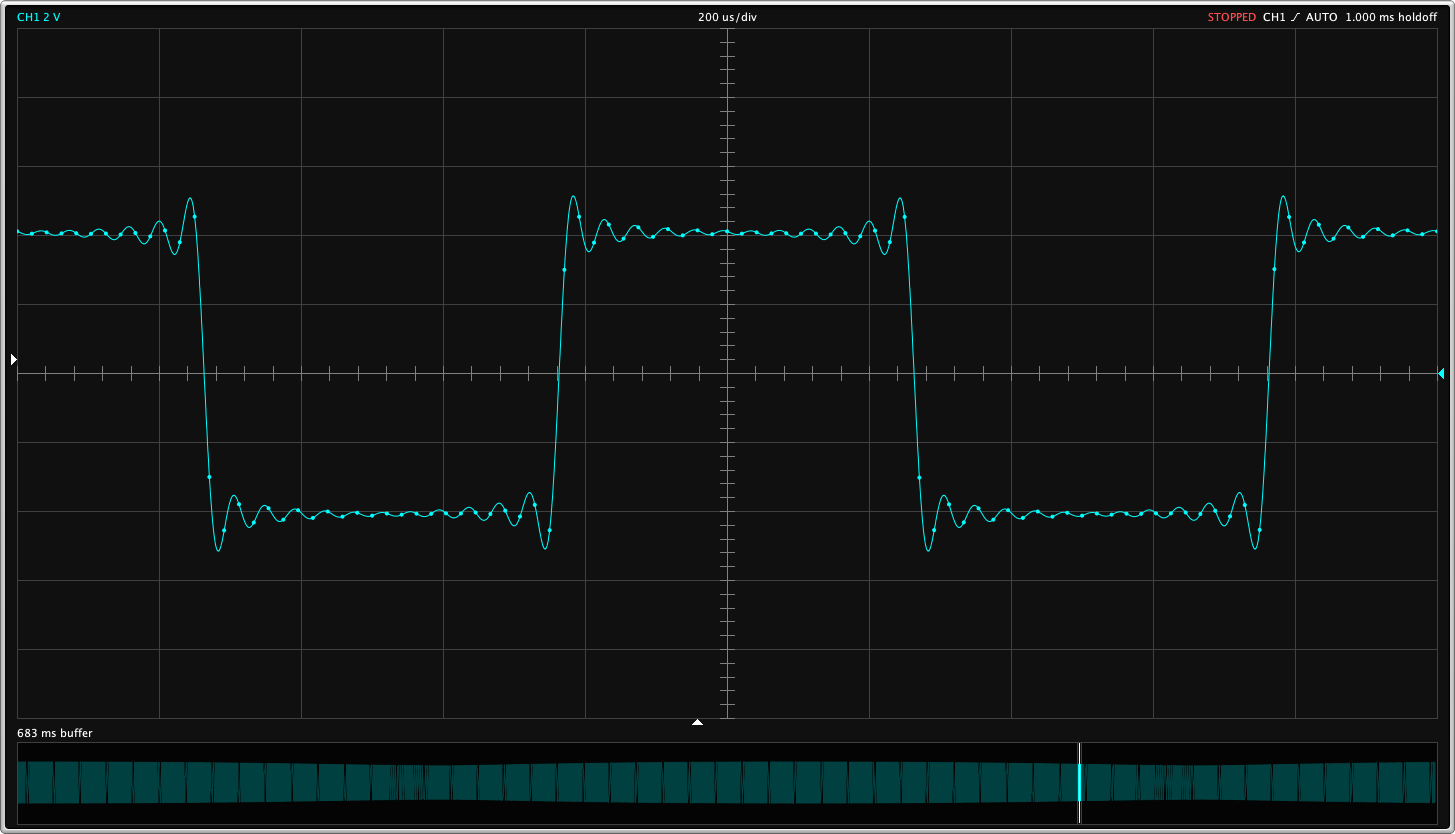
And here's what a 1kHz square wave looks like through the ADC:
Measured using the trusty and well-performing Element24 interface. UMC22 only supports 48kHz at 16 bits, so that's what I measured.
First, the DAC portion fed with 1kHz signal. I couldn't get 0dBFS out of it. -3.2dBFS produced 400mV at the output. THD+N of -83.5dB and an elevated noise floor below 100Hz. This didn't seem to be mains frequency related, so I'm not sure what caused it:
Multi-tone test (remember, this is still with 16-bit data). Some non-linearity in the peak level observed, these should normally all line up at the same level:
Frequency response looks pretty flat in the audible range, but phase isn't quite so nice:
I then repeated the same set of tests with the ADC portion of the interface.
1kHz with input of 265mV at the microphone input, anything greater resulted in clipping:
Multi-tone test:
Frequency response and phase for the ADC:
And here's what a 1kHz square wave looks like through the ADC:
Last edited:


