
• Welcome to ASR. There are many reviews of audio hardware and expert members to help answer your questions. Click here to have your audio equipment measured for free!

Pure Electric Vehicles

Towing with an EV in general is an efficiency killer and thus a range killer. At present, if you are towing, I would go ICE.

EVs do weigh more due to the obvious weight of the battery. This can affect tire wear if one is not careful. New EV tires are getting better. The heavier a vehicle the more road wear it creates, though you really have to get into the weight of heavy trucks and semis before wearing of road surfaces is an issue. If you look into the data or road surface wear, semi-trucks are the main cause of major highway and, particularly, Interstate road wear.
Sure, but if that's what people need to do, that's what people need to do. I do know for a fact that some people and organisations put a hold on EV specifically due to lack of towing capacity, and for a SUV that will be an important point of consideration to me and many others. The new EU weight limits will make this easier, although for EV's it's a construction consideration too.

It's a requirement, like for a van. It should have a flat inboard surface area of min 1220 mm x 2440 mm (abt 4 ft x 8 ft) plus clearance for straps and handling of typical wooden construction plates or 3 euro pallets (800mm x 1200 mm). Builders prefer that for trailers too.
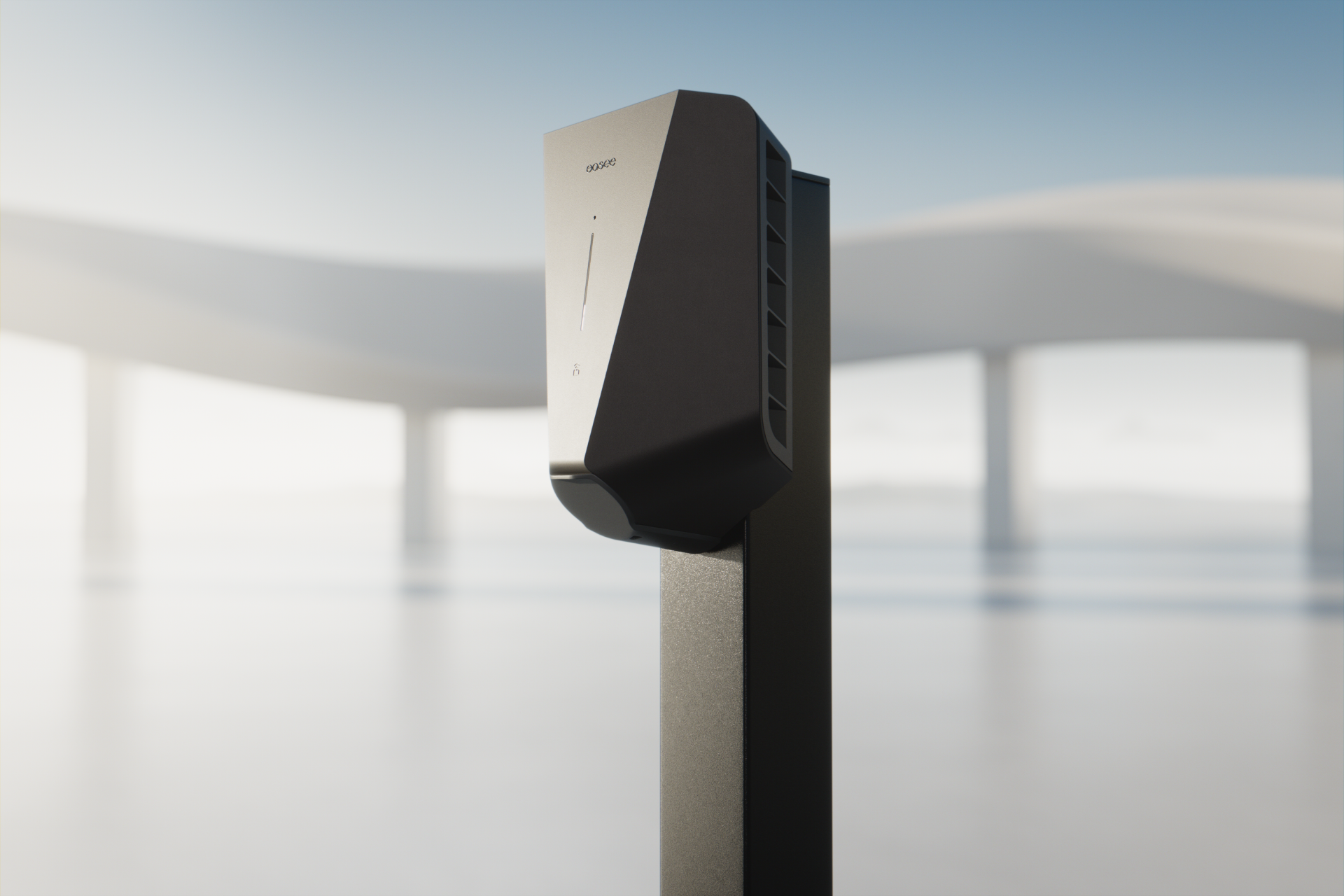
My home chargers are 7.2kwh max. I think one of them is turned down from that, though. Also, home chargers really aren't. The charger is on the car. The wall thing is a fancy switch.
Please do allow me to rephrase: Charging capacity for homes would typically be 11 kW up to 22 kW.

Out of courtesy I checked for Porsche Taycan 4 Cross Turismo 2027: The on the wall box is capable of 22 kW and the Mobile Charger capable of 11 kW. You'll pick the cable suitable to your home/cabin. With an EV I would likely have to pay abt usd 40 to 50 more per month for the utilisation of capacity, consumption not included. Upgrading of wiring/fuseboxes ++ to handle 22 kW will vary. Most would need a bit of digging hereabout, and that can be expensive.
 
Last edited:
I'd call that an overstatement. The charging infrastructure in Silicon Valley seems to be 98% <7kW and yet EV adoption here is very high.
And companies limit charging time to 3 hours, that is around 20kWh. Enough to get home for most. But most certainly not enough to even remotely fill 100kWh batteries that are quite common now.
There are 350kW chargers at pretty well every service station on major roads here, so never a problem for my car.
Country roads, which I much prefer, are the problem with few high power chargers, so planning the route around charging and eating is a bit more of a challenge but no problem so far in the last almost 4 years. Visiting my daughter on Anglesey and using a scenic route through Wales, as I have for over 20 years, I have only changed where we stop for lunch to a place with a fairly fast charger 120kW, on the island until recently the fastest chargers were 50kW but Tesla have opened a supercharger site now.
I do own a hybrid but prefer my EV for long trips.
 
I am an EV owner and haven't claimed EVs are "better" even once.
I have, for my situation and location.
I never drive either of my V8 petrol cars and only use my hybrid a little because it is smaller so easier to park and my dog much prefers it.
 
Last edited:
I do. :-) Then again, my circumstances are mine. My car has a ~140 mile E range, but unlimited range if I refill the engine generator every 120 miles or so. A capability I only use in long trips (as to the cabin).
It also has a maximum charging speed of 50kW so would still be a bit tedious to charge on a journey at the fastest charge it could accept.
 
Can get around Australia in an EV with a little planning. Completely falls apart in peak periods - like school holidays, where you can end up waiting hours for a charge on popular routes
 
Please do allow me to rephrase: Charging capacity for homes would typically be 11 kW up to 22 kW.
Depends on the country and the regulations therein.
Here there are commercial AC chargers that powerful in car parks (used to be free before Russia invaded Ukraine and made power here so expensive) but UK single phase domestic AC system maximum is 7.2kW.
Out of courtesy I checked for Porsche Taycan 4 Cross Turismo 2027
The optional 22kW on board charger failed so regularly it was deleted as an option and cars going in with a failed unit had a refund and 11kW unit retro-fitted. Not Porsche's finest hour.
Mine is specced at 11kW maximum but that much is not legal here from a domestic single phase system, so I only get that if I use a commercial AC dispenser in a car park.
 
Depends on the country and the regulations therein.
Here there are commercial AC chargers that powerful in car parks (used to be free before Russia invaded Ukraine and made power here so expensive) but UK single phase domestic AC system maximum is 7.2kW.
Certainly. Regulations tends to reflect the typical state of the grid and the availabilty of energy. Wherever the distribution grid is upgraded to handle the consumption and peaks EV charging is likely to cause, village by village, town by town, neighbourhood by neighbourhood, 22 kW is an option. If the location has an upgraded distribution grid, they can have 22 kW /3 phase, if the grid isn't capable you can't get approval, which means no one will do the job. 7.2 kW or 11 kW depends on the state of the on property wiring and fuse boxes. Electric wiring is covered by pretty strict regulations, and fixed wiring is not to be done DIY. Only certified people (annual update) can work with fixed wiring and fuse boxes, and every house/apartment/building will have someone signing off / vouching for it. In public/industrial/commercial buildings you need a certificate to open a fusebox just to have a look.

As for employee car parks and so on, it's for the building owner to decide what they want to offer, at what price and to whom, given the distribution grid has been modernized.

But there is no general regulation with limitations preventing 22 kW in homes/vacation homes beyond actual feasibility.

The optional 22kW on board charger failed so regularly it was deleted as an option and cars going in with a failed unit had a refund and 11kW unit retro-fitted. Not Porsche's finest hour.
Mine is specced at 11kW maximum but that much is not legal here from a domestic single phase system, so I only get that if I use a commercial AC dispenser in a car park.
I just had a look at this for the sake of this discussion thus I have no objections. I did however do another check, and It seems like there are some inconsistencies courtesy of Porsche where some models have 22 kW as an option whereas the option may not be present for every EV in every market.

Eg the 22 kW option is being offered with the rather new Cayenne Turbo Electric. Might be they have fixed whichever issues they may have had. Don't know.

There has been issues with wall boxes by various brands, which tends to be resolved. These guys were in serious Swedish regulatory problems.
 
I have, for my situation and location.
I never drive either of my V8 petrol cars and only use my hybrid a little because it is smaller so easier to park and my dog much prefers it.
I'm not shy about this. EVs are inherently superior, and to the extent that one cares about global warming/climate change, EVs are essential. For the majority, fossil fuel vehicles offer no advantages, and in any case, climate change is now an emergency and we are all beholden to reduce our personal contribution to CO2 (and other) pollution to the extent possible.
 
... EVs are inherently superior, and to the extent that one cares about global warming/climate change, EVs are essential. ...

Some studies show that there are drawbacks to the transition to EVs. Their production, materials... it's not 0% environmental cost.

To think we billions of humans can exist on Mother Earth with zero environmental impact is an illusion. To me, EVs' biggest advantage is zero air pollution in densely populated areas... but otoh that will allow for even denser population areas.
 
Last edited:
My home chargers are 7.2kwh max. I think one of them is turned down from that, though. Also, home chargers really aren't. The charger is on the car. The wall thing is a fancy switch.
Yes, what we call a charger is not a charger. It is an EVSA -- electric vehicle supply equipment -- a fancy word for a smart power switch. Inside of your EV sits the AC to DC converter and the true charging unit.
 
Some studies show that there are drawbacks to the transition to EVs. Their production, materials... it's not 0% environmental cost.

To think we billions of humans can exist on Mother Earth with zero environmental impact is an illusion. To me, their biggest advantage is pollution in densely populated areas... but otoh that will allow for even denser population areas.

All actions have impacts and costs. No free lunches. An EV environmental impact for the life of a car will be less than an ICE car. How much less depends on the models you are comparing, your driving habits, etc.

Xeriscaping still requires water, and has many other associated costs, some quite high. That is not a reason for a desert city to promote bluegrass lawns. You have to look at long term reductions.
 
Sure, but if that's what people need to do, that's what people need to do. I do know for a fact that some people and organisations put a hold on EV specifically due to lack of towing capacity, and for a SUV that will be an important point of consideration to me and many others. The new EU weight limits will make this easier, although for EV's it's a construction consideration too.

It's a requirement, like for a van. It should have a flat inboard surface area of min 1220 mm x 2440 mm (abt 4 ft x 8 ft) plus clearance for straps and handling of typical wooden construction plates or 3 euro pallets (800mm x 1200 mm). Builders prefer that for trailers too.

Please do allow me to rephrase: Charging capacity for homes would typically be 11 kW up to 22 kW.

Out of courtesy I checked for Porsche Taycan 4 Cross Turismo 2027: The on the wall box is capable of 22 kW and the Mobile Charger capable of 11 kW. You'll pick the cable suitable to your home/cabin. With an EV I would likely have to pay abt usd 40 to 50 more per month for the utilisation of capacity, consumption not included. Upgrading of wiring/fuseboxes ++ to handle 22 kW will vary. Most would need a bit of digging hereabout, and that can be expensive.

Home infrastructure to support charging is indeed a cost. With home charging, speed is typically not much of an issue once you get over a certain current threshold. If you are sleeping, do you care if your car takes 4 hours to charge instead of 3 hours?

I have a 150-amp panel. I installed a smart charger that, if necessary, will adjust downward the current into my EV if the rest of the house is pulling a lot of current. Thus, no panel upgrade required. That downward adjustment has yet to ever happen, as most of the time my home is not pulling that much current. The unit comes with wi-fi and software that monitors your home electricity usage in real time, and keeps home usage and EV charging logs.

My Emporia Pro unit will deliver up to 11KW via a 60-amp breaker and 6-gauge wire. All those have a real cost to install. For me it was about $900 all in, including the cost of the Emporia unit. Code for new homes in my town now requires pre-wiring for an EV. That's smart. My house is 30 years old.

If you look at miles added per hour of charging, once your wall until delivers 9KW you are in very good shape. I run mine at about 10 KW and 40 amps, even though I could do 11KW at 48 amps. Yes, a Taycan can charge at 22KW, but only a few wall units will deliver that, and you are running up hardware and installation costs due to those current needs -- large breaker, very thick wire gauge.

In a typical 3-5 hours of charging at night, I get my car to an 80% SOC. Only if I am going on a road trip will I charge to 100%. You optimize battery life by keeping within a 20-80% SOC. In general, home charging will enable a battery to have less degradation than if one is mostly DC fast charging, a result of current demands in fast charging.

I live near Boulder, Colorado, and there is sufficient DC fast charging infrastructure locally, and along major highways and Interstates, that I am not constrained in regard to road trips. My EV will charge from 10-80% at a DC fast charger in 20 minutes or less. On a road trip that is about what time it takes to hit the bathroom, buy a snack and a drink. I realize for some that is too long and painstaking. If so, go ICE.

The chart below gives one an idea of home charging under various current scenarios. With a 50-amp breaker and running my wall unit at 40 amps, I am getting over 30 miles of range added to my Ionic 5 per hour. In a typical week I am charging 2X per week and charge late at night during non-peak electricity rates. I think pre-tax that is less than 8 cents per KWH. So if I put in 40KW into my battery, the cost to me is less than $4. Most DC fast chargers are around 50 cents per KW -- a huge difference from home charging.

1789320357937.png
 
Home infrastructure to support charging is indeed a cost. With home charging, speed is typically not much of an issue once you get over a certain current threshold. If you are sleeping, do you care if your car takes 4 hours to charge instead of 3 hours?

I have a 150-amp panel. I installed a smart charger that, if necessary, will adjust downward the current into my EV if the rest of the house is pulling a lot of current. Thus, no panel upgrade required. That downward adjustment has yet to ever happen, as most of the time my home is not pulling that much current. The unit comes with wi-fi and software that monitors your home electricity usage in real time, and keeps home usage and EV charging logs.

My Emporia Pro unit will deliver up to 11KW via a 60-amp breaker and 6-gauge wire. All those have a real cost to install. For me it was about $900 all in, including the cost of the Emporia unit. Code for new homes in my town now requires pre-wiring for an EV. That's smart. My house is 30 years old.

If you look at miles added per hour of charging, once your wall until delivers 9KW you are in very good shape. I run mine at about 10 KW and 40 amps, even though I could do 11KW at 48 amps. Yes, a Taycan can charge at 22KW, but only a few wall units will deliver that, and you are running up hardware and installation costs due to those current needs -- large breaker, very thick wire gauge.

In a typical 3-5 hours of charging at night, I get my car to an 80% SOC. Only if I am going on a road trip will I charge to 100%. You optimize battery life by keeping within a 20-80% SOC. In general, home charging will enable a battery to have less degradation than if one is mostly DC fast charging, a result of current demands in fast charging.

I live near Boulder, Colorado, and there is sufficient DC fast charging infrastructure locally, and along major highways and Interstates, that I am not constrained in regard to road trips. My EV will charge from 10-80% at a DC fast charger in 20 minutes or less. On a road trip that is about what time it takes to hit the bathroom, buy a snack and a drink. I realize for some that is too long and painstaking. If so, go ICE.

The chart below gives one an idea of home charging under various current scenarios. With a 50-amp breaker and running my wall unit at 40 amps, I am getting over 30 miles of range added to my Ionic 5 per hour. In a typical week I am charging 2X per week and charge late at night during non-peak electricity rates. I think pre-tax that is less than 8 cents per KWH. So if I put in 40KW into my battery, the cost to me is less than $4. Most DC fast chargers are around 50 cents per KW -- a huge difference from home charging.
Would I care if 3 or 4 hrs? Depends, Energy prices varies by the hour 24/7/12/365. People might have 2 EV's or even more - that gets more likely day by day. Or people may have visitors who need to charge their car whilst visiting. Or no car needs charging at all. One or three 22 kW outlets provides the homeowner with more options and flexibility than a single 7 kW. If the homeowner needs that on not isn't for me - or you - to have an opinion about. Their investment and their choice, not mine.
 
Would I care if 3 or 4 hrs? Depends, Energy prices varies by the hour 24/7/12/365. People might have 2 EV's or even more - that gets more likely day by day. Or people may have visitors who need to charge their car whilst visiting. Or no car needs charging at all. One or three 22 kW outlets provides the homeowner with more options and flexibility than a single 7 kW. If the homeowner needs that on not isn't for me - or you - to have an opinion about. Their investment and their choice, not mine.

Quite true. Up to the individual, as you say. My point: once you pass 7.6KW and a 30-amp breaker you are getting decent charging speeds almost all can live with. To go up from 40-amp delivery to your car is going to have a lot of incremental costs. Once you pass a 40-amp service, you must hardwire your on-wall unit, which I have. I could go up to 48 amp by switching to a 60-amp circuit breaker, but I would rather run the unit less than full bore. For 22KW charging you will need 3-phase service. Few have that domestically in the U.S.

If you cannot live with 4 hours or more of charging time at home, then I would not advise getting an EV.
 
If you’re a "local" driver like me—covering an average of 30 kilometers a day (excluding trips) and making only occasional longer journeys of 80 to 100 kilometers—there is simply no reason to buy an internal combustion car anymore.

Of course, the situation is different if you’re a sales rep.

I charge once a week and enjoy a quiet, supremely comfortable ride.

Modern combustion cars sound bad—often relying on artificial noise pumped through the speakers—and are just as boring as electric cars; they feature plastic exhaust tips and fake air intakes scattered across bodies that lack any elegance or visual appeal. As far as I’m concerned, nothing beats a pure electric car for daily driving.
Let’s leave plug-in hybrids out of it—they combine the worst aspects of both technologies.

Now, if we’re talking about 1960s sports cars, that’s a different story...

but for long-distance travel, there are 300 km/h trains and airplanes; driving 500, 700, or 900 kilometers to the beach is just a hassle.
 
Quite true. Up to the individual, as you say. My point: once you pass 7.6KW and a 30-amp breaker you are getting decent charging speeds almost all can live with. To go up from 40-amp delivery to your car is going to have a lot of incremental costs. Once you pass a 40-amp service, you must hardwire your on-wall unit, which I have. I could go up to 48 amp by switching to a 60-amp circuit breaker, but I would rather run the unit less than full bore. For 22KW charging you will need 3-phase service. Few have that domestically in the U.S.

If you cannot live with 4 hours or more of charging time at home, then I would not advise getting an EV.
People will choose whatever is feasible and makes sense to them, what they need or what they think they'll need. Preferring quick charging isn't prohibitive of getting EV's, not at all, and what works for you might not be defining the criteria of others. Neither am mine. Would believe 80-90% of all houses and perhaps 60 % of all vacation homes have the oppurtunity of having 22 kW if so desired in the rural village I live. If they want to pony up or not it's for them to decide.

Having 22 kW installed will definately increase the value of a house/flat, and make it easier to sell. It's not like the costs are pure loss.
 
Nice looking ride? I can't make out the brand and model.
Renault Scenic E-Tech EV87 by the looks of it.

I like this type of car, highly versatile and a very common choice covering most bases for pragmatics. Was very popular with combustion, thus a lot of effort was and is put into the segment for EV's too. Fiercly competitive segment with high volumes.
 
People will choose whatever is feasible and makes sense to them, what they need or what they think they'll need. Preferring quick charging isn't prohibitive of getting EV's, not at all, and what works for you might not be defining the criteria of others. Neither am mine. Would believe 80-90% of all houses and perhaps 60 % of all vacation homes have the oppurtunity of having 22 kW if so desired in the rural village I live. If they want to pony up or not it's for them to decide.

Having 22 kW installed will definately increase the value of a house/flat, and make it easier to sell. It's not like the costs are pure loss.

Yes. We all have differing points of view and personal situations. I live in an EV epicenter, so installing a device in my garage will likely enhance the value of my home.
 
Back
Top Bottom