• Welcome to ASR. There are many reviews of audio hardware and expert members to help answer your questions. Click here to have your audio equipment measured for free!

Pure Electric Vehicles

... In any case banging on about range is baffling to me, very, very few people need to do frequent very long trips. In the 4 years I have had a performance EV with big wheels and relatively limited range it has not been a problem...

I do understand why it's a big practical consideration for many. Especially here in California, where distances are often larger than in more densely populated European countries.

But bigger range is also a compromise... the math on how long it takes to charge a battery is remarkably simple. And with most chargers I see around me, the limit is 6kW....
 
Last edited:
Can we concede the "pureness" of EVs, and agree that EREV may actually be a more viable and a better solution?
Many of the manufacturers are said to be going that route, blending ICE and EV in "Extended Range" (~600 Mile) vehicles
:oops:
No.
 
Oh, home on the range...

I live in Colorado. I have had an EV for 15 months. In that time I have driven more than 175 miles from my home about 4 times. My Ionic 5 gets from 250 to 300 miles per charge.

If I plan out my route, usually with zero or little compromise, I can DC fast charge at 200 or more KW units and have zero issues in traveling almost any distance. I can charge from 10-80% in 20 minutes, sometimes less.

If you need to travel 500 miles without charging or buying fuel, then you are in a rare minority of people. Further, most families have multiple cars, so if you feel the need to have an ICE auto, then have one.

Here is one of the best insights I have come across:

 
Can we concede the "pureness" of EVs, and agree that EREV may actually be a more viable and a better solution?
Many of the manufacturers are said to be going that route, blending ICE and EV in "Extended Range" (~600 Mile) vehicles
:oops:
The world isn't static, it changes continuously. There may be plenty of gas stations around now, but in 20, 30, 40 years? I am not so sure.

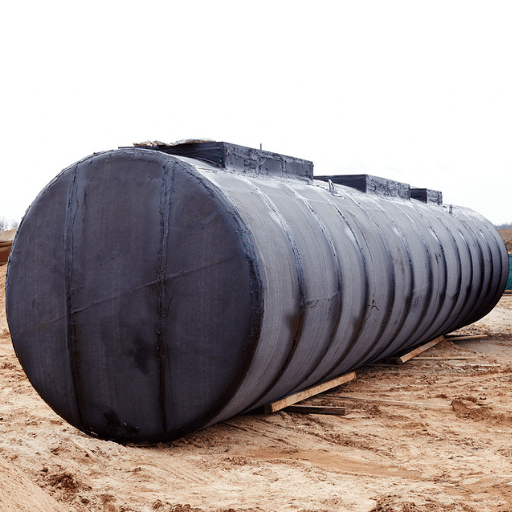
The underground tanks of gas stations don't last forever. They need to be replaced about every 20-30 years. When its time is up, is it going to be replaced?

 
Not pedantic, didactic.
When the Pink Panther stepped on an ant, he said, "Dead ant, ick!"
A couple of years ago, the NY Times published an opinion piece by a senior editor of Car & Driver magazine (US) titled "Sometimes, to Make an Electric Car Better, You’ve Got to Make It a Little Worse" advocating for fake noise and fake gear shifts. When I first read it (back then) I thought the writer was serious and filled with dumb nostalgia for what is rapidly becoming obsolete technology. In light of the conversation here, I re-read the article and now think it is a subtle satire, though I'm not sure. Anyway, here is a link that should get past the paywall, if you want to read it yourself and come to a conclusion:

This isn't subtle satire. Ezra Dyer is just a ****** but popular automotive journalist.
 
I hate long car trips. I hate getting gas. I hate charging anywhere but home. If I'm going 400+ miles in a day, I'm almost certainly flying. If I'm going 300 miles in a day, I'll charge during lunch or dinner.
 
I came home from my holiday today and plugged in whilst having brunch. My car does charge quickly, though this charge wasn't at maximum, limited by the dispenser, but I still ended up halting the charge before we finished eating, it is cheaper to charge at home.
Anyway as usual the net time loss due to charging was zero.
Hence, the reference to "commercial chargers" and not charging in general.
 
I do understand why it's a big practical consideration for many. Especially here in California, where distances are often larger than in more densely populated European countries.

But bigger range is also a compromise... the math on how long it takes to charge a battery is remarkably simple. And with most chargers I see around me, the limit is 6kW....
The old charging stations may be rated 50 kW, but no one would use those unless no other option. What people expect would be 150-350 kW depending on car and provider.
Chargers for homes would be typically 11 kW, up to 22 kW.
 
Problem with that is regulatory in some. places. My EV has a 2.4 gallon gas tank for a generator. It's why I made the switch. Zero risk.
I considered the i3 like yours originally but rejected it when studying the technical details because the range extender compromised the car performance too much (for me) considering the very few times I may take advantage of it.

I still think the original i3 is one of the cleverest EVs, ie ground up design rather than electic motor in conventional car, but that is not what the normal conservative car buyer wanted.
I am considering getting one now there are places who rebuild the battery packs around.
 
The old charging stations may be rated 50 kW, but no one would use those unless no other option. What people expect would be 150-350 kW depending on car and provider.
Chargers for homes would be typically 11 kW, up to 22 kW.
Here in the UK the most you get from a domestic specification single phase supply (very few domestic houses have 3-phase supplies) is 7.2 kW. On my car, which has a 500W overhead for coolant pumps and conversion from AC to DC, I get 6.7 kW into the battery.
 
Oh, home on the range...

I live in Colorado. I have had an EV for 15 months. In that time I have driven more than 175 miles from my home about 4 times. My Ionic 5 gets from 250 to 300 miles per charge.

If I plan out my route, usually with zero or little compromise, I can DC fast charge at 200 or more KW units and have zero issues in traveling almost any distance. I can charge from 10-80% in 20 minutes, sometimes less.

If you need to travel 500 miles without charging or buying fuel, then you are in a rare minority of people. Further, most families have multiple cars, so if you feel the need to have an ICE auto, then have one.

Here is one of the best insights I have come across:

Travel patterns / distances are individual - there will be anecdotal evidence for just about any scenario a.o depending on geography.

People want 600 km (373 miles) range and more because all delivers less in winter, like Lucid Air loosing more than 45% of it's range in cold winter conditions. That wouldn't matter at all in summer, and it wouldn't matter at all most of the year most of the US. Elsewhere it might be essential. To get sufficient range in winther, you'll need more than enough in summer.

 
Last edited:
Here in the UK the most you get from a domestic specification single phase supply (very few domestic houses have 3-phase supplies) is 7.2 kW. On my car, which has a 500W overhead for coolant pumps and conversion from AC to DC, I get 6.7 kW into the battery.
Makes sense to me at least.

Lower energy prices + convenience favours home charging, and as fossile cars gets old and off the roads, the power grids will need serious upgrades to cope. Infrastructure upgrades have been ongoing for years. The corps, regions, states, countries++ who ignore it will have issues if/when the market turns all EV.
 
If I'm going 400+ miles in a day, I'm almost certainly flying.
I used to fly 50 years ago. It was fairly straightforward and quick. Nowadays the airport experience is so unpleasant and slow I don't (and am aware of how much I have contributed to climate change being on a plane weekly for decades so it is partly guilt).
A flight around Europe nowadays is likely to be more time in airports than on a plane.
 
How many of you EV guys are true travellers? I'll be interested to see what EV makers have to offer this segment? At the moment it looks like an unaddressed area.

I mean, the full EV becomes a slam dunk solution (for the homebodies who buzz around their local district doing commutes, shopping and services, social catchups and a weekend buzz in the hills) once the initial purchase price differential doesn't need to be addressed with long-term ownership calculations full of assumptions. And we are now seeing such EVs (well, exclusively from China at the moment).

But the real world has got some really wide open spaces out there, and people who want to spend serious time in it. Maybe one day.
I have a friend who regularly (2x year) drove from Victoria, BC to South Florida (visiting parents) in a Tesla S and never had a problem or complaint. On the other hand, I had an acquaintance who had to make frequent 600 mile drives in a Model 3 and hated having to stop and charge. Much depends on personality and attitude. There is no practical reason, throughout much, if not most, of North America, to worry about range, but but there are folks in a hurry who happily drive hour after hour without a significant break, that cannot stand the 20-30 minute charging time that seems typical at this juncture.

The main difference between the Canadians who traveled to FL, and the guy with the 600 mile drive, was that the latter is a 20 something in a hurry, and the former are actual adults.
 
At the moment it looks like an unaddressed area.
Around here, SF Bay Area, every Amazon and FedEx delivery van is electric and seems to go all day. They must be saving millions$ with today's fuel prices. So there is one new market that's being addressed. We would go a long way (pun) if the auto companies standardized battery configurations and connectors, but I guess it's too early in the game for that.
 
Here in the UK the most you get from a domestic specification single phase supply (very few domestic houses have 3-phase supplies) is 7.2 kW. On my car, which has a 500W overhead for coolant pumps and conversion from AC to DC, I get 6.7 kW into the battery.

Here in Silicon Valley, the vast majority of urban charging stations are 6-7kW (and so are the home systems I know) . And the superchargers are either Tesla only or extremely rare.
If you drive I5 to LA or so, there are super charging stations on the way that allow one to plan a very safe and quick trip.
I have "hacked" my car's gas-based generator to -for long trips- keep the battery at 75%, and stop every 120 miles or so to quickly top off the little gas tank.
The charging network was the most clever thing Tesla did to own this market which they did for a long time. They started off in the cities, then one in the middle between, then 1/4 and so on. And the car sales followed that expansion area by areal. They were way ahead the rest for a long time. An aquaintance of mine "got it". Their family operated a quite profitable gas station with a cafe, fastfood and motel facitilites, and he managed to convince Tesla to put one of their faciltities on his ground at a very early stage. These days, the've moved the road, and the charger will be what will be keeping him in business. Without it, he'll be bust.

With the car culture, vast number of cars and the distances in the US, I'm rather convinced you'll need upgrades of the distribution grid, energy production and then some, to make a complete transition to EV - if that's what people eventually wants.

No chance, we've had 35% EV and 98% EV registration (new cars, 2026) with 6-7kW charging along the roads. Zero chance. As mentioned before, I got 3 charging points within 1/2 a mile, and another 20 miles from here. One gas station shut down, another on the verge. No chargers, and they'll be gone.

A couple of new EU rules (tyres needs less wear, and increased weight for drivers licence classes) will have an impact, the latter because it opens the EV market for another driver segment. Towing capacit was the previous issue - quite a few wants/needs good towing capabilities, and some businesses have waited years to go EV as they weren't made to pull enough.

There are 4 problems with the expansion of EV:
1: Energy production and the AI/Sky servers plants which sucks the life out of everything.
2: Upgrading the distribution grid for robustness, to handle commercial and home charging, and establishing a commercial high capacity charging network.
3: Weight and tyre/road wear (I'm a sinner, I prefer Diesel SUV due to a.o pt 4)
4: Wherever relevant - contigency and e.g. roads which closes due to bad weather and results in being stuck in a car for 12, 24 or 36 hours.

If neither of these points are issues wherever people are, EV would be the better option just about anywhere.

...as long as the owners don't give a f**k about own and other's privacy and information security.

 
Last edited:
6-7KW public chargers are useless other than at a job site with longtime plug in. My home unit will do 11KW, though I run it at 9.9 or so. With that it is 4 hours for me on a typical charge, as I keep my SOC between 20% and 80%.

EV adoption in the U.S. will not match Europe, China or much of the developed world in the near- and mid-term. The current political climate is anti-EV and pro oil and coal. Ironically, pols will take hundreds of millions from Musk but not buy his cars, and will work to repress the industry he pioneered. Of course Tesla has pulled down any environmental or climate messaging on its website. Such is life in an anti-science leaning political climate. It is somewhat akin to vinyl and tube lovers taking over messaging and moderation of ASR and telling us we suck and that a SINAD of 35 is a thing to be cherished.

Given the science and data-driven philosophy of those on this forum, I would suspect EV adoption among ASR members strongly over-indexes compared to the general public.

When I drive by the gas station in my EV and see $5 for premium, which my 2016 ICE turbo car takes, I tend to chuckle.

Low U.S. EV adoption rates will doom North America to losing the EV production and development game to China, as well as the business of EV battery development. Markets do not tolerate ignorance.

DC fast charging prices also remove most of EVs economic advantage over gas. For the foreseeable future hybrids will dominate and a wave of range extender vehicles will test the market for that segment's viability.
 
Back
Top Bottom