• Welcome to ASR. There are many reviews of audio hardware and expert members to help answer your questions. Click here to have your audio equipment measured for free!

PrimaLuna Dialogue Seven Tube Amp Review

Rate this amplifier:

  • 1. Poor (headless panther)

    Votes: 214 87.3%
  • 2. Not terrible (postman panther)

    Votes: 10 4.1%
  • 3. Fine (happy panther)

    Votes: 6 2.4%
  • 4. Great (golfing panther)

    Votes: 15 6.1%

  • Total voters
    245
No wonder there are always so many of these for sale on USAudiomart and Audiogon, the websites of great regret. I just looked up the former and there are 33 Primaluna products for sale! That tells you everything you need to know.

I take it Amir didn't hear the magical three-dimensionality that California tube scam artist says can only be heard with such gear, lol.
 
Thank you for these review, Amir.
 
Does anyone have a schematic? It would be interesting to see where they went wrong.
I'm also very curious about this. Gonna see what I can find...
 
Does anyone have a schematic? It would be interesting to see where they went wrong.
There is something going on. Could also be driver/splitter tubes are not that good either. There are too many harmonic distortion spikes after 100 Hz.
 
20 years old tube amp still with the original power tubes? Then this is normal, those tubes are worn out and should have been replaced long time ago as they age the most. With tubes that are in good shape this amp is not that noisy in my experience. I got the stereo version (Prologue 4) and with worn out tubes it makes audible noise, that is true...

But it's a tube amp, it will never be low noise. But this measurment should be done with relative new tubes that are tested and confirmed in spec, not with 20 years old tubes. Then you got the real numbers.
 
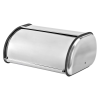
Thanks for the test Amir. It helped me remember that I'm going to buy a new bread box today.:D
assetstream (1).png
Edit:
Other than that, I really don't know how to comment on this amplifier. Against other tube amps with the same power? If so how does it compare to other tube amps in terms of performance?

Or should you compare tube amps with solid state? If you disregard looks and only concentrate on performance (and why not also price) then tube amps generally don't have a chance, do they?

However, a historical HiFi related question is when did solid state, transistor based amplifiers overtake tube amps in performance? Sometime in the 1960s?
 
Last edited:
20 years old tube amp still with the original power tubes? Then this is normal, those tubes are worn out and should have been replaced long time ago as they age the most.
I don't know if they are or are not replaced. I do know I measured lower distortion than the spec (although power rating is different). And my measurements agree with that of Stereophile.
 
It‘d be good to see the combined noise and distortion through the two units, since they were designed for each other…
 
The amp kept improving its performance as I left it on. I waited a half hour and it kept going:
Interesting to see that myth about Tube amps improving performance after half an hour or more seems to be true.
Thanks for the review.

BTW, I had Audio Research VS55 tube amp for a while and I really liked the sound of the mids and highs. Silky and smooth. Or so I thought I heard it like that. But I remember that bass was awful. Muddy and flabby... I hated the bass response. It's surprising to hear that same impression from Amir about the bass... Wonder if it can be confirmed with blind testing.
Also, if this poor bass response is true, can it be measured somehow?
 
Tube amps, as I see it, fulfill their function for those who know electronics and have DIY tinkering with them as a hobby. Build tube amps or renovate, fix old classics for example.:) Apart from that, I see no reason for tube amps these days. Or do you see any other reasons for having tube amps?

Example of what I mean, see horias2000's post above, #30 :)
 
Or do you see any other reasons for having tube amps?
Sure. Lots of reasons.

For start, musicians still use tube amps and preamps and it helps them create art. Some swear by tubes, even though D class amps with DSP might do the same, but if they knew, their art might suffer, so best left alone.

The other reason is antics and style. Who enjoys that kind of thing, why not... If I had the time and money, I would make a secondary system consisting of tube amps, analog tuner from 60s or 70s and a turntable... whatever..

I am sure there are others....
Musicians' artistic expression of creating tube amp distortion is one thing, but it has nothing to do with then reproducing, playing that music on a HiFi system.

To create a sound you can:

In 1964, a fuzzy and somewhat distorted sound gained widespread popularity after guitarist Dave Davies of The Kinks used a razor blade to slash his speaker cones for the band's single "You Really Got Me".[25]


But I don't think anyone recommends using a razor blade to slash their home HIFi speakers.:oops:
I agree that for Hi-Fi you need an amp that is as close as possible to a wire with gain. It should only amplify the signal and not add anything to it. No harmonics no frequency dependable gain and no IMD or any other amplifier related errors.
This is not the same for an artist. I fully understand why a guitar player would like a tube amp as they drive them hard, near clipping and the sound of the distortion is part of the electric guitar sound that we know and love. That being said, I want my amp to add as little as possible to what the artist created.
I did my amp out of pure technical curiosity. I wanted to learn about tubes and after I did, I wanted to build something to see how the theory is applied. I'm an electronics design engineer and I did not learn anything about tubes during university so I was really curious. On the subjective part, I have to say that having an amp that glows while it plays is something really attractive :). It has a certain look that somehow enhances the experience. As I said, totally subjective.
 
I know it's a pain, but to bring the tests a little more inline with Stereophile, PLEASE could we see a return to the frequency response into a typical speaker load, to show the roller coaster equalisation effect an amp such as this has into real world loudspeakers? Static plots at spot frequencies just don't easily show the damage an amp such as this can cause and the Stereophile 'frequency-response-into-a-typical-speaker-load' shows it brilliantly I feel.
 
Last edited:
I will say what I already said at the time about tube amplifiers. Would any of you ever think of comparing a 19th century steam train with a modern magnetic levitation high-speed electric train? Does it make sense to compare speed, acceleration, fuel consumption? Of course not, but that doesn't devalue the steam locomotive as a glamorous vehicle. Tube amplifiers should not be considered as alternatives to modern solid state amplifiers, and it makes no sense to compare their performances, they are fascinating instruments, of an obsolete but very suggestive technology, I see nothing strange in an audiophile who wishes to own one and listening to him, just as it doesn't seem absurd to me that a train enthusiast enjoys a ride on an old steam locomotive.
 
I will say what I already said at the time about tube amplifiers. Would any of you ever think of comparing a 19th century steam train with a modern magnetic levitation high-speed electric train? Does it make sense to compare speed, acceleration, fuel consumption? Of course not, but that doesn't devalue the steam locomotive as a glamorous vehicle. Tube amplifiers should not be considered as alternatives to modern solid state amplifiers, and it makes no sense to compare their performances, they are fascinating instruments, of an obsolete but very suggestive technology, I see nothing strange in an audiophile who wishes to own one and listening to him, just as it doesn't seem absurd to me that a train enthusiast enjoys a ride on an old steam locomotive.
I agree as long as tube enthusiasts don't think they get better sound from a tube amp vs a good constructed sold state amp. But everyone active at ASR knows that, and there are still those active here at ASR who fiddle with tube amps. There are also many here who fiddle with vinyl despite the fact that there is streamed music with better sound quality (in most cases).People have different hobbies and that's only good because the world would be a sad place if everyone was the same and thought and did the same.:oops:

Incidentally, a well constructed tube amp, I wonder if it is that easy to hear any difference between such and a good solid state? Given that in both cases there is enough amp power. Even more difficult if you relieve the amplifiers and let a dedicated active sub take care of everything below 80-100 Hz. So the tube amp does not have to struggle with the lowest frequencies.I don't know if you can hear any difference then. Maybe a person trained to detect distortion, with the right kind of music material and ultra low distortion speakers may hear differences, but beyond that, well I wonder.
 
Incidentally, a well constructed tube amp, I wonder if it is that easy to hear any difference between such and a good solid state?
Unlikely. @levimax (for one) did the comparison using an old Dynaco ST-70 and couldn't distinguish it from a good solid state amp when it was done ears-only.
 
Thanks for another excellent review, @amirm. I will stay with my solid state gear.
 
Back
Top Bottom