• Welcome to ASR. There are many reviews of audio hardware and expert members to help answer your questions. Click here to have your audio equipment measured for free!

Possible solution for DTS/Dolby/Atmos+eARC+HDCP to AES/EBU - via Dante? (for Okto DAC8PRO etc)

I was just about to suggest that!

In the second tranche of tests with the RME in the chain, do you have any DSP running?

Yes ;) , only mixer (CamillaDSP) In to Out for Channel 1 and 2 no Filter apllied but CamillaDSP runs from IN to OUT.
Without CamillaDSP running the Input Sihnal would not go to Out on RME Card, no Mixer used there!!!
Also Volumecontrol on CamillaDSP was working corectly!

First Test RME Card was set to Internal Clock thats was not working great so you need to switch that to incomming AES Clock (1, Left and Right) or if WCLK is connected from MUTEC to that!
 
Last edited:
Did the Measurings, and i got suprised, look here:
https://www.diyaudio.com/community/...ound-digital-aktive-setup.440807/post-8412475
RME Card can't remove Jitter at all!!! Where is the StadyclockFS ????
Need to talk to RME i guess, need Answers, may be i am doing something wrong or need to setup different .....
Thanks for that - fascinating. I would have expected better from the RME.

The system works well with the Mutec before the RME, so the RME doesn't add jitter, but it doesn't reduce it with PLL etc.
 
Thanks for that - fascinating. I would have expected better from the RME.

The system works well with the Mutec before the RME, so the RME doesn't add jitter, but it doesn't reduce it with PLL etc.
Jep, MUTEC do the Jitter reduction Job much better than RME Card!

I have added one more Measuring without RME Card at all and it is clean as Hell ;)

But at leased RME Card do not adding Jitter ..... so i am fine using it!

RME Card can only reduse some Jitter, but not all like Mutec does alone.

Thats incredible to see ...... how good MUTEC is working.

So if i like to feed Stereo Audio in to the Chain (without HDMI at all) i need to think about MUTEC MC 3+ ;) USB to AES.

So i would have one 7.1 Settup on CamillaDSP and one Stereo Setup (still lots off ASE inputs left ;) )
 
Last edited:
What's a little bit worrying to me is that the SU-2 has a very good DAC chip.
It's the ES3038Q2M with SRC (not all ES DACs have SRC).
Your tests show that the DAC alone can't deal with the jitter (which I thought it might).
Maybe the DAC has a PLL bandwidth setting?
 
No it uses the newer S3039Q2M Chip, not sure about SRC capabilitys changed.
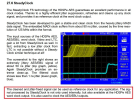
But yes, it is not capabel to deal with Jitter.

No word about ASRC on Datasheet first Site like on 3038 so may be they removed it!
 
No it uses the newer S3039Q2M Chip, not sure about SRC capabilitys changed.
You're quite right, it was a typo, I meant to type ES9039. I've actually got that datasheet open right now.
 
Last edited:
3038 Datasheet says : Clock Gearing

and "Patented Time Domain Jitter Eliminator"

on 3039 i can't find it but still "Supports synchronous and asynchronous sampling modes"
 
Last edited:
I finally read all the DIYAudio thread. Phew. Two things seemed to stick out:

How are you doing the volume control? I have a great interest in that, they have a lot of advantages, but I couldn't find the implementation.

The RME card ought to be doing a lot of jitter reduction, but it's not. RME are very rigorous about everything they do, and I'm sure there's a fix.
I saw there was also a thread on the RME user forum, and I'm sure you'll get an answer there.

 
First of all look at Dokumention on RME Card, it says:

1780249841053.png

So Jitter get fixed to around 1ns, right?

My Extractor has around 950ps Jitter, thats already around 1ns.

My Bluerayplayer, as example, has 250ps Jitter on SPDIF Out.

So probably thats the Reason it can't get it cleaner, but i am not sure and don't know how this PLL clocking refreshing stuff realy works, let see what answer i will get from Developer ;)

I am not sure if this 50dB reduction means that an 1ns Jitter could get cleaned by 50dB, that would be insanly clean tho, i guess ;)
 
I thought I'd read the DIYA thread rather than ask obvious questions about what hardware, software and configuration you were using for the DSP.
I didn't realise you were using a PC, but now I know, I guess that opens every opportunity imaginable for DSP.
I understand what you're trying to do right now, but here's one to think about in the future.
PC's can do reconstruction filtering much better than any DAC. These links show what can be achieved with uncompromised filters:


We have a similar approach to audio, and I think you might find this thread interesting. It starts talking about AV processors with digital outputs, but goes on to discuss the possibilities for optimising each and every stage of the of the audio reproduction process, which is only possible with digital decoder outputs:

 
Volumecontrol is an Story for it'S own i gues, i try to make is short:

I will use Relaisbased R2R kind of Volumecontrol (128 Steps) on Analogue Stage between DAC and AMP.

The Problem is DAC and AMP will be located directly at each Speaker, so i cant put 16 Channel Volumecontroll in one Box!

I need to split it to each Speaker (Surround, 2 Channels each, Mainspeaker probably 3 Channels 2 Way + Sub on each Side).

But i want to have Remotecontrol for all Channels so i will experiment with 433MHz on Arduino and using LORA Networkstack there for Communication between all Channels!

Thats would be Next on my Todo List.

So far i have Programmed an Arduino with an Twisted Pair Audio Relais Board for 128 Steps with Characterdisplay and Encoder for Volume up and down, that was already working on my Bench.

Now i need to go into that LORA Networkstuff for secure communication ;)

I have already some 433MHz Reciver here for experimenting with it.

First i was designing it into each Hypex Amp like here:

Endstuffe Sattelit 433MHz - Kopie.jpg Endstuffe Sattelit 433MHz Frontaufbau - Kopie.jpg

But i gues i will build up an own Box only for that Volumecontroll (Preamp) with XLR in and Out so i could change AMP's in the Future without need of rebuilding Volumecontrol.

Each Volume control Box would be one Node in the LORA Network, and there would be one Mastercontroll box at my Hifi Rack thats detect each Node and manage all the Communication.

Anything like this.

But tahts i need to fidle out by my self in the Future.
I know an Teacher near by that has expirience with LORA Networking so he could probably help me if i get Stuck with Programming ;)

Or using ChatGPT LOOOL
 
Last edited:
I thought I'd read the DIYA thread rather than ask obvious questions about what hardware, software and configuration you were using for the DSP.
I didn't realise you were using a PC, but now I know, I guess that opens every opportunity imaginable for DSP.
I understand what you're trying to do right now, but here's one to think about in the future.
PC's can do reconstruction filtering much better than any DAC. These links show what can be achieved with uncompromised filters:


We have a similar approach to audio, and I think you might find this thread interesting. It starts talking about AV processors with digital outputs, but goes on to discuss the possibilities for optimising each and every stage of the of the audio reproduction process, which is only possible with digital decoder outputs:

That why i try to get my SETUP cheep as possible done and after it works like it should i starting changing Amps or DAC'S to wory about Sound but for me the most importand Point is to have the ability to use FIR Filter on all my Speaker i build or use on my 7.2 Setup!

The most difference hearable on first Place are the Speaker / Room Combination.

Next probaly the AMP's and the last one is the DAC!

On the Digital Side, you transfering only Bits, they could only have the Stage 0 or 1 and Transporting digital numbers works already for Decades withou Problems in our Internet World, think about Online Banking, if there an Bit would flip (MSB) the Number could go from 128$ to 256$ as an example ;)

So Sound difference, i would say are more Problematic on Analogue side or at converting from digital into Analogue Values.

Of course there would be Rounding Errors on DSP Side while calculation FIR Filter but thats is done with 64Bit! So lots of Headroom and the Errors should realy smal, possible not Hearable, i am not sure, i am not an Developer.

24Bit has already Headroom in comparence to an 16Bit CD File.

I have more Trust on Digital saved Files than on old Vinyl Records played already 10 or 100 Times ;)
 
I think we have similar objectives, but the "bits are bits" thing confused me. So what was your objective with this endeavour?
  1. To avoid using HDMI with processing and conversion?
  2. To use a PC for DSP.
  3. To use high quality, high value stereo DACs.
 
no i mean on Digital chain you dont loose Data or change the original Data til it fits into the DAC for conversion back to analogue.

If you are using analogue Chain at all let say Vinyl Turntable as source you could lose information or change it on every Chain Stage and it could sound worse after playing the record 100 Times, it degrade over Time.

Even if you are using CD player the Data could be change while reading the Disc, digital errorcorection thrue Vibrations, scratches and so on.

If the Data is stored digtaly on an Computer, they always the same, if no big Harddisccrash orcur.
And even on DAC the same digital Data gets converted the same, Bits are Bits.

Normaly if you save a picture on an Nas or SSD, this Data you could open 20 years later and it would be the same, without changes, if no serius degrading on Hardware happen.
But for that you could make safety copys on different Storage devices.

Also CD's could degrade after Time like Venyl records or Tape's but not that fast if you are carefully with it.

I have CD's from 1990 or so and still ok, playable but i cann not be sure if the Data still 100% like i bought it.

If youre House burns down all Records ar lost so only way is to Store it on Digital HD or better SSD an keep 2 Copys, one local and one on Cloud or on other Place.

But who realy do it ;)

Cloud would Probably be the easiest way (you can reach youre Data from all places on the World with Internetconnction's) , for me i have 500GB in Music Data as *.WAV from my whole CD Colection also some SACD, CD Track but not the Highres for now.

Also all DVDA i could Rip with 96kHz

Only Bluerays left to rip any day....

I have it on 2 different NAS (Raid 6) and one Copy on external SSD for now.

Of course there People Out they probably need >2 TB of Data for his whole collection ;) Or they could use FLAC Format.

HDMI adds Jitter, true, but don't change the original Bits there, if the Jitter got removed, all Data still the same, they get collected, buffered on next digital stage and reclocked transfered without Jitter (or at minimum Level) into RME Card there the DATA gets the FIltering stuff (at 64Bit so rounding errors would be buried into unhearible sphere around -180dB or so, i guess, i am not an Mathematition) and send to the DAC without adding Noise or Distortion's. That my sugestion.

If Jitter becomes worse, Data could be degraded also on digital Side by sure but than you loose the Sync at one Point and you would notice it. Drop Outs, poping Noise

On the other Hand my Measurings show that 1ns Jitter already Visible on THD+N Values up to -85dB ;), there we again neare Vinyl Record Level LOOOOL but still not worse ;)
 
Last edited:
In that case, why not just use an AVR?

That will get the bits right.
 
Last edited:
I wrote this already but not sure where, i had an ONKYO TX5007, normaly cost 2500€ and i got it for 1300€ because it was already Outdated with an newer Model.

I tested it and the Sound comes not even close to my Stereo Setup, automatic Measurment switched Subwoofer off every Time, so i used only the AMP's on that Device with an Najda DSP for Stereo ;) (Split the HDMI Preamp section from the Amps and feed all Amp inputs out off the Box for Direct connection) This way i had 9 Amps with more than 100W each ;)

As i know Onkyo uses Bur and Brown DAC Ships there and i coult bet they will never reach THD+N better than 100dB, also i uses self build aktive speaker not Passive so i can't use an normal AVR anymore!!!

Also no FIR Filter there, no 7.1 digital Outputs there!

I need an Surroundprocessor with AES Outs like HYPERION DPR-16 or NuprimeX HX16-AES in the Future (Releasedate next Year).
 
The poor sound quality of all AV equipment, especially with HDMI sources, has frustrated me for the last 15 - 20 years.
I tried to work out what was going wrong, and what could be done to fix it, here and here and here and here and here and here and here and here.
One clue came from listening to CD's played via HDMI and via I-link. I-link has a DAC-master configuration and was much better, showing that HDMI was full of jitter.
Another clue came from the audible and measurable degradation from connecting an idle HDMI source, while audio was being played from an entirely different input.
This showed the degradation came from the interference of the digital video on HDMI, rather than from shortcomings in the wanted digital audio signals on HDMI.
The other opportunity (I thought) came from using a processor with digital outputs and off-board DA conversion.
I was convinced that it should be possible to make an AV system with HDMI source with the quality of a good stereo system, and last week you did just that!
Maybe other people have done it using an HD621 or VanityPRO, but you have proved that it works with those SOTA measurements. :D
 
Last edited:
A stereo system can use a DAC-master configuration, but an immersive AV system can't - you have to rely on HDMI clock recovery, so my concerns over jitter have returned, as my audio architecture below makes the assumption that modern DACs are good enough to overcome that problem, but your tests suggest they're not.

1793578414591.png


Matthias Carstens from RME is stepping in your RME User Forum thread, and he's a great person to have on your side. He suggested that the HDSPe AES has not just Steady Clock (which gets jitter below 1ns) , but SteadyClock FS, which gets jitter below 1ps (on certain new models). I thought the PCIe card only had SteadyClock, but perhaps Revision 2 has SteadyClock FS.

Now - here's the good bit.
Mattias made this video about Steady Clock and FS - it's a compulsory watch - and the figures show:
  1. SteadyClock: None, Input Jitter 1 ns, Output Sidebands: -94dB
  2. SteadyClock: Yes , Input Jitter 20 ns, Output Sidebands: -119dB
  3. SteadyClock: FS , Input Jitter 150 ns, Output Sidebands: None
  4. SteadyClock: FS , Input Jitter 500 ns, Output Sidebands: None
1793578120402.png
1793578146905.png
1793578174076.png
1793578186028.png


Here's a summary of jitter reduction in multiple cases. The jitter sideband levels are in dBc, with the bold numbers from the RME video and from the SoundStageNetwork tests, and the rest are my interpolations to show the pattern.

1793578253724.png


What does this show?
First, that SteadyClock achieves around 50dB of jitter reduction.
Second, SteadyClock FS achieves around 60dB more rejection than SteadyClock.
That's seriously impressive. Discussion:
It would be good to get confirmation from Matthias at RME that HDSPe AES does indeed have SteadyClock FS. RME aren't always clear or up to date about this.
The RME HDSPe AES product page states it has SteadyClock, but the User Guide explicitly states SteadyClock FS.
It would be interesting to know whether RME use an ASRC or PLL for SteadyClock FS (is synchronous or asynchronous). I think it's PLL.
I don't know why the HDSPe AES isn't helping Frunse. It certainly should be helping. Maybe it's a simple setting like the clock source isn't correctly selected?
RME say that SteadyClock is generally used internally in an interface; used externally for the AES output; and used in a DAC for the analogue output.
For an AES output it might seem a bit wasted, since AES is an inherently prone to jitter because the audio clock is embedded in the audio data in the same physical channel.
However, professional interfaces often have a word clock I/O, and the HDSPe AEs is no exception, meaning a downstream converter can use the high quality clock output.
I'm so impressed with SteadyClock FS, assuming Frunse can get his to work, that it's worth finding any excuse to use it, in any system, with any source.
 
Last edited:
Back
Top Bottom